| If you cannot view this message correctly, please click here. |
 |
| In this edition: 👉 Climate change threatens Germany's economy — and its government👉 Germany's intelligence agency gets more powers 👉 where the victims of Berlin's latest terrorist attack find support👉 The number of young people in Germany is dwindling — despite immigration👉 Berlin's Volksbühne finds itself at the center of a controversy over alleged racism 👉and Angela Merkel's portrait is drawing crowds of visitors to Berlin's Bode museum. |
 | ||
|
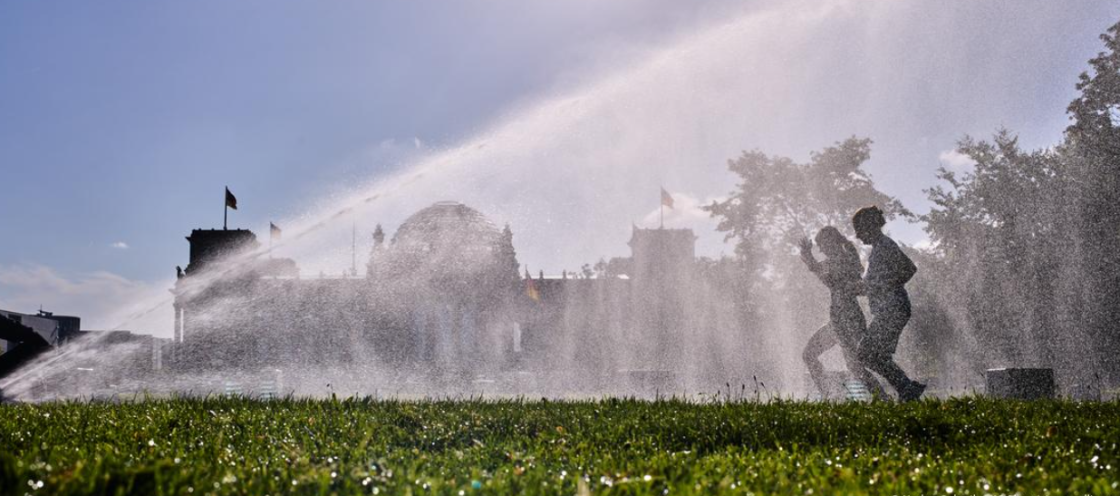
| Willkommen to Berlin Briefing! Ignore climate change at your own peril. That's the message Planet Earth is sending loud and clear to Germany. Severe drought, wildfires, extreme heat — it’s all on the menu in the summer of 2026. And yet, when walking the streets of Berlin, wearing one of the increasingly popular Panama hats for sun protection, you might come across a campaign poster from the far-right AfD that reads “affordable energy instead of climate hysteria.” This implies that there is too much concern about climate change in Germany. Factually, that claim is hard to back up. The topic of climate change is not completely but remarkably absent from most party campaigns for upcoming regional elections in the states of Berlin, Saxony-Anhalt and Mecklenburg-Western Pomerania (with the predictable exception of the Greens). And the German chancellor, Friedrich Merz, is certainly a far cry from being a climate hysteric. In fact, he is staying away, both from the campaign trails in the above-mentioned states and the topic of climate change and its effects on the country. To be fair, Merz has generally acknowledged the reality of human-induced climate change. But record lows in Germany's shipping waterways, crop failures and an estimated 12,500 heat-related deaths in the country (so far this year) have not led to major statements by the head of government. DW's Oliver Pieper has looked into how record heat meets climate action fatigue in Germany. Friedrich Merz’s center-left coalition partner, the Social Democratic Party (SPD), is now starting to fill that vacuum, lobbying to enshrine climate change adaptation and nature conservation in Germany's constitution. The chancellor's party, the center-right Christian Democratic Union (CDU), is not on board — although Merz himself, as noted, has not taken a public stand yet. But the discussion is starting to, well, heat up. Could climate change bring the German coalition government troubles to another boiling point? Don't miss out on this week's edition of our podcast, where we will discuss all of this and more. And please check out our editors' cool selection of the most important developments in Germany this week. |
|

| Germany's intelligence agency gets beefed up |
| German intelligence agencies have been calling for more powers in the fight against cyberattacks, terrorism and extremism. Now, the Federal Intelligence Service (Bundesnachrichtendienst, BND) is set to see the scope of its operations extend far beyond its current powers. Should a state of tension or military defense arise, the BND could carry out acts of sabotage abroad. It will also become possible for them to counter a cyberattack by neutralizing enemy IT systems. But critics warn that red lines are being crossed, writes DW's Marcel Fürstenau. |
| Support for victims of terrorist attacks |
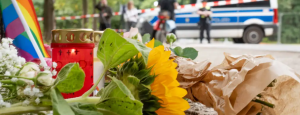
| On the evening of July 25, an attacker drove a van into a crowd in Berlin's Tiergarten park near the Brandenburg Gate, where thousands were celebrating Berlin Pride. He then got out of the vehicle and began attacking people at random with a large knife. One person was killed, 30 people were injured, some of them seriously. Many details have emerged about the perpetrator, his links to extremists, his criminal record and his family. But there is little information on the identities of the victims, and how they are coping after the attack. DW's Bernd Riegert has looked into what support they can get to help them come to terms with what happened. |
|
| Is Germany running out of young people? |
| This week, new statistics show that 10% of all 20- to 24-year-olds in Germany are neither employed nor in education. This number is rising, but still below the EU average. The majority of those found to neither work nor study say they have health limitations or are tied up in caregiving responsibilities. Young people aged 5–24 make up the smallest proportion of Germany's population. Immigrants and their descendants boost Germany's overall youth share, but numbers are still predicted to go down. |
|


| Volksbühne pool gets mired in controversy |
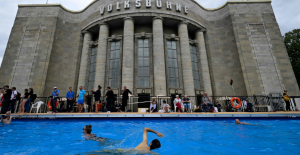
| A temporary public pool in front of Berlin's Volksbühne theater opened recently amid much fanfare. Berlin was, after all, experiencing a major heatwave. Any member of the public could book one of the free tickets in advance and enjoy a visit to the pool. But when the organizers encouraged a local anti-racism organization to reserve a slot for the Black community on a Friday afternoon, they triggered a severe backlash. |
|

| And finally … |
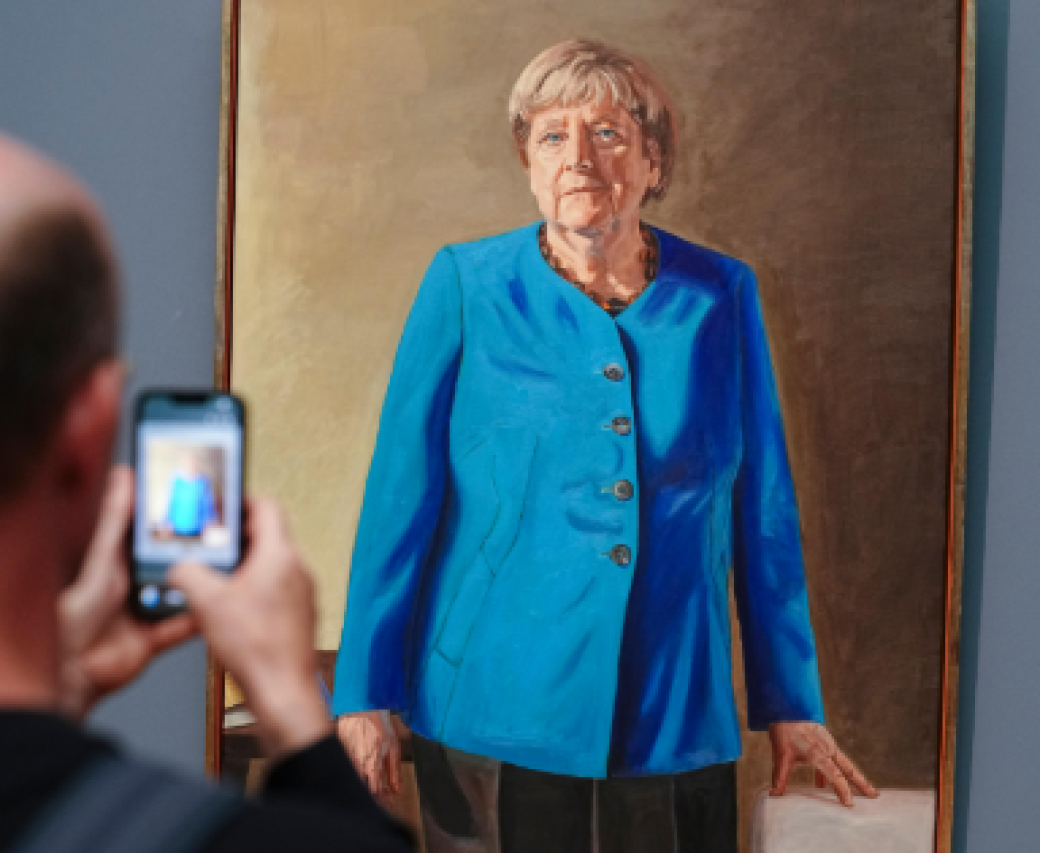
| Angela Merkel shaped German politics during her tenure as Chancellor from 2005 to 2021. Since her official portrait was unveiled to the public at Berlin's Bode Museum at the end of June, visitors have been flocking there in droves. Daily visitor numbers have risen by 85%, with many visitors immediately asking for directions to the Merkel painting. Visitors can view the Merkel portrait until October, after which it will be moved to the first floor of the Chancellery to join the portrait gallery of all Germany's chancellors. |
|

| Do you have questions about Germany? If so, drop us a line and we'll try to answer them in an upcoming newsletter. |

No comments:
Post a Comment