by Eldar Mamedov
In October 2013, I was part of a delegation of the Social-Democratic Group of the European Parliament (EP) to Iran. The trip, which took place shortly before the Geneva nuclear interim agreement was reached between the P5+1 and Iran, was meant as a confidence-building measure between the EU and Iran, aimed at widening the space for diplomacy and re-establishing connections after Mahmoud Ahmadinejad’s toxic presidency. As such, it was the first official visit from the EP to Iran after a seven-year hiatus provoked by a string of misunderstandings, petty politicking and overbidding from both sides, but mostly due to the Ahmadinejad administration’s poisonous rhetoric and flagrant human rights violations, which made it politically unfeasible for mainstream European politicians to visit the country.
Among the Iranian officials that the delegation, led by the then-Social-Democratic-Group President Hannes Swoboda, met with in Tehran was the Ayatollah Ali Akbar Hashemi Rafsanjani. At that time, Rafsanjani was the head of the Expediency Council, an institution he’d created to mediate between the different branches of power in Iran. More importantly, he was imbued with the mystique of someone who, together with the late Ayatollah Khomeini, was perhaps the most consequential leader of the Islamic Republic. Rafsanjani was the ultimate powerbroker, whose political skills and acumen prompted Ali Vaez, the Iran expert at the International Crisis Group, to call him the “Ayatollah Machievelli.” Rafsanjani did not defy expectations.
On a personal level, in a marked contrast to some decidedly dour characters representing the Islamic Republic, he came across as a gregarious man clearly at ease with a European delegation that comprised several female MPs. He was keenly aware of his place in the history of the Islamic Republic. For instance, he spoke at some length of his role as the “Commander of Reconstruction,” as his supporters called him, during the years following the end of the Iran-Iraq war when he served his two terms as Iran’s president (1989-1997). Like other Iranian officials meeting their Western counterparts, he didn’t fail to complain about the West’s backing of Saddam Hussein during that war, or the support that the radical Iranian cult Mojaheddeen-e Khalq (MEK), bitterly opposed to the Islamic Republic and removed from the EU terror list only in 2009, still enjoys in some quarters in the EU and the US.
This latter point had an intense personal connotation for Rafsanjani. Like other top figures of the newly minted Islamic Republic, including the current Supreme Leader Ayatollah Khamenei, he was a target of an assassination attempt by the MEK in a massive terror blast in 1981. Later, in a culmination of a bloody power struggle, the authorities massacred thousands of real and alleged MEK prisoners in what surely remains a stain on the history and reputation of the Islamic Republic.
Yet overall in that meeting with the European MPs Ayatollah Rafsanjani lived up to his reputation as a moderate and a proponent of engagement with Europe. He spoke fondly of the days when, in his role as the president, he negotiated the normalization of relations with Germany. This détente included an end to assassinations of the Iranian dissidents in Europe—another dark chapter in the history of the Islamic Republic, in which Rafsanjani was deeply involved – and the beginning of what was known as a “critical dialogue” between the EU and Iran. Despite many false starts in his long career—such as a bold effort to reach out to the United States in 1996 by offering Conoco, an oil major, a $1 billion deal to develop offshore Iranian oil and gas fields, only to be punished with new sanctions by the Clinton administration—Rafsanjani was quite forward-looking and confident that at least Iran’s ties with Europe stood a fair chance of prospering.
Subsequent events have proved him half right. European diplomacy, spearheaded by the High Representative for the EU Foreign and Security Policy Federica Mogherini, played an important role in achieving the Joint Comprehensive Plan of Action (JCPOA). It continues to play this role through Mogherini’s chairing of the Joint Commission tasked with overseeing the implementation of the JCPOA. European politicians and businesses are busy exploring venues of cooperation with their Iranian counterparts. Iran Task Force, established in the Mogherini-led European External Action Service (EEAS), coordinates the outreach of the EU institutions and confidence-building through concrete projects in areas as diverse as aviation safety and banking. In October 2016, the European Parliament adopted a forward-looking and detailed report emphasizing mutual respect, a relationship of equals (extremely important notions for the Iranians of any persuasion), and further engagement with Iran. And the Council of the EU, the bloc’s main foreign policy decision-making body, has ratified this approach by adopting its own Conclusions in November 2016.
These developments reflect a certain level of institutionalization of the EU engagement with Iran. The strategy is to create a dense network of connections and interdependencies that would make the survival of the relationship less reliance on single individuals. In this sense, although the EU certainly has reasons to lament Rafsanjani’s passing as an influential Iranian advocate for rapprochement, it won’t change much in the way the EU engages Iran. If anything, the disappearance of a strong ally of the moderate president Hassan Rouhani, up for a re-election in April 2016, and the uncertainty associated with the Trump presidency, should mobilize the EU to double down on its commitment to normalize relations with Iran.
One area where Rafsanjani’s hand will clearly be missed is regional security and relations with the Persian Gulf states. In its Global Strategy, adopted in 2016, the EU announced its intention to pursue a balanced engagement with both Iran and the Gulf Cooperation Council (GCC). Unlike the US, the EU is well placed to mediate between regional actors, especially Iran and Saudi Arabia, to end their proxy wars. Rafsanjani had ties with top GCC leaders and was respected by them as an elder statesman. His passing definitely removes a powerful advocate of lowering tensions with Saudi Arabia and other GCC states. More assertive elements, tied to the Revolutionary Guards, might benefit as a result. This will make the EU’s task more difficult.
Ultimately, only time will tell whether Ayatollah Rafsanjani´s passing is more than a mostly psychological blow to the supporters of closer relations between Iran and the West. That it is not immediately seen as threatening to upend the rapprochement already testifies to the ground covered since that memorable EP visit to Iran in October 2013. Iran´s foreign policy is in the steady hands of the Rouhani administration and its foreign minister Javad Zarif. The death of Rafsanjani, however, also reminds us that the legacy of moderation and pragmatism can only be safeguarded if it is constantly built upon. That will be the main challenge in the coming months. Photo: Akbar Hashemi Rafsanjani announcing his candidacy in 2013 election. This article reflects the personal views of the author and not necessarily the opinions of the European Parliament.
Eldar Mamedov has degrees from the University of Latvia and the Diplomatic School in Madrid, Spain. He has worked in the Ministry of Foreign Affairs of Latvia and as a diplomat in Latvian embassies in Washington D.C. and Madrid. Since 2007, Mamedov has served as a political adviser for the social-democrats in the Foreign Affairs Committee of the European Parliament (EP) and is in charge of the EP delegations for inter-parliamentary relations with Iran, Iraq, the Arabian Peninsula, and Mashreq.
Introduction: The Historical Inevitability of The Syrian Civil War and the Rise of Militant Islam
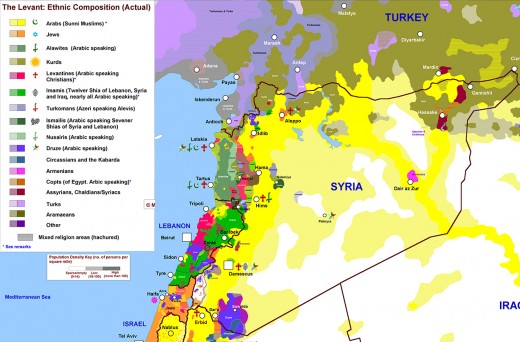
The ongoing Syrian Civil War (2011-present) is significant to the region and world for a plethora of reasons. More specifically of the many past and current events of this unstable crisis, the Syrian Civil War arose from and later began the counter-revolution against the same turbulent social and political instability of most Arab states within the Middle East that started in 2011 otherwise known as the Arab Spring, and from this counter-revolution emerged the Islamic State and other militant groups to oppose the Syrian regime’s reassertion of control. However very few politicians, pundits and policymakers look at the history of the Syrian state and its role in the region to realize that a dangerous interregional and localized conflict was likely going to occur at some point in time, and due to the overbearing actions taken by the Assad dynasty’s brutal and systemic authoritarian Presidential Dictatorship it was almost guaranteed that the Islamic State or something like it would rise to power in the region.
How Syria Came to Be
Syria from its very conception as state was originally created without consideration for the historical make-up of the diverse regional population incorporated within it (Cleveland, 187). Due to this lack of legitimacy, the rulers of these nations were from the start forced to initiate a balancing act between the wishes of their population and with powerful Western forces externally influencing events in the region, such as with the role of the Syrian National Bloc, an organization of influential families in Syria originating from the Ottoman era, in serving as an intermediary between the Syrian public and the French rulers in the 1920s (Cleveland 189-190, 213). When the Mandate system put in place by the victories British and French in World War I to indirectly control Iraq and Syria decayed and Western control over their puppet states gradually collapsed, Syria was finally able to wrestle its independence from France in 1946 after victory in elections for pro-independence factions in the newly re-established parliament (Cleveland 195). Despite the elections the oppressive, divisive colonial political institutions that were created upon these state’s birth were not abolished and instead were restructured to cement the control of the new local ruling elite to take the place of the former French overlords (Cleveland 197, 200). The current state political ideology known as Ba’athism, was initially embraced by the new dictators who called themselves presidents such as Syria’s Hafez al-Assad and Iraq’s Saddam Hussein who had overthrown the civilian led governments there shortly after their formation (Cleveland 205-208). Ba’athism’s founder Michel Aflaq (1910-1989) originally created the ideology to emphasize Arab unity, liberation, democracy, nationalism and socialism, but when the ideology was officially adopted by the Syrian and Iraqi states it was used selectively as a political tool to accomplish regional and domestic goals and its principles were distorted and stretched to accomplish these goals, such as Hafez al-Assad’s use of its ideological concepts of equality and democracy to create a rubber stamp parliament and ensure his minority Shi’a offshoot Alawite faction attained many prominent positions of power within the government (Cleveland 303, 308, 383-384). The overall policy of Syria during this era represented a devotion to pragmatism, calculation, and realism that ended up using the Ba’athist ideology as a political tool for indoctrination and whose principles were not needed to be followed strictly and were not based on Islamic morals which is exemplified by Assad’s educational reforms that dramatically increased educational opportunities of the population but were subject to Ba’athist ideological indoctrination, and also with the secular reforms in both nations that gave historically unprecedented rights to women despite domestic conservative Islamic backlash from the population (Cleveland 314-315). Despite the fact that the regime in Syria and (as well as the one in Iraq) were founded as artificial, non-representative, and colonial states that later adopted secular, nationalist, and socialist policies, there was always a varying degree of grassroots Islamic movements within these nations that were continually oppressed (Cleveland 217, 226). Many examples of this oppression and subversion took place throughout Syria’s modern history, for example al-Assad’s brutal destruction of the Islamic popular revolt centered on the Syrian city of Hama in 1982 that resulted in the death of at least 10,000 people (Cleveland 412-414). Despite these politically convenient gestures made to the domestic populations of Syria, Assad never fully committed himself to their own principles of their Ba’athist ideology, let alone that of political Islam, and even though the domestic populations of Syria holds significant Islamic influences, the very structures of the political institutions in these nations were created with the intention of controlling and influencing their populations and the departure of the French colonial masters did not result in local aspirations of the citizens of these nations being realized and instead resulted in the perpetuation of this cycle of repression being carried out by the new domestic political elite in place of the former colonial rulers (Cleveland 312-319). This reality explains why the ideals prevalent after the independence of the Arab states in the region such as pan-Arabism, secularism, socialism, and nationalism may have created some positive benefits to the domestic population through social and economic reforms, but these concepts failed to achieve greater political liberation for the Arabs and other ethnicities of the region and were instead used pragmatically and conveniently by the Ba’athist regimes as a political tool to perpetuate their political dominance and ensure the stability of what essentially amounted to a pair of mafia-states in Syria and Iraq, which effectively suppressed the simmering discontent within their domestic populations and left the greater political questions of the region to be unresolved (Cleveland 314-320, 412).
Current Issues and Possible Future Outcomes
The long debated greater political questions include examples such as what is Syria and Iraq exactly? How can Syria’s ethnic and religious minorities as well as the Sunni Arab majority gain more equality and representation in the Shia Alawite ruled government? And what role should Islam play in Syria’s secular government? The answer to these questions are not apparent now, but following the conclusion of the Civil War we will have bigger understanding of how to tackle these questions in the new paradigm that emerges. Questions such as was an Arab Spring type uprising inevitable in Syria, and did Hafez al-Assad’s successor son current President Bashar al-Assad’s oppressive policies contribute to the rise of ISIS, are much newer and can be argued much more conclusively. The artificially drawn borders in Iraq and Syria that do not in any way reflect any useful demographic division between the people living there resulted in many communities being separated and distinct ethnic and religious groups clumped together. The French built this state on this unstable foundation, and added to the instability to give political power to the small Shia Alawite group and politically powerful and wealthy Sunni Arabs, creating a government enforced inequality, divisiveness, and oppression that carried on through the local political elites once the French left (Cleveland 189-190). The result is this mafia state keeps its population at a slight simmer an occasionally has to issue a bloody crackdown to brutally stamp out any opposition such in Hama in 1982 (Cleveland 412-414). However, in essentially all Arab states in the region, there exists a large amount young adults with or without college degrees and searching for work in stagnant economies leading to poverty, dissatisfaction, and discontent which is commonly believed led to the Arab Spring protests. Due to all of these underlying repressed issues and since the Syrian Regime already had past problems with revolt before the Arab Spring, once the initial wave of demands for bread, jobs, and dignity began, it was only a matter of time that the equivalent protests that emerged would evolve towards advocating reform and elections. Assad could never accept true reforms because it would result in his Ba’athist minority elite group losing complete control over the state, and after seeing how quickly the protests in Egypt and Tunisia escalated and later removed their dictators there was no way Assad could propose meager skeleton reforms and listen to the growing crowds of protestors to try to wait it out like the abolished dictators did. So he chose to answer with complete and total force and pushed the peaceful protestors out and began instigating an armed conflict with the opponents of the regime who eventually took up arms to defend themselves. Brutalizing your own people is not an acceptable action to international powers and Assad knew that he would not be able to simply suppress the civil uprising for long. So he labeled all people opposing his regime as terrorists of the same quality the West was fighting all around the world. The narrative sounded purely propagandist initially, but as Syria’s civilian population fled and militants from all around the world flooded in, and soon enough Muslim extremist groups such as Islamic State and al-Nusra Front have solidified and also began attacking the original opposition group the Free Syrian Army. After the Islamic State seized most of western Iraq and began trading oil and resources secretly with Assad at the expense of the moderate opposition, Assad managed to elicited the help of Russia in the form of a thinly veiled military intervention justified under the politically loaded goal of “fighting terrorism” to turn the tide of the war from near defeat to likely victory. Regardless if Assad completely wins his Civil War, he has already won enough international political legitimacy to claim he is fighting a civil war against terrorists. Since the international community and particular the United States now feels that the threat from Islamic militants in the region is a bigger threat then to spend previously considered resources on a humanitarian or military intervention to stop Assad’s brutal crackdown, Assad’s narrative has become a self-fulfilling prophecy of his own contribution. Because the international threat of Islamic militants subsiding any time soon is very unlikely, for now there are even debates ongoing between the involved parties about whether Assad should be included as an alliance of convenience in a future military coalition, giving him even more undeserved international legitimacy to quietly continue his brutal systemic crackdown of his people indefinitely.
Works Cited
Cleveland, William L., and Martin Bunton. A History of the Modern Middle East. 6th ed. Boulder: Westview, 2016. Print.
ALUF BENN is Editor in Chief of Haaretz. Follow him on Twitter @alufbenn[1].
Israel—at least the largely secular and progressive version of Israel that once captured the world’s imagination—is over. Although that Israel was always in some ways a fantasy, the myth was at least grounded in reality[2]. Today that reality has changed, and the country that has replaced it is profoundly different from the one its founders imagined almost 70 years ago. Since the last elections, in March 2015[3], a number of slow-moving trends have accelerated dramatically. Should they continue, they could soon render the country unrecognizable.
Already, the transformation has been dramatic. Israel’s current leaders—headed by Prime Minister Benjamin Netanyahu[4], who metamorphosed after the election from a risk-averse conservative into a right-wing radical—see democracy as synonymous with unchecked majority rule and have no patience for restraints such as judicial review or the protection of minorities. In their view, Israel is a Jewish state and a democratic state—in that order. Only Jews should enjoy full rights, while gentiles should be treated with suspicion. Extreme as it sounds, this belief is now widely held: a Pew public opinion survey published in March found that 79 percent of Jewish Israelis supported “preferential treatment” for Jews—a thinly veiled euphemism for discrimination against non-Jews.
Meanwhile, the two-state solution to the conflict with the Palestinians has been taken off the table, and Israel is steadily making its occupation of East Jerusalem and the West Bank permanent. Human rights groups and dissidents who dare criticize the occupation and expose its abuses are denounced by officials, and the government has sought to pass new laws restricting their activities. Arab-Jewish relations[5] within the country have hit a low point, and Israel’s society is breaking down into its constituent tribes.
Netanyahu thrives on such tribalism, which serves his lifelong goal of replacing Israel’s traditional elite with one more in tune with his philosophy. The origins of all these changes predate the current prime minister, however. To truly understand them, one must look much further back in Israel’s history: to the country’s founding, in 1948.
THE OLD MAN AND THE NEW JEW
Modern Israel was created by a group of secular socialists led by David Ben-Gurion, who would become the state’s first prime minister. “The Old Man,” as he was known, sought to create a homeland for a new type of Jew: a warrior-pioneer who would plow the land with a gun on his back and then read poetry around a bonfire when the battle was won. (This “new Jew” was mythologized, most memorably, by Paul Newman in the film Exodus.) Although a civilian, Ben-Gurion was a martial leader. He oversaw the fledgling state’s victory in its War of Independence against Israel’s Arab neighbors and the Palestinians, most of whom were then exiled. And when the war was over, the Old Man oversaw the creation of the Israel Defense Forces (IDF), which he designed to serve as (among other things) the new country’s main tool for turning its polyglot Jewish immigrants into Hebrew-speaking citizens.
Ben-Gurion was a leftist but not a liberal. Following independence, he put Israel’s remaining Arab residents under martial law (a condition that lasted until 1966) and expropriated much of their land, which he gave to Jewish communities. His party, Mapai (the forerunner of Labor), controlled the economy and the distribution of jobs. Ben-Gurion and his cohort were almost all Ashkenazi (of eastern European origin), and they discriminated against the Sephardic Jews (known in Israel as the Mizrahim), who came from Arab states such as Iraq, Morocco, Tunisia, and Yemen. Ben-Gurion also failed to appreciate the power of religion, which he believed would wither away when confronted with secular modernity. He therefore allowed the Orthodox to preserve their educational autonomy under the new state—thereby ensuring and underwriting the creation of future generations of religious voters.
In recent years, as the Israeli public has shifted rightward, so has Netanyahu—which has allowed him to more openly indulge his true passions.
For all Ben-Gurion’s flaws, his achievements were enormous and should not be underestimated: he created one of the most developed states in the postcolonial world, with a world-class military, including a nuclear deterrent, and top scientific and technological institutions. His reliance on the IDF as a melting pot also worked well, effectively assimilating great numbers of new Israelis. This reliance on the military—along with its battlefield victories in 1948, 1956, and 1967—helped cement the centrality of the IDF in Israeli society. To this day, serving in the military’s more prestigious units is the surest way to get ahead in the country. The army has supplied many of the nation’s top leaders, from Yitzhak Rabin and Ezer Weizman to Ehud Barak[6] and Ariel Sharon, and every chief of staff or intelligence head instantly becomes an unofficial candidate for high office on retirement.
The first major challenge to Ben-Gurion’s idea of Israel arrived on Yom Kippur in 1973, when Egypt and Syria launched a surprise attack that managed to catch the IDF unawares. Although Israel ultimately won the war, it suffered heavy losses, and the massive intelligence failure traumatized the nation. Like the United Kingdom after World War I, Israel emerged technically victorious but shorn of its sense of invincibility.
Less than four years later, Menachem Begin—the founder of Israel’s right wing—capitalized on this unhappiness and on Sephardic grievances to hand Labor its first-ever defeat at the polls. Taking power at the head of a new coalition called Likud (Unity), Begin forged an alliance with Israel’s religious parties, which felt more at home with a Sabbath-observing conservative. To sweeten the deal, his government accelerated the building of Jewish settlements in the West Bank (which appealed to religious Zionists) and offered numerous concessions to the ultra-Orthodox, such as generous educational subsidies.
Begin was a conservative and nationalist. But the decades he’d spent in the opposition had taught him to respect dissent and debate. As prime minister, therefore, he always defended judicial independence, and he refrained from purging Labor loyalists from the top echelons of the civil service and the IDF. As a consequence, his revolution, important though it was, was only a partial one. Under Begin’s leadership, Israel’s old left-wing elite lost its cabinet seats. But it preserved much of its influence, holding on to top positions in powerful institutions such as the media and academia. And the Supreme Court remained stocked with justices who, while officially nonpartisan, nevertheless represented a liberal worldview of human and civil rights.
BIBI’S BAPTISM
Although Likud has governed Israel for most of the years since then, the left’s ongoing control over many other facets of life has given rise to a deep sense of resentment on the right. No one has felt that grievance more keenly than Netanyahu, who long dreamed of finishing Begin’s incomplete revolution. “Bibi,” as Netanyahu is known, first won the premiership in 1996, but it would take him decades to accomplish his goal.
Netanyahu’s initial election came shortly after the assassination of Rabin. The years prior to Rabin’s death had been dominated by the Oslo peace process between Israel and the Palestine Liberation Organization (PLO), and that same peace process would become the focus of his successor’s first term as well.
Netanyahu opposed Oslo from the very beginning. Then as now, he saw Israel as a Jewish community besieged by hostile Arabs and Muslims who wanted to destroy it. He considered the Arab-Israeli conflict a perpetual fact of life that could be managed but would never be resolved. The West—which, in his view, was anti-Semitic, indifferent, or both—couldn’t be counted on to help, and so Israel’s leaders were duty bound to prevent a second Holocaust through a combination of smart diplomacy and military prowess. And they couldn’t afford to worry about what the rest of the world thought of them. Indeed, one of Netanyahu’s main domestic selling points has always been his willingness to stand up to established powers, whether they take the form of the U.S. president or the UN General Assembly (where Netanyahu served as Israel’s representative from 1984 to 1988 and first caught his nation’s attention). Netanyahu loves lecturing gentiles in his perfect English, and much of the Israeli public loves these performances. He may go overboard at times—as when, last October, he suggested that Adolf Hitler had gotten the idea to kill Europe’s Jews[7] from Amin al-Husseini, the grand mufti of Jerusalem during World War II. Historians of all stripes scoffed at the claim, but many ordinary Israelis were indifferent to its inaccuracy.
During his first term, Netanyahu connected his domestic and international agendas by blaming the leftism of Israel’s old elite for the country’s foreign policy mistakes. To prevent more missteps in the future, he borrowed a page from the U.S. conservative playbook and vowed to fight the groupthink at Israel’s universities and on its editorial boards—a way of thinking that, he argued, had led the country to Oslo. In a 1996 interview with the Haaretz columnist Ari Shavit, Netanyahu complained about his delegitimization “by the nomenklatura of the old regime,” adding that “the problem is that the intellectual structure of Israeli society is unbalanced.” He pledged to create new, more conservative institutions to rewrite the national narrative.
But Netanyahu’s political inexperience worked against him. His tenure was rocked by controversy, from his reckless provocations of the Palestinians and of Jordan to a scandal caused by his wife’s mistreatment of household employees. Israel’s old elites closed ranks, and, with the support of the Clinton administration, they forced Netanyahu into another deal with the Palestinian leader Yasir Arafat. The 1998 Wye River memorandum—the last formal agreement[8] that Israel and the Palestinians have signed to this day—triggered early elections in May 1999, after several small, hard-right parties abandoned Netanyahu’s coalition in protest. Barak and the Labor Party emerged victorious.
Both Barak, a decorated former head of the IDF, and Sharon, who replaced Netanyahu at the helm of Likud and became prime minister himself in 2001, represented a return to the Ben-Gurion model of farmer turned soldier turned statesman. Their ascent thus restored the old order—at least temporarily—and made Netanyahu seem like a historical fluke.
Sebastian Scheiner / Pool / REUTERS Israeli Prime Minister Benjamin Netanyahu at a weekly cabinet meeting in the Golan Heights, April 2016.
A MODERATE MASK
But Netanyahu saw things differently, and he spent the next decade plotting his return to power. Following Sharon’s reelection in 2003, Netanyahu become finance minister, although he resigned on the eve of the August 2005 unilateral pullout from Gaza. When Sharon created a new centrist party, Kadima (Forward), shortly after the withdrawal, Netanyahu took over the remnants of Likud. But he lost the next election, in March 2006, to Ehud Olmert, who had replaced the ailing Sharon as head of Kadima.
Olmert had pledged to follow through on his mentor’s vision by withdrawing Israel from most of the West Bank. But in July, his plans were disrupted when he let Hezbollah draw him into a pointless and badly managed war in Lebanon. His subsequent effort to negotiate a comprehensive peace deal with the Palestinians, launched in Annapolis, Maryland, in late 2007, led nowhere. Meanwhile, Netanyahu’s credibility and popularity were boosted that same year when Hamas, well armed with rockets, seized control of Gaza—just as he’d predicted. So when Olmert announced his resignation over corruption charges in the summer of 2008 (he ultimately went to jail earlier this year on different charges), Netanyahu was ready to pounce.
His revival was further aided by the sudden appearance in 2007 of what would become the most important of what Netanyahu called independent sources of thought. Israel Hayom (Israel Today) is a free daily newspaper owned by the American casino magnate Sheldon Adelson, and ever since its launch, it has provided Netanyahu with a loud and supportive media megaphone. By 2010, Israel Hayom had become the country’s most-read weekday newspaper, printing 275,000 copies a day. And its front page has consistently read like Bibi’s daily message: lauding his favorites, denouncing his rivals, boasting about Israel’s achievements, and downplaying negative news.
With Olmert out of the picture, Netanyahu returned to office on March 31, 2009. Eager to prove that he was no longer the scandal-plagued firebrand who’d been voted out of office a decade before, however, and fearing pressure from the new U.S. president, Barack Obama, he once again was forced to shelve his long-term plans for elite replacement. Instead of undermining his enemies, he shifted to the center, recruiting several retired Likud liberals to vouch for the “new Bibi” and join his cabinet, and forging a coalition with Labor under Barak, who stayed on as defense minister (a job he’d held under Olmert). Together, Netanyahu and Barak spent much of the next four years working on an ultimately unrealized plan to bomb Iran’s nuclear facilities.
In June 2009, ten days after Obama’s Cairo address, Netanyahu sought to reinforce his new centrist credentials by endorsing the idea of Palestinian statehood in a speech. True to form, however, the prime minister imposed a condition: the Palestinians would first have to recognize Israel as a Jewish state. Mahmoud Abbas, the Palestinian president, instantly rejected the idea. But the move enhanced Netanyahu’s moderate credentials anyway.
And it helped get Obama off his back—but not before the U.S. president convinced Netanyahu to accept a ten-month freeze on new residential construction in the West Bank settlements. The freeze was meaningless, however, since it didn’t change the facts on the ground or facilitate serious peace talks. And soon after it expired, Republicans won control of the House of Representatives in the U.S. midterm election, creating a firewall against any further pressure from Washington. Obama soon lost interest in the thankless peace process. Although his rocky relationship with Netanyahu led to many juicy newspaper and magazine stories, it had little effect on Israel’s internal politics, since most Israelis also distrusted the U.S. president, and still do; a global poll released in December 2015 found that Obama had a lower favorability rating in Israel than almost anywhere else, with only Russians, Palestinians, and Pakistanis expressing greater disapproval.
Any remaining pressure on Netanyahu to pursue peace with the Palestinians evaporated soon after the Arab Spring[9] erupted. Hosni Mubarak’s regime in Egypt collapsed, threatening a cornerstone of Israel’s security strategy; Syria sank into a bloody civil war; and a terrifying new nemesis, the Islamic State (also known as ISIS), appeared on the scene. These events unexpectedly bolstered Israel’s position in several ways: Russia and the United States ultimately joined forces to eliminate most of Syria’s chemical weapons, and the conservative governments of Jordan, Saudi Arabia, the United Arab Emirates, and (after the 2013 counterrevolution) Egypt strengthened their ties with Jerusalem (albeit unofficially in most cases). But the regional carnage and turmoil horrified Israeli voters, who told themselves: if this is what the Arabs are capable of doing to one another, imagine what they would do to us if we gave them the chance.
Nonetheless, peace and security played an uncharacteristically minor role in the next election, in January 2013. Instead, the race was dominated by social issues, including the rapidly rising costs of housing and food staples in Israel. Such concerns helped usher in a new class of freshman politicians, who replaced old-timers such as Barak. But none of them was able to overcome the incumbent’s experience and savvy, and after reengaging with his right-wing base and merging with another conservative party led by former Foreign Minister Avigdor Lieberman, Netanyahu won the election.
In the summer of 2014, following one last push for peace with Abbas (this time led by U.S. Secretary of State John Kerry), war broke out between Israel and Hamas. The discovery of dozens of tunnels dug by Hamas into Egyptian and Israeli territory put another big scare into the Israeli public and prompted a prolonged ground operation—the bloodiest conflict of the Netanyahu era. During 50 days of fighting, more than 2,000 Palestinians and 72 Israelis, mostly soldiers, were killed. Israel’s Jewish population overwhelmingly supported the war, but the fighting caused communal tensions in the country to explode. Thousands of Arab Israelis[10]—who identified with the suffering in Gaza and were tired of their own abuse by the police and their increasing marginalization under Netanyahu—protested against the war. Hundreds were arrested, and other Arabs employed in the public sector were reportedly threatened with firing after criticizing the conflict on Facebook.
Israel has already become far less tolerant and open to debate than it used to be.
THE NEW RIGHT
Around the same time, personal animosities within Netanyahu’s coalition started to pull it apart. Netanyahu was unable to prevent Israel’s parliament, the Knesset, from electing Reuven Rivlin, a longtime Likud rival, to the largely symbolic presidency. And several of the prime minister’s erstwhile allies, including Lieberman, endorsed a bill that would have forced Israel Hayom to start charging its readers. (The bill never made it past a preliminary hearing.) In December, the government finally collapsed, and the Knesset called an early election.
Likud went into the 2015 race trailing in the polls. The public was angry with Netanyahu over a small-time financial scandal involving his wife and over the stalemated result of the war with Hamas. The Zionist Union, a new centrist coalition led by Labor’s Isaac Herzog, seemed poised to form the next government. But the uncharismatic Labor leader proved no match for his wilier, more experienced adversary. Netanyahu tacked right—scoring an unprecedented invitation to address the U.S. Congress (which he used to denounce the nuclear deal the Obama administration was negotiating with Iran) and stealing votes from smaller conservative parties by promising not to allow a Palestinian state to be established on his watch. Then, on election day, he released a video in which he claimed that “Arab voters are heading to the polling stations in droves. Left-wing NGOs are bringing them in buses.” The statement wasn’t true, but it effectively tapped into Jewish voters’ anxiety and racism and won Likud the election: Likud emerged with 30 seats; the Zionist Union earned 24.
In Israel’s fractious parliamentary system, votes alone don’t determine who takes power, however; that gets decided during the coalition-building process that inevitably follows each election. In this case, the electoral math left Netanyahu, who was 31 seats short of a majority, with two choices: he could form a national unity coalition with Herzog and the ultra-Orthodox, or he could forge a narrow but ideologically cohesive alliance with several smaller center- and far-right parties.
Choosing Herzog would have created a wider coalition and allowed Netanyahu to show a more moderate face to the world. But the prime minister, who was sick of acting like a centrist, picked the latter course instead. That left him with a very narrow, one-seat majority in the Knesset. But it also gave him his first undiluted hard-right government since his 2009 comeback—one that would finally allow him to realize his long-deferred dream of remaking Israel’s establishment.
Although Netanyahu is both secular and Ashkenazi, his new allies are mostly Mizrahim—long ostracized from Israel’s centers of power, even though they represent a large segment of the Jewish population—and religious Zionists, who are known for their knitted yarmulkes, are fiercely committed to (and often live in) West Bank settlements, and have, in recent years, come to hold many prominent positions in the army, the security services, and the civil service.
These groups are most vocally represented by three members of the current government: Likud’s Miri Regev, the minister of culture; Naftali Bennett, the minister of education and head of Habayit Hayehudi (Jewish Home), a religious Zionist party that he built out of the ashes of the old National Religious Party; and Ayelet Shaked, Bennett’s longtime sidekick [11]and now the minister of justice. Regev is Sephardic—her family came to Israel from Morocco—and a former brigadier general in the IDF, where she served as chief spokesperson during the Gaza pullout. Bennett, the son of American immigrants, served in the Israeli special forces and then made a fortune as a high-tech entrepreneur. He is both a model product of the “start-up nation” and the epitome of the religious, fiercely nationalist, pro-settlement leader (although he himself lives comfortably within the Green Line). Shaked, meanwhile, was a computer engineer before joining politics; despite her membership in the Jewish Home, she is neither religious nor a settler. Both she and Bennett worked directly for Netanyahu in Likud a decade ago, when he was the opposition leader, but they broke with him over personal quarrels in 2008.
Changing of the guard: Netanyahu at a memorial service for Ben-Gurion, November 2014.
Like the prime minister, Regev, Bennett, and Shaked are skilled, media-savvy communicators. In keeping with Israeli tradition, all three have complicated, “frenemy” relationships with Netanyahu. Regev climbed the ranks of Likud without the prime minister’s sponsorship, and Netanyahu has never forgiven Bennett and Shaked for their betrayals; the two are never invited to join him at his residence or on his plane. Yet so far, they have not let their personal grievances block the pursuit of their shared interests. Netanyahu needs Bennett and Shaked to keep his coalition afloat, and he needs Regev to maintain his support among Sephardic Israelis, an important Likud constituency. And there are no real ideological differences among the four politicians. Netanyahu is thus happy to let the others lead the charge against the old guard—and to take the heat for it as well.
Since taking office last year, the three ministers have readily obliged him. Regev—who likes to rail against what she calls “the haughty left-wing Ashkenazi elite” and once proudly told an interviewer that she’d never read Chekhov and didn’t like classical music—has sought to give greater prominence to Sephardic culture and to deprive “less than patriotic” artists of government subsidies. Bennett’s ministry has rewritten public school curricula to emphasize the country’s Jewish character; it recently introduced a new high school civics textbook that depicts Israel’s military history through a religious Zionist lens and sidelines the role of its Arab minority. In December 2015, Bennett even banned Borderlife, a novel describing a romance between a young Jewish Israeli woman and a Palestinian man, from high school reading lists.
Shaked, for her part, has vowed to reduce judicial interference in the work of the executive and the Knesset by appointing more conservative justices to the Supreme Court next year, when four to five seats (out of 15) will open up. She has also made good use of her position as head of the cabinet committee on legislation, which decides which bills the executive will support in the Knesset. The committee has recently promoted several draft laws designed to curb political expression. One, aimed at non-Zionist Arab legislators, would allow the Knesset to suspend a member indefinitely for supporting terrorism, rejecting Israel’s status as a Jewish state, or inciting racism. Another, which Shaked has personally championed, would shame human rights groups by publicly identifying those that get more than half their funding from foreign governments. (So far, none of these bills, or even more restrictive measures put forward by Likud backbenchers—such as one that would label left-wing nongovernmental organizations “foreign agents” and another that would triple the jail sentence for flag burning—has been passed.)
Meanwhile, Netanyahu is doing his part as well. After last year’s election, he insisted on holding on to the communications portfolio himself, giving him the last word on any media-related legislation. This move has given him unprecedented leverage over Israel’s television and telecommunications networks, which have grown leery of doing anything to alienate the prime minister.
Many of the government’s recent actions, such as Regev’s promotion of Sephardic culture, seem designed to address the traditional disenfranchisement of Israel’s Mizrahim and citizens living in the country’s “periphery” (that is, far from the central Tel Aviv–Jerusalem corridor). Other measures are aimed at promoting social mobility. Yet virtually all of them have had a clear political goal as well: to reduce, if not eliminate, the domestic opposition to Israel’s occupation of the West Bank, which Netanyahu and his allies want to make permanent. By portraying the shrinking peace camp and its supporters as unpatriotic stooges of foreign anti-Semites, the government hopes to delegitimize them and build a consensus around its hard-right policies.
The strategy seems to be working. One example: in a poll conducted last December of Israeli Jews, 53 percent of those surveyed supported outlawing Breaking the Silence, a veterans’ group that aims to expose the harsh realities of the occupation by publishing wrenching testimonials of soldiers who have served in the West Bank.
DAGGERS DRAWN
Late last summer, after years of relative quiet, violence erupted in the West Bank and inside Israel. The first intifada (1987–93) was characterized by mass protests and stone throwing; during the second intifada (2000–2005), organized Palestinian suicide bombings and large-scale military reprisals by Israel caused thousands of casualties. This time, the so-called loners’ intifada has taken a more privatized form. Acting on their own, young Palestinian men and women have used knives and homemade guns to attack Israeli military and police checkpoints or civilians at flash points such as the settlements and Jerusalem’s Old City. So far, 34 Israelis have died in these assaults. Almost all the perpetrators have been arrested or shot on the spot—to date, about 200 Palestinians have been killed—but more have kept coming.
The loners’ intifada has presented the current government with its toughest test so far. Netanyahu has always claimed to be tough on terror and has portrayed his opponents as softies. Yet he and his top aides have seemed clueless in the face of the rising violence. Instead of stanching the bloodshed, they have redoubled their attacks on those they deem enemies within: human rights groups and Arab Israeli politicians. And the center-left parties, worried about looking unpatriotic, have gone along with him. In April, Herzog urged Labor to “stop giving the impression that we are always Arab-lovers.” And Yair Lapid, the head of the opposition Yesh Atid (There’s a Future) party—another centrist faction—has called on the army and the police to ease their rules of engagement and “shoot to kill whoever takes out a knife or a screwdriver or whatever.” Highlighting the danger of such rhetoric, in late March, B’Tselem, a respected human rights group, released a video taken in Hebron showing an Israeli soldier executing a Palestinian suspect[12] who had already been shot and was lying, bleeding, on the street.
Instead of remorse, the Hebron shooting unleashed a wave of ugly nationalism among many Israeli Jews. The military high command quickly detained the soldier and declared his action immoral, unlawful, and undisciplined. Yet in a public opinion poll conducted several days after the incident, 68 percent of respondents supported the shooting, and 57 percent said that the soldier should not face criminal prosecution. Far-right politicians, including Bennett, defended the killer, and Netanyahu, who had initially supported the military brass, quickly closed ranks with his right-wing rivals and called the shooter’s parents to express his support. When Moshe Yaalon, the defense minister, nonetheless insisted on a criminal investigation, he was roundly attacked on social media for his stand. After Netanyahu seemed to side with Yaalon’s critics, their quarrel escalated, and in May, Yaalon resigned. Announcing his decision, Yaalon remarked, “I fought with all my might against manifestations of extremism, violence, and racism in Israeli society, which are threatening its sturdiness and also trickling into the IDF, hurting it.”
Netanyahu's government will keep trying to cement as many changes as possible to Israeli society and the Israeli establishment.
That Yaalon of all people could be subjected to such treatment shows just how much Israel has changed in recent years. A Likud leader and former IDF chief of staff, Yaalon is no leftist: he supported Oslo but later changed his mind when, as the head of military intelligence, he witnessed Arafat’s duplicity firsthand. Yet Yaalon believes in the importance of a secular state and the rule of law. That marked him as one of the last of the Ben-Gurion-style old guard still in office. And those credentials were enough to incite the online mob. It didn’t matter that he had an impressive military record, opposed the peace process, or supported settlement expansion. In Netanyahu’s Israel, merely insisting on due process for a well-documented crime is now enough to win you the enmity of the new elite and its backers.
THE PERMANENT PRIME MINISTER
One of the ways Netanyahu has retained power for so long—he’s now Israel’s second-longest-serving leader, after Ben-Gurion—has been by tailoring his politics to match public opinion. In 2009, he leaned toward the center because he feared Obama and wanted to dispel his own reputation for recklessness. In recent years, as the Israeli public has shifted rightward, so has he—which has allowed him to more openly indulge his true passions.
Throughout this period, Netanyahu has benefited from one other key asset: the lack of any serious challenger, either inside or outside Likud. Since returning to power in 2009, he has consistently beaten all other plausible candidates for prime minister in public opinion polls—by large margins. Within Likud, Netanyahu has managed to sideline a series of aspirants, such as Moshe Kahlon, Gideon Saar, and Silvan Shalom. And the opposition has failed to produce a credible alternative of its own. After leaving office in 2001, Barak undermined his standing by adopting a lavish lifestyle deemed unseemly for a Labor leader. Meanwhile, Tzipi Livni[13], Olmert’s foreign minister and his successor as the head of Kadima, actually beat Netanyahu’s Likud in the 2009 election, winning 28 seats to Likud’s 27. But she was unable to build a large enough coalition to form the next government, and her subsequent weakness as opposition leader damaged her popular appeal.
Bennett is now trying to position himself as a younger and more populist version of his one-time mentor. There’s no doubt that Bennett is charismatic and has grown quite popular. But he leads a small party with a limited base that cannot win an election unless it unites with Likud. Nir Barkat, the right-wing mayor of Jerusalem, is another former high-tech entrepreneur who harbors national aspirations. But he lacks charisma and remains unknown to the public outside Israel’s capital city.
Netanyahu’s strongest current challenger is probably Lapid, the former columnist and TV anchor who established Yesh Atid as a centrist party in 2012 and won a spectacular victory in 2013, earning Yesh Atid the second-highest number of seats in the Knesset. Lapid joined Netanyahu’s cabinet after he and Bennett forced the prime minister to drop the ultra-Orthodox parties. But Netanyahu soon outmaneuvered him, pushing Lapid to the Treasury—a well-established graveyard for ambitious politicians, since it often involves making unpopular moves such as raising taxes and cutting benefits. Lapid accomplished little while in office, and in 2015, after a tough fight with Herzog and his Zionist Union over the same voters, Yesh Atid lost almost half its seats. Since then, Lapid has improved his public standing—popularity polls now put Yesh Atid second, after Likud—by appearing to be more religiously observant and by talking tough on terror. Lapid is a moderate (he supports a Palestinian state and opposes the expansion of remote West Bank settlements), is an excellent communicator, and is an astute reader of public sentiment. But he is hypersensitive—he tends to overreact when criticized—and he lacks security experience, a huge impediment in Israel.
None of this means that Netanyahu is invulnerable, however. In March, Haaretz published a poll showing that a new, imaginary centrist party led by Gabi Ashkenazi (a popular former IDF chief of staff), Kahlon, and Saar would beat Likud in an election held tomorrow. But unless its coalition crumbles, the government doesn’t need to call a new election until November 2019, and the nonexistent party remains a fantasy. In the meantime, Netanyahu continues to maneuver. He has tried to entice the smaller right-wing parties into forming a new, broader party with Likud (so far, none of them has shown much interest). And this past spring, he held negotiations with Herzog over the formation of a unity coalition, only to back off at the last moment and offer his former ally Lieberman the post of defense minister. With Lieberman inside the government, the ruling coalition—more right-wing than ever—would get an expanded parliamentary base and more room to breathe.
Until the next election does come around, Netanyahu’s government will keep trying to cement as many changes as possible to Israeli society and the Israeli establishment. The prime minister and his allies will push to appoint more conservatives to the Supreme Court and more religious Zionists to key government and academic positions. They will maintain their support for Mizrahi culture and West Bank settlements, will impose more restrictions on left-wing organizations, and will work to increase tensions with Israel’s Arabs.
Regardless of who wins the next election, at least some of these changes seem likely to become permanent. The country has already become far less tolerant and open to debate than it used to be. The peace camp has withered, and very few really challenge the status of the occupation anymore. Arab-Jewish relations are so bad that they would take outstanding leadership and enormous effort to fix. And the United States’ retrenchment has strengthened the sense among many Israelis that they can go it alone and no longer need to worry about pleasing Washington. It’s hard to see how a new Israeli prime minister—or a new U.S. president—will be able to reverse many of these shifts.
Turkey´s New Anti-PKK Strategy: Consequences and Feasibility
15 Dec 2016
By Karol Wasilewski for Polish Institute of International Affairs (PISM)
In this paper, Karol Wasilewski analyzes the Turkish government’s newly adopted “total liquidation” strategy against the Kurdistan Workers Party (PKK). The strategy, which is not risk free, is designed to use combined military, economic and political means in order to put military pressure on the PKK, dry up its sources of funding, and provide financial aid to urban areas that have been hard hit by the ongoing conflict.
This article was originally published by the Polish Institute of International Affairs (PISM) on 1 December 2016. The Turkish government, empowered further by the state of emergency, adopted a new strategy in its fight with the Kurdistan Workers Party (PKK). The declared goal is the total liquidation of the PKK. It will contribute to deepening political polarisation at home while in the regional dimension it may lead to greater Turkish involvement in Iraq and Syria. It is also possible that the strategy will intensify the tension between Turkey and its Western allies. Both the situation in Turkey and in the region make the achievement of the Turkish politicians’ goal dubious.
Old Conflict, New Mode
In July 2015, a two-plus year peace process between Turkey and the PKK (considered a terrorist organisation by Turkey, the EU and the U.S.) ended. The breakdown in negotiations was caused both by developments in the region and in Turkey, in particular, the siege of Kobanî by Islamic State (IS) and Turkey’s parliamentary elections in June 2015. Both developments highlighted the differences of interests between the sides.
On 22 July 2015, PKK members killed two Turkish policemen in Ceylanpınar, which provoked Turkey to bomb PKK positions in Iraq, resuming the conflict. This new phase, however, is different than previous ones in several ways. First, the PKK decided to carry the fight to Turkey’s southeastern cities. Turkish security forces picked up the gauntlet and responded heavily. Second, the wide use of radicalised youth through the Patriotic Revolutionary Youth Movement (tied to the PKK) was a novelty in the conflict as well. Other organisations affiliated with the PKK, such as the Kurdistan Freedom Falcons, intensified their activities. Third, the conflict has been waged in unique circumstances. The primary influence was regional dynamics, principally the Kurdish Democratic Union Party’s (PYD) success in northern Syria (although PYD is linked to the PKK, Turkey views it as a Syrian branch of the PKK). Also significant was the use of social media, used as part of an information war.
These new modes of this old conflict have led to a surge in the number of civilian deaths, massive urban destruction in the southeast, and deepening of political polarisation in Turkey. At the moment, the total number of casualties because of the fighting is hard to pin down as both sides in the conflict use statistics as propaganda. However, the large scale of the confrontation can be seen by looking at the number of internally displaced people. According to the International Crisis Group, it has exceeded 350,000.
New Strategy: “Total Liquidation”
The failed 15 July coup in Turkey became an important turning point in the Turkey-PKK conflict. The Turkish authorities decided to toughen its stance towards both the organisation and the Turkish-Kurdish conflict. An early sign of this may have been when the pro-Kurdish Democratic People’s Party (HDP) was excluded from government actions aimed at muting tensions in the domestic politics. The HDP’s leaders were not invited to meetings with the prime minister or president, nor to a huge political meeting in Yenikapı. Moreover, there were some subtle changes in the ruling Justice and Development Party’s (AKP) and Recep Tayyip Erdoğan’s rhetoric. After the coup, Turkey’s leaders equated the PKK with the Gülen movement, which it accuses of staging the attempted overthrow. Furthermore, they started to emphasise that “Turkey has no Kurdish problem, just a PKK problem.” The authorities’ stance toughened even more after the introduction of a state of emergency on 20 July. The government seized the authority to issue decrees that later served to dismiss southeastern city mayors who were suspected of links to the PKK and thus accused of supporting terrorism (on 11 September, 28 or so mayors were removed). It seems that the wide powers granted by the state of emergency have made Turkish leaders believe that their stated goal of the total liquidation of the PKK is possible.
The new strategy combines military, economic and political actions. On the military front, the authorities want to intensify the fight by transitioning to offensive actions consisting of increasing the mobility of units battling the PKK and supported by armed drones. The aim of this is to exert permanent military pressure on the PKK. Moreover, the security forces will be strengthened, including building up so-called village guard units, a paramilitary structure that recruits mainly ethnic Kurds with the aim to defend local civilians against the PKK. In the economic sphere, the authorities will try to hit PKK sources of funding. As important will be a project to renew urban areas devastated by the ongoing conflict. The government aims to allocate around $3.5 billion to this work. In politics, the authorities have taken aim at NGOs, media and politicians suspected of having links to the PKK. The government’s actions here seek to create an atmosphere that keeps people sympathetic to the PKK in check. It is also possible that in the future, the Turkish leaders will try to create an alternative to the HDP and a more AKP-leaning Kurdish political front.
The strategy is not limited to Turkish territory. President Erdoğan has claimed that the offensive’s aim is to hit the terrorist organisation at its sources. This means that military activities will be carried out on Syrian and Iraqi territory, where the PKK is very active. The Turkish government will also try to isolate the PKK in Iraq and diminish the PYD’s influence in Syria. To achieve this goal, it will try to cooperate with Masoud Barzani, president of the Iraqi Kurdistan Region, who for years has had strained relations with the PKK. In this aspect, the new strategy fits in with the government’s previous actions aimed at intensifying intra-Kurdish divisions both at home and in the region.
The Turkish government, using the powers granted by the state of emergency, has already started to implement the new strategy. Closing Kurdish media and arresting HDP leaders such as Selahattin Demirtaş and Figen Yüksekdağ are signs of that. Likewise, the use of drones to fight the PKK has intensified of late and the strengthening of units in the Silopi district near the Turkey-Iraq border may be a sign that the Turkish government is considering military intervention in northern Iraq.
Consequences and Possibilities
When it comes to Turkey, the effect of the strategy will probably be increased political polarisation. This, in turn, may pose a threat to the country’s security, since the IS strategy towards Turkey is to stir up division within Turkish society and make use of it for its own ends. Moreover, hitting the political side of the Kurdish movement, in addition to banning pro-Kurdish associations and closing media outlets, may result in the radicalisation of some Kurds (in the last election, HDP won more than 5 million votes). It is also probable that the PKK will intensify its actions, including killings of officials appointed by the government to replace the dismissed mayors. At the same time, the strategy may lead to the consolidation of the AKP’s and Erdoğan’s electorate, resulting in strengthening the government’s position.
In the regional dimension, the strategy requires an increase in Turkish actions on Iraqi and Syrian soil. As an example, Turkey’s efforts to take part in the Mosul anti-IS operation stems in part from concerns about the PKK’s presence in the cross-border Sinjar region. Thus, Turkey’s tense relations with Iran, which is interested in preserving its influence over Iraq, and the central government in Bagdad may be further strained. Moreover, Turkey’s anti-PKK strategy constitutes a challenge for the U.S. and its plans regarding the Syrian and Iraqi conflicts. This is a result of the Americans’ close cooperation with the PYD on Syrian soil. Turkish measures aimed at the PYD may further complicate the Americans’ moves during the northern Raqqa anti-IS offensive that started on 6 November. What is more, the strategy’s political dimension may increase tensions between Turkey and the EU, which has expressed worry about the state of Turkey’s democracy. The strain may be boosted by Turkey’s accusations that Western European countries do not give it enough support in its fight with the PKK (although such allegations emerge whenever the Turkey-PKK conflict resumes). To prevent the tensions from growing further, the EU may engage in political dialogue with Turkey.
Although the Turkey’s new anti-PKK strategy has many facets, achieving its declared goal may not be an easy task. First, doubts have been raised that the strategy may contribute to the radicalisation of some Kurds, which would serve the PKK’s interests. Besides this, a serious deficiency of the strategy is that it seems not to take into account the significant shift in opinion on the so-called Kurdish question. Strictly speaking, it seems to ignore the fact that the PYD’s intensive and effective fight with IS has brought it international sympathy and a relationship with the U.S. This, in turn, makes Turkey’s strategy costlier to achieve its goals and may impede its actions, unless the incoming U.S. administration decides to change its approach to the PYD, as hoped for by Turkey. Finally, one serious obstacle to achieving the strategy’s declared goals may be the condition of the Turkish Armed Forces (TSK) after the failed coup. Although both politicians and the military’s current top commanders have offered assurances that the TSK’s potential has not been diminished as a result of the widespread purges in the coup’s aftermath, the next few months will show whether the military is capable of achieving the Turkish leaders’ declared goal.
About the Author Karol Wasilewski is a Turkey analyst at the Polish Institute of International Affairs (PISM) and a PhD candidate at the Faculty of Political Science and International Studies (University of Warsaw). He is the author of: 'Turkey’s European Dream. Western Identity and its Influence on the Foreign Policy of the Republic of Turkey’. @kwasylewsky
What is Eurasianism?
Graham E. Fuller (grahamefuller.com)
13 September 2016
You might recall the term “Eurasia” from high school geography classes. The term isn’t used much any more in political discussions in the West, but it should be. That is where the most serious geopolitical action is going to be taking place in the world as we move deeper into the 21st century. The US, focused so intently on “containment” of Russia, ISIS, and China will be missing the bigger Eurasian strategic picture. Eurasia is the greatest landmass of the world, embracing Europe and all of Asia—some of the oldest and greatest centers of human civilization. So what is Eurasianism? It has meant different things at different periods. A century ago, the Kissingers of the time spun theories about a deep and inevitable strategic clash between sea-borne power (UK/US) and continental/land-based powers (Germany, Russia.) “Eurasia” then meant mostly Europe and western Russia. Indeed, what need was there to talk then about Asia itself? Most of Asia was underdeveloped and lay under the control of the British Empire (India, China) or the French (Indo-China) and had no independent will. Japan was the only real “Asian power”—that ironically developed its own imperial designs, mimicking the West, and thus came to clash with American imperial power in the Pacific. Today of course all that is different. Eurasia increasingly means “Asia” in which the “Euro” part figures modestly. Furthermore, China has now become the center of Eurasia as the world’s largest economy. Not surprisingly, China (like the Muslim world) projects a decidedly “anti-imperial” bent based on what it sees as its humiliation at the hands of the West (and Japan) during its two-hundred year eclipse—during one of its dynastic down-cycles. But China is very much back now into a classic “up-cycle” mode of power and influence again and is determined to project its weight and influence. India too now is now a rapidly developing power with regional reach. And Japan, while quiescent, still represents formidable economic power, perhaps to be augmented by greater military regional reach. The significance of the term “Eurasian” has changed a good deal, but it still suggests strategic rivalry. At a time when the US formally declares its intent to militarily dominate the world (“full spectrum dominance” was the official Pentagon doctrine in 2000) the concept of Eurasianism is responding with vigor. And not just in China, but in its new significance for countries like Russia, Iran, even Turkey. It suggests a sense of the eclipse of dominant western power in the face of new Asian power. It’s not all just about military and money. It’s also cultural. Russian culture has for two centuries maintained a lively debate about whether Russia belongs to the West, or embodies a distinctly Eurasian (yevraziiskaya) culture that is separate from the West. Eurasianists represent a significant force within Russian strategic and military thinking (although Putin, interestingly, does not fully embrace this world-view.) The idea is a vague but culturally important one; it grapples with Russian identity. It speaks of a Slavic culture but with deep Eurasian roots even in an old Turkic and Tatar past. Remember that historically it is the modern West that torched Russia twice: witness the invasions of Napoleon and Hitler up to the gates of Moscow. Nato today probes ever more deeply all around the Russian periphery. The Eurasianists are suspicious of, if not hostile to, the West as a permanent threat to “Holy Mother Russia.” “Eurasianism” will always lurk just beneath the surface in the Russian strategic world-view. That is what Russia’s new Eurasian Economic Union is all about, a goal to at least economically unite Belarus, the Central Asian states and others into a greater Eurasian economic whole. (Oil-rich Kazakstan was actually the author of the concept; it will seek to maintain ties with the West; but look at it its place on a world map to see where Kazakstan’s real long-term options lie. Russia may not now be the best economic star to tie one’s future to, but it is just one of many Eurasian vehicles out there and they are not mutually exclusive. Options bring greater security. China is moving in stunningly ambitious directions in creating the new Asia Infrastructure Investment Bank (that 57 states have signed onto including most European states, Canada and Australia—but conspicuously without Japan so far, or the US.) This creates a new Eurasian-focused central banking instrument with strong Chinese influence. China is also projecting massive new transportation networks (the Silk Road Economic Belt and the Maritime Silk Road —“One Belt One Road”) across Eurasia to China linking China to Europe, the Middle East, Central and South Asia, and the Far East by rail, road, and sea. China’s “Eurasian strategy” is already a burgeoning reality. Yes, suspicions and rivalries exist between Russia and China and India and Japan. But the strong economic and developmental thrust of these proposals differ markedly from the American more “security” focused organization with its worrisome military implications. Not only has Washington fought these Chinese and Eurasian initiatives unsuccessfully, but it is US policies in particular—that identify both Russia and China as the presumptive enemy—that have helped bring Russia and China together on many issues, linked now by shared distrust of US global military ambitions. Japan, incidentally, before World War II had its own doctrine of “Eurasianism” —an effort to identify with and stir up Asian peoples and territories against western colonial domination; this strategy could have been quite effective had it not been accompanied by Japan’s own brutal military invasions of East Asian countries, destroying the credibility of the Japanese “Greater East Asia Co-prosperity Sphere.” Today Japan hasn’t moved its location; it will still have to deal with the reality of Chinese power in the East. And what Japanese leader would seriously pursue a long range policy of hostility to China in support of a US Pacific strategy that is inherently designed to bottle up China? Especially when China and Japan are huge mutual trading and investment partners? Iran is keenly interested in balancing against geopolitical pressures from the US and seeks membership in these Russian and Chinese economic development institutions. Iran is a natural “Eurasian “ and “Silk Road” power. Turkey has gotten into the Eurasian game, again. Going back to the early days of Erdogan’s AK Party foreign policy— in the vision of then foreign minister Davutoglu—Turkey was no longer limited to being a western power, but also proclaimed its geopolitical interests (nearly a hundred years after the fall of the Ottoman Empire) in the Middle East, and indeed, Eurasia. (After all, the Turks originally come from Eurasia, having migrated west from Lake Baikal a thousand years ago.) That means serious ties with Russia, combined with deep ethnic, cultural and historical ties with Central Asia, and with China. Turkey (like Iran and Pakistan) seeks to be part of these Russian and Chinese networks. And, among some Turkish nationalist politicians and military officers (including many secular Kemalists) there is strong “Eurasianist” leaning to expand Turkey’s geopolitical options to explore strategic and cultural ties with Eurasia. It also reflects an expression of distrust of western and US efforts to dominate the region. For Turkey this is not an either/or issue. It can seek to be part of Europe (including Nato) but will not relinquish the broad geostrategic alternative options to the East, with its ever greater economic clout, and roads and rails to link it. In short, the new Eurasianism is no longer about nineteenth century land and sea power. It is an acknowledgment that the era of western (and especially US) global dominance is over. Washington can no longer command (or afford) a longer-term bid to dominate Eurasia. In economic terms no state in the region, including Turkey, would be foolish enough to turn its back on this rising “Eurasian” potential that also offers strategic balance and economic options. There are, of course, huge fault-lines across Eurasia—ethnic, economic, strategic, and some degree of rivalry. But the more Washington attempts to contain or throttle Eurasianism as a genuine rising force, the greater will be the determination of states to become part of this rising Eurasian world, even while not rejecting the West. All countries like to have alternatives. They don’t like to lie beholden to a single global power that tries to call the shots. America’s narrative of what the global order is all about is no longer accepted globally. Furthermore it is no longer realistic. It would seem short-sighted for Washington to continue focus upon expanding military alliances while most of the rest of the world is looking to greater prosperity and rising regional clout. (China’s military expenditures are about one quarter of US spending.) Graham E. Fuller is a former senior CIA official, author of numerous books on the Muslim World; his latest book is “Breaking Faith: A novel of espionage and an American’s crisis of conscience in Pakistan.” (Amazon, Kindle) grahamefuller.com
Thilo Schmuelgen / Reuters Supporters of Turkish President Tayyip Erdogan wave Turkish flags during a pro-government protest in Cologne, Germany July 31, 2016.
JOHN BUTLER is an independent analyst with a decade of experience specializing in Turkey. DOV FRIEDMAN is a specialist on Turkey and Kurdistan. He serves as U.S. director for Middle East Petroleum, a British–Turkish energy company. The views expressed are the author’s alone.
Two weeks after the failed Turkish coup attempt, there are still questions about the full extent of the plot and who, exactly, was involved. Still, it is possible to make some educated guesses.
The ruling Justice and Development Party (AKP) has blamed Pennsylvania-based preacher Fethullah Gulen and his followers. The ongoing power struggle between the AKP and the Gulenists renders this account suspicious, although mounting evidence suggests that high-ranking followers of Gulen were intimately involved in the plotting and execution of the coup attempt. The evidence thus poses thorny challenges for Turkey and its partner, the United States. Turkey will craft its response to maximize domestic political advantages, although its decisions will perhaps have greater implications for the Kurdistan Workers’ Party (PKK) and Syrian conflicts. Meanwhile, the United States will have to come to terms with an operational partner in turmoil and the possibility that the coup was ordered or inspired from U.S. soil by a permanent resident.
The AKP government’s complicated history with the Gulen Movement has regained attention after the attempted coup. Starting in 2002, the two distinct political Islamist movements joined forces to lead Turkey politically, populate its bureaucracy, and subjugate the overactive military to civilian control. The erstwhile alliance worked well. Turkish President Recep Tayyip Erdogan wielded political power; the Gulenists entrenched themselves in the civil service, police force, prosecutors’ offices, and judiciary. Meanwhile, the Gulen Movement concocted show trials to cleanse the military and bureaucracy of the joint political project’s more radical opponents. Yet, divergent interests and competing designs on power led to conflict. The Gulenists launched corruption probes against AKP heavyweights; Erdogan retaliated by purging Gulenists from the bureaucracy, media, and business worlds—an effort that was ongoing when the coup attempt touched off on July 15.
Members of Patriotic Party shout slogans as they demonstrate against the visit of U.S. Chairman of the Joint Chiefs of Staff General Joseph F. Dunford in front of the U.S. Embassy in Ankara, Turkey, August 1, 2016.
The AKP government’s rash behavior following the failed coup served its political purposes but diminished its trustworthiness. Within hours of the start of the coup attempt, Erdogan and senior government officials had already blamed Gulen for orchestrating the plot—an unsurprising move that nevertheless cast doubt on the government’s reliability. The government then broadened and intensified its ongoing purges. In addition to the 8,600 military forces formally arrested and the 15,000 detained, the government fired tens of thousands of state employees it claimed had connections to the movement.
The government also undermined its own credibility through its treatment of detainees. Lieutenant Colonel Levent Türkkan, top aide to Chief of General Staff Hulusi Akar, confessed that he was a Gulenist and that the movement was behind the coup. Yet, photographic evidence appears to show that Türkkan had been tortured while he was detained—tainting the confession and rendering it invalid. Indeed, Amnesty International has received several reports of systematic detainee abuses that undermine the Turkish government’s credibility.
That the AKP government is inherently untrustworthy, though, does not make it entirely wrong.
Few dispute the Gulen Movement’s efforts to enter the military power structure from the 1980s onward. Nokta magazine—a publication staunchly aligned with Kemalism, the secularist founding ideology of the Turkish state—published an exposé of Gulenists’ inroads into the military in 1986. “Grit your teeth and hide yourselves until you are staff officers,” it quoted an older Gulenist telling teenage military students in his charge. “Pray [only] with your eyes. By the 2000s, Turkey will be in our grasp.”
As Gulenists rose through the ranks during the 1980s and 1990s, the Supreme Military Council began using its semiannual planning meetings to cull suspected Gulenists from the officer corps. These removals were a crude instrument, as they undoubtedly overlooked many adherents to the movement and may have wrongly implicated others.
Once the AKP and the Gulen Movement joined forces, the military’s expulsion of Gulenist figures was curtailed, opening up unrivaled space for the movement. The Gulenists worked to eliminate all obstacles in their path to power—routinely using extralegal tactics to achieve their objectives. The Ergenekon and Sledgehammer show trials of 2008 and 2010—which used fabricated and planted evidence to frame senior military officers for attempting to overthrow the government—are only the most infamous examples of shadowy endeavors that began much earlier.
In 2005, a bookshop was bombed in the small Kurdish town of Şemdinli, seemingly by local military forces. When the case came to court, the indictment—written by a suspected Gulenist prosecutor—expanded to include charges of “establishing an [illegal] organization” against the Commander of Ground Forces and two other generals. To prevent a row with the military, Erdogan stepped in and fired the prosecutor. The generals’ lawyer, Vedat Gülşen, would later claim this as “the Gulenist Terror Organization’s first plot against the Turkish armed forces.” In the aftermath of the coup, over 40 percent of generals and admirals have been expelled from the force. More recently, in the 2011 Military Espionage case, key admirals were accused of organizing a gang that provided underage, illegally-trafficked, and drug-addicted prostitutes to naval officers, and then blackmailing them into furnishing information for sale to foreign intelligence services. This year, courts exonerated all suspects, and prosecutors opened a new case investigating allegations that Gulenist-linked officers had fabricated the claims. A man named Colonel Muharrem Köse had signed off on some of the evidence in the initial case; some in the security forces now claim that he masterminded this month’s coup attempt.
With each new prosecution targeting senior military figures, new officer positions opened up. Gulenist officers—no longer subject to expulsion—were ready to fill the gaps. As with their modus operandi in other government institutions, Gulenists first sought control of key intelligence and human resources positions. By the 2010s—despite the 2013 AKP–Gulen Movement rupture and consequent society-wide purges—officers believed to be associated with the movement were being promoted at an astounding rate.
Ever fearful of Gulenist motivations and capabilities, a group of senior military officers targeted in the fabricated Sledgehammer investigations began compiling a secret list of fellow officers they felt certain had Gulenist sympathies. This list, of which Foreign Affairs has obtained a copy, is not comprehensive: it contains no names from the air force, for example, where the list’s compilers likely had no sources. It also surely excludes many officers who successfully hid their allegiances from their colleagues. Critically though, the list does provide essential corroborating evidence for claims that Gulenists orchestrated the failed coup.
Even with the strongest of disclaimers, the pre-compiled list of suspected Gulenists is a strong predictor of which officers would participate in the attempted coup. This suggests either that the movement encouraged its sympathizers to join the coup attempt, or else that external factors strongly correlated with Gulen Movement membership—like enduring bitterness toward the AKP—greatly increased the chances that those officers would choose to participate.
In addition to Köse, the list includes some of those suspected to be among the leaders of the coup, as well as officers who oversaw coup-supporting troop garrisons; helped kidnap Akar, the chief of staff; arrested fellow senior officers; and ordered martial law in Turkish cities. The list includes 23 officers at the rank of admiral or general who have been taken into custody—roughly 20 percent of the total number of flag officers arrested thus far. A handful of officers on the suspected Gulenist list came out against the coup in its early stages. Perhaps their condemnations were false positives, but it may suggest that the Gulen Movement is a less cohesive entity than some have claimed.
Chief of Staff Akar’s testimony raises further questions. Akar believes his kidnappers were “members of the [Gulenist] organization,” and indeed, several of their names feature on the list compiled by their peers long before the coup. Akar also claimed that one kidnapper, General Hakan Evrim, proposed he speak by phone with Fethullah Gulen himself. Yet, Gulen and the movement’s upper echelon purportedly shifted communication to encrypted messaging applications long before the attempted coup. Further, Akar points the finger at Akın Öztürk—a retired commander of the Turkish Air Force who is not believed to be a Gulenist. Initial state media reports corroborated this claim, but Öztürk later came forward—looking badly beaten after a period of detention—to deny involvement. We remain uncertain which figures actually ordered the coup attempt.
Conflicting information on the failed coup’s legal ramifications also undermines the AKP government’s claims of the Gulenists’ sole responsibility. The government and the media emphasized that a tiny minority within the military carried out the attack, and the military itself estimated that just 1.5 percent of its force participated. On the other hand, over 40 percent of generals and admirals have been expelled from the force as a result. In its zeal to purge officers who appeared neither to take part in the coup nor to arouse suspicion as Gulenists, the government seems to have weakened its own narrative that the coup was entirely a plot by followers of Gulen.
U.S. based cleric Fethullah Gulen at his home in Saylorsburg, Pennsylvania, U.S. July 29, 2016.
Perhaps the government is not trying to make a sound argument, but is instead trying to construct a narrative that serves a greater purpose. Beyond the ongoing purges, it has retroactively folded past tragedies and scandals into its narrative about the Gulen Movement. Take the 2011 Uludere massacre, in which the government killed by airstrike 34 ethnic Kurdish villagers transporting goods across the border, mistaking them for PKK militants. At the time, the state did not take responsibility for the incident and attempted to bury it. Ten days after the coup attempt, Energy Minister Berat Albayrak announced that the case would be reopened and reexamined for potential links to the so-called Gulenist Terrorist Organization. The more Erdogan’s government succeeds in offloading responsibility for societal ruptures in Turkey, the greater his chances of refashioning Turkish politics as he desires.
Others have willingly leveraged the Gulenist conspiracy narrative as well. Selahattin Demirtas, chairman of the Kurdish-oriented People’s Democratic Party (HDP) accused the movement of spearheading the military operations conducted in the majority Kurdish southeast since late last year. The operations—authorized and executed on the AKP’s orders—killed hundreds of civilians and displaced 350,000 more. It subjected entire cities to months-long dusk-to-dawn curfews and even some 24-hour bans on movement. Demirtas’ redirection of popular anger telegraphed his interest in reopening the Kurdish peace process that broke down in the summer of 2015—turning the failed coup into a hand extended toward the government
The United States may also face a critical decision in the matter of Gulen’s extradition. To date, Turkey has not formally requested that the United States review the evidence and make an extradition determination—although that has not stopped the Turkish government from telling its public otherwise. Still, Washington must prepare for that eventuality. There, the guiding principle would be simple: follow the letter of the law. If the legal standard for extradition is not met, the United States should not satisfy Turkey’s desire for vengeance.
Nor, however, should the United States protect Gulen if the evidence meets the legal threshold. For all his service-oriented teachings, commitment to interfaith activities, and ostensible religious moderation, Gulen’s influence is cause for genuine concern. His followers have established charter school networks implicated—at the very least—in racketeering, bid-rigging, and possible H-1B visa violations. They have built cozy political relationships with everyone from local school boards all the way to Capitol Hill—with indications of financial improprieties along the way.
A refusal to extradite Gulen would shock many in Turkey and would intensify already hysterical anti-Americanism in pro-AKP media outlets—fueling speculation of tectonic shifts in the alliance. Yet, betting on such an outcome would be unwise. Turkey has worked to repair strained international relationships in a revised, post-activist foreign policy. That effort warmed relations with Russia and Israel, and it anticipates stable pragmatic ties with the United States. It is fair to wonder, though, about the corrosive effects of Turkey’s anti-American, anti-Western posture. A 70-year relationship is far more valuable than the use of essentially fungible military bases. Turkey should not overrate the strength of its position while recognizing what it still has: a long-standing, institutional relationship with the United States it would do well to preserve.