GZERO DAILY - GZero Daily Newsletter Today, we’re looking at the mounting costs of the Iran war for the United States. Plus: A "New Party” shakes up Turkey’s opposition
Today, we’re looking at the mounting costs of the Iran war for the United States. Plus:
A "New Party” shakes up Turkey’s opposition
Ukraine targets Russia’s Wildberries
Berlin’s queer community grieves after Pride parade attack
Thanks for reading,
- The Daily Crew
The costs of the Iran war are starting to pile up for the United States. Defense Secretary Pete Hegseth told Congress last week that the conflict has cost the country $37.5 billion so far — about $8 billion more than the Pentagon estimated in May. Replenishing munitions and repairing US bases damaged by Iranian strikes, he said, will require an additional $67 billion in emergency funds from Congress.
But those aren’t the only costs mounting.
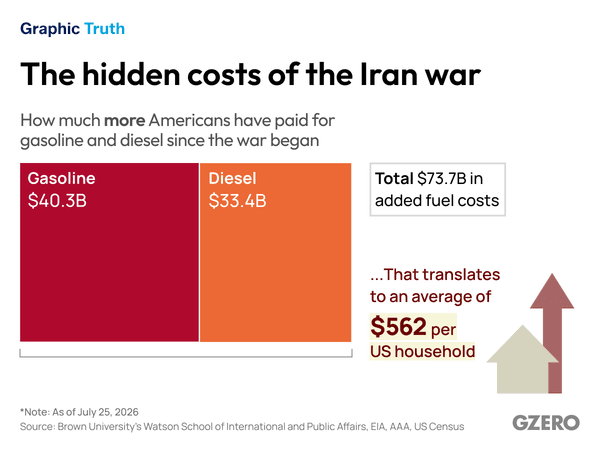
According to researchers at Brown University’s Watson Institute of International and Public Affairs, US consumers have spent nearly $74 billion more on gasoline and diesel than they would have if the war had not occurred. That comes out to an additional $562 for fuel for the average US household, according to the researchers.
The impact is especially visible at the pump. The national average price for a gallon of regular gas is now about $4.11. Without the war, Brown estimates it would be closer to $3.38.
Turkish opposition leader Özgür Özellaunched a new political party on Friday to challenge President Recep Tayyip Erdoğan and his party, the AKP. Özel was previously ousted by a Turkish court as chairman of the CHP in a move critics saw as an attempt to weaken opposition. More than 90 former CHP lawmakers joined Özel's Yeni Parti (literally the “New Party”), making it the largest opposition bloc in parliament. Özel now faces a critical question: Should he push for early elections and capitalize on the momentum behind his new party and the broader opposition movement? While Erdoğan has already reached the constitutional two-term limit, an early election called by parliament would allow him to seek a third term. Some experts believe Erdoğan may push for early elections regardless, but having Özel's party lead the charge may allow the president to preserve his political capital. The next presidential election is not due until May 2028.
Haitians in the US weigh a dangerous return home
Over 350,000 migrants in the US will lose their Temporary Protected Status (TPS) today following a Supreme Court ruling last month that allowed the Trump administration to end the program for some groups. The majority of those losing TPS, which allows migrants to live and work in the US, are Haitians who were granted permission to temporarily live and work in the US after a devastating earthquake in 2010. Now, hundreds of thousands of Haitians will face the choice of trying to stay in the US, where they could be vulnerable to deportation, or return to Haiti. But going home would not be safe. Gangs control roughly 90% of the capital, the economy is in ruins, and over half the population is facing food insecurity.
Ukraine picks Russian Wildberries
Over the past week, Ukraine has expanded its list of targets inside Russia beyond oil refineries and military installations to include e-commerce giant Wildberries. The sprawling company, started years ago by a schoolteacher selling goods out of her apartment, is often called “the Amazon of Russia.” Ukrainian drones have so far hit at least four of the company’s warehouses, destroying billions of dollars worth of consumer merchandise belonging to the thousands of small businesses that use the platform. Kyiv has hinted it believes the company’s logistics networks are being used to transfer military-use goods to Russian troops involved in the invasion of Ukraine. And the company openly sells non-lethal military equipment such as body armor, first aid kits, or food rations used by soldiers on the front lines. But by hitting Wildberries, Kyiv also seeks to bring home the reality of the war to the tens of millions of ordinary Russians who increasingly rely on e-commerce.
While the world’s attention has focused on the Strait of Hormuz and the conflict between the United States and Iran, another front of the war could reshape the Middle East.
Israeli attacks against the Iranian-backed group Hezbollah have left more than 4,000 people dead and displaced over a million. Now, a fragile ceasefire has raised a question diplomats have struggled with for decades: Can Hezbollah actually be disarmed?
On the GZERO World Podcast, Ian Bremmer speaks with Lebanese-born journalist and Middle East expert Kim Ghattas about Iran’s shrinking regional influence, Israel’s possible plans for a long-term buffer zone, and Lebanon’s best chance in decades to reclaim control of its territory. Hezbollah remains armed, but Ghattas argues that it is substantially weaker, while the fall of Syria’s Assad regime has severed a crucial link in Iran’s regional network.
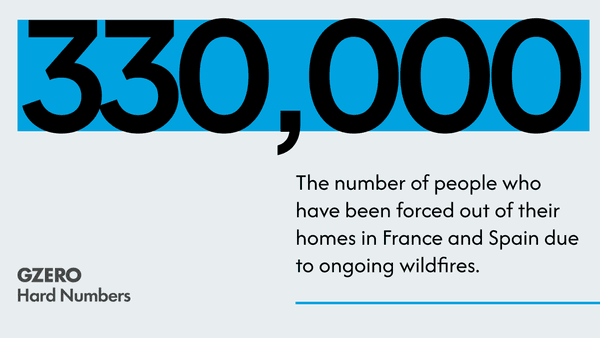
Massive wildfires continue to rage through France, Spain, and, as of this weekend, Italy. Flames have torn through over 1,000 square miles of land, and authorities are attempting one of the continent’s biggest evacuation efforts since World War II. Spanish and French militaries joined the battle against the fires late last week, but rising temperatures and an anticipated heatwave later this week could complicate containment efforts.
Berlin’s Pride parade began Saturday with celebrations as hundreds of thousands of attendees filled the streets in glitter, colorful makeup, and feather boas – but ended with a deadly attack. At least one person was killed and 29 others injured when a man drove into the crowd. The prime suspect, who was later shot and killed by police, had attempted to join ISIS and had previously been sentenced to prison – but was released from detention in May. Incidents of “anti-queer” crimes have more than tripled in Berlin between 2016 and 2025, according to city statistics.
The costs of the Iran war are starting to pile up for the United States. Defense Secretary Pete Hegseth told Congress last week that the conflict has cost the country $37.5 billion so far — about $8 billion more than the Pentagon estimated in May. Replenishing munitions and repairing US bases damaged by Iranian strikes, he said, will require an additional $67 billion in emergency funds from Congress.
But those aren’t the only costs mounting.
According to researchers at Brown University’s Watson Institute of International and Public Affairs, US consumers have spent nearly $74 billion more on gasoline and diesel than they would have if the war had not occurred. That comes out to an additional $562 for fuel for the average US household, according to the researchers.
The impact is especially visible at the pump. The national average price for a gallon of regular gas is now about $4.11. Without the war, Brown estimates it would be closer to $3.38.
Turkish opposition leader Özgür Özellaunched a new political party on Friday to challenge President Recep Tayyip Erdoğan and his party, the AKP. Özel was previously ousted by a Turkish court as chairman of the CHP in a move critics saw as an attempt to weaken opposition. More than 90 former CHP lawmakers joined Özel's Yeni Parti (literally the “New Party”), making it the largest opposition bloc in parliament. Özel now faces a critical question: Should he push for early elections and capitalize on the momentum behind his new party and the broader opposition movement? While Erdoğan has already reached the constitutional two-term limit, an early election called by parliament would allow him to seek a third term. Some experts believe Erdoğan may push for early elections regardless, but having Özel's party lead the charge may allow the president to preserve his political capital. The next presidential election is not due until May 2028.
Haitians in the US weigh a dangerous return home
Over 350,000 migrants in the US will lose their Temporary Protected Status (TPS) today following a Supreme Court ruling last month that allowed the Trump administration to end the program for some groups. The majority of those losing TPS, which allows migrants to live and work in the US, are Haitians who were granted permission to temporarily live and work in the US after a devastating earthquake in 2010. Now, hundreds of thousands of Haitians will face the choice of trying to stay in the US, where they could be vulnerable to deportation, or return to Haiti. But going home would not be safe. Gangs control roughly 90% of the capital, the economy is in ruins, and over half the population is facing food insecurity.
Ukraine picks Russian Wildberries
Over the past week, Ukraine has expanded its list of targets inside Russia beyond oil refineries and military installations to include e-commerce giant Wildberries. The sprawling company, started years ago by a schoolteacher selling goods out of her apartment, is often called “the Amazon of Russia.” Ukrainian drones have so far hit at least four of the company’s warehouses, destroying billions of dollars worth of consumer merchandise belonging to the thousands of small businesses that use the platform. Kyiv has hinted it believes the company’s logistics networks are being used to transfer military-use goods to Russian troops involved in the invasion of Ukraine. And the company openly sells non-lethal military equipment such as body armor, first aid kits, or food rations used by soldiers on the front lines. But by hitting Wildberries, Kyiv also seeks to bring home the reality of the war to the tens of millions of ordinary Russians who increasingly rely on e-commerce.
While the world’s attention has focused on the Strait of Hormuz and the conflict between the United States and Iran, another front of the war could reshape the Middle East.
Israeli attacks against the Iranian-backed group Hezbollah have left more than 4,000 people dead and displaced over a million. Now, a fragile ceasefire has raised a question diplomats have struggled with for decades: Can Hezbollah actually be disarmed?
On the GZERO World Podcast, Ian Bremmer speaks with Lebanese-born journalist and Middle East expert Kim Ghattas about Iran’s shrinking regional influence, Israel’s possible plans for a long-term buffer zone, and Lebanon’s best chance in decades to reclaim control of its territory. Hezbollah remains armed, but Ghattas argues that it is substantially weaker, while the fall of Syria’s Assad regime has severed a crucial link in Iran’s regional network.
Massive wildfires continue to rage through France, Spain, and, as of this weekend, Italy. Flames have torn through over 1,000 square miles of land, and authorities are attempting one of the continent’s biggest evacuation efforts since World War II. Spanish and French militaries joined the battle against the fires late last week, but rising temperatures and an anticipated heatwave later this week could complicate containment efforts.
Berlin’s Pride parade began Saturday with celebrations as hundreds of thousands of attendees filled the streets in glitter, colorful makeup, and feather boas – but ended with a deadly attack. At least one person was killed and 29 others injured when a man drove into the crowd. The prime suspect, who was later shot and killed by police, had attempted to join ISIS and had previously been sentenced to prison – but was released from detention in May. Incidents of “anti-queer” crimes have more than tripled in Berlin between 2016 and 2025, according to city statistics.






No comments:
Post a Comment