Thursday, October 1, 2026

Middle East Forum - September 29, 2026 Khaled Alyemany - Subscribe Home Observer Home Archive About Donate Show Search Middle East Forum Observer A Two-State Solution in Yemen Is a Practical Exit, Not an Ideological One The U.N. Cannot Impose Trust, and Saudi Arabia Cannot Continue to Impose Its Trusteeship over South Yemen


A Two-State Solution in Yemen Is a Practical Exit, Not an Ideological One

The U.N. Cannot Impose Trust, and Saudi Arabia Cannot Continue to Impose Its Trusteeship over South Yemen

Outside the United Nations headquarters in New York.

Outside the United Nations headquarters in New York.

Shutterstock

The 81st United Nations General Assembly meets under the theme, “Restoring Trust, Managing Transformation: A United Nations That Delivers for All.” Yemen test that slogan. This past week in New York, three scenes illustrated the crisis: one inside, one outside, and one on the screen.

Inside the hall, Abdullah al-Alimi Bawazir, a member of the Presidential Leadership Council and a leader of the Muslim Brotherhood-affiliated Islah Party, headed Yemen’s delegation. He called for support against terrorism and smuggling and for help to dry up networks that finance and arm the Houthis. Few would disagree.

A few meters away, southern Yemenis in the United States held a vigil denouncing Saudi trusteeship over South Yemen and affirming its right to self-determination and statehood.

The paradox lies in the speaker. Al-Alimi Bawazir represents Islah on the Presidential Leadership Council, announced in Riyadh in April 2022 and reshaped by Saudi Arabia in January 2026, when Riyadh moved to sideline the Southern Transitional Council. That a leader of a party affiliated with the Muslim Brotherhood, some of whose branches Washington has designated as terrorist organizations, addresses the world on counterterrorism, while southern forces that fought Al Qaeda and the Houthis struggle to be heard, highlights how broken the prevailing equation is.

A few meters away, southern Yemenis in the United States held a vigil denouncing Saudi trusteeship over South Yemen and affirming its right to self-determination and statehood. Inside, al-Alimi Bawazir restated his attachment to Yemeni unity—the same unity in whose name his party, armed with religious edicts, took part in the killing of southerners during North Yemen’s 1994 invasion of South Yemen. The vigil came nine months after Saudi aircraft struck southern forces as they pursued terrorist smuggling networks, followed on January 9, 2026, by Riyadh’s announcement dissolving the Southern Transitional Council. The announcement did not end the question; rather, it moved it from institutions to the street, as the crowds in Aden, Mukalla, and now outside the United Nations attest.

Abdullah al-Alimi Bawazir in April 2026.

Abdullah al-Alimi Bawazir in April 2026.

Photo: U.S. Embassy Yemen, Public domain, via Wikimedia Commons

On the day of the vigil, former U.S. Yemen envoy Tim Lenderking said Yemen splitting into two states is “possible,” noting the precedent. Its future, he said, is for Yemenis to decide at the negotiating table, not outsiders to impose. Talks look difficult for now, he said: The climate is militarized, and the Houthis are building their capabilities and exploiting their opponents’ divisions.

Official discourse treats unity as Yemen’s natural condition. History says otherwise. Throughout the twentieth century, North and South were governed separately, and from 1967 to 1990, they were two sovereign states, each with its own United Nations seat. The May 22, 1990, unification was a compact between two states; the war of 1994 turned partnership into annexation by force.

None of this denies Saudi Arabia’s weight or its interest in border security. But a decade of Saudi stewardship has produced its verdict. In the North, the Houthis grew from a local insurgency into a regional power threatening the Red Sea and the Bab el-Mandeb. In the South, exclusion of the Southern Transitional Council forces who fought the Houthis and Al Qaeda effectively opened the field to Islah. Riyadh’s gamble endangers Saudi security and international shipping alike.

If the future is a Yemeni decision, as Lenderking put it, it must be made among Yemenis themselves, not imposed by Saudi authorities in Riyadh. To achieve this, Washington should first lead the political process through the international Quartet, with both Riyadh and Abu Dhabi serving as guarantors and partners. The United States cannot subcontract its interest in the Bab el-Mandeb, and it has a unique stature to convene and guarantee and not to write Yemen’s future. American absence is a vacuum the Houthis and Iran both fill.

In Yemen, trust will not be built by a speech for a council born in Riyadh and reshaped at its sponsor’s pleasure, nor by dismissing southern demands in the name of a hollow unity.

Second, the dialogue should move out from under Saudi supervision, not out of hostility to Riyadh, but because a party engaged militarily cannot also referee. The talks might even include the Houthis—not to legitimize them, but to bind them to border and security arrangements under international oversight.

Third, a two-state outcome should be approached as a practical exit, not an ideological one: the 1990 borders as the basis for negotiation, resource-sharing arrangements, guarantees for freedom of navigation, and neighborly relations between two sovereign states that secure Saudi Arabia’s borders by treaty, not trusteeship.

The United Nations General Assembly asks for the restoration of trust. In Yemen, trust will not be built by a speech for a council born in Riyadh and reshaped at its sponsor’s pleasure, nor by dismissing southern demands in the name of a hollow unity. Until the decision returns to those who own it, and Washington assumes responsibility that its own interests dictate, the Houthis remain the only party succeeding because they have clear goals and a consensus policy, no matter how ill-conceived and destabilizing it may be.


Khaled Alyemany was foreign minister of Yemen from 2018 to 2019 and is currently a nonresident senior fellow at the Atlantic Council.

Middle East Forum - Iran Seeks Revenge for Killing of Khamenei - September 30, 2026 - Shay Khatiri


Iran Seeks Revenge for Killing of Khamenei

Avenging the Supreme Leader’s Death in the War Is State Policy, and Iranian Media and Officials Reflect It

Mourners in the streets of Tehran for Supreme Leader Ali Khamenei's funeral.

Mourners in the streets of Tehran for Supreme Leader Ali Khamenei’s funeral.

Shutterstock

The Islamic Republic’s delegation visited New York between September 22–26, 2026, to participate in the annual United Nations General Assembly. On the sidelines, they met with President Donald Trump’s diplomatic envoys, Jared Kushner and Steve Witkoff, and offered a ceasefire deal, which Trump rejected. While the Trump administration appears eager for an off-ramp to end the war, there is no indication that the two sides have discussed what may be the most important point for Iran’s leaders.

“This revenge is the will of our nation and should definitely happen.”

Supreme Leader Mojtaba Khamenei

The war’s first strike resulted in the death of Supreme Leader Ali Khamenei, and the Islamic Republic remains committed to avenging him. Principalists, often labeled hardliners in Western discourse, tried to discredit the summer negotiations and the resulting Memorandum of Understanding, objecting that a ceasefire would mean overlooking revenge. Prominent journalist Mohsen Mehdian asked, “So what happened to the retribution for our martyred imam?” Military cleric Ali Shirazi said, “Avenging [Khamenei] is the main demand of the Iranian nation.”

Eventually, on July 11, 2026, Iran issued a statement to ease concerns under Supreme Leader Mojtaba Khamenei’s name. It praised the virtues of his late father, invoked the fervor of the 680 ad Battle of Karbala, and then addressed the dead man: “We pledge to avenge your honored blood and all the martyrs of these two wars from the criminal and shameless murderers. This revenge is the will of our nation and should definitely happen.”

If he is alive, Mojtaba has a personal reason to avenge his father’s death as a son with the resources of a state under his command. It also makes sense to enforce deterrence against decapitation as a matter of policy. Regardless of who wrote this letter, it is now state policy, and Iranian media and officials reflect it.

Four days after Mojtaba’s statement, Ayatollah Alireza Arafi, the powerful head of the seminaries who served on the interim Supreme Leadership Council, made clarifying comments on the Memorandum of Understanding and the unresolved issue of Khamenei’s killing: “Asking for revenge and retribution for the martyred imam and other martyrs of the recent two wars is a necessary and certain issue, does not depend on the coming and going of individuals and administrations, and will certainly happen.” Iran’s state policy, therefore, is one of revenge against the United States and Israel—not just individuals—even after Trump and Prime Minister Benjamin Netanyahu leave office.

The prospects of a new agreement have revived the issue of revenge. On September 25, 2026, Abolfazl Shekarchi, the senior spokesperson for the armed forces, said, “We will not forgive the murderers of the martyred imam or the children of Minab even after the war, and we will execute their sentences.” Paydari faction journalist Meysam Nili attacked reformist President Masoud Pezeshkian on the same day: “The people of Iran certainly seek revenge and the murder of that yellow pig and drawing the blood of all murderers of the martyred imam and children of Iran,” he said.

“We will not forgive the murderers of the martyred imam or the children of Minab even after the war, and we will execute their sentences.”

Abolfazl Shekarchi

This is not a unified position. The Islamic Republic News Agency, overseen by the Pezeshkian administration, conducted a “study” of the 57 times Ali Khamenei mentioned revenge. It concluded that most of the time, Khamenei associated revenge with something “the enemy” does, while Ali ibn Hussyn, the fourth Shi’ite imam and son of Hussayn Ibn Ali, did not seek to avenge his father. Yet, this view, whether a majority or a minority position within the regime, is a muted one.

Iran previously sought to assassinate Trump and other American officials for killing General Qassem Soleimani in January 2020. It will continue to do so with greater rigor, adding that Arafi’s comments hint that future presidents will not be immune, either.

What this means for U.S. negotiators is simple. Rather than elide the issue, any agreement to permanently end hostilities should explicitly require Iran to renounce revenge on Americans and Israelis.

Shay Khatiri is a senior fellow at the Yorktown Institute and a fellow at the Rainey Center.

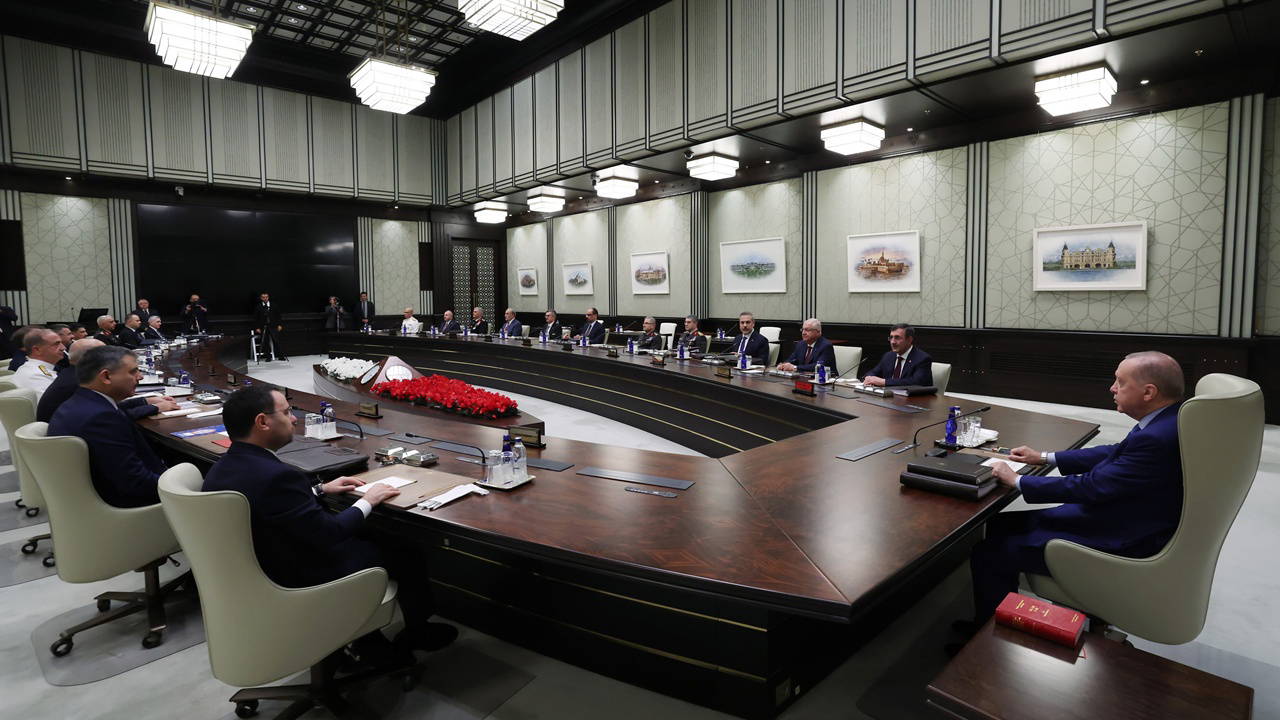
Cumhuriyet gazetesi - 30 Eylul 2026 - Cumhurbaşkanı Erdoğan başkanlığında gerçekleştirilen MGK toplantısı ardından yayınlanan 8 madelik bildiri

 Haberler

Son Dakika... MGK toplantısı sona erdi: Toplantının ardından 8 maddelik bildiri yayımlandı!

30.09.2026 21:04:00
Güncellenme:
Son Dakika... MGK toplantısı sona erdi: Toplantının ardından 8 maddelik bildiri yayımlandı!

AKP'li Cumhurbaşkanı Recep Tayyip Erdoğan başkanlığında gerçekleştirilen Milli Güvenlik Kurulu toplantısı sona erdi.

Toplantının ardından 8 maddelik bir bildiri yayımlandı.

Bildiri maddeleri şu şekilde sıralandı:

"Toplantıda;

1. PKK/KCK-PYD/YPG, FETÖ ve DEAŞ terör örgütleri başta olmak üzere millî birlik ve beraberliğimiz ile bekamıza yönelik her türlü tehdit ve tehlikeye karşı yurt içinde ve yurt dışında azim, kararlılık ve başarıyla yürütülen faaliyetler ile son dönemde meydana gelen uluslararası gelişmeler hakkında Kurula bilgi sunulmuştur.

2. Terörsüz Türkiye ve Terörsüz Bölge hedefleri istikametinde atılan adımlar ve katedilen mesafe değerlendirilmiş; ülkemizin ve milletimizin yanı sıra bölgemizin güvenliği ile komşularımızın huzuru ve refahı için sarf edilen gayretlerin kararlılıkla sürdürüleceği ifade edilmiştir.

3. Suriye’nin birliğinin ve bütünlüğünün tahkimi ile devlet otoritesinin ülke sathına teşmili ve entegrasyon sürecindeki müspet gelişmeler ele alınmış; Suriye halkının, ülkelerini yeniden ayağa kaldırmasına ve uluslararası toplumla bağlarını kuvvetlendirmesine yönelik desteğimizin devam edeceği kaydedilmiştir.

4. Irak’ın huzur ve istikrarının tüm bölge için kritik önem arz ettiği vurgulanmış; Irak Hükûmeti’nin devlet egemenliğini ülke genelinde güçlendirme gayretlerinden memnuniyet duyulduğu belirtilerek, Irak ile stratejik iş birliğini ilerletme yönündeki irademiz teyit edilmiştir.

5. ABD ve İsrail ile İran arasındaki savaşın, süregelen çatışmalarla bir kısır döngüye evrilerek bölgedeki kırılganlıkları tetiklediği ifade edilmiş; taraflara, müzakerelere dönme ve küresel neticeleri tedricen ağırlaşan ihtilafa son verme çağrısında bulunulmuştur.

6. İsrail Yönetimi’nin Gazze ve Lübnan’da barışın tesisi hususundaki taahhüt ve yükümlülüklerini yerine getirmeyerek saldırılarını sürdürdüğüne işaret edilmiş; uluslararası toplum, Suriye’nin toprak bütünlüğünü ve egemenliğini de ihlal ederek bölgede istikrar sağlanmasına engel olmaya çalışan İsrail Yönetimi karşısında somut adımlar atmaya davet edilmiştir.

7. Rusya-Ukrayna Savaşı’ndaki güncel durum ile sivil altyapılar ve seyrüsefer güzergâhları üzerinde yoğunlaşan saldırıların bölgesel ve küresel etkileri ele alınmış; müşahede edilen kontrolsüz tırmanma ve yayılma emareleri karşısında, taraflara itidal ve ateşkes çağrısında bulunulmuştur.

8. Yemen’de son dönemde tırmanan gerilimin başta komşu ülkeler olmak üzere bölgede güvenlik risklerini artırdığı vurgulanarak, küresel istikrar bakımından da önem arz eden sükûnetin ivedilikle sağlanması gerektiğinin altı çizilmiştir."

İlgili Konula