Sunday, February 4, 2018

Eski Türklerin Dini (Bölüm I )


Eski Türklerin Dini  Yrd.Doç. Serdar Uğurlu (31 Ocak 2018)

Günümüzden bir asır öncesine kadar eski Türklerin dini denilince bu hususta yeterli birikimi bulunmayan dönemin sosyal bilimcilerinin akıllarına gelen ilk mistik yapı Şamanizm olmuştur. Üstelik Şamanizm zikredilirken de “Gök Tanrı İnanç Sistemi”nden yeterince bahsedilmemiştir. Hâlbuki Gök Tanrı İnanç Sistemi kendi başına incelenmesi ve üzerinde durulması gereken bir dini sistemdir. Gök Tanrı kültü, Atalar kültü, Yer-Su kültü ve Umay Ana kültü olmak üzere çeşitli yan unsurlar üzerine bina edilen bu inanç sistemi ile hurafelere ve ilkel uygulamalara dayanan Şamanist inanışın arasındaki farkı görmemek mümkün değildir. Ancak buna rağmen günümüzde Şamanizm’in bir din olduğu algısı hala devam etmekte, üstelik bu algıdan hareketle Türklerin İslamiyet’ten önceki dininin Şamanizm olduğu da vurgulanmaktadır. İşte bu noktada yapılan çalışmaların bu muğlaklığı aydınlatmak gibi bir misyon üstlenmesi gerekmektedir. Yani Türklerin eski dini söylenildiği gibi Şamanizm midir yoksa dört ana unsurdan müteşekkil olan Gök Tanrı İnanç Sistemi midir açıklıkla ifade edilmeye muhtaçtır.

Basit bir tarihi sıralamayla gidecek olursak; İslami devirden önceki Türklerin dini hakkındaki çalışmalar, XIX. yüzyılda Rus âlimi W. Radloff ile başlamıştır denilebilir. Onun tespiti: “Altaylardaki Türkler arasında tespit ettiği Şamanizm’in, İslamiyet’ten önce eski Türklerin asıl dinleri olduğu varsayımı” idi (Ocak 1983:33). Radloff bu varsayımına dayanarak eserlerini Orta Asya’daki Türkler arasında mevcut olduğuna inandığı Şamanizm’e hasretmiştir. Eserlerinin sonraki dönemde yerli yabancı birçok araştırıcı tarafından eski Türk dini hususunda ana kaynak olarak kabul edilmesi, Şamanizm tezinin benimsenmesinde başrolü oynamıştır. Yani Şamanizm’in eski Türklerin dini olduğu tespiti, batılı ve yerli pek çok bilim adamının düşüncesinde bu eserler sayesinde yer etmiştir. 18. asır sonları ve 19. asır boyunca hem araştırma zorlukları hem de bölgenin siyasi durumu, Orta Asya Türkleri ile ilgili çalışmaların çok sınırlı seviyelerde kalmasına sebep olmuştur. Bundan dolayı bu bölgenin pek çok özellikleri ile beraber inanç-inanış yapısını ve bu yapının Orta Asya coğrafyasına dağılımını Sosyalist Rusya’nın yıkılmasına kadar öğrenememişizdir. İşte bu yetersiz araştırma olanakları sonucunda eksik bir bilgi birikimi meydana gelmiş, bu eksik bilgi birikiminden hareketle de Şamanizm’in Türklerin eski dini olduğu saptaması yapılmıştır.

Şamanizm’e Dair Çalışmalar

Bugüne kadarki çalışmalar sonucunda anlaşılmıştır ki Şamanizm bir din olmaktan çok uzak bir yapıya sahiptir. Aslında Şamanizm’in en eski dönemlerdeki şekline dair akademik çevrelerin elinde neredeyse hiçbir veri bulunmamaktadır. Yakın zamanlardaki çalışmalardan ulaşılan bir sonuçtur ki Şamanizm, ilk kez Türkler arasından tarih sahnesine çıkıp yayılmış bir sistem de değildir. Şamanizm’in Uygurlardan sonraki senelerde Türkler arasında yaygınlaşmaya başladığı tahmin edilmektedir. Çünkü Gök Türkler ile Uygur Türkleri ağaç ve orman kültüne değer veren Türkler olarak, kutsal ormanda Gök Tanrı için kurban sunma törenlerine sadece avcıları başkan olarak atamışlardır. Öncesinde ise yani Hun Devleti zamanında bu başkanlık işi kağanlar tarafından yürütülmüştür.

Şaman ya da kamların Gök Türk ve Uygurlar zamanında bu törenlere başkan olarak atanmaması, akla bu dönemin şaman öncesi bir dönem olduğu düşüncesini getirmektedir. Yani milattan sonra VIII. asırlara gelindiğinde Türkler arasında faaliyet gösteren şaman ya da kam gibi bir tipin olmaması muhtemeldir. Zaten şaman tipi ile ilgili ilk tespitler VIII. asırdan bile sonraya rastlamaktadır. Görüldüğü gibi şaman ya da kam tipini Türklerin üretmiş olduğunu iddia etmek doğru değildir. Ancak Orta Asya’da yaşayan eski Türklerin diğer topluluklardan etkilenerek bu tipi zamanla üretmiş olduğu aşikârdır. Şaman kelimesinin etimolojisi üzerinde şimdiye kadar çok durulmuştur.

Bu terimin Tunguzcadan önce Rusçaya ve oradan da Batı dillerine geçtiği bilinmektedir. Şamanın Toharca’daki karşılığı Samane yani budist rahip şeklindedir ve bundan ötürü Budizm’in etkisiyle Türkler arasına güneyden kuzeye doğru girmiş olabileceği akla gelmektedir. “Koppers ve Eliade gibi araştırıcılar, gerçekte, yukarıda iyi Tanrılar, yeraltında fena Tanrılar şeklinde tipik bir düalizm (ikicilik) ihtiva eden Şamanizm’in, Orta Asya’nın çoban kavimlerine, bu arada Türklere güneyden gelmiş olabileceğini” (Ocak 2005:72-3) savunmaları da Budizm’in etkisi tezini kuvvetlendirmektedir. Bu bağlamda Şamanizm’i, Budist çevrelerin ürettiği fikri daha fazla kuvvetlenmektedir.

Şamanizm sonraki süreçte eski Türk dinine ait olan atalar kültü, ölüler kültü, dağ kültü ve ağaç kültü gibi kültleri kısa zamanda kendi bünyesinde tekrar tanımlamış ve yeniden kurgulamıştır. Bütün bu kültler aslen Gök Tanrı dinini rükünleri olmasına rağmen zaman içerisinde tamamen Şamanist bir yapıya dönüşmüştür. Hatta günümüzde öyle bir aşamaya gelinmiştir ki bu kültlerden bahsedilmeden Şamanizm yazılamamaktadır.

Şamanizm ile ilgili Batılıların XX. asra kadarki çalışmaları daha çok bu inanış sisteminin Türklerin en eski dini olduğu yönünde olmuştur. “Bizde ise, eski Türk dini üzerindeki çalışmalar, Osmanlı İmparatorluğu’nun son zamanlarındaki Türkçülük akımlarıyla beraber başlamış, ilk defa Ziya Gökalp bu konuda araştırmalar yapmıştır. O, belki de Durkheim’in etkisiyle eski Türklerin dininin Totemizm ve Natürizm safhalarından geçtiğini, sınırlı malzemesinden hareket ederek ileri sürmüştür. Fakat sonraları, eski Türklerin daha gelişmiş bir dini sisteme sahip olduklarını düşünerek buna Toyunizm adını vermiştir. Ancak daha sonra bunun Budizm olduğu ortaya çıkmıştır. Z. Gökalp’in Şamanizm’i de eski Türk dini olarak reddetmediği görülüyor” (Ocak 1983:21). Bu yorumu Gökalp’in “Türk Töresi” adlı kitabında da görebilmekteyiz. Ziya Gökalp adı geçen kitapta Tisin Türklerinin dinine Şamanizm adını vermektedir. Eserde: “Bu dinin din adamları ‘kam’lar yahut ‘kamanlar’dır. ‘Şaman’ kelimesi bundan çıkmıştır. Şaman’a Yakutlar’da ‘oyun’ adı verilir ki Oğuzlardaki ‘ozan’ kelimesiyle aynı köktendir” diye geçmektedir (Gökalp 2005:34-35). Görüldüğü üzere Şamanizm bir din, şaman da bir din adamı olarak belirtilmiştir. Bu türlü saptamalar daha da çoğaltılabilir.

Fuad Köprülü “Anadolu’da İslamiyet”, “Osmanlı’nın Etnik Kökeni” ve “Türk Edebiyatında İlk Mutasavvıflar” adlı eserlerinde yer yer Anadolu’nun hem etnik hem de dini yapılanması hakkında bilgiler vermiştir. Buna göre Anadolu’nun dini şekillenmelerinde Eski Türk dini olan Gök Tanrı dininin de etkilerine değinmiş; Anadolu’daki heterodoks yapıya sahip zümrelerdeki Şamanist etkilere işaret etmiştir. Kendisinin kesin olarak Eski Türk Dinini, Şamanizm’le örtüştürdüğünü eserlerinde görebilmiş değiliz. Ancak Abdülkadir İnan’da bu daha bir nettir. İnan “Tarihte ve Bugün Şamanizm Materyaller ve Araştırmalar” adlı eserinde; Şamanizm’i Türklerin Eski Dini olarak adlandırmıştır (İnan 2000). Cumhuriyetin ilk yıllarında Türk milli kültürü üzerinde yapmış olduğu önemli çalışmalarında, kitap ve makalelerinde Şamanizm’den Türklerin eski dini olarak bahsetmiş hatta bu konuda daha da ileri giderek Müslüman Türkler arasında Şamanist unsurları tespit etmeye çalışmıştır. İlerleyen yıllarda dünyanın değişik coğrafyalarında yaşamakta olan farklı ilkel kavimlerin inanışlarında da Şamanist uygulamalara benzer uygulamalara rastlanması konuya değişik bir boyut kazandırmıştır. Üstelik bu ilkel kavimlerin inanç-inanış örgütlenmelerinin Gök Tanrı inanç sistemine tamamen yabancı kalması, İnan’ın bu konudaki fikirlerinin de değişmesine sebep olmuştur. Konunun üzerine gidildikçe Gök Tanrı İnanç siteminin farklılıkları ve dünyadaki diğer tek tanrılı dinlere benzerliği bu fikirlerin değişmesinde önemli rol oynamıştır. Aslında zamanla meydana gelen bu fikir değişikliği diğer pek çok bilim adamı için de geçerlidir.

“Avrupalı araştırıcılar arasında da aynı dönemde hep bu tezin işlendiği görülmektedir. Mesela W. Eberhard, U. Havra ve L. Rasonyi bunlardandır. Doğrudan doğruya eski Türk dini ile uğraşmamasına ve bir Selçuklu tarihçisi olmasına rağmen Osman Turan (Selçuklular Tarihi ve Türk İslam Medeniyeti) da zaman zaman bu konularla ilgilenmiş, hudut bölgelerinde oturan Türklerin yabancı din ve kültürlerin etkilerine maruz kalmalarına karşılık, asıl büyük kitlenin Şamanist olduğunu savunmuştur. Ancak o, eski Türklerin Şamanizm içinde tek Tanrı mefhumuna eriştiklerini de kabul etmektedir” (Ocak 1983:22).

Bir başka araştırmacı olarak Cemal Şener “Şamanizm Türklerin İslamiyet’ten Önceki Dini” adlı eserinde başlığından da anlaşılacağı gibi bu tezi savunmuştur. Hatta eserinde Şamanizm’in insanlığın en eski dinlerinden biri olduğundan bahsetmiştir (Şener 2003:18). Şener, her ne kadar Şamanizm’i bir din ve şamanı da bu dinin din adamı olarak eserinde tanımlamış olsa da Şamanizm’i açıklarken ondan ilahi bir dinmiş gibi bahsetmez. Şamanizm’in esas olarak sihir ve büyüye dayandığını belirtir. Şamanı da insan ve ruhlar âlemi arasında bir arabulucu olarak açıklar. Onun ifadelerinden Radloff’un meydana getirdiği hatalı algının kendisini etki altına aldığı anlaşılmaktadır. Şamanizm’in bir din olduğu düşüncesine İlhan Başgöz’ün “Türk Halk Hikâyelerinde Rüya Motifi ve Şamanlığa Giriş” isimli incelemesinde rastladığımız gibi Umay Günay’ın ona hitaben (1999:10-11) “Türklerin İslamiyet’i kabul etmelerinden önceki inançları olan Şamanizm ve Şamanlık…” şeklindeki ifadeleri tekrarlamasıyla Günay’da da rastlamaktayız. Günay, “Türkiye’de Âşık Tarzı Şiir Geleneği ve Rüya Motifi” adlı eserinde Şamanizm’den bir inanç olarak bahsetmekte ve bir de sürece değinmektedir. Bu süreç şaman ile âşığı ortak noktada buluşturan bir süreçtir. Buna göre Şamanizm bir din olarak kabul edilmiş ve onun kültürel değerlerinin önce İslami edebiyata, İslami edebiyattan da âşık edebiyatına geçerek yaşamaya devam ettiği ifade edilmiştir.

Şamanizm’in bir din olduğu tespitini paylaşanlar olarak ilk akla gelenler: Altay Köymen “Selçuklular Devri Türk Tarihi”, Özkan İzgi “İslamiyet’ten Önce Orta Asya Türk Kültürü” ve Hayri Bolay “Din Bilgisi” adlı kişiler ve mezkûr eserleri sayılabilir.

Anlaşılacağı gibi Türklerin eski dininin Şamanizm ve hatta Totemizm olduğunu iddia eden daha pek çok araştırmacıdan ve eserlerinden bahsetmek mümkündür. Tabii ki zamanla bu Şamanizm fikrine katılmayanların ve bu görüşün aksini savunanların da çıktığı görülmektedir. “Bunlardan biri de P.Wilhelm Schimidt’tir. Bilhassa Hunlar üzerinde duran Schimidt, onlarda çok eskiden beri, gök dini dediği Gök Tanrı kültüne dayanan bir inanç sistemi hâkim olduğunu söylemektedir. Aslında bir sosyolog olmasına rağmen H. Ziya Ülken’in de bu konuda bazı fikirler ileri sürdüğünü müşahede ediyoruz. Ona göre Eski Türkler, gerçekte din değil bir sihri sistem olan Şamanizm yerine düalist fakat ahenkçi bir gök-yer dinine mensupturlar. Yakut Şamanlığı ile Eski Türk Dini arasında hiçbir münasebet yoktur. Türklerin düalizmi monizm olmaya çok elverişli idi. Bu sebepledir ki, Maniheizm’in çatışan iki prensibe dayanan görüşünü terk ederek Müslüman olmuşlardır”(Ocak 2005:58). Bu düalist yapı daha sonraları Gök Tanrı inanç sisteminde de kendisine yer bulmuştur. Manihaizm’in öğretisinden hareketle Gök Tanrının karşısına Erlik yani Yer Tanrısı çıkarılmıştır. Tabii bu etkilere Orta Asya coğrafyasında güneye inildikçe rastlamaktayız. Kuzeyde yani Sibirya bölgesine yakın kalan yerlerde ise daha sade ve dış etkilerden uzak kalmış bir Gök Tanrı inanç sisteminden söz edilebiliriz.

Saturday, February 3, 2018

Assessments on Vietnam war

Wrong on Nam, Wrong on Terror

1024px-David_H._Petraeus_press_briefing_2007
by Danny Sjursen
Vietnam: it’s always there. Looming in the past, informing American futures.
A 50-year-old war, once labeled the longest in our history, is still alive and well and still being refought by one group of Americans: the military high command.  And almost half a century later, they’re still losing it and blaming others for doing so.
Of course, the U.S. military and Washington policymakers lost the war in Vietnam in the previous century and perhaps it’s well that they did.  The United States really had no business intervening in that anti-colonial civil war in the first place, supporting a South Vietnamese government of questionable legitimacy, and stifling promised nationwide elections on both sides of that country’s artificial border.  In doing so, Washington presented an easy villain for a North Vietnamese-backed National Liberation Front (NLF) insurgency, a group known to Americans in those years as the Vietcong. 
More than two decades of involvement and, at the war’s peak, half a million American troops never altered the basic weakness of the U.S.-backed regime in Saigon.  Despite millions of Asian deaths and 58,000 American ones, South Vietnam’s military could not, in the end, hold the line without American support and finally collapsed under the weight of a conventional North Vietnamese invasion in April 1975.
There’s just one thing.  Though a majority of historians (known in academia as the “orthodox” school) subscribe to the basic contours of the above narrative, the vast majority of senior American military officers do not.  Instead, they’re still refighting the Vietnam War to a far cheerier outcome through the books they read, the scholarship they publish, and (most disturbingly) the policies they continue to pursue in the Greater Middle East.
The Big Re-Write
In 1986, future general, Iraq-Afghan War commander, and CIA director David Petraeus penned an article for the military journal Parameters that summarized his Princeton doctoral dissertation on the Vietnam War.  It was a piece commensurate with then-Major Petraeus’s impressive intellect, except for its disastrous conclusions on the lessons of that war.  Though he did observe that Vietnam had “cost the military dearly” and that “the frustrations of Vietnam are deeply etched in the minds of those who lead the services,” his real fear was that the war had left the military unprepared to wage what were then called “low-intensity conflicts” and are now known as counterinsurgencies.  His takeaway: what the country needed wasn’t fewer Vietnams but better-fought ones.  The next time, he concluded fatefully, the military should do a far better job of implementing counterinsurgency forces, equipment, tactics, and doctrine to win such wars.
Two decades later, when the next Vietnam-like quagmire did indeed present itself in Iraq, he and a whole generation of COINdinistas (like-minded officers devoted to his favored counterinsurgency approach to modern warfare) embraced those very conclusions to win the war on terror.  The names of some of them — H.R. McMaster and James Mattis, for instance — should ring a bell or two these days. In Iraq and later in Afghanistan, Petraeus and his acolytes would get their chance to translate theory into practice.  Americans — and much of the rest of the planet — still live with the results.
Like Petraeus, an entire generation of senior military leaders, commissioned in the years after the Vietnam War and now atop the defense behemoth, remain fixated on that ancient conflict.  After all these decades, such “thinking” generals and “soldier-scholars” continue to draw all the wrong lessons from what, thanks in part to them, has now become America’s secondlongest war.
Rival Schools
Historian Gary Hess identifies two main schools of revisionist thinking.  There are the “Clausewitzians” (named after the nineteenth century Prussian military theorist) who insist that Washington never sufficiently attacked the enemy’s true center of gravity in North Vietnam.  Beneath the academic language, they essentially agree on one key thing: the U.S. military should have bombed the North into a parking lot.
The second school, including Petraeus, Hess labeled the “hearts-and-minders.”  As COINdinistas, they felt the war effort never focused clearly enough on isolating the Vietcong, protecting local villages in the South, building schools, and handing out candy — everything, in short, that might have won (in the phrase of that era) Vietnamese hearts and minds.
Both schools, however, agreed on something basic: that the U.S. military should have won in Vietnam.
The danger presented by either school is clear enough in the twenty-first century.  Senior commanders, some now serving in key national security positions, fixated on Vietnam, have translated that conflict’s supposed lessons into what now passes for military strategy in Washington.  The result has been an ever-expanding war on terror campaign waged ceaselessly from South Asia to West Africa, which has essentially turned out to be perpetual war based on the can-do belief that counterinsurgency and advise-and-assist missions should have worked in Vietnam and can work now.
The Go-Big Option
The leading voice of the Clausewitzian school was U.S. Army Colonel and Korean War/Vietnam War vet Harry Summers, whose 1982 book, On Strategy: A Critical Analysis of the Vietnam War, became an instant classic within the military.  It’s easy enough to understand why.  Summers argued that civilian policymakers — not the military rank-and-file — had lost the war by focusing hopelessly on the insurgency in South Vietnam rather than on the North Vietnamese capital, Hanoi.  More troops, more aggressiveness, even full-scale invasions of communist safe havens in Laos, Cambodia, and North Vietnam, would have led to victory.
Summers had a deep emotional investment in his topic.  Later, he would argue that the source of post-war pessimistic analyses of the conflict lay in “draft dodgers and war evaders still [struggling] with their consciences.”  In his own work, Summers marginalized all Vietnamese actors (as would so many later military historians), failed to adequately deal with the potential consequences, nuclear or otherwise, of the sorts of escalation he advocated, and didn’t even bother to ask whether Vietnam was a core national security interest of the United States.
Perhaps he would have done well to reconsider a famous post-war encounterhe had with a North Vietnamese officer, a Colonel Tu, whom he assured that “you know you never beat us on the battlefield.”
“That may be so,” replied his former enemy, “but it is also irrelevant.”
Whatever its limitations, his work remains influential in military circles to this day. (I was assigned the book as a West Point cadet!)
A more sophisticated Clausewitzian analysis came from current National Security Adviser H.R. McMaster in a highly acclaimed 1997 book, Dereliction of Duty.  He argued that the Joint Chiefs of Staff were derelict in failing to give President Lyndon Johnson an honest appraisal of what it would take to win, which meant that “the nation went to war without the benefit of effective military advice.”  He concluded that the war was lost not in the field or by the media or even on antiwar college campuses, but in Washington, D.C., through a failure of nerve by the Pentagon’s generals, which led civilian officials to opt for a deficient strategy.
McMaster is a genuine scholar and a gifted writer, but he still suggested that the Joint Chiefs should have advocated for a more aggressive offensive strategy — a full ground invasion of the North or unrelenting carpet-bombing of that country.  In this sense, he was just another “go-big” Clausewitzian who, as historian Ronald Spector pointed out recently, ignored Vietnamese views and failed to acknowledge — an observation of historian Edward Miller — that “the Vietnam War was a Vietnamese war.”
COIN: A Small (Forever) War
Another Vietnam veteran, retired Lieutenant Colonel Andrew Krepinevich, fired the opening salvo for the hearts-and-minders.  In The Army and Vietnam, published in 1986, he argued that the NLF, not the North Vietnamese Army, was the enemy’s chief center of gravity and that the American military’s failure to emphasize counterinsurgency principles over conventional concepts of war sealed its fate.  While such arguments were, in reality, no more impressive than those of the Clausewitzians, they have remained popular with military audiences, as historian Dale Andrade points out, because they offer a “simple explanation for the defeat in Vietnam.”
Krepinevich would write an influential 2005 Foreign Affairs piece, “How to Win in Iraq,” in which he applied his Vietnam conclusions to a new strategy of prolonged counterinsurgency in the Middle East, quickly winning over the New York Times’s resident conservative columnist, David Brooks, and generating “discussion in the Pentagon, CIA, American Embassy in Baghdad, and the office of the vice president.”
In 1999, retired army officer and Vietnam veteran Lewis Sorley penned the definitive hearts-and-minds tract, A Better War: The Unexamined Victories and Final Tragedy of America’s Last Years in Vietnam.  Sorley boldly asserted that, by the spring of 1970, “the fighting wasn’t over, but the war was won.”  According to his comforting tale, the real explanation for failure lay with the “big-war” strategy of U.S. commander General William Westmoreland. The counterinsurgency strategy of his successor, General Creighton Abrams — Sorley’s knight in shining armor — was (or at least should have been) a war winner.
Critics noted that Sorley overemphasized the marginal differences between the two generals’ strategies and produced a remarkably counterfactual work.  It didn’t matter, however.  By 2005, just as the situation in Iraq, a country then locked in a sectarian civil war amid an American occupation, went from bad to worse, Sorley’s book found its way into the hands of the head of U.S. Central Command, General John Abizaid, and State Department counselor Philip Zelikow.  By then, according to the Washington Post’s David Ignatius, it could also “be found on the bookshelves of senior military officers in Baghdad.”
Another influential hearts-and-minds devotee was Lieutenant Colonel John Nagl.  (He even made it onto The Daily Show with Jon Stewart.) His Learning to Eat Soup with a Knife: Counterinsurgency Lessons from Malaya and Vietnam followed Krepinevich in claiming that “if [Creighton] Abrams had gotten the call to lead the American effort at the start of the war, America might very well have won it.”  In 2006, the Wall Street Journal reported that Army Chief of Staff General Peter Schoomaker “so liked [Nagl’s] book that he made it required reading for all four-star generals,” while the Iraq War commander of that moment, General George Casey, gave Defense Secretary Donald Rumsfeld a copy during a visit to Baghdad.
David Petraeus and current Secretary of Defense James Mattis, co-authors in 2006 of FM 3-24, the first (New York Times-reviewed) military field manual for counterinsurgency since Vietnam, must also be considered among the pantheon of hearts-and-minders.  Nagl wrote a foreword for their manual, while Krepinevich provided a glowing back-cover endorsement.
Such revisionist interpretations would prove tragic in Iraq and Afghanistan, once they had filtered down to the entire officer corps.
Reading All the Wrong Books 
In 2009, when former West Point history professor Colonel Gregory Daddis was deployed to Iraq as the command historian for the Multinational Corps — the military’s primary tactical headquarters — he noted that corps commander Lieutenant General Charles Jacoby had assigned a professional reading list to his principal subordinates.  To his disappointment, Daddis also discovered that the only Vietnam War book included was Sorley’s A Better War.  This should have surprised no one, since his argument — that American soldiers in Vietnam were denied an impending victory by civilian policymakers, a liberal media, and antiwar protestors — was still resonant among the officer corps in year six of the Iraq quagmire.  It wasn’t the military’s fault!
Officers have long distributed professional reading lists for subordinates, intellectual guideposts to the complex challenges ahead.  Indeed, there’s much to be admired in the concept, but also potential dangers in such lists as they inevitably influence the thinking of an entire generation of future leaders.  In the case of Vietnam, the perils are obvious.  The generals have been assigning and reading problematic books for years, works that were essentially meant to reinforce professional pride in the midst of a series of unsuccessful and unending wars.
Just after 9/11, for instance, Chairman of the Joint Chiefs Richard Myers — who spoke at my West Point graduation — included Summers’s On Strategyon his list.  A few years later, then-Army Chief of Staff General Peter Schoomaker added McMaster’s Dereliction of Duty.  The trend continues today.  Marine Corps Commandant Robert Neller has kept McMaster and added Diplomacy by Henry Kissinger (he of the illegal bombing of both Laos and Cambodia and war criminal fame).  Current Army Chief of Staff General Mark Milley kept Kissinger and added good old Lewis Sorley.  To top it all off, Secretary of Defense Mattis has included yet another Kissinger book and, in a different list, Krepinevich’s The Army and Vietnam.
Just as important as which books made the lists is what’s missing from them: none of these senior commanders include newer scholarshipnovels, or journalistic accounts which might raise thorny, uncomfortable questions about whether the Vietnam War was winnable, necessary, or advisable, or incorporate local voices that might highlight the limits of American influence and power.
Serving in the Shadow of Vietnam 
Most of the generals leading the war on terror just missed service in the Vietnam War.  They graduated from various colleges or West Point in the years immediately following the withdrawal of most U.S. ground troops or thereafter: Petraeus in 1974, future Afghan War commander Stanley McChrystal in 1976, and present National Security Adviser H.R. McMaster in 1984.  Secretary of Defense Mattis finished ROTC and graduated from Central Washington University in 1971, while Trump’s Chief of Staff John Kelly enlisted at the tail end of the Vietnam War, receiving his commission in 1976.
In other words, the generation of officers now overseeing the still-spreading war on terror entered military service at the end of or after the tragic war in Southeast Asia.  That meant they narrowly escaped combat duty in the bloodiest American conflict since World War II and so the professional credibility that went with it.  They were mentored and taught by academy tactical officers, ROTC instructors, and commanders who had cut their teeth on that conflict.  Vietnam literally dominated the discourse of their era — and it’s never ended.
Petraeus, Mattis, McMaster, and the others entered service when military prestige had reached a nadir or was just rebounding.  And those reading lists taught the young officers where to lay the blame for that — on civilians in Washington (or in the nation’s streets) or on a military high command too weak to assert its authority effectively. They would serve in Vietnam’s shadow, the shadow of defeat, and the conclusions they would draw from it would only lead to twenty-first-century disasters.   
From Vietnam to the War on Terror to Generational War
All of this misremembering, all of those Vietnam “lessons” inform the U.S. military’s ongoing “surges” and “advise-and-assist” approaches to its wars in the Greater Middle East and Africa. Representatives of both Vietnam revisionist schools now guide the development of the Trump administration’s version of global strategy. President Trump’s in-house Clausewitzians clamor for — and receive — ever more delegated authority to do their damnedest and what retired General (and Vietnam vet) Edward Meyer called for back in 1983: “a freer hand in waging war than they had in Vietnam.” In other words, more bombs, more troops, and carte blanche to escalate such conflicts to their hearts’ content.
Meanwhile, President Trump’s hearts-and-minds faction consists of officers who have spent three administrations expanding COIN-influenced missions to approximately 70% of the world’s nations.  Furthermore, they’ve recently fought for and been granted a new “mini-surge” in Afghanistan intended to — in disturbingly Vietnam-esque language — “break the deadlock,” “reverse the decline,” and “end the stalemate” there.  Never mind that neither 100,000 U.S. troops (when I was there in 2011) nor 16 full years of combat could, in the term of the trade, “stabilize” Afghanistan.  The can-do, revisionist believers atop the national security state have convinced Trump that — despite his original instincts — 4,000 or 5,000 (or 6,000 or 7,000) more troops (and yet more dronesplanes, and other equipment) will do the trick.  This represents tragedy bordering on farce.
The hearts and minders and Clausewitzians atop the military establishment since 9/11 are never likely to stop citing their versions of the Vietnam War as the key to victory today; that is, they will never stop focusing on a war that was always unwinnable and never worth fighting.  None of today’s acclaimed military personalities seems willing to consider that Washington couldn’t have won in Vietnam because, as former Air Force Chief of Staff Merrill McPeak (who flew 269 combat missions over that country) noted in the recent Ken Burns documentary series, “we were fighting on the wrong side.”
Today’s leaders don’t even pretend that the post-9/11 wars will ever end.  In an interview last June, Petraeus — still considered a sagacious guru of the Defense establishment — disturbingly described the Afghan conflict as “generational.”  Eerily enough, to cite a Vietnam-era precedent, General Creighton Abrams predicted something similar. speaking to the White House as the war in Southeast Asia was winding down.  Even as President Richard Nixon slowly withdrew U.S. forces, handing over their duties to the South Vietnamese Army (ARVN) — a process known then as “Vietnamization” — the general warned that, despite ARVN improvements, continued U.S. support “would be required indefinitely to maintain an effective force.”  Vietnam, too, had its “generational” side (until, of course, it didn’t).
That war and its ill-fated lessons will undoubtedly continue to influence U.S. commanders until a new set of myths, explaining away a new set of failures in Iraq, Afghanistan, and elsewhere, take over, possibly thanks to books by veterans of these conflicts about how Washington could have won the war on terror.
It’s not that our generals don’t read. They do. They just doggedly continue to read the wrong books.
In 1986, General Petraeus ended his influential Parameters article with a quote from historian George Herring: “Each historical situation is unique and the use of analogy is at best misleading, at worst, dangerous.”  When it comes to Vietnam and a cohort of officers shaped in its shadow (and even now convinced it could have been won), “dangerous” hardly describes the results. They’ve helped bring us generational war and, for today’s young soldiers, ceaseless tragedy.


Note: The views expressed in this article are those of the author, expressed in an unofficial capacity, and do not reflect the official policy or position of the Department of the Army, Department of Defense, or the U.S. government. Photo: David Petraeus (Wikimedia Commons).
Major Danny Sjursen, a TomDispatch regular, is a U.S. Army strategist and former history instructor at West Point. He served tours with reconnaissance units in Iraq and Afghanistan. He has written a memoir and critical analysis of the Iraq War, Ghost Riders of Baghdad: Soldiers, Civilians, and the Myth of the Surge. He lives with his wife and four sons in Lawrence, Kansas.  Follow him on Twitter at @SkepticalVet and check out his new podcast Fortress on a Hill. Follow TomDispatch on Twitter and join us on Facebook. Check out the newest Dispatch Book, Alfred McCoy’s In the Shadows of the American Century: The Rise and Decline of U.S. Global Power, as well as John Dower’s The Violent American Century: War and Terror Since World War II, John Feffer’s dystopian novel Splinterlands, Nick Turse’s Next Time They’ll Come to Count the Dead, and Tom Engelhardt’s Shadow Government: Surveillance, Secret Wars, and a Global Security State in a Single-Superpower World. Copyright 2018 Danny Sjursen

Saber-Rattling, Nuclear Threat- Or an Even More Devastating War?

Saber-Rattling, Nuclear Threat – Or an Even More Devastating War?

 20
 1  15
 
 36
The World Economic Forum (WEF) in Davos has come and gone, and nothing has really changed. The wonderful people of the world struck again – blowing hot air to the four corners of the world. When in reality the poor get poorer, the rich get richer, wars and conflicts are on the rise – and humanity, at least in the western world, is ever more exposed to propaganda lies and mind manipulations, of which then WEF is just one tiny, miserable example.
For instance, was anybody still listening to the bombastic nonsense coming out of Trump’s and Macron’s throat? – It is a soft version of “Fire and Fury” — to confirm to the World of the Noble who is in charge, and to assure the elite that nothing, but nothing will change in the balance of power. That’s the neoliberal Davos Club of always. And they, this elite of beautiful people, would certainly not want a ‘hard core’ nuclear war to destroy their properties and luxury yachts, castles and comfort zone.
So, rest assured, sable-rattling about nuclear Armageddon is just a smoke screen, a deviation maneuver to hide a much worse atrocity. An atrocity, or rather a set of atrocities by which the WEF crowd will most likely never be touched. Trump, for the moment, is the best salesman and mouthpiece the Deep State could muster for their ploy. He is pompous, pretentiously egocentric, and an absurd bully. His America First and Make America Great again, repeated over and over – sounds so silly, but said often enough, it takes hold and becomes the truth in people’s minds.
In Davos Trump’s speech was so simple, it was even catchy: America will always be first; and each one of you, addressing the statesmen in the crowd, he said, should do the same for your country. Then we can work together. This sounds like a complete anti-globalist declaration. The world is now to believe that globalization – which most of the universe has woken up to understand is a disaster – is over, a thing of the past. Another smoke-screen to let the corporate machine push harder to globalize the last corner of Mother Earth – suck the last juice out of the poor, the dispensable “shithole” people.
From 2008 to 2016 Obama was the ideal liar with credibility – so much so that he got the Peace Nobel Prize even before he really started his Presidency. Hectoliters of tears of hope were shed during his inauguration on the Washington Mall. His smooth and charming smile convinced everybody, his eloquent and articulate speeches swayed the world into believing that change was coming, that after the horrible Bush years, the United States wanted only the good for the people of the world. With this false image, Obama managed to leave the Presidency with seven active wars (he inherited two) to his credit – and a record of drone killings – all approved by the Commander-in-chief, Obama, himself – unimaginable. Tens of thousands of innocent people were assassinated or maimed – all extrajudicial killings. That was the Peace Man at the time.
The Donald is, indeed, of a different breed, color and style. Precisely the style needed by his masters for the next at 4 years. Maybe 8; we don’t know yet. His controversial preposterous character, crying wolf along with nuclear saber-rattling over and over again, is to diverge the attention of the public at large – within the US, as well as around the globe, so that a much more sinister war can be developed, advanced and rapidly expanded.
The dark elite that pulls the strings, the would-be and wannabe hegemon, has, I honestly believe, no intention in destroying themselves, ‘their’ planet, along with their properties, their fiscal paradises, castles, yachts and casinos, yes casinos, like the western all dominating central banks. They are the casinos of the rich. They live too well to wanting to see their feudal lives destroyed by a nuclear apocalypse.
They, the new feudals, may think it is be alright to use precision nuclear weapons “light” – destined to take out specific targets, but they also know – those who direct the Red Nuclear Button (Trump’s ‘Bigger Button’) – that they don’t know what the reaction from the targeted enemies or their allies might be. Perhaps a total annihilation. Not unlikely. – The deep dark elitists may survive. But what is life in bunkers and contaminated air, water and soil, perhaps for decades or centuries? – “Fire and Fury” life and in real time are no good. Just screaming and yelling to scare people into submission. That’s always good.
These somber masters of the universe, they are smarter than nuclear war. They have another, a quieter war in mind, a gradual but steady destruction of the useless, expendable humanity, leaving infrastructure and their safe havens in place, increasing their living space of opulence.
It is a war that is already in full swing; not a cold war – a hot war, a medium-to long-term execution of mankind. This strategy will work like an octopus with many tentacles operating simultaneously around the globe. If one tentacle fails, the others will do its job, until the damaged one has recovered. It’s a combat, where hardly anybody targeted can escape.

Think of biological warfare, as one of the tentacles. There exist already more than 100 secret Pentagon – CIA controlled biological weapons labs around the world. Often, their store front is a “scientific research” lab, looking for cures of human and animal diseases or biological means to eradicate agricultural pests. They are coverups. In reality, these labs develop new biological strains, viruses and bacteria, even new generations of vaccines – to be tested on local populations, of course, without their knowledge or consent. Among such research centers is the Richard E. Lugar Centre in Tbilisi, Georgia, known to be a biological weapons lab. See this.
In addition to developing new bio weapons, the lab is investigating the links between DNA groups and bio weapons, targeting Russia and possibly other geographic and ethnic regions, i.e. the Middle East. Kamens, the author of the above article, quotes Russian Senator Klintsevich as saying,
“It is no secret that different ethnic groups react to biological weapons in different ways and that is why the West is meticulously collecting material all across Russia.” 
No doubt this or comparable labs around the globe will do similar research on the East Asian populations, with emphasis on China. Latin America, Washington’s backyard will not be spared.
The Ebola outbreak in West Africa – 2014 to 2016 – covering Sierra Leone, Liberia and Guinea, was very likely a “man-made” bio-trial. Ebola today can be contained. It registered officially close to 30,000 cases and killed according to official statistics more than 11,000 people. Unofficial figures put the death toll way above 20,000. It also reduced the economic output of these countries. Sierra Leone and Liberia suffered the most from the outbreak. It’s a perfect test for what to do to subjugate this kind of developing country. This is applicable, basically for most of resources rich Africa.
Another tentacle of the monster octopus is genetically modified organisms (GMO). Monsanto is known since the late sixties early seventies to be working with Henry Kissinger, the Mastermind of the Bilderberg Society, whose major objective it is to drastically reduce world population. Almost any bio-disease strain can be implanted into GMO seeds. Nobody will notice and know. In the 1990s Monsanto tested a GMO wheat in India that rendered women infertile. The test was carried out on poor women, the untouchables. The exercise blew open, created a short-lived scandal, but was soon muffled by the media. Imagine, GMOs targeting specific populations with genetic diseases? – The poor are the most vulnerable and defenseless – not only with infertility, but with any kind of deadly diseases or brain or neurological long-term insufficiencies. Some of these health failures develop only over time, so that nobody can trace them back to GMOs.
Climate warfare is another nefarious tentacle of the would be-wannabe emperor, or his handlers. Climate manipulation technology is already at least 50 years old. Environmental modification techniques – ENMOD – is the Pentagon’s ultimate weapon of mass destruction. It is a sophisticated electromagnetic weapon operated from the outer atmosphere.

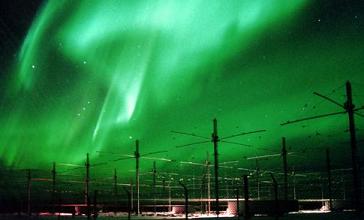
The technology was developed in the 1990s by the High-frequency Active Auroral Research Program (HAARP), based in Alaska, enabling selectively changing weather patterns, causing excessive precipitations, floods, droughts, hurricanes and other excessive weather phenomena, thereby destroying infrastructure, agricultural production, entire economies of a country or a region, without the deployment of bombs, troops and tanks. In 1977 the UN General Assembly banned ‘military or other hostile use of environmental modification techniques having widespread, long-lasting or severe effects.’ In 2014 the HAARP center was officially closed. However, this secretive technology is alive and well – and ready to be applied anywhere Washington wants to coerce a ‘regime change’, including destroying or weakening a population to facilitate access to the country’s natural resources.
An early version of climate modification was used in the late sixties and early seventies in Vietnam. Cloud-seeding, Operation Popeye, allowed prolonging the monsoon season, thereby blocking or rendering the Vietcong’s supply routes on the Ho Chi Minh Trail more difficult. This was accompanied by the Napalm defoliant which was supposed to expose, maim and kill Vietcong insurgents and allied populations.
While no climate change theorists talk about this secretive technology, it is possible, though not proven, that climate modifications are already ongoing in Africa, for example in strategically situated Somalia and Ethiopia, causing extended droughts and famine, and in Afghanistan with extremely cold and wet winters, thereby weakening and possibly exterminating entire swaths of populations. Possibly, though also not proven, as an undesired result, by an ever equalizing Mother Nature, the West is also experiencing excessive weather patterns – the record cold in the eastern US, the drought-provoked forest fires followed by heavy rain and mudslides in California, as well as stronger and more frequent hurricanes in the Caribbean Gulf area.
Talking about man-made climate modification – Rainforests once covered 14% of the earth’s land surface; now they cover a mere 6%. According to The Guardian, every year an area of about 180,000 km2 of rainforest is lost, the equivalent of the size of England and Wales. At this rate, in 40 years 10 million km2 – the size of Europe, will have been razed. At current rates, linearly expanded, all of the rainforest may have gone in 100 years. The good news is that linearism does not apply to long-term projections; this horrendous trend of destruction can, thus, still be stopped by awakened people.
The Amazon rainforest encompassed in 1970 still 4.1 million km2 and in 2015 about 3.3 million km2, a reduction of 800,000 km2 in 45 years. The main reason is cattle farming, beef and leather trade, but also bio fuel and logging – to a large extent illegal logging. The impact of rainforest razing in the Amazon is already noticeable in the form of increased drought in Argentina’s Patagonia, damaging agriculture and Argentina’s beef industry. Deforestation as climate weapon? – Capitalism, when left free destroys everything, not just the environment, but mankind’s entire social fabric.
Privatization of water is another weapon of the monster. It is quietly and often clandestinely advancing, driven and coerced by the multilateral development banks, the IMF and often governments themselves. Privatization of water is already going on grand-scale, and I’m not referring in the first place to the abhorrent water bottling by Nestlé and Coca Cola and thousands of others, destroying the environment and often robbing the water, or making it inaccessible, of poor population. Case in point is Nestlé. Nestlé India with its bottled water brand “Pure Life” was eventually forced to quit India, because of multiple social conflicts with local populations, where Nestlé’s massive groundwater pumping lowered the water level so drastically that the local poor had no longer access to their traditional groundwater, but had to buy Nestlé’s expensive bottled “Pure Life” water.
Nestlé ran into similar problems in Africa and even in the US. In Flint, Michigan, where unpolluted drinking water is scarce, Nestlé paid an annual fee of a mere US$ 200 for pumping one of the few remaining sources for private rather than public water use. In drought-stricken California in 2015 and 2016, Nestlé in 2017, over-extracted water from the San Bernardino National Forest Park with some 40 million gallons and with an expired license of some US$ 500 per year, while water to farmers was rationed due to the drought. Regulators eventually forced Nestlé to stop pumping. See the multiply rewarded documentary film “Bottled Life”.
Nestlé’s ex-CEO, Peter Brabeck, said “Water has to be our chief priority”, to which Maude Barlow, former Senior Advisor on Water to the United Nations replied, “Nestlé is a predator, a water hunter”. Coca Cola, Pepsi and other water bottlers follow the same unethical ways of basically stealing groundwater from the common people, forcing them to buy their expensive bottled water.
But the real predators of water and those that are massively privatizing the last uncontaminated sources of water in, for example, Amazon’s huge aquifers and the Guarani fossil aquifer, arguably the world’s largest freshwater reserve, are the giant water corporations like the French Veolia, and Suez: followed by US ITT Corporation; United Utilities and Severn Trent, Thames Water, UK; American Water Works, US; – and an ever growing number of corporations that see the future in privatizing first the source, then the city water supply of mega-cities, where already today the poor and favela inhabitants are deprived of fresh water, because they can no longer afford privately supplied drinking water – which increases intestinal diseases and child mortality all over the globe. And worse is to come, as privatization of water is becoming a worldwide powerful weapon.
Numerous huge water giants install themselves through proxy companies or farmers on top of the Guarani aquifer which is almost entirely fossil water (non-renewable), and receive lifelong water licenses. The Guarani aquifer is said to have the capacity to supply the world population for the next 200 years with some 100 liters per capita per day.  The inhabitants of Frankfurt use some 120 l/c/d. Imagine, this huge non-renewable aquifer in the hands of private corporations which could turn on and off the spigot at will – or according to ‘maximizing profit’ principles. A powerful weapon. If remaining unchecked, it is clear who is losing and who is winning.
Today, RT reports that Greek President Tsipras has just launched a sales pitch to the Greek people, that it would be a good idea to privatize Greek water supply. Can you imagine? After all that this criminal despot leader has already done to Greece – now privatizing water.
Studies carried out by the very World Bank, the institution that pushes for water privatization like no one else, except for the IMF, found that in parallel with water privatization in South Africa – intestinal diseases and child mortality increased in townships. After Nelson Mandela was elected President of a free South Africa in 1994, the western international financial vultures, like WB, IMF, FED via Wall Street, descended on Pretoria to persuade him and his government to privatize most everything. “It was good for paying back the accumulated debt of South Africa.” Yes, of course. People had no choice. Poor people in townships could no longer afford drinking water supplied to their modest homes or yards – but had to resort to traditional sources, like polluted ponds and streams. – How will the Greek cope with privatized water?
France, home to the two largest water corporations, Viola and Suez, started in 2010 remunicipalization of water with the city of Paris, followed by all major cities in France. Authorities realized that the cost of water was way too high for the quality of service provided. Similar motives prompted Berlin to go the same way.
Water is life. And life does not just cave in. It will fight for survival. But the enemy, the privatization corporations, like mining companies that irreparably destroy nature and populations social fabric, are backed by entire armies – the US, UK, German and NATO armed forces – to defend the rights of corporations… and the loser is…. Or would be, if the population would not wake up in time to defend their right to water, their Human Right to Water.
Digitization of money and the economy is another tentacle of the evil octopus. Its advancing very fast with cryptocurrencies leading the way. Digitization of money is a means for the government or any oppressing force to control populations by holding on or confiscating their vital resources to sustain live, their income. Blockchain moneys like Bitcoins, ‘specialists’ say, are more secure than any banking system the world has known so far. That myth seems to have been broken. CNBC reported on 29 January that the Japanese cryptocurrency exchange had been hacked and about US$ 535 million equivalent of Bitcoins were stolen. This is the largest Bitcoin heist in Bitcoin’s relative short history of barely 9 years. So much for security.
As of January 2018, there are close to 1,400 different cryptocurrencies on the market and rising. Cryptocurrencies are highly volatile and speculative and therefore preferred currencies for crooks and speculators. One of the major hubs for cryptocurrencies and their ‘marketization’ is – you guessed it – Switzerland, the banking center of everything and ‘smart’ banking. Blockchain currencies are so complex and complicated for the common citizen to understand that even an IT expert has a hard time weaving his way through the maze of cryptocurrency technologies. – Which is good. Because propaganda will assure that enough people who have no clue of what they are doing are duped into making a quick buck. They have seen how. The price of Bitcoins is listed on a daily basis along with the regular stock market fluctuations. Bitcoins have increased in value from zero in 2009 to more than US$ 20,000 at their peak in December 2017. In the meantime, Bitcoin’s value has slipped to about US$ 10,000 (30 January 2018), but could be way different tomorrow.
But digitization is not just about cryptocurrency. It is also a small octopus, advancing on several fronts, of which blockchain currencies are just one tentacle. There is at least one other more potentially harmful menace to the common citizen, like gradually eliminating cash and replacing it by digital currencies.
This is already happening, almost clandestinely – throughout Europe, starting with Scandinavian countries where certain department stores do no longer accept cash. Imagine – what it means when you can’t go anymore to your corner ATM to get cash to buy your groceries? You will be enslaved to the gnomes of banking, of digital banking, that is. It is another powerful weapon to subjugate people to do what they are told, lest sanctions in the form of blocked or outright confiscated accounts might be used as the “new sanctions”. These modes of punishment can induce famine, expropriation of properties and savings, poverty, eventually disease and reduction in life expectancy as a result of ever growing destitution – see Greece, which has been made poor by sticking to a fake and fiat currency, the euro, that is like digital money, stealing the countries assets through debt.
If we eventually were to live in a digital economy, it means that every value is electronic, the tangibility of hard work and physical output, the production of labor, is worth only what smart ‘digits’ will allow it to be. If the neoliberal system wants to save on labor costs – the value of labor output can be reduced to almost zero. So, every social value, social statistic, becomes a potential farce, is manipulatable which today is already the case with the figures of unemployment, inflation and ‘growth’ – economic growth. For example, in our linear western world destruction is growth. It requires production of weapons (growth) and eventually reconstruction – growth again. And everything in between, like the industry around war injuries and war deaths, is growth. All with a profit motive – and an overarching motive of subjugating populations to the hegemon of Washington.
This leads to yet another tentacle – Propaganda – all-embracing propaganda, controlled by six Zion-Anglo media giants that control some 90% of the news the west receives 24/7. The news sells you all evil about Russia, Syria, Iran, Venezuela, Cuba, China – and whoever else does not want to submit to the empires rules. Propaganda in the west is nothing less than propaganda of deceit. It sells you the idea that war is good for peace – hence a never-ending war against terror. Propaganda invents terror and terrorists by making you believe that all those who disagree with a despotic system are terrorists and have to be fought. Propaganda sells you falls flags as reality.
Propaganda western style is one of the worst, most deadly weapons to hegemonize the world, as it makes the common citizen root for war, root against North Korea, a country whose only objective it is to defend itself, not to threaten the world, as western propaganda has you believe. Propaganda is also omission of facts – important facts, namely that the western powers, the US and its European puppets, the EU and NATO are the most dangerous rogue nations and organizations populating Mother Earth these days, and have been for at least the last 200 years. But despite the endless killing by these monsters, constituting the head of the evil octopus with its multiple tentacles, people do not realize who is their enemy – thanks to western deceit-propaganda.
Take the Olympics. After banning Russian athletes from participating in the Rio Games following the infamous McLaren Report on doping which has often been criticized of being manufactured, the same McLaren Report is behind prohibiting Russia from participating in South Korea’s winter games in Pyeongchang this month. This is sheer politics, Russia-denigrating propaganda. And now banning even the majority of the some 600 “clean Russian athletes” from participating under the most ludicrous arguments, is not only unjustly hurting individual athletes, who have never had anything to do with doping, it’s a repeat Russia bashing.
The President of the World Anti-Doping agency (WADA) said in a recent interview with RT, there was in fact not enough evidence to prove a state sponsored doping system in Russia. Nevertheless, he obviously went along – had to go along – with the Russia banning decision. We never know what would be at stake for these officials, if they were to follow their common-sense judgement and internal moral standards. The IOC (International Olympics Committee) is totally corrupt and bought by Washington. This is, by the way true for all International courts and UN organizations. They have all become a travesty.
Nothing prevents Russia from calling and organizing her own Olympic games, the Russian Olympics. It would be interesting to see how many western countries would dare to participate. I bet, many would wake up, because they would love to bond with Russia, if for nothing else but business, but are afraid to do so with Washington bully’s sword swinging above their necks. Sports is always a good reason for mending disagreements, which are actually only imposed ‘disagreements’. – How long will fear prevail over reason? – The light At the end of the tunnel is in sight.
Albeit, it is a shame and surprising that the world just looks on. People cannot be that dumb not to recognize that this is all a propaganda to portray Russia around the world as evil. This sort of propaganda, adding to the military threat that Russia is said to present to the world, when the real danger comes from the US and its NATO allies, is deadly propaganda, provoking war. President Putin plays it “Tao” – he is relatively quiet, non-aggressive – the non-aggressor will always win in the long run. 
The final blow, however, the ultimate tentacle, is conventional warfare, sowing conflicts and proxy wars – what we know too well – what has dominated the last two decades. When none of the other tentacles do their illegal job radically enough, then comes the traditional killing machine, enhanced Regime Change through Color Revolutions, through false flag assassinations, NATO or mercenary invasions, planted “civil wars” – i.e. Ukraine, Syria, Yemen, Afghanistan – and now even Iraq. Take the case of Fallujah, where massive weapons of depleted uranium were purposefully used by the US army, leaving the city and surroundings scarred for decades, for generations to come.
It is mass murder perpetrated by Washington and its dark invisible string-pulling handlers. These killings have genocide proportions. Yet, genocide is almost never mentioned when the most atrocious killings are carried out by the United States. I wonder why?
If we do not wake up, we will not escape. I few do, we may. It’s five to high-noon. It would be hell, not nuclear hell, but ‘octopus hell’, as we will be surrounded by different killing techniques or tentacles of the monster – and don’t know where to go and cry for help. Certainly not to our western leaders, not to those, which we believe we elected to do the best for Us, the People. No, these leaders are all corrupted, bought, they all have their little space reserved in paradise, for doing what they are doing helping the minuscule elite to dominate all – literally to reach Full Spector Dominance. – That’s what the PNAC (Plan for a New American Century) openly declares as the hegemon’s ultimate goal. – At the end of the day, they – our lovely puppet leaders – may get a cold shower, when they have done their job as they were told – and find out that they too are dispensable like trash; like Us, The Common People. No scruples by the self-styled dark handlers of the western race. You only live once.
*
Peter Koenig is an economist and geopolitical analyst. He is also a former World Bank staff and worked extensively around the world in the fields of environment and water resources. He lectures at universities in the US, Europe and South America. He writes regularly for Global Research, ICH, RT, Sputnik, PressTV, The 21st Century (China), TeleSUR, The Vineyard of The Saker Blog, and other internet sites. He is the author of Implosion – An Economic Thriller about War, Environmental Destruction and Corporate Greed – fiction based on facts and on 30 years of World Bank experience around the globe. He is also a co-author of The World Order and Revolution! – Essays from the Resistance.

Comment on Global Research Articles on our Facebook page

Friday, February 2, 2018

Putin and Xi

Friday, February 2, 2018 - 12:00am
The Autocrat’s Achilles' Heel
How Putin and Xi Undermine Their Own Rule
Alina Polyakova and Torrey Taussig
ALINA POLYAKOVA is the David M. Rubenstein Fellow in the Foreign Policy program at the Brookings Institution.
TORREY TAUSSIG is a Postdoctoral Fellow in the Foreign Policy program at the Brookings Institution and at the Harvard Kennedy School's Belfer Center for Science and International Affairs.
 
Great power competition is back. Russia and China—two great powers with autocrats at their helms—are actively testing the durability of the international order as the West seemingly retreats. Russian President Vladimir Putin, unfazed by Western sanctions, not only led a disinformation campaign in Western democracies to disrupt major elections, but continues to maintain Russia’s occupation of Crimea and the Donbas region in eastern Ukraine. Chinese President Xi Jinping, meanwhile, is projecting China’s military power into the South China Sea and its economic might across Latin America, Africa, and Asia. Both countries also seek to influence democratic states through the use of “sharp power [1].” Aware of Russia and China’s growing reach, the Trump administration made the right decision to identify the two nations as U.S. competitors in its recently released National Security Strategy [2] and National Defense Strategy [3]. For the first time since September 11, 2001, great power competition, rather than global terrorism, is considered the number one priority for U.S. national security.
There seem to be no effective checks to Putin and Xi’s growing ambitions. Both leaders, however, could be making a strategic error. They are staking their countries’ futures, and international trajectories, on one thing: themselves. Throughout their respective reigns, Putin and Xi have taken steps to consolidate their personal control on power. This may work as a stabilizing mechanism in the short term, but in the long term, can exacerbate inherent domestic tensions that could eventually undermine their rule. Putin and Xi face two similar dilemmas as long-time autocrats of large countries: managing brutal elite competition for loyalty and succession, and balancing international ambitions with deepening tensions between the central government and restive regions. As both leaders seek more “wins” to justify their personal control at home, they may increasingly pursue riskier and bolder foreign policies.
As the United States weighs its approach to this new era of great power politics, U.S. policymakers will need to take into account how the internal domestic tensions inherent to personalist systems will affect Putin and Xi’s foreign policy agendas.
THE KNIVES ARE OUT
Autocrats have to be good managers. A strongman’s position is only as secure as his network of elite loyalists. But political loyalties, even in authoritarian regimes, are fickle. It is quite certain that Putin will win reelection in March. Thus, the real competition lies in the internal jockeying among the Kremlin elite—once hidden, these internal battles are increasingly being played out in public view. Even Putin’s allies, such as Igor Sechin, the head of Rosneft, are taking political risks to push out potential competitors. In November 2016, Sechin carried out a sting operation that took down former Russian Economy Minister Aleksei Ulyukayev by exposing his involvement in a bribery scheme. There are also signs that Putin’s grip on the elite, and on Sechin in particular, is loosening. Putin reportedly asked [4] Sechin to testify in the Ulyukaev case, but Sechin refused, dealing a public blow to the Russian leader.
As Moscow’s palace games intensify in the lead up to the March election, Putin will need to prove to an anxious and wavering elite that he is still the people’s chosen leader. To reaffirm his mandate, Putin is reportedly [5] seeking to achieve a 70/70 goal: to win the election with a 70 percent turnout and with 70 percent of the vote. At the very least, Putin will need to surpass his 2012 results (65 percent turnout with 64 percent of the vote). In this regard, it is most likely not a coincidence that the presidential elections are being held on the anniversary of Russia’s annexation of Crimea, a foreign policy gamble that increased Putin’s popularity ratings by 21 percentage points, his largest boost [6] to date. In contrast, Russia’s intervention in Syria produced only a five percent bump for Putin, from 83 to 88 percent. Beyond the elections, Putin will have to reenergize his support base by shoring up nationalist-populist sentiments—so far, foreign incursions have been the only winning formula to achieve that goal.
Unlike in Putin’s Russia, elite competition in China is contained within the institutionalized one-party system. Yet Xi’s rapid consolidation of control is testing the bounds of China’s collective leadership model. Xi is considered the most powerful ruler in China since Mao Zedong. Xi’s accumulation of official titles (he currently holds thirteen) culminated in the decision at the 19th Party Congress to enshrine “Xi Jinping Thought [7]” in the nation’s constitution. Moreover, Xi’s stringent anti-corruption campaign, known as “killing tigers and swatting flies,” is testing the loyalty of the elite. Although Xi came into office with a mandate to clean up the party ranks, Xi’s weeding out of high- and low-level cadres has left many in the Party unsure of where Xi’s favor lies—and unwilling to test it. Prominent cases involving the “tigers” include Xu Caihou and Guo Boxiong, both former vice chairs of the Central Military Commission, who were both found guilty of extraordinary corruption. Their falls from grace serve as reminders that no position in the party is safe—a sentiment that may leave Xi with more enemies than loyalists.
This new reality in China indicates that if Xi shows support for a policy shift—whether aggressive or cautious—his decision is unlikely to meet significant pushback from the upper echelons of the Chinese leadership. This can give Chinese leaders a false sense of confidence in their national capabilities and result in “groupthink” among Xi’s advisers. History reveals, however, that foreign policy strategies devised under both criteria often end with disastrous results.
CENTER-PERIPHERY TENSIONS
Large countries ruled by authoritarian figures who centralize control inevitably face internal tensions between the center and the periphery. As with its political structures, Russia’s management of its finances is highly centralized: resources such as oil production revenues and taxes flow from the resource-rich regions to Moscow for redistribution to the resource-poor provinces. While the economy was booming in the early 2000s due to high oil prices, the Kremlin could maintain the delicate dance of keeping the peace among Russia’s 85 provinces. But as oil prices collapsed in 2015 and as they remain stubbornly low, Russia’s hydrocarbon-dependent state budget has suffered. Western sanctions have also begun to take a toll, contributing 1.5 percent [8] to Russia’s decline in GDP in 2015.
As the state coffers shrunk along with the overall economy, Moscow took a larger cut of revenues from the provinces, which are now starting to openly rebel. Resentment is growing [9] in the oil-rich Sakhalin region, where Moscow has laid claim to increasingly larger shares of the oil revenues. Last fall, Moscow passed new federal legislation seeking to siphon 75 percent of tax and royalties from the profitable Sakhalin-2 project. Under current law, Moscow receives a 25 percent cut. Governors and local populations, already living on meager incomes, are openly airing their grievances through protests. At the same time, regions facing a budget shortfall complain that they are not getting enough from Moscow to maintain basic services and infrastructure. Across Russia, regional governments are demanding more autonomy and more control over their budgets. The Kremlin’s ability to calm the waters or to repress dissent is constrained by its continued need for more money and its limited reach outside of Moscow and St. Petersburg. Without economic growth in sight, Putin will face a Catch-22: increased resentment in the provinces coupled with a constant need to shore up popular support through costly operations abroad.
Xi Jinping is also having to deal with center-periphery tensions, all the while presiding over the rise of ardent nationalism and patriotism across China. Xi’s three-hour speech at the 19th Party Congress in October was full of nationalist sentiment. He reaffirmed his promise to usher in a “great rejuvenation of the Chinese nation” and vowed to restore the country to its rightful place in the world. Taking a more strident tone, Xi boasted of China’s South China Sea island reclamation project as one of his greatest achievements. But Xi’s ambitious plans for China, internally and internationally, come at a cost. Xi is having to expend significant resources to crack down on China’s more restive populations, including in Hong Kong and Xinjiang. These efforts are meant to ensure domestic stability and regime security and to warn all Chinese citizens to stand behind Xi’s “Chinese Dream.”
In November 2017, China’s National People’s Congress demanded that the semi-autonomous Hong Kong adopt its “National Anthem Law,” [10] which makes insulting or disrespecting the national anthem illegal and punishable by jail time. This may have been a response to defiant protesters in Hong Kong who have taken to booing the Chinese anthem at soccer matches in recent years. Once a model of what a prosperous and open China could look like, Hong Kong’s ability to withstand China’s encroaching authoritarian system is fading. In the northwestern province of Xinjiang, Xi has carried out draconian and repressive police surveillance over the minority Uighur population. While Beijing claims that these measures are to address terrorist threats, the tensions are also about rising resentment among the local population toward the central government.
Internal dissent puts the Communist Party of China in a difficult position. On the one hand, Xi is aiming to increase his domestic legitimacy through nationalistic appeals, while on the other hand, he is seeking to reassure China’s wary neighbors that his nation wants peace and cooperation. Looking ahead, if Xi finds that quelling domestic instability through national propaganda at home and shows of strength on core interests like the South China Sea is more important than assuaging regional actors, then stability will likely suffer.
STABLE UNTIL THEY’RE NOT
As Putin and Xi deal with internal tensions among their elites and their broader populations, their foreign policy strategies will become increasingly difficult to contend with. The United States will need to strike a balance against a more assertive China and a volatile Russia as it pursues its own national security interests. Although the challenges that Putin and Xi present will engage the United States for years to come, in the immediate term, the Trump administration should take specific steps to manage these two competitor states.
Putin’s intervention in Ukraine and Syria seemingly caught the Obama administration by surprise, and as result, the response was slow and cautious. Future Russian interventionism will require a quick and decisive response. While it is impossible to know exactly where Putin may next seize the opportunity to launch a conventional or nonconventional strike, the Trump administration should prepare responses for a range of possible aggression, whether it’s a hybrid war against states on Russia’s periphery or continued disinformation campaigns in the West.
Xi’s global ambitions, however, present the greatest long-term challenge to the United States. China has time on its side; its military and economic capabilities are growing relative to the United States’. The Trump administration should thus leverage its current advantages now. This means investing in long-established partnerships and building new relationships with states in the Indo-Pacific region to diminish incentives for aggression on China’s part.
In the end, Putin and Xi’s consolidation of control will leave them personally responsible for their governments’ successes and missteps. The buck stops with them. In turn, Putin and Xi will likely respond to growing economic and political pressures by seeking more control at home while taking greater risks abroad. Domestically, this will mean harsher measures to silence the voices of the opposition, to neuter political competition, and to restrict access to information. But repression is a costly way to ensure long-term compliance from a citizenry. Putin and Xi might find it easier to enhance legitimacy by depicting their regimes as “defenders of the people” against malevolent outsiders and thus might feel the need to pursue aggressive tactics abroad, even though these impulses will ultimately only deepen the cracks in each regime. Putin and Xi may look like the world’s most powerful strongmen, but the age-old axiom still applies: authoritarian regimes are stable, until they are not.