LIVE
Trump-Xi live: China, US hold talks on tariffs, rare earths and fentanyl
What's happening
- U.S. President Donald Trump and China’s President Xi Jinping met
- Trump said he agreed to trim tariffs on Chinese goods to 47%
- China agrees to one-year rare earth export deal, Trump said
- He says US to cut tariffs on Chinese goods over fentanyl flow to 10%,
- Trump said Taiwan tensions did not come up in talks
- Trouble viewing video posts? Content depends on your cookie settings
'It’s probably just talk' - Taiwanese residents don't have high hopes

We spoke to people in the Taiwanese capital Taipei about the Trump-Xi deal.
The first speaker is 37-year-old service industry worker Wang Yi-Kai who said (translated from Mandarin):
"President Trump is quite unpredictable. So even if he says something now, it’s entirely possible that things could change again after the Trump-Xi meeting. That’s why I think we should just take things as they come and focus on doing our part well."
He also said:
"Personally, I don’t think Taiwan is so significant that it would necessarily be used as a bargaining chip. Although, realistically speaking, it could happen. But if we are used as a bargaining chip, well, the truth is, Taiwan doesn’t really have much choice in the matter."
70-year-old retiree, Ku, said:
"The reality is that Taiwan and mainland China exist as separate entities. That’s a fact. It’s not something anyone can deny or change. I suppose each side has its own calculations, but ultimately, it won’t make much of a difference."
When asked whether he believes the meeting has an impact on Taiwan or the current situation between China and Taiwan, he said:
"It’s probably just talk. In reality, nothing will actually change."
China's defence ministry says its hopeful on military relations
The Chinese defense ministry said Beijing takes an open attitude towards the development of China-U.S. military relations.
It also said it hopes for fair, peaceful and stable ties.
The U.S. and China have a history of competing militarily, economically and technologically.
Trump didn't discuss Nvidia's Blackwell chip with Xi



FILE PHOTO: Nvidia GB10 Grace Blackwell Superchip at a conference in California, March 19, 2025. REUTERS/Max A. Cherney
Trump may have teased that he could discuss Nvidia's state-of-the-art artificial intelligence Blackwell chips with Xi, but in the end, he said the topic didn't come up.
Trump told reporters aboard Air Force One that semiconductors had been discussed and that China is "going to be talking to Nvidia and others about taking chips," but added: "We're not talking about the Blackwell."
A day earlier, Trump had praised the Blackwell chip as "super-duper", adding he might speak to Xi about that - comments that likely helped Nvidia make history as the first company to reach a $5 trillion valuation.
China says US should abide by nuclear test ban obligations
We're getting updates from China's foreign ministry.
On Trump resuming nuclear weapons testing, it said:
- China hopes the U.S. will abide by obligations under the test ban treaty
- It hopes the U.S. will abide by the commitment to a moratorium on nuclear testing and uphold global strategic balance and stability
On G7 plans for a critical minerals alliance, it said it urged the G7 to uphold principles of market economy and stop disrupting the international trade order.
Readout from China's Commerce Ministry
China's Commerce Ministry said after the talks:
- China will pause the October 9 export control measures for a year.
- China will pause countermeasures related to Washington's 301 investigation for a year.
- China and the U.S. reached a consensus on fentanyl cooperation and expanding agriculture trade.
- China will suspend shipbuilding measures against the U.S. for a year.
Why would US resume nuclear testing?

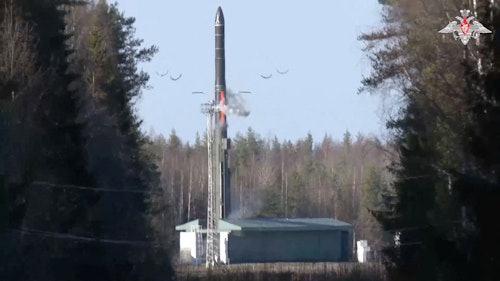
A Yars intercontinental ballistic missile during a military exercise of Russia's nuclear forces in the Arkhangelsk region, Russia, in this still image taken from video released October 22, 2025. Russian Defence Ministry/Handout
As we reported earlier, before his meeting with Xi, Trump said the U.S. would resume testing nuclear weapons after a gap of 33 years, After the meeting, he told reporters he was talking to Russia about denuclearization.
So how many nuclear weapons tests have there been, why were they stopped - and why would anyone start them again?
In a nutshell, restarting nuclear testing can gather information - or send a signal.
Our Russian bureau chief Guy Faulconbridge has more answers here.
'The response from markets has been cautious'
FILE PHOTO: A Chinese flag and a stock graph in an illustration picture taken April 30, 2024. REUTERS/Dado Ruvic
Chinese shares pulled back from a decade high on Thursday.
Investors appeared heartened by signs of cooling tensions between the world's top two economies after recent escalations, while also positioning defensively.
China's yuan retreated from a near one-year high against the dollar after the meeting.
The benchmark Shanghai Composite Index hit its highest level since 2015 in early trading but later weakened as much as 0.8%.
"The response from markets has been cautious in contrast to Trump's enthusiastic characterisation of the meeting with Xi as 'a 12 out of 10'," said Besa Deda, chief economist at advisory firm William Buck in Sydney.
"There are still some structural issues that have been left unresolved, which could be contributing to the market's response and takes some shine off the truce."
'Isn’t Trump known for being unreliable?'
Reuters spoke to Chinese people in the city Shenzhen, who expressed doubts that the Trump-Xi meeting would improve relations.
The first speaker is 48-year-old green industry worker, Li Chao, who said (translated from Mandarin):
"A meeting between leaders of two countries should mean that the two countries' economic cooperation will be in a better position. In today’s society, cooperation is a win-win situation. Confrontation only brings losses to the ordinary people of both sides. It is detrimental to the economies of both countries."
Next, 36-year-old repairman Yao Wushen said:
"(For the Trump-Xi meeting) I don't have much hope. If the talks fall apart, they fall apart. China has already gotten used to it. Isn’t Trump known for being unreliable? Even if he agrees to peace negotiations now, who's to say that once he goes back he (Trump) may report something different. Chinese people are already used to it."
Our reporter can be heard asking, "What you're saying is that whatever Trump says..."
Yao answers, "Americans are unreliable, the whole world knows."
Finally, 49-year-old electrician Wang Duancao said:
"Because of work I move around to different areas as an electrician and I’ve seen many factory buildings that are half-empty. It’s because of the tariffs. Many factories in places like Pingshan's Kengzi (a major manufacturing hub known for biopharmaceuticals and energy companies), these places that rely on foreign trade (have been affected). In April, when there was a period of new tariffs being added, some (factories) rushed to ship their goods out immediately, or the next day. Now, with more tariffs, some factories don't do overtime, and some factories are really empty. Overall, the impact on the manufacturing sector in Shenzhen and the Pearl River Delta has been significant. The tariffs impact is large, really large."
Fentanyl-related punitive US tariffs cut to 10%

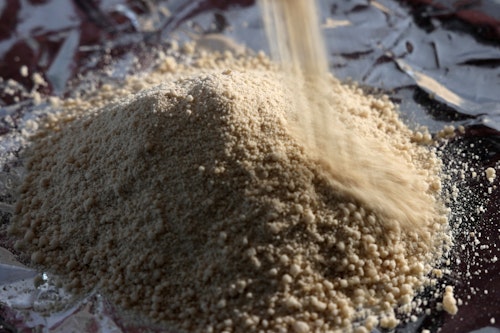
FILE PHOTO: Fentanyl precursors are displayed at Reuters' office in New York City, July 10, 2024. REUTERS/Andrew Kelly
Trump said on Thursday that the U.S. will cut its tariffs imposed on Chinese goods as punishment for failing to stop the flow of fentanyl to 10% from 20%, after his meeting with Xi.
Xi will work "very hard to stop the flow" of fentanyl, Trump said, and the tariff was reduced "because I believe they are really taking strong action."
Trump had said earlier he expected to reduce U.S. tariffs on Chinese goods in exchange for Beijing's commitment to curb the flow of precursor chemicals to make fentanyl, a deadly synthetic opioid that is the leading cause of American overdose deaths.
Beijing had sought the lifting of 20% tariffs over fentanyl among other matters.
Xi on strengthening cooperation
Chinese state media reported Xi saying:
- He and Trump agreed to strengthen cooperation in energy and trade.
- Both sides have good prospects for cooperation in the fields of AI and combatting illegal immigration, telecom fraud and money laundering.
Xi opposes 'vicious cycle of retaliation', Chinese media says
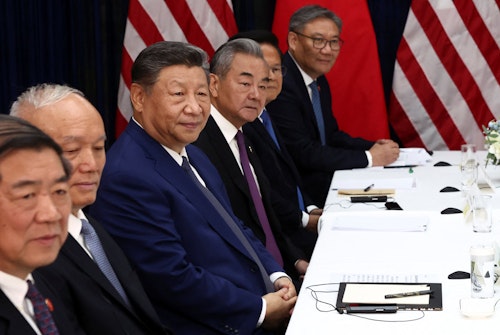
Xi attends a meeting with Trump (not pictured) in Busan, South Korea, October 30, 2025. REUTERS/Evelyn Hockstein
Chinese state media are reporting comments from Xi after his meeting with Trump.
Here is what they are saying Xi said:
- China never seeks to challenge or replace any country and focuses on doing its own business well
- China's economy is like an ocean. China is confident and capable to deal with all kinds of risks and challenges
- China-U.S. relations maintain overall stability and teams on both sides should refine and follow up on consensus
- The two sides should lengthen the list of cooperation and not fall into a 'vicious cycle of revenge'
- Conversation is better than confrontation
Trump says rare earth issue 'settled'

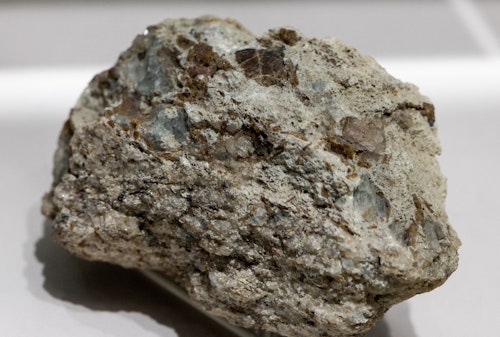
FILE PHOTO: Bastnaesite ore, a mineral used in the rare earth industry, at the Geological Museum of China in Beijing, October 14, 2025. REUTERS/Maxim Shemetov
Trump said China has agreed to keep rare earth exports flowing to the world as part of a one-year agreement, and said he expected it to be extended.
"All of the rare earth has been settled," Trump told reporters on Air Force One. "And that's for the world, worldwide, you could say this was a worldwide situation, not just a U.S. situation."
Rare earths, 17 elements which play tiny but vital roles in cars, planes and weapons, have emerged from obscurity to become China's most potent source of leverage in its trade war with the United States.
Export controls introduced in April caused widespread shortages overseas, especially for magnets, forcing some automakers to pause production before exports rebounded following deals between Beijing and Washington and the European Union to free up the flow.
China expanded those controls again in October, taking the total number of elements restricted to 12 and adding much of the equipment used to process them.
'This looks like a tactical pause'
Here are some initial comments from finance professionals to the emerging details of the meeting.
TARECK HORCHANI, HEAD OF DEALING, PRIME BROKERAGE, MAYBANK SECURITIES, SINGAPORE:
"The U.S.–China trade truce is likely to be greeted as a relief rally rather than a structural reset.
"When such truces occur, one of the first areas both sides highlight is agriculture, a politically sensitive sector in the United States, where farmers form a key constituency.
"Overall, this looks like a tactical pause rather than a strategic breakthrough, with underlying tensions in technology, supply chains and rare earths still unresolved."
KYLE RODDA, SENIOR MARKET ANALYST, CAPITAL.COM, MELBOURNE:
"At the moment, the price action makes things seem like a lot of this was already priced in.
"The markets rallied at the start of the week on the expectations of the fentanyl tariff cut and soybean purchases.
"Arguably, the markets were hoping for the complete removal of the fentanyl tariff, so that could explain the ambivalence."
Chicago soybean futures fall 1% on lack of details

FILE PHOTO: A crop scout collects soybean samples across the Midwest, in Indiana, August 19, 2025. REUTERS/Evelyn Hockstein
Chicago soybean futures fell on disappointment at the lack of concrete details on agricultural purchases from the Trump-Xi meeting.
The most-active soybean contract on the Chicago Board of Trade (CBOT) fell 1.32% to $10.8 a bushel, as of 0516 GMT, retreating from a 15-month high hit in previous sessions.
"There is nothing really there," said Andrew Whitelaw, an analyst at Australian consultant Episode 3.
"The market was expecting a trade deal that was concrete and would resume the trade, but it's not really all that concrete as far as we can see at the moment," he added.
Trump says he's agreed to reduce China tariffs to 47% from 57%
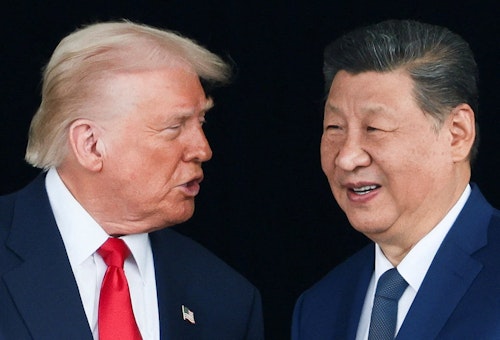
Trump and Xi talk after their meeting at Gimhae International Airport, in Busan, South Korea, October 30, 2025. REUTERS/Evelyn Hockstein
Trump told reporters on Air Force One he had agreed to reduce U.S. tariffs on Chinese goods to 47% down from 57% in exchange for Beijing resuming U.S. soybean purchases, keeping rare earths exports flowing and cracking down on the illicit trade of fentanyl.
His remarks marked the finale of a whirlwind Asia trip on which he also touted trade breakthroughs with South Korea, Japan and Southeast Asian nations.
"I thought it was an amazing meeting," Trump told reporters.
Trump had repeatedly talked up the prospect of reaching agreement with Xi since U.S. negotiators on Sunday said they had agreed a framework with China that would avoid 100% U.S. tariffs on Chinese goods and achieve a deferral of China's export curbs on rare earths.
On North Korea's Kim Jong Un, 'I'd come back' for meeting
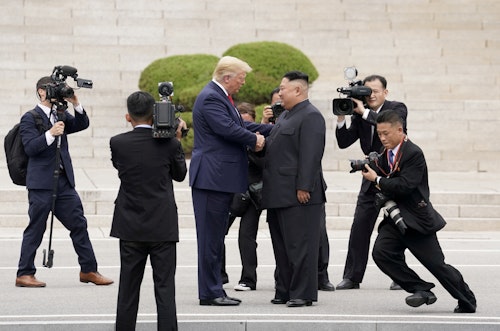
FILE PHOTO: Trump in a previous meeting with Kim Jong Un in Panmunjom, South Korea, June 30, 2019. REUTERS/Kevin Lamarque
Trump said there was simply no time to talk to North Korean leader Kim Jong Un about setting up a meeting while he was in South Korea.
"We were never able to talk, because look I was so busy and really this (meeting) is why we came. I think it would have been maybe disrespectful to the importance of this meeting if we did that," he said on Air Force One.
"So I'd come back, with respect to Kim Jong Un."
Trump, who had repeatedly called for a meeting with Kim to take place during this trip, had said on Wednesday the timings would not work out.
Kim and Trump held three summits during Trump's first term and exchanged several letters that Trump called "beautiful", before the unprecedented diplomatic effort broke down over U.S. demands that Kim give up his nuclear weapons.
In September, Kim expressed "fond memories" of Trump and said there was no reason to avoid talks with the U.S. if Washington stopped insisting his country give up nuclear weapons. But he reiterated he would never abandon the nuclear arsenal to end sanctions.
Trump says talking to Russia about denuclearization
Asked whether his announcement that the United States would resume nuclear testing was a sign of a more risky nuclear environment, Trump said if other countries were testing, then the U.S. has to as well.
But he said he would like to see denuclearization.
"I think de-escalation would be, they would call it denuclearization, would be a tremendous thing," he told reporters on Air Force One.
"And it's something we are actually talking to Russia about that. And China would be added to that if we do something."
Trump says he had a 'very nice conversation' with Carney

FILE PHOTO: Trump and Canadian Prime Minister Mark Carney at a dinner with other leaders in Gyeongju, South Korea, October 29, 2025. REUTERS/Evelyn Hockstein
Arriving in South Korea, Trump indicated he had no plans to meet Canadian Prime Minister Mark Carney.
But as he left, he told reporters they'd actually had what he said was a "very nice conversation".
Trump didn't get into specifics.
He called off trade talks with Canada and announced an extra 10% tariff citing a political ad from Ontario featuring Republican former President Ronald Reagan criticising tariffs.
Trump imposed tariffs on Canadian steel, aluminium and autos shortly after taking office this year, prompting Ottawa to respond with similar measures.
Carney has tried on two White House visits since becoming prime minister to strike a deal and said after Trump halted the talks he was ready to revive them.
Trump says Taiwan didn't come up in talks with Xi
Asked whether he and Xi discussed Taiwan, Trump responded "It never came up. Taiwan never came up."
China views self-ruled Taiwan as its own territory, but Taiwan's government rejects Beijing's sovereignty claims.
Taiwan has over the decades enjoyed strong though unofficial support from the United States, which despite the lack of formal diplomatic ties is bound by law to provide the island with the means to defend itself.
Over the weekend, a group of Chinese H-6K flew near self-ruled Taiwan to practice "confrontation drills".
Trump also said he and Xi are going to work together on Ukraine.
Our Standards: The Thomson Reuters Trust Principles., opens new tab

No comments:
Post a Comment