Friday, October 31, 2025

GAZA’S FUTURE HINGES ON A CLEAR UN SECURITY COUNCIL RESOLUTION by Dennis Ross and Assaf Orion PolicyWatch 4127 October 31, 2025


GAZA’S FUTURE HINGES ON A CLEAR UN SECURITY COUNCIL RESOLUTION
by Dennis Ross and Assaf Orion

PolicyWatch 4127
October 31, 2025

With Hamas already regrouping, U.S. officials must help craft targeted language that empowers the Board of Peace to oversee a technocratic administration and stabilization force, with the goal of quickly filling the territory’s governance and security vacuum.

READ THIS ITEM ON OUR WEBSITE


A temporary International Stabilization Force (ISF) is central to President Trump’s plan for ending the Gaza war. According to the president and his secretary of state, Marco Rubio, many countries are prepared to contribute both funds and personnel to the force, but Rubio has also stated that key potential contributors are conditioning their participation on the establishment of a United Nations Security Council mandate. For some, like Indonesia—which has experience in peacekeeping operations—such a resolution meets national legal requirements for contributing to forces; for others, including possible Arab contributors, it simply creates an aura of legitimacy for providing forces. 

Alternatives for a UN Resolution

Regardless of the reason, the Trump administration has embraced the idea of producing a UN Security Council resolution and is likely to promote one soon. Resolutions falling under Chapter VII concern threats to peace and the use of force or sanctions in response. For the Israeli-Palestinian conflict, establishing the precedent of applying Chapter VII resolutions would be unwise. Force will not end this conflict, and the United States will be thrust into constantly having to head off or veto ill-considered resolutions. Resolutions under Chapter VI—with their emphasis on diplomacy—make more sense at this stage, and the administration should seek such a resolution to endorse the Trump peace plan and its twenty points.   

Necessarily, this resolution would empower the plan’s Board of Peace, which is designed to oversee a “technocratic” Palestinian administration and the ISF in guiding the transitional period in Gaza. The resolution must be narrowly focused on giving power and authority to the Board of Peace so that it can work with the technocratic administration and define the role and missions of the ISF. This mission must include law enforcement and disarmament of Hamas, despite concerns from some actors about these roles. 

The temptation with most such resolutions, especially those related to the Israeli-Palestinian or Arab-Israeli context, has been to include reference to all previous resolutions calling for an end to the conflict. That by itself is not a problem, but one must recognize that Russia and maybe China will likely want to make any such resolution as broad as possible, with an ongoing role for UN agencies and an emphasis on the political character and purposes of the resolution. Such resolutions appeal to the lowest common denominator in the UN and gain automatic support, but they have little or nothing to do with changing the reality on the ground. Gazans do not need symbolic resolutions; they need an end to the war with an alternative administration on the ground that builds the basis for a different future. 

To that end, the Trump plan calls for establishing the Board of Peace and “immediately” deploying the ISF “in Gaza.” Every day that goes by without this force being constituted and deployed will make it harder to take the first step in transforming Gaza, as the plan envisions.     

Preventing a Hamas Rebound

Already, Hamas is reconstituting itself in a part of Gaza from which the Israel Defense Forces has withdrawn. The longer it takes to establish the force and an alternative administration, the more Hamas will project the image of its own permanence. The crux of the Trump plan calls for the disarmament of Hamas—and the demilitarization of the Strip—in return for full Israeli withdrawal and reconstruction. Without disarmament, there will be neither Israeli withdrawal nor reconstruction. In other words, demilitarization is the key to Gaza’s future, and the ISF, according to the Trump plan, will assume a role in the decommissioning or handing over of weapons and monitoring of disarmament.   

That is the theory. Unfortunately, at this point, a clear mandate for the ISF has yet to be established by an empowered Board of Peace. Views differ on what that mandate should be. Egypt and others see it as one in which the ISF will act to prevent smuggling and help with demilitarization, but will play no role in law and order within Gaza—that, they say, should be the role of Palestinian security forces largely trained by Egypt. Discussions with Egyptian and other Arab officials have revealed their view that only Palestinian security forces can or should deal with internal security challenges. But at this stage, the idea that Palestinian security forces can impose law and order, and challenge Hamas if it acts against the alternative administration or the public, is simply unrealistic. In fact, the Egyptian approach is not based on taking on Hamas but on including it within a new Palestinian consensus in which the group acquiesces to the new arrangements. But such an effort ignores the reality that Hamas leaders will demand a payoff in return for any governing arrangement requiring them to disarm and accept an alternative administration—and that payoff will involve acceptance of their continuing role in Gaza. Nothing would more clearly contradict the letter and spirit of the Trump plan.   

Creating an Effective Board of Peace

So what can be done? 

  • First, ensure the resolution makes clear the Board’s responsibility to determine ISF missions. That would not mean changing Israel’s status as the occupying power; only an end-of-conflict political agreement could do this.
  • Second, the Board of Peace will need to coordinate with Israel, at a minimum, to ensure that the ISF does not include international or regional forces unacceptable to Israel.
  • Third, the Board must take account of the lessons of failed international peacekeeping forces like the UN Interim Force in Lebanon (UNIFIL), even allowing for the clear differences between Lebanon, which is a sovereign state and has a government, and Gaza, which obviously does not.   

On the last count, even when UNIFIL was supposedly bolstered by UN Security Council Resolution 1701 after the 2006 Lebanon war, it never fulfilled its missions: assisting the Lebanese Armed Forces in establishing a demilitarized zone in southern Lebanon; preventing Hezbollah from building up militarily or operating in the south; and maintaining a ceasefire in the face of Hezbollah’s military activity. Far from preventing Hezbollah’s military buildup, UNIFIL assisted in covering it up, and when the UN force did take tentative steps to limit or simply observe Hezbollah activities, it was attacked. Moreover, UNIFIL limited what Israel could do in response to violations. Hamas must not be allowed to replicate Hezbollah’s actions—meaning it can neither reconstitute itself militarily nor attack the ISF with impunity.   

Either development would defeat the purpose of the ISF, which is to advance the Trump plan. With that in mind, the UN resolution must require the ISF to work closely with the Civil-Military Coordination Center, which was set up by the United States with multinational participation. The force’s missions should encompass maintaining public order, securing the delivery of humanitarian assistance, preventing smuggling, and helping with disarmament. The assumption of these roles over time by Palestinian police forces, excluding Hamas, should be supported by the ISF—but that is not realistic in the near term.  

Protecting Gazans to Sideline Hamas

Only if the people of Gaza feel adequately protected from Hamas threats and coercion will they be able to express their displeasure with a continued role for the group. It is one thing for Arab states to pressure Hamas; it is something else for the Palestinian public in Gaza—which has become increasingly alienated from Hamas and wants to breathe and live a more normal life—to feel safe enough to make their opposition known. That will raise the price to Hamas of refusing to accept the new arrangements. The group’s leaders present themselves as if they were organically linked to the Palestinians and the embodiment of the cause—so opposing the Gaza public in such circumstances would contradict Hamas’s self-image and further erode its legitimacy. The surest way to ensure Hamas does preserve itself for eventual Gaza rule, by contrast, is to grant it a voice in selecting the technocratic administration and to exclude the ISF from providing for law and order and public safety. President Trump will need to use his leverage with the key Arab states, which will almost certainly have representatives on the Board of Peace, to accept the idea that the ISF, joined over time by Palestinian police, must play a role in public safety and protection. 

For those who want to seize the moment created by the Trump plan, now is the time to produce a UN Security Council resolution that empowers the Board of Peace and thus the ISF in the areas of public safety, disarmament, and support for the Board and the technocratic Palestinian administration. Otherwise, a scenario may play out that actually helps Hamas reemerge and reassert its rule over Gaza. 

Dennis Ross is the Davidson Distinguished Fellow at The Washington Institute and a former senior official in the Reagan, Bush, Clinton, and Obama administrations. Brig. Gen. Assaf Orion, IDF (Res.), is the Institute’s Rueven International Fellow, a senior research fellow at the INSS, and former head of the IDF Strategic Planning Division.

Greek Reporter - October 31, 2025 - Rule of Law in Greece Slips to 48th Worldwide, Near Bottom in Europe

 Rule of Law in Greece Slips to 48th Worldwide, Near Bottom in Europe

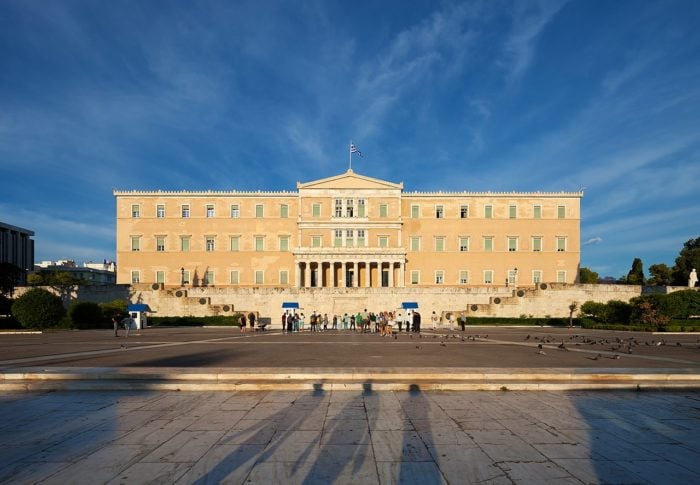
Syntagma Square Greek Parliament, Athens, Greece
Greece is ranked 29th among 31 European nations. Image: Syntagma Square, Greek Parliament, Athens. Credit: Tomas Wolf / Wikimedia Commons CC BY-SA 3.0

Adherence to the rule of law in Greece has deteriorated, landing it in 48th place out of 143 countries globally and at the near-bottom of European countries in the World Justice Project’s new global index.

The Rule of Law Index confirms an escalating global crisis in democratic accountability, with 68 percent of the 143 countries surveyed recording declines—the highest rate since the index began in 2009. Experts describe a “systemic crisis of democratic accountability,” as core safeguards against government overreach weaken across the globe.

Greece’s rule of law: Institutional erosion and last in Europe for security

Greece’s marginal slip reflects a deeper institutional struggle against the backdrop of an accelerating worldwide “recession in the rule of law.” Regionally, the country is ranked 29th among 31 European nations (EU, EFTA, and North America), placing it ahead only of Bulgaria and Hungary.

The report highlights several critical areas of erosion in the Greek system:

  • Shrinking public space: Key indicators for freedom of expression, assembly, and civic participation have worsened, signaling a pattern of authoritarian backsliding. The WJP warns that limited citizen engagement increases the risk of political influence over the judiciary.
  • Justice system under strain: Greece ranks 55th globally in criminal justice and 50th in civil justice. The system is described as plagued by chronic delays, growing interference, and reduced judicial independence. This aligns with the global trend in which courts’ ability to check government power is weakening in 61 percent of indexed countries.
  • Security: The most alarming finding is Greece’s performance in order and security, where it ranks 71st globally and is dead last in Europe. This unfortunate showing is driven by delayed justice, ineffective law enforcement, and low public trust in security forces.

Despite digital progress and reform pledges, the WJP stresses that “Laws alone are not enough; consistent enforcement is required.” For Greece, the report serves as a cautionary signal: democratic institutions function but with diminishing resilience, creating an environment of gradual institutional decay.

RelatedMitsotakis Says Rule of Law in Greece is “Stronger than Ever”

Global trends: Winners and losers

The 2025 Index confirmed a worrying trend across Europe, where the rule of law declined in over two-thirds of EU countries. However, Northern Europe maintains its reputation for judicial independence, transparency, and civil liberties, dominating the top spots globally.

Denmark tops the Index for the fifth consecutive year, above Norway and Finland. Notable exceptions to the European decline include Ireland and Poland, which showed modest but significant improvements across various rule-of-law indicators, demonstrating that positive change is possible even amid a negative regional and global trend.

At the bottom of the global rankings, the countries with the weakest adherence to the rule of law are led by Venezuela, Afghanistan, Cambodia, and Haiti. The sharpest declines globally were recorded in countries like the Russian Federation and Sudan.

RelatedGreece Falls Five Spots in 2024 Democracy Index, Global Democracy at Historic Low

Yeniçağ gazetesi -Arslan Bulut - "Dahili ve harici odaklar" kim? 31 Ekim 2025

 “Dahili ve harici odaklar” kim?

31 Ekim 2025 00:01
Son Güncelleme: 31 Ekim 2025 11:41
Arslan BULUT
arslanbulut@yenicaggazetesi.com.tr


Cumhurbaşkanı Recep Tayyip Erdoğan, Cumhurbaşkanlığı Külliyesi Sergi Salonu'nda düzenlenen 29 Ekim Özel Programı'ndaki konuşmasında, “Şu noktayı da her zaman hatırımızda tutmamız gerekiyor. Türkiye Cumhuriyeti devamlılık ilkesine dayalı kadim devlet geleneğimizin en son halkasıdır. Bundan 102 sene evvel ilan edilen Cumhuriyetimiz, 'Hâkimiyet kayıtsız şartsız milletindir' ilkesiyle de aynı zamanda millî iradenin şahlanışıdır. Türkiye'yi ve Türk demokrasisini güçlendirme davamızda son 23 yıldır en önemli dayanağımız milletimizin sarsılmaz iradesidir. İnşallah bu irademiz sapa sağlam ayakta olduğu sürece, bu millet binlerce yıldır olduğu gibi birbiriyle muhabbetle kucaklaştığı müddetçe, Türkiye'nin kutlu yolculuğunun önünü kesebilecek hiçbir dâhili ve harici odak yoktur." dedi.
Bu sözler ve konuşmanın bütünü gayet güzel ama sorun şu ki, Erdoğan, bir taraftan “Türkiye’nin kutlu yolculuğu” derken, diğer taraftan, kuruluş felsefesine aykırı söylemlerde bulunuyor! Mesela Anayasa’nın 66’ncı maddesinde “Türk Devletine vatandaşlık bağı ile bağlı olan herkes Türktür.” denilirken, Erdoğan “Türk, Kürt, Arap ittifakı”ndan söz ediyor.
Erdoğan, yıllarca “Türk” yerine “Türkiyeli” denilmesini de savundu ama şimdi “Türk-Arap-Kürt” diyor.
***
Erdoğan’ın “üçlü millet” söylemleri, Cumhuriyetin getirdiği “tek millet” sistemine aykırı, fakat Osmanlı’nın kendi son yüzyılı içinde uygulamaya çalıştığı millet sistemine uygundur.
Bu sistemi, Necip Fazıl’ın etkisindeki Milli Türk Talebe Birliği’nden yetişen AKP’li siyasetçiler, uzun yıllardır savunmaktaydı ama son olarak ABD'nin Ankara Büyükelçisi Tom Barrack, tarafından gündeme getirildi. Barrack, geçtiğimiz Haziran ayı sonunda “Benim için İzmir, Yahudilerin, Müslümanların, Hıristiyanların bir arada yaşadığı, bu toplulukların harmanlandığı bir örnek. Bu, tüm dünyada ve Orta Doğu’da olması gereken bir durum... Bence Türkiye, tüm bunların merkez noktası olabilir, Suriye’de gördüğünüz üzere. Suriye’de olanların büyük bir kısmı, Türkiye ve liderliği sayesinde gerçekleşiyor. Osmanlı İmparatorluğundaki millet sistemi, yüzlerce yıl farklı grupların merkezi sistemde varlıklarını sürdürmelerine imkân verdi.” dedi.
Büyük Orta Doğu Projesini ABD için geliştiren Bernard Lewis de 1996 yılında, İstanbul’da verdiği konferansta, “Bu coğrafyada, Türklük, Araplık ve Farslı gibi kimliklerin yerini Orta Doğu kimliği alabilir” demişti...
***
Osmanlı’nın din eksenli millet sistemine dönmek için Türkiye’nin ulus devlet olmaktan çıkarılması gerekir! ABD ise kendi topraklarında ulus devlet modelini uyguluyor; 72 milletten tek bir millet oluşturmaya, böylece süper güç niteliğini sürdürmeye çalışıyor.
Osmanlı millet sistemi çok iyi ise ABD neden kendi topraklarında ulus devleti güçlendirmeye çalışıyor?
***
MHP, “Türk Milliyetçiliği iddiasında” bir parti olmasına rağmen Erdoğan’ın adını koymadan seslendirmekte olduğu Osmanlı miller söylemine dönük herhangi bir itirazda bulunmadı. Bu konuda ciddi eleştiriler İyi Parti Genel Başkanı Müsavat Dervişoğlu ve Zafer Partisi Genel Başkanı Ümit Özdağ’dan geldi. Cumhuriyetin kurucu partisi olan yani ulus devlet modelini getiren CHP ise bu konuda sessizdi.
CHP Genel Başkanı Özgür Özel, 29 Ekim gecesi, Bağdat Caddesi’nde konuştu ve ülkeyi yönetenlerin Cumhuriyetin taşıyıcısı olan demokrasi, adalet, sosyal devlet ve laiklik kolonlarını kesmeye çalıştığını anlattıktan sonra “Bunlar yetmezmiş gibi, meşruiyeti, sizde, sandıkta değil, Amerika’da, Trump’ta arayanlar, Amerikan Büyükelçisinin ifadeleriyle, ‘Bu ülkeye mezhebe dayalı yönetim anlayışları ya da Türk, Kürt, Arap diyerek etnisiteye dayalı 120 yıl öncesinin yönetim anlayışlarını Türkiye’ye telkin edecek kadar hadsizleşmişlerdir. Tüm bunlara cevabımız bu geceki milyonlardır. 81 ildeki cumhuriyet coşkusudur. Bu milletin gönlündeki cumhuriyet ve Atatürk sevgisidir. Asla ve asla teslim olmayacağız. Bu zulme yenilmeyeceğiz, bu baskıya sonuna kadar direnecek, eninde sonunda biz kazanacağız, çünkü 100 yıl önce işgale teslim olmayanların, 100 yıl önce emperyalizme yenilmeyenlerin, 100 yıl önce bağımsızlıktan vazgeçmeyenlerin Türkiye’siyiz. Biz hep birlikte Türkiye’yiz ve bu ülkeyi kimselere bırakmayız.” dedi.
Özgür Özel, nihayet sorunun özüne değinmiş oldu.
Özel, ancak buradan yürürse, iktidarın CHP’ye yönelik kumpaslarıyla birlikte Cumhuriyetin kolonların kesme girişimlerini de durdurabilir.
CHP’nin kendi kuruluş felsefesi ışığında yürümesi, Türkiye’yi düze çıkarır

NTV-AA - 31 Ekim 2025 - Dışişleri Bakanı Hakan Fidan Ankara'da ağırladığı Estonya Dışişleri Bakanı Margus Tsahkna ile ortak basın toplantısı düzenledi.


Dışişleri Bakanı Hakan Fidan: Ateşkese ilişkin kaygılarımız var

Dışişleri Bakanı Hakan Fidan pazartesi günü islam ülkelerinin dışişleri bakanlarıyla İstanbul'da Gazze toplantısı yapacak. Bakan Fidan İsrail'in ateşkesi ihlal etmek için bahane aradığını da söyledi ve "Endişeliyiz" dedi.

Dışişleri Bakanı Hakan Fidan: Ateşkese ilişkin kaygılarımız var

Dışişleri Bakanı Hakan Fidan Ankara'da ağırladığı  Dışşişleri Bakanı Margus Tsahkna ile ortak basın toplantısı düzenledi.

Dışişleri Bakanı Hakan Fidan Gazze'de ateşkesin devamı konusunda endişeleri olduğunu söylerken, "Netenyahu bütün dünyanın gözleri önünde ateşkesi ihlal etmek ve soykırımı yeniden başlatmak için bahane aramakta." dedi. 

8 ÜLKENİN DIŞİŞLERİ BAKANLARI İSTANBUL'DA GÖRÜŞECEK

Ateşkes süreci, yeniden inşa ve insani yardımları ele almak için İstanbul'da islam ülkeleri dışişleri bakanlarıyla biraraya geleceklerini açıkladı. 

"New York'ta Trump'la biraraya gelen ülkelerin dışileri bakanlarıyla pazartesi İstanbul'da toplantı gerçekleştireceğiz. ifadelerini kullanan Bakan Fidan, , Endonezya, Katar, Suudi Arabistan, Birleşik Arap Emirlikleri (BAE), Ürdün, Pakistan ve Mısır'ı temsilen devlet veya hükümet başkanlarının Trump ile eylülde yaptığı toplantıyı hatırlattı.

Fidan, New York'taki bu görüşmede ortaya çıkan görüş birliğinin, Gazze'de barış planı ve tarihi anlaşma için zemin oluşturduğunun altını çizerek, barış planının, devam eden krizin çözülmesi için "umut ışığı" olduğunu söyledi.

"Bunun önünde engeller var mı? Sorunlar neler? Bir sonraki aşamada neler yapmamız gerekiyor? Batıdaki dostlarımızla neler konuşacağız? Amerika'yla devam eden görüşmelerde ne türden destekler var? Bunların hepsini pazartesi günü yapacağımız inşallah toplantıda ele alacağız." diyen Fidan, bu konuda çok sayıda çalışma ve telefon görüşmesi yaptıklarını belirtti.

Fidan, bu meselenin "bir saniye bile boş bırakmaya gelmeyeceğini" vurgulayarak, sahip çıkılması gerektiğini kaydetti.

Fidan Gazze Görev Gücü'nün oluşumu konusunda görüşmelerin sürdüğünü de söyledi. 

TÜRKİYE-AB İLİŞKİLERİ

Fidan, görüşmelerinde Türkiye'yle AB arasındaki ilişkilerini de ele aldıklarını, Türkiye-AB ilişkilerinde uzun vadeli çıkarlara bakılmasının gerekli olduğunu vurguladı.

Fidan, Estonya'nın Türkiye'nin AB üyeliğine uzun yıllardır verdiği destek için teşekkür etti.

Dışişleri Bakanı Fidan, gümrük birliğinin güncellenmesi ve vize serbestisi diyaloğunun yeniden canlandırılması gibi konuları da ele aldıklarını, Türk vatandaşlarının vize başvurusu süreçlerinde yaşadığı zorlukların da gündemlerinde yer aldığını ve somut çözümler bulunması için çaba harcadıklarını söyledi.

Almanya Başbakanı Friedrich Merz'in Türkiye'yi ziyaret etmesinin önemine dikkati çeken Fidan, "Toplantılar sonrası iki liderin, Türkiye'nin Avrupa Birliği (AB) üyeliği konusunda iradelerini yeniden beyan etmeleri son zamanlarda bence AB ile ilişkilerimiz açısından en önemli gelişmelerden birisi." dedi.

AB'ye üyelik müzakereleri ve AB kurumlarıyla ilişkilerin canlandırılmasının gündemlerinde olduğunu anımsatan Fidan, Avrupa güvenlik mimarisinin NATO ile ilişkisinin ne olacağı konusunda da yoğun mesai yaptıklarını paylaştı.

Fidan, Estonya ile ikili ilişkilerin yanı sıra NATO ve AB çevrelerinde uyum içerisinde olduklarını kaydetti.

"TÜRKİYE SAFE PROGRAMINDA OLMALI"

Estonya Dışişleri Bakanı Margus Tsahkna ise, Avrupa Birliği'nin (AB) Avrupa Güvenlik Eylem Programı (SAFE) mekanizmasına değinerek, "Bir sonraki AB bütçesinde Estonya net bir biçimde Türkiye'nin buna katılması gerektiği görüşünü paylaşıyor. AB dışındaki ülkelerin de dahil edilmesi gerekiyor. AB dışında da işbirliğine ihtiyacımız var. Türkiye gibi güvenilir ortaklarla birlikte hareket etmek istiyoruz." dedi.

-Anadolu Ajansı - Afganistan ve Pakistan, İstanbul'daki görüşmelerde ateşkesin devamı konusunda anlaşmaya vardı -31 Ekim 2025


Anadolu Ajansı 

Afganistan ve Pakistan, İstanbul'daki görüşmelerde ateşkesin devamı konusunda anlaşmaya vardı

Hikayeyi yazan: Anadolu Ajansı • 21 sa. • 

1 dk okuma


Afganistan ile Pakistan arasında Türkiye ve Katar'ın arabuluculuğuyla gerçekleştirilen görüşmelerde, ateşkesin devamı konusunda mutabık kalındı.

Afganistan ve Pakistan, İstanbul'daki görüşmelerde ateşkesin devamı konusunda anlaşmaya vardı

Dışişleri Bakanlığınca paylaşılan ortak yazılı açıklamada, Afganistan ile Pakistan arasında 18-19 Ekim'de Doha'da, Türkiye ve Katar'ın arabuluculuğunda uzlaşılan ateşkesin pekiştirilmesi amacıyla, 25-30 Ekim'de İstanbul'da dört ülkenin katılımıyla toplantılar gerçekleştirildiği belirtildi

Tarafların ateşkesin devamı konusunda mutabık kaldığı aktarılan açıklamada, ateşkesin uygulanmasına ilişkin ilave esasların 6 Kasım'da İstanbul'da yapılacak bir üst düzey toplantıda istişare edileceği ve kararlaştırılacağı bildirildi.

Açıklamada, tarafların barışın sağlanmasını ve ihlal eden tarafa ceza uygulanmasını temin edecek bir izleme ve doğrulama mekanizması kurulması konusunda anlaşmaya vardığı ifade edildi.

Afganistan ve Pakistan'ın sürece sağladığı etkin katkıların arabulucu Türkiye ve Katar tarafından takdir edildiği belirtilen açıklamada, arabulucuların kalıcı barış ile istikrarın tesisine yönelik çabaları desteklemeyi sürdürmeye hazır olduğu kaydedildi.

Pakistan ile Afganistan arasında yaşanan sınır çatışmalarının ardından 15 Ekim'de duyurulan 48 saatlik ateşkes, taraflar arasında Türkiye ve Katar'ın desteğiyle Katar'ın başkenti Doha'da yapılan müzakerelerin sonuna kadar uzatılmıştı.


Times of Israel /Reuters - Today (Oct.31,2025) - Turkey to host Gaza meeting on Monday amid ceasefire concerns

 Live Update arrow right icon From the Liveblog of Friday, October 31, 2025

Turkey to host Gaza meeting on Monday amid ceasefire concerns

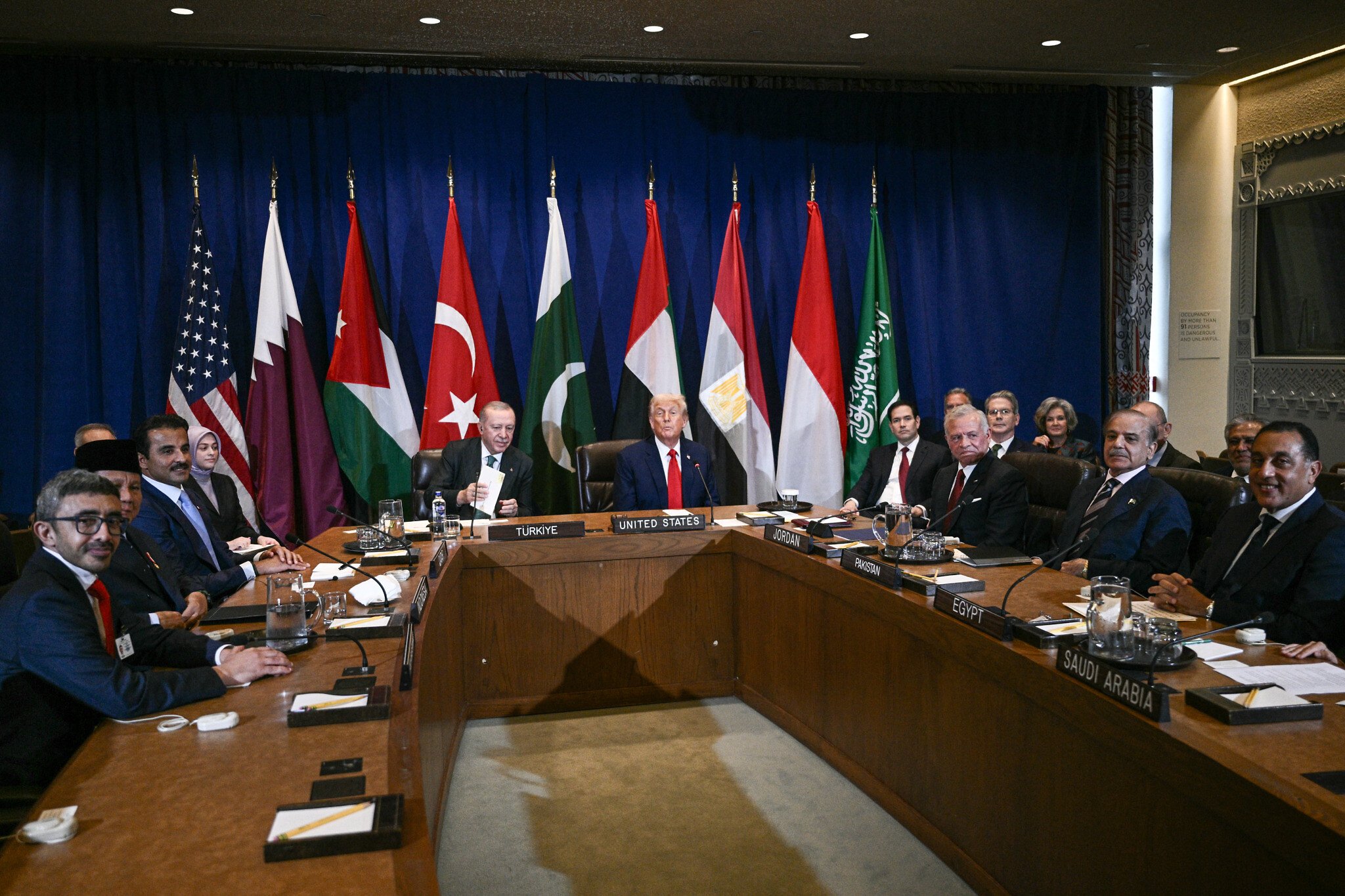
Seated at main table, L/R, UAE Foreign Minister Sheikh Abdullah bin Zayed Al Nahyan, Indonesia's President Prabowo Subianto, Qatar's Emir Sheikh Tamim bin Hamad al-Thani, Turkey's President Recep Tayyip Erdogan, US President Donald Trump, Jordan's King Abdullah II, Pakistan's Prime Minister Shehbaz Sharif, and Egypt's Prime Minister Mostafa Madbouly attend a multilateral meeting to discuss the situation in Gaza, on the sidelines of the United Nations General Assembly in New York City on September 23, 2025. (Photo by Brendan SMIALOWSKI / AFP)

Foreign ministers of some Muslim countries will meet in Istanbul on Monday to discuss the Gaza ceasefire and next steps there, Turkish Foreign Minister Hakan Fidan says, voicing concern over whether the ceasefire will continue.

Speaking at a press conference in Ankara, Fidan says the gathering would include foreign ministers of countries represented at a meeting with US President Donald Trump in New York in September.

That meeting, to discuss the situation in Gaza, was attended by Turkey, Qatar, Saudi Arabia, Egypt, the United Arab Emirates, Jordan, Pakistan and Indonesia.

“The topics being discussed currently are how to proceed to the second stage, the stability force,” Fidan says.

Prime Minister Benjamin Netanyahu hinted last week at his opposition to any role for Turkish security forces in the Gaza Strip as part of a mission to monitor a US-backed ceasefire with Hamas.

The New York Times Testing America’s Nuclear Bombs: What to Know - By William J. Broad Oct. 30, 2025

The New York Times 

Testing America’s Nuclear Bombs: What to Know

Though the country’s nuclear arsenal has undergone no explosive testing for decades, federal experts say it can reliably obliterate targets halfway around the globe.


Share full article


The tower for Icecap, a nuclear test that was nearly ready to execute but never happened because of the testing moratorium enacted on Oct. 1, 1992, at the Nevada National Security Site.Credit...Los Alamos National Laboratory

William J. Broad

By William J. Broad

Oct. 30, 2025

President Trump’s threat on Wednesday to restart the testing of nuclear weapons has raised numerous knotty questions about national and global security.


The United States spends tens of billions of dollars every year on its large arsenal of the world’s deadliest weapons and the infrastructure that supports it. Here’s what you need to know about American atomic bombs and the issues involved in whether or not to test them explosively.


How many nuclear bombs does the United States have?

The American arsenal includes roughly 3,700 warheads, with about 1,700 of them currently deployed, according to the Federation of American Scientists. The group, which has long scrutinized the highly classified topic, recently updated its estimates. Nuclear weapons can be carried on warplanes like the B-2 or B-52, launched from missiles in silos on U.S. territory, or heaved from rockets on submarines.


The United States does not have the most nuclear bombs in the world, as Mr. Trump incorrectly stated on Wednesday night. That distinction belongs to the Russian Federation.


Washington is deep into a modernization program that seeks to replace every warhead with an updated version and to upgrade their carriers. The overall cost of the sprawling program over three decades is estimated at $1.7 trillion.


Does anyone actually know that an atom bomb can work?

The same logic that applies to cars — lots of maintenance and testing, even for old models — suggests that the world’s nuclear powers have much confidence that their weapons will work, if needed. The weapons are seen as igniting at the flip of a switch. Currently, the United States spends roughly $25 billion a year on nuclear weapons upkeep, a program it calls stockpile stewardship.


Washington’s program of weapon upkeep does not rely on explosive tests. Instead, it includes hundreds of machines and devices and many thousands of workers and scientists. The devices include room-size supercomputers, the world’s most powerful X-ray machine and a laser system the size of a sports stadium. No other nation possesses such an extensive array of tools for the nonnuclear testing of nuclear weapons.


Editors’ Picks


An Old-Fashioned Halloween Store That Won’t Give Up the Ghost

How One Neighborhood Engineers the Ultimate Halloween Spectacle

These Candies Are a Treat for Your Feed

Image

The Summit supercomputer at Oak Ridge National Laboratory in 2017.Credit...Shawn Poynter for The New York Times


Currently, the complex of facilities employs 65,500 people at eight main sites from coast to coast. Just at Los Alamos National Laboratory in New Mexico, the birthplace of the atomic bomb, the total work force has grown by 50 percent since 2018, to nearly 18,000.


When was the last time the U.S. tested a nuclear weapon?

The last underground explosive blast at the Nevada Test Site occurred on Sept. 23, 1992. Its power was reportedly quite small — a third of the Hiroshima bomb’s — and no public information seems to exist on the test’s purpose.


Trump Administration: Live Updates

Updated 

Oct. 30, 2025, 10:12 p.m. ETOct. 30, 2025

Air traffic controller shortage causes delays in Orlando and disruptions elsewhere.

Trump returns to White House in time to greet trick-or-treaters.

Comey attacks perjury and obstruction charges in new motions.

That same year, at the Cold War’s end, the United States voluntarily gave up the explosive testing of nuclear arms and eventually talked other atomic powers into doing likewise.


Then, in 1993, President Bill Clinton announced plans for a treaty in which all nations would forgo all nuclear blasts. This meant banning tests even underground, the last permissible zone.


Image

The Nevada Test Site in 1996. The last underground explosive blast there occurred in 1992.Credit...Lennox McLendon/Associated Press

Although the 1996 test-ban treaty never officially went into force, it created a global norm. The long, hard process of hammering out a global consensus on the merits of a ban, embraced by all the thermonuclear states at the time, led to a more stable era. Gone were the shock waves that had regularly radiated from underground test sites and ricocheted around the globe.


Since then, the United States, Russia, China, Britain and France have tested no weapons.


When could the U.S. test a nuclear bomb again?

The nation’s nuclear test site is a desolate expanse of the Nevada desert bigger than the state of Rhode Island. Nuclear experts see great difficulty in preparing it for new underground tests because much of the key equipment at the sprawling site has fallen into disrepair or been lost.


Nonetheless, a 2013 document from the Energy Department, which oversees the nation’s nuclear arsenal, stated that “a very limited test to signal the readiness of the U.S. nuclear deterrent or to respond to another nation’s test could be conducted in six to 10 months.”


Will a lack of testing hold back the U.S. nuclear arsenal?

Top U.S. officials say new bomb designs are already in development without underground tests. Also, the directors of the national labs in charge of the arsenal have repeatedly testified to Congress that the United States has no need to return to nuclear detonations.


In 2022, the Biden administration announced plans to make the first new warhead since the Cold War — an update that White House officials said was long overdue for safety reasons. The weapon, for submarine missiles, is a small part of the gargantuan overhaul of the nation’s complex of atomic bases, plants, bombers, submarines and land-based missiles.


The new warhead, known as the W93, is thermonuclear. That means a small atom bomb at its core acts as a match to ignite the weapon’s hydrogen fuel, which can produce blasts a thousand times as strong as the Hiroshima bomb.


What are other reasons some experts want to test atomic bombs?

To intimidate rivals.


During the Cold War, explosive tests were an element of the psychological and political warfare, especially between Moscow and Washington. The shock waves that radiated from underground test sites let any nation with a seismometer know what might happen if the testing power decided to launch an attack with the world’s deadliest weapons.


Nowadays, a Vienna-based U.N. organization, the Comprehensive Nuclear-Test-Ban Treaty Organization, runs the world’s largest and most sensitive network for listening to the faint echoes of nuclear blasts. The global network of more than 100 monitoring stations sifts through the seismic din of earthquakes and volcanic eruptions for telltale signs of nuclear detonations.


William J. Broad has reported on science at The Times since 1983. He is based in New York.