BBC
Summary
Donald Trump says the Israeli and Lebanese leaders have agreed to a 10-day ceasefire, beginning at 17:00 EST (22:00 BST) - the US has shared more detail here
For Trump, a ceasefire in Lebanon removes a major hurdle to the broader peace talks with Iran, writes our North America editor - read the latest analysis from BBC correspondents in the US and Middle East
Lebanon's Prime Minister Joseph Aoun has welcomed the agreement, while Israel's Benjamin Netanyahu says it presents a "historic" opportunity for peace
Trump says Iran-backed Hezbollah - which has been fighting with Israel in Lebanon - is included in the ceasefire
Netanyahu says Israeli troops will remain in a 10km-deep (6.2 mile) "security zone" in southern Lebanon - which goes against Hezbollah's demand for them to withdraw
Iranian commander praises Hezbollah - state media
Ghoncheh Habibiazad
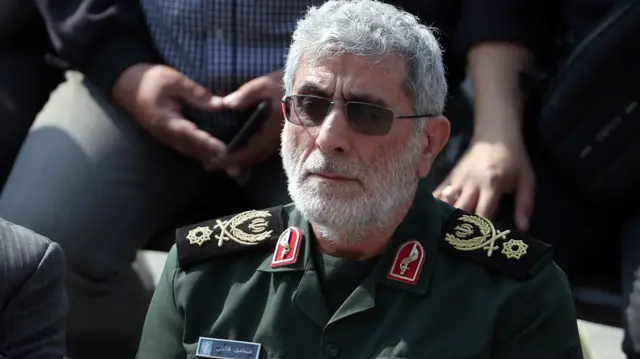
Senior reporter, BBC PersianEsmail Ghaani, commander of the Islamic Revolutionary Guard Corps (IRGC) Quds Force, writes in a message published by Iranian media that the “victor” in the ceasefire agreement is the “heroic Hezbollah”.
Ghaani says "if a ceasefire is achieved, it will be the result of the steadfast resilience of Lebanon’s resistance (referring to Hezbollah) and the support of the Islamic Republic of Iran".
He also says that “some seek to impose humiliation” on the people of Lebanon, without mentioning who he is referring to.
EPAGhaani, pictured here in 2024
IDF says it is 'preparing for the possibility of fire from Lebanon'
In the last few moments, the Israeli military has said it is preparing for the possibility of fire from Lebanon "following the recent developments".
Israel Defence Forces (IDF) says its focus is on northern Israel.
"The IDF is conducting ongoing situational assessments. As of now, there is no change in Home Front Command guidelines," it adds.
The latest analysis from BBC correspondents
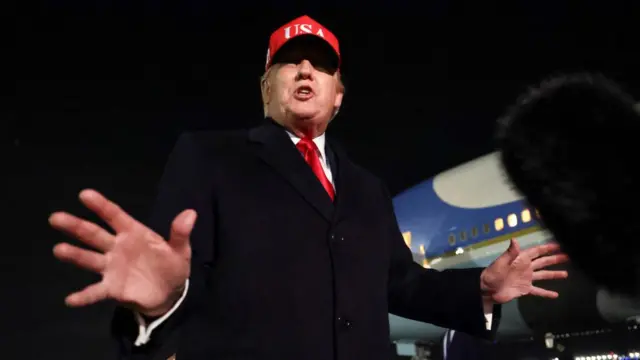
ReutersUS President Donald Trump has announced that a temporary ceasefire had been agreed between Israel and Lebanon.
Over the last few hours, our correspondents in the Middle East and Washington have been unpacking the details. Here's a rundown:
- In Beirut: "While the ceasefire could pause the violence, it does not resolve the central political dilemma: the future of Hezbollah’s weapons," Hugo Bachega writes. "That remains the question likely to shape what happens once the pause ends"
- In Jerusalem: "This seems to be another example of Netanyahu bowing to Trump’s demands to halt fighting in the region, even when the terms or the timing are not to Israel’s liking," says Lucy Williamson
- Also in Jerusalem: Netanyahu says Israeli troops will remain in a 10km-deep (6.2 mile) "security zone" in southern Lebanon, against the demands of Hezbollah. Nick Beake tells us: "It reveals just one of the many complications that could lie ahead"
- In Tehran: "One week into a fragile ceasefire, some of the sights and sounds of Tehran have returned - but five weeks of war have left many marks," Lyse Doucet observes
- In Washington DC: Sarah Smith says a ceasefire in Lebanon "offers some good news for for Trump to celebrate and removes a major hurdle to the broader peace talks with Iran".
Stay with us for further updates.
Lebanese army urges 'restraint' in returning to southern Lebanon
The Lebanese army has urged residents to "exercise restraint" in returning to villages and towns in southern Lebanon following a ceasefire agreement that has been reached between Israel and Lebanon.
The army says caution should remain until the agreement comes into force, which it is due to at 22:00 BST (00:00 in Lebanon), adding that even then residents should avoid areas that remain occupied by Israeli forces.
It also warns of the dangerous of potential unexploded ordnance in the region.
US State Department outlines details of Israel-Lebanon ceasefire
We've just seen an update from the US State Department, which outlines details of a ten-day ceasefire between Israel and Lebanon that will begin at 17:00 EST (22:00 BST) today.
The US says both parties, having met for face-to-face talks in Washington this week, "affirm that the two countries are not at war and commit to engaging in good-faith direct negotiations, facilitated by the United States".
Here are six other takeaways from it:
- The ceasefire is described as "a gesture of goodwill by the Government of Israel"
- It also "may be extended by mutual agreement" if negotiations show signs of progress
- Despite the ceasefire, the US reiterates Israel's right "to take all necessary measures in self-defense, at any time, against planned, imminent, or ongoing attacks"
- Once the ceasefire begins, the Lebanese government "will take meaningful steps to prevent Hezbollah and all other rogue non-state armed groups" in its country
- Those involved in the ceasefire recognise the "exclusive responsibility for Lebanon’s sovereignty and national defense"
- Israel and Lebanon have asked that the US "further direct negotiations between the two countries with the objective of resolving all remaining issues"
Trump upbeat at a chaotic White House gaggle
Bernd Debusmann Jr
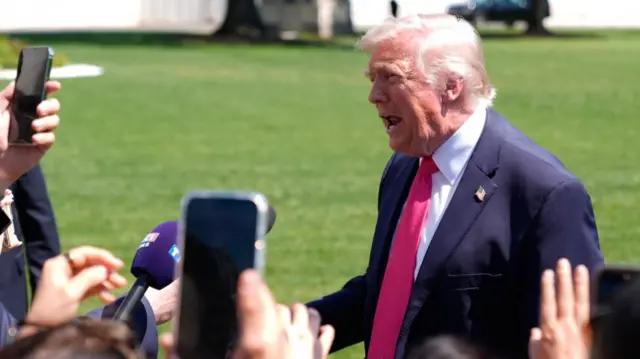
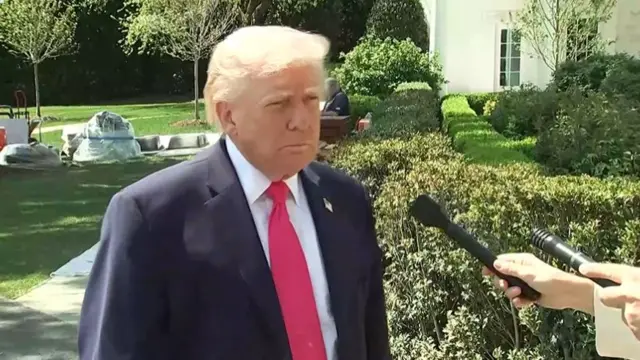
reporting from the White HousePA MediaI've just returned to my desk from the South Lawn of the White House, where President Trump stopped and chatted with reporters during an extended - and extremely chaotic - Q+A session.
There were several dozen reporters jostling for position outside, yelling over each other to try to get the president's attention, which he seemed to relish.
Trump struck me as upbeat today, and bullish on the prospects that talks will lead to a lasting peace with Iran, saying that the US is close to a deal and suggested that the Iranians are more amenable to negotiations than they were at the outset of the war.
He's also clearly feeling slightly triumphant after today's announcement of a ceasefire between Israel and Lebanon, saying that it's "very exciting" and that he believes Hezbollah will be a part of it.
However, much can go wrong over the course of the next few weeks, and earlier today Defence Secretary Pete Hegseth made it clear that the US stands poised to resume offensive operations inside Iran if a deal is not reached.
It is unclear whether Iran - which hopes that high oil prices will pressure the Trump administration to scale back demands it previously termed "maximimalist" - is as confident about the negotaitions as Trump is.

The sights and sounds of Tehran are returning - but five weeks of war have left a mark
Lyse Doucet
Chief international correspondentOne week into a fragile ceasefire, some of the sights and sounds of Tehran have returned – traffic is flowing, some shops are open including florists selling spring blooms, restaurants are back in business.
But airports are still shut, schools are still closed, and a near-total internet blackout hasn’t been lifted.
Five weeks of war have left many marks. Prices in the markets, high even before hostilities erupted, are even higher now. And many small businesses didn’t survive the shutdown.
Security is visibly tighter: more checkpoints; more uniformed and plain-clothed forces; armoured vehicles are positioned around main squares. And some squares are plastered with Iranian flags and photographs of the dead.
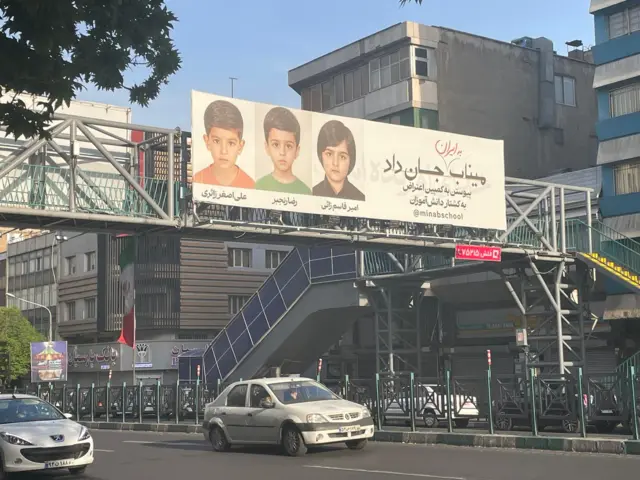
They are gathering places for mourning, for defiant messaging from government supporters. New banners also stretch across buildings and overpasses including ones honouring the “school children of Minab” killed on the first day of the war.
Tehran is a city where people now seem to live day-to-day, where everyone we meet tells us - they don’t believe this truce will last.
Trump says Iran has agreed not to have nuclear weapons
BreakingDonald Trump says that Iran has agreed to not have nuclear weapons for more than 20 years.
"It's looking very good that we're going to make a deal with Iran and it's going to be a good deal, it's going to be a deal with no nuclear weapons...
"We have a very powerful statement, beyond 20 years, that they will not have nuclear weapons," he says. "Let's be honest, there's no 20 year limit."
We have not heard an immediate official response from Iran.
US and Iran very close to a deal, Trump says
ReutersSpeaking to reporters outside the White House, Trump says that the US and Iran are very close to a deal, with Tehran agreeing to nearly all of the US's demands.
He adds that Iran is willing to "do things" today that they previously were not.
We'll bring you more from the US president shortly.
Chance for 'historic' agreement, says Netanyahu - but troops to remain in parts of southern Lebanon
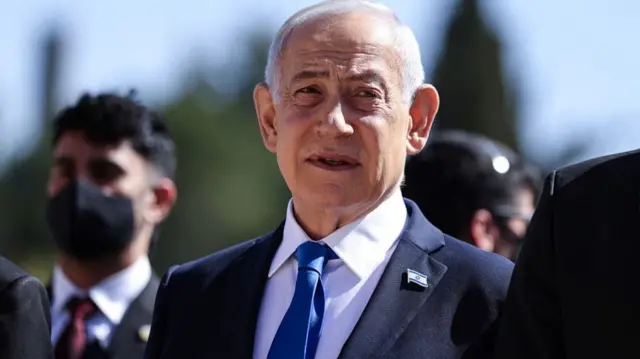
BreakingGetty ImagesIsraeli Prime Minister Benjamin Netanyahu says a ceasefire with Lebanon is an “opportunity to make a historic peace agreement”.
He says the disarmament of Hezbollah is one of the fundamental demands Israel will have in further talks with the Lebanese government.
Israeli troops will remain in southern Lebanon, he says, in a 10km-deep (6.2 mile) “security zone”, adding “we are there, and we are not leaving”.
He says this will allow Israeli forces to “block the danger of invasion” and prevent fire into Israeli communities across the border.
However, he says “there are still problems”, such as the missiles Hezbollah still possesses, which he says “will have to be dealt with” as part of the agreement.
He adds that US President Trump has told him that he is determined to dismantle “whatever is left” of Iran’s nuclear capability.
Police in Pakistan already preparing for unconfirmed US-Iran talks
Caroline Davis
Pakistan correspondentMeanwhile, police in Pakistan’s capital Islamabad are already preparing for a visit by foreign delegations, although as yet no second round of talks has been confirmed.
The city’s traffic police have announced that they will close all transport terminals in the city and neighbouring Rawalpindi for 10 days from 23:00 tonight until 26 April.
Public transport from Rawalpindi and Islamabad to other districts will remain suspended. Islamabad Traffic Police have also banned heavy traffic from entering Islamabad from 18 April.
Earlier today, Pakistan’s foreign ministry said they had no official announcement on a second round of talks.
For Trump, a ceasefire in Lebanon ties into broader talks with Iran
Sarah Smith
North America editor, in WashingtonThe fragile ceasefire between the US and Iran was being imperilled by the ongoing Israeli attacks on Lebanon. So it was important to President Trump to broker a ceasefire between these two nations before the fighting derailed his own efforts to secure a deal with Iran
The announcement, which Trump said he hoped would achieve a lasting peace, came hours after US Defence Secretary Pete Hegseth was urging Iran to choose its next steps wisely.
There is less than a week left before the agreed pause in the fighting between Iran and the US runs out.
President Trump has said that he thinks his war with Iran is close to being over and that he is confident a deal can be agreed - without offering any evidence for his upbeat assessment.
A ceasefire in Lebanon offers some good news for him to celebrate and removes a major hurdle to the broader peace talks with Iran.
Trump declares win with ceasefire - but is it premature?
Bernd Debusmann Jr
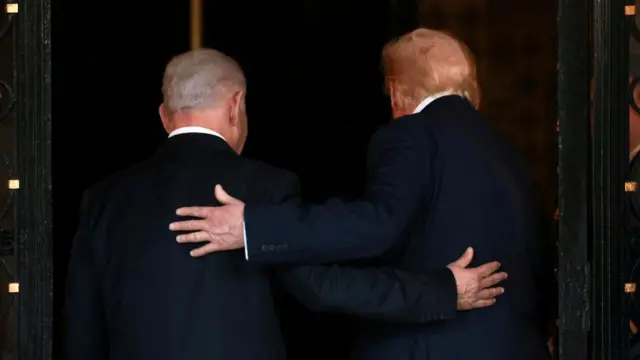
Reporting from the White HouseReutersUS President Donald Trump is declaring a victory after Lebanon and Israel agreed to a ceasefire, as well as a subsequent in-person meeting at the White House between Israeli Prime Minister Benjamin Netanyahu and Lebanese President Joseph Aoun.
Trump has often touted himself as a peacemaker, and claims the Israel-Lebanon ceasefire marks the 10th conflict he has ended - a fact that is disputed by many.
But what this means in practice remains unclear. Hezbollah, while deeply embedded in Lebanon, is not a part of the Lebanese government's security apparatus.
While they've so far signalled a willingness to abide by the ceasefire, that is also dependent on Israel halting its own military operations.
While Trump has enormous influence over Israel, that is not something he can guarantee if the Israel Defence Forces (IDF) believe they need to continue military operations.
The announcement, however, brings Trump a much needed PR win at a time when the fate of broader talks between Iran and the US remain uncertain.
Israeli sources say there's no plan to move troops out of southern Lebanon
Nick Beake
Reporting from JerusalemThe Israeli Security Cabinet is meeting now in an urgent gathering called by Prime Minister Benjamin Netanyahu.
Some reports say those on the call only had five minutes notice. We’ve not heard any confirmation from the Israeli side of a ceasefire.
Meanwhile, Israeli military sources say they have no intention of moving their thousands of troops out of southern Lebanon during a 10-day ceasefire.
It reveals just one of the many complications that could lie ahead.
Hezbollah demands 'no freedom of movement for Israeli forces'
BreakingHezbollah says a ceasefire with Israel must include "a comprehensive halt to attacks across all Lebanese territory" and "no freedom of movement for Israeli forces".
It also demands a "return to the situation prior to 2 March ", on which date Hezbollah launched rockets and drones into Israel in retaliation for the killing of Iran's supreme leader, to which Israel responded with strikes across the country.
It adds: "The continued Israeli occupation of Lebanese territory grants Lebanon and its people the right to resist."
Our Middle East correspondent explains that media reports in Israel tonight suggest the government does not intend to withdraw from positions it currently holds in Lebanon.
We are yet to see an official Israeli response to the ceasefire announced by Trump.
Israel and Hezbollah fighting has continued since US-Iran ceasefire deal struck
More than an hour and a half ago now, President Trump announced that a ceasefire had been agreed between Israel and Lebanon, which he said would begin in the coming hours.
Israel and the Iran-backed militant group in Lebanon, Hezbollah, have continued to trade fire since a ceasefire deal was struck between Iran and the US on 8 April - up to and including today.
The recent fighting between the two sides began in March, when Hezbollah launched rockets into the north of Israel following the assassination of Iran's supreme leader. Israel retaliated with a wave of air strikes across the country, including Beirut.
Attacks continued following confusion over whether Lebanon was included in US-Iran ceasefire. Israel said it was not.
The Lebanese health ministry's latest death toll stands at 2,196 since 2 March.
Netanyahu again faces pressure to align with Trump's interests
Lucy Williamson
Middle East correspondent, reporting from JerusalemReutersThis seems to be another example of Israel’s Prime Minister Benjamin Netanyahu bowing to Donald Trump’s demands to halt fighting in the region, even when the terms or the timing are not to Israel’s liking.
Iran has been demanding an end to Israeli operations in Lebanon since it paused fighting with US just over a week ago.
And after initially saying Israel’s military campaign against Hezbollah in Lebanon was separate, Trump said this week he was trying to get what he called “a little breathing room between Israel and Lebanon”, as he continues to try and reach a deal with Iran.
A widely respected Israeli news outlet tonight described Netanyahu convening an impromptu security cabinet with just five minutes notice, shortly before the ceasefire announcement was made.
Both Netanyahu and Israel’s military leaders have been keen to emphasise in recent days that there is no ceasefire in Lebanon.
Israel has five army divisions in southern Lebanon, and its chief army spokesman said yesterday that they would continue advancing, with forces still operating in the key Hezbollah stronghold of Bint Jbeil just across the border.
Media reports here tonight suggest Israel does not intend to withdraw from positions it currently holds in Lebanon.
But Israel’s leader is again under pressure from his US ally to align with Washington’s interests — and again is face to face with how they differ from his own.
As a reminder, we are yet to see an official Israeli response to the ceasefire announced by Trump.
Early signals suggest Hezbollah will abide by ceasefire
Hugo Bachega
Middle East correspondent in BeirutA 10-day ceasefire expected to begin later tonight could bring much-needed relief to Lebanon after more than six weeks of a war between Israel and Hezbollah.
More than 2,000 people have been killed in the country and more than one million displaced - roughly one in five of the population.
Early signals from Hezbollah suggest the group is likely to abide by the deal.
Senior lawmaker Hassan Fadlallah says Hezbollah had been briefed on a short-term ceasefire and indicated its compliance would depend on Israel halting all forms of hostilities.
The formulation suggests the group has been brought into the process, at least indirectly.
The pause follows a call between Lebanon’s President Joseph Aoun and US President Donald Trump, with Aoun having repeatedly said Lebanon would not engage in negotiations with Israel for a possible peace deal - a US objective but still a divisive subject in Lebanon - without a halt to the fighting.
Yet the military reality on the ground complicates the picture. Israeli forces remain inside southern Lebanon, where officials say they aim to establish what they describe as a security buffer zone along the border.
Today, the Israeli military destroyed the last bridge linking the south to the rest of the country, further isolating the region and renewing fears among many Lebanese that this could lead to a long-term occupation of some areas.
Ultimately, the ceasefire could pause the violence but does not resolve the central political dilemma: the future of Hezbollah’s weapons.
Lebanese authorities have long argued that disarming Hezbollah cannot be imposed by force and would require negotiation with the group, which is backed by Iran.
Hezbollah has, so far, rejected calls to lay down its weapons. That remains the question likely to shape what happens once the pause ends.
What Hezbollah does next could be crucial
Nick Beake
Reporting from JerusalemAPHezbollah are separate from the Lebanese state. What they do next could be crucial.
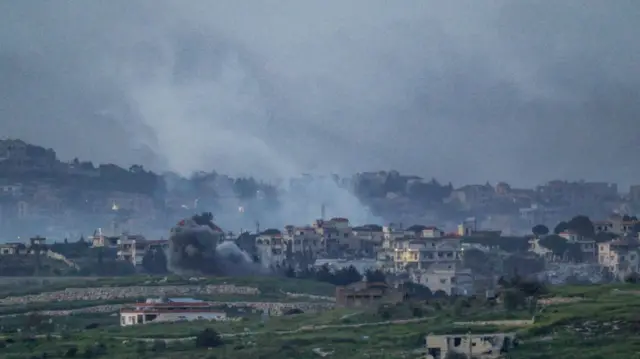
We've seen today that the Israeli military has been continuing to fire into southern Lebanon, and it says it's been hitting Hezbollah positions.
At the same time, rockets have been fired by Hezbollah over the border into northern Israel where there have been sirens blaring. There have been no reports of injuries.
But today, once again, authorities in Lebanon say more people have been killed by Israeli airstrikes.
So we wait, we watch and we wonder how all of this will play out in the hours to come.
Lebanon-Israel ceasefire a 'relief', says von der Leyen
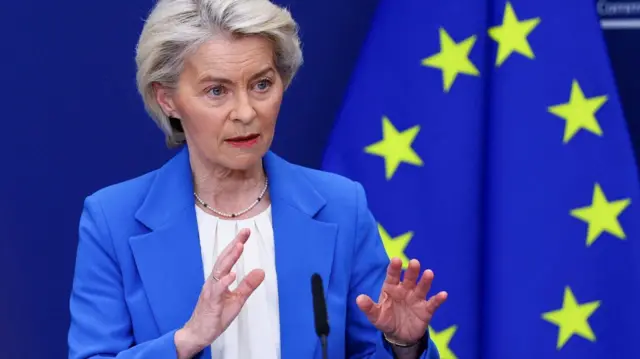
ReutersEuropean Commission President Ursula von der Leyen has welcomed the 10-day ceasefire between Israel and Lebanon, announced by US President Trump.
"This is a relief, as this conflict has already claimed far too many lives," she writes on X.
She says a path to "permanent peace" is now needed, not "just a temporary peace", adding that Europe will continue to call for the "full respect of Lebanon’s sovereignty".








No comments:
Post a Comment