Saturday, August 30, 2025

The National Interest - The US’ Moral Responsibility to Ukraine - August 26, 2025 By: Agnia Grigas

 The National Interest 

The US’ Moral Responsibility to Ukraine

August 26, 2025

By: Agnia Grigas


Just because Russia is “big” does not mean its aggression should be rewarded with diplomatic recognition of its Ukrainian conquests.

“Russia is a very big power and [Ukraine is] not,” President Donald Trump said after his meeting with Vladimir Putin in Alaska, justifying a proposal that would compel Ukraine to surrender its territory. It’s a sentiment grounded in cold realpolitik—the idea that might makes right, and that smaller nations must yield to greater powers when compelled by force.


Yet, as Trump discusses peace proposals with Ukrainian president Volodymyr Zelensky alongside European and NATO leaders, it’s essential to remember that this worldview neither tells the whole story nor should it shape the outcome of any Ukraine-Russia peace negotiations.


Realism has long dominated the worldview of American foreign policy thinkers, shaping the instincts of leaders like Trump and his closest advisors. According to this school of thought, nations act solely in their own interest, based on power calculations, rather than ideology. Democracy or dictatorship, rich or poor, all countries are presumed to behave the same under the pressures of geopolitics. In this view, Mexico or Russia, North Korea or Luxembourg are merely pieces on the same chessboard, judged by capability alone.


What realism leaves out—fatally, in my view—is any space for moral responsibility, soft power, or values. The very things that have made America great—its moral leadership, its commitment to democratic principles, and its ability to inspire allies around the globe—are rendered irrelevant by realism’s sterile calculus.


I know this not just from academic theory or current events, but from personal experience.


I am a Lithuanian-American who grew up in the United States, educated by its schools and universities, and shaped by its ideals. Now, I live in Lithuania with my husband and three young children. And I cannot help but wonder: What would happen if the Russians came again? They’ve done it before—in 1941 and 1944—and stayed until the 1990s. Back then, Soviet soldiers left a trail of death and terror. Would they now butcher Lithuanian civilians as they did in Bucha in 2022? Would the world once again stand by and rationalize the violence because “Russia’s a great power”?


Lithuania today is a member of NATO and the European Union, and is rapidly rearming. However, the country’s security still depends on one key factor: that the West, especially the United States, views honoring alliances and defending freedom as a moral obligation, not just a strategic calculation.


Ukraine, tragically, has already learned what happens when the world treats security assurances as symbolic rather than binding. In 1994, Ukraine gave up the world’s third-largest nuclear arsenal in exchange for security assurances from the United States, the United Kingdom, and Russia under the Budapest Memorandum. Those guarantees—though never formalized and detailed—promised to uphold Ukraine’s territorial integrity. As Russia has definitively broken its word, America and Britain owe Ukraine a moral debt. Words must mean something. Promises, even unenforceable ones, carry weight.


This is not a theoretical debate for the Ukrainian people. Since 2014, they have been shedding blood to defend their sovereignty—from Russia’s annexation of Crimea to the war in Donbas and the invasion of 2022. But their fight did not begin with tanks and missiles—it began with a choice to align with Western values.


In the winter of 2004, during the Orange Revolution, Ukrainians stood in freezing squares demanding free elections and a path toward the European Union and the United States. During the 2014 Euromaidan protests, they faced down riot police and government snipers to reject a future tethered to Moscow’s corruption and authoritarianism. These demonstrations were declarations of allegiance to a better world. To our world.


As a child in Soviet-occupied Lithuania, I remember sitting in my grandmother’s kitchen, listening to the crackling Voice of America broadcast. Those words—barely audible through the interference—carried the promise of freedom. They told us we weren’t alone. That America cared.


Ukrainians, too, have been listening. They believed in America’s message. They embraced the call to democracy, markets, and human rights. And they have paid a terrible price for that choice.


As one aging Lithuanian resistance fighter told me about his years hiding in the forests, “We kept fighting in the snow-covered trenches for years, waiting for the Americans or the British to come.” The West never came then. But will it fail again now?


A world governed solely by realism would abandon Ukraine. It would appease aggression in the name of stability. But such a world would not be stable. It would be a world where small nations live in fear, where values are transactional, and where dictators face no consequences.


The United States has a choice. It can acknowledge a moral obligation to Ukraine not only stemming from its past promises, but also because America’s global role depends on standing by those who share its values and take risks for its ideals.


Peace will eventually come to Ukraine. But if any territorial concessions are made, they must be de facto, not de jure. The world must never legitimize conquest by force. Ukraine must retain the legal right to reclaim its lands, even if it takes generations to do so. To do otherwise would reward aggression and endanger not just Ukraine, but Lithuania, Eastern Europe, and all who live in the shadow of tyranny.


About the Author: Agnia Grigas

Dr. Agnia Grigas is a senior fellow at the Atlantic Council and author of Beyond Crimea: The New Russian Empire, among other books. Follow @AgniaGrigas.


Image: Paparazzza / Shutterstock.com.


Related Articles

Romanian troops march down the streets in Bucharest, Romania.

Security

Romania Holds the Key to Ukraine Peacekeeping

Bucharest is willing to lend its critical military infrastructure to any post-war peacekeeping effort in Ukraine.


Glen E. HowardPhilip Breedlove August 29, 2025

President Trump meets with European leaders in the Oval Office.

Security

Mapping the Russia-Ukraine War Endgame

Ukraine faces a difficult choice: end the war and risk conceding territory or fight on and absorb more material, manpower, and territorial losses.


Graham Allison August 29, 2025

NATO tank on parade in Vilnius, Lithuania.

Security

An Empty US-NATO Arms Deal

The recent arm-sharing agreement with NATO does not address Europe’s woeful lack of defense capabilities. 


Violet Collins August 28, 2025


LSE -EUROPP - Why the Russia-Ukraine war isn’t just about NATO and Putin - Gabriel A. Pierzynski , Jonathan Joseph August 15th, 2025

 LSE -EUROPP 

Why the Russia-Ukraine war isn’t just about NATO and Putin

Gabriel A. Pierzynski

Jonathan Joseph 

August 15th, 2025 


0 comments | 40 shares


Estimated reading time: 6 minutes


Most explanations of Russia’s invasion of Ukraine focus on NATO expansion or Vladimir Putin’s personal ambitions. Yet as Gabriel A. Pierzynski and Jonathan Joseph argue, such accounts miss that Russia’s imperial state structure shapes the state’s behaviour regardless of who leads it or how the West reacts.


Explanations of the causes of the Russia-Ukraine war tend to drift towards one of two lines of argument. These are the “NATO expansion” argument, chiefly focusing on the geopolitical rivalries system and the possibility of the acceptance of Ukraine into NATO, and the “Putin’s war” argument, which attempts to place the bulk of blame for the war on the actions and agency of Putin himself. Both explanations, however, focus on processes rather than structures. We propose a third explanation – patrimonial imperialism, arising out of fundamental state-society relations.


Patrimonial imperialism

Patrimonial imperialism integrates imperial structures into the internal organisation of the state. Unlike traditional imperialism, where states subjugate diverse peoples to expand power externally, patrimonial imperialism constitutes an established internal state structure arising out of state-society relations.


This structure influences the organisation of the state, its laws, mindset, government and actions without requiring a formal empire. As both state structure and style of governance, it perpetuates itself with each generation and iteration of the state. The patrimonial state can be seen as an emergent social feature, and the concept captures the way that a core population becomes attached to an imperialist state.


Historically, the approach was characterised by a strictly imperial state structure that sought to bring all peoples under Russian rule. Tsarist Russia annexed outright its constituent nations and peoples and held them in direct subjugation. In the Soviet Union, there was the notion of the Soviet citizen that, on its own terms, pertained to the idea of a universal identity. In practice, however, the main language of the state was Russian and the various Soviet Socialist Republics were held in check by the Russian core.


This was, however, an advance from outright denial of the existence of other nations. Currently, the notion of Russia is, in theory, more nationalist than universal, albeit Russia still views itself as a hegemonic imperial culture. The main change is that the Russian Federation seeks to keep Belarus and Ukraine within its sphere of influence.


That means that it no longer aspires to form a singular uniform state with the constituent populations in subjugation. Rather, it seeks to simply hold the nations in subjugation without them being a part of Russia. The following dynamics show that core tenets of patrimonial imperialist structures perpetuate themselves irrespective of regime changes, with each iteration of the state bringing about a different form.


NATO and Putin

Patrimonial imperialism ought to be seen as a part of a larger causal model that separates the causes of the Russia-Ukraine war into internal state-society structure (patrimonial imperialism), geopolitical rivalries (NATO expansion) and state agency (Putin’s war).


The “NATO expansion” and “Putin’s war” arguments could best be described as representations of processes deduced from sequences of events. These approaches, focused on observable events and individual decisions, cannot account for deeper, less visible causes.


Patrimonial imperialism, on the other hand, identifies the underlying structure that generates these surface manifestations. It questions traditional notions of imperialism focused on ideological or strategic considerations by showing how imperialism can become an embedded feature of state structure that is persistent through regime changes. The broader causal power of the framework has shown why a move away from imperialism in Russia failed after the fall of the Soviet Union and how the feature has, and likely will, persist with subsequent regimes.


This leads to the conclusion that for genuine change to take place in states where patrimonial imperialism has taken root, more fundamental transformations would have to occur that go beyond the scope of regime change. This would likely involve a foundational change in society-state relations, which requires further investigation.


The patrimonial imperialism framework can ground inquiry into embedded aspects of imperialism that can be applied beyond Russia to other nations such as Türkiye or China. The consequences of our research are directly relevant to academic and policy circles as they highlight the need to reconsider how relations with states where patrimonial imperialism is present ought to be conducted.


Given that the perpetuation of imperial structures remains constant throughout regime change, future research and policy approaches must develop strategies that engage with such structural continuities rather than regime-level dynamics.


For more information, see the authors’ accompanying paper in the Journal for the Theory of Social Behaviour.


Note: This article gives the views of the authors, not the position of EUROPP – European Politics and Policy or the London School of Economics. Featured image credit: Joey Sussman / Shutterstock.com


Subscribe to our newsletter


About the author

Gabriel A. Pierzyński

Gabriel A. Pierzynski is a Research Assistant at the London School of Economics and Political Science. His research focuses on IR theory and Computational Social Science.


Jonathan Joseph

Jonathan Joseph is a Professor in Politics and International Relations at the University of Bristol. His research focuses on IR, social theory and resilience.


EU - Palestine: Statement by the High Representative on behalf of the European Union - 30/08/ 2025


 Council of the EU
30/08/2025 16:34 | Statements and remarks |

Palestine: Statement by the High Representative on behalf of the European Union


The EU has learned the decision to refuse and revoke entry visas for members of the Palestinian Authority and the Palestine Liberation Organization ahead of their participation in the United Nations General Assembly in New York in September.

In light of the existing headquarters agreements between the UN and its host state, we urge for this decision to be reconsidered.


Yazar: Murat Yetkin / 30 Ağustos 2025, Cumartesi / 30 Ağustos hem dış hem iç düşmanlara karşı bir zaferdir


30 Ağustos hem dış hem iç düşmanlara karşı bir zaferdir

/ / Hafıza Kartı

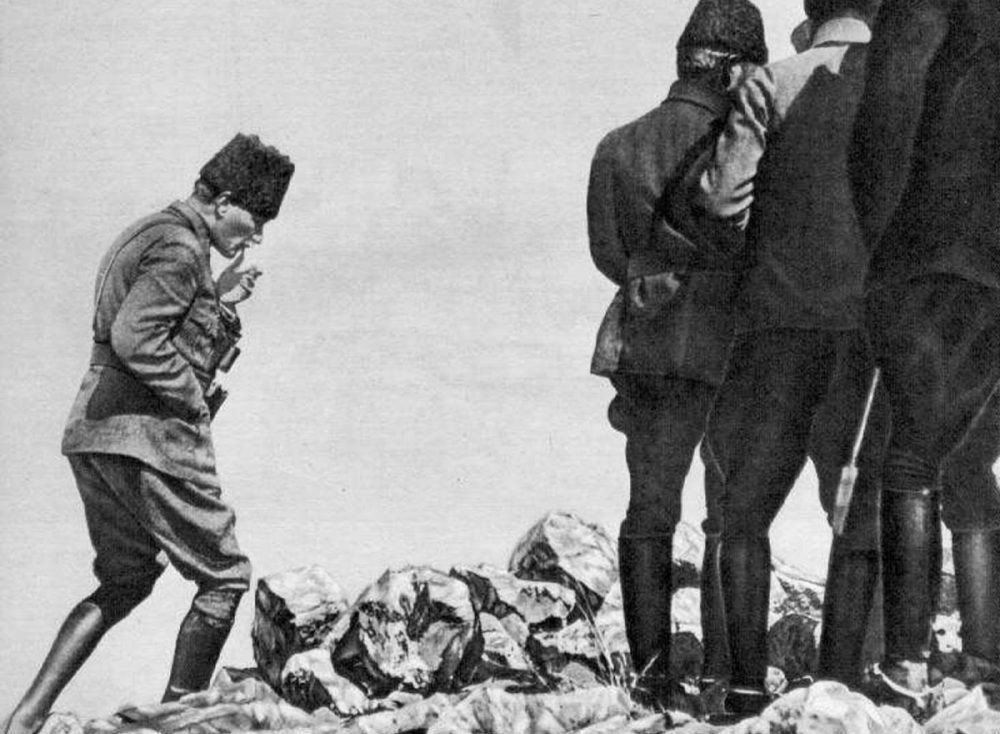
30 Ağustos Zafer Bayramında gerçeklerle yüzleşelim: Zafer hem işgalcilere hem de işgalcilerin Halife Sultan destekli yerli işbirlikçilerine karşı kazanıldı. Fotoğrafı çeken Ethem Tem’in gazeteci Fikret Otyam’a anlatımıyla Mustafa Kemal Atatürk 26 Ağustos sabaha karşı Büyük Taarruzu başlatması ardından saat 11.00 sularında Kocatepe’de durum değerlendirmesinde görülüyor.

30 Ağustos Zafer Bayramı’nı Bağımsızlık Savaşımızın son perdesi olan Büyük Taarruzun 1922’de tamamlandığı gün olarak kutluyoruz.
Bugün Zaferin kime ve neye karşı kazanıldığını hatırlamak ve bununla yüzleşmek zorundayız.
Türkiye’de kitleleri vatan kavramıyla tanıştıran Namık Kemal oldu. “Vatan Yahut Silistre” eserinin sahnelenmesi ve halktan büyük ilgi görmesi üzerine Payitaht tarafından gönderildiği sürgünlerde 47 yaşında vefat etti.
O zamana dek Halife Sultana mülk olan topraklar üzerinde yaşayanlara ait olmaya başladı.
Türkiye’de kitleleri “halk” kavramıyla tanıştıran ise Mustafa Kemal Atatürk oldu.
O zamana dek Halife Sultan’a tebaa olan ümmet, kendisini millet olarak tanımaya başladı.
Kurtuluş Savaşı vatan için verilen bir halk savaşıdır.
Bu yönüyle işgalcilere karşı verilmiştir.
Osmanlı yönetiminde iki asır önce Tuna nehri boylarında başlayan gerileme, Sakarya nehri boylarında durdurulmuştur.
Durduran orduların başında, Halife Sultan’ın İngiliz ordusunun İstanbul’u, Payitahtı işgaliyle uzlaşması ardından 23 Nisan 1920’de Ankara’da kurulan Millet Meclisinin verdiği yetkiyle Büyük Taarruza komuta eden Mustafa Kemal Paşa vardı.

Dersimli Diyap Ağa: “Kaçmaya mı geldik?”

Araştırmacı Sabahattin Selek “Millî Mücadele- Ulusal Kurtuluş Savaşı” kitabında (kendisi de Güney Cephesi Kurtuluş Savaşı kahramanlarından olan) Adana Milletvekili Damar Arıkoğlu’nun anılarından aktarıyor. Hem Bakanlar Kurulu Başkanı hem de Genelkurmay Başkanı görevlerini üstlenen Fevzi (Çakmak) Paşa ”rengi uçmuş, tıraş olmamış, kim bilir kaç gündür uykusuzluktan gözlerinin etrafı halka halka, elbisesi toz toprak, perişan kıyafette” kürsüye gelir.
“Arkadaşlar” der; “Yunanlıların çok üstün kuvvetle yaptıkları taarruza karşı asker ve subaylarımız insanüstü bir gayretle kahramanca savaştılar. Harp çok kanlı oldu. Ağır zayiata uğradık. Şehir, bölge harbi yapmıyoruz; hedefimiz nihai zaferdir. Hükümet merkezimizi Kayseri’ye taşımaya karar verdik. Hazırlığa başlamanızı rica ederim.”
Ortaklık karışır. Dersim Mebusu Diyap Ağa söz alır: “Efendiler biz buraya kaçmaya mı geldik, yoksa kavga ederek ölmeye mi geldik?”
Meclis’te iki eğilim ortaya çıkar. Ankara’yı savaşmadan terk etmemek ve orduyu bu hale getiren komutanları cezalandırmak.
Fevzi Paşa tekrar kürsüye çıkar. Bütün sorumluluğu üstüne alır “Vereceğiniz cezayı şahsen, şimdiden kabul ederim” der. Onun bir altında da İngiltere destekli işgalci Yunanistan ordularıyla yüz yüze savaşan Batı Cephesi Komutanı İsmet (İnönü) Paşa vardır.
Meclis Başkanı Mustafa Kemal’in orduya komuta sorumluluğunu üstlenmesi fikri ortaya atılır. Sert tartışmalar sonucu yetki verilir . Sakarya Savaşı böyle kazanılır, Yunan orduları Ankara’ya 50 kilometre kala geri çekilmek zorunda kalır.
Bir yıl sonra, 26 Ağustos’ta ki Malazgirt’in yıl dönümüdür, Büyük Taarruz başlar, 30 Ağustos’ta zafer kazanılır.

Zafer kime karşı kazanıldı?

Zafer sadece işgalci İngiliz, Fransız, İtalyan, Yunan, Gürcü ve Ermeni ordularına karşı kazanılmakla kalmadı.
Bu işin askeri yönüdür.
Zafer aynı zamanda işgalcilerle uzlaşan Halife Sultan ve yandaşlarına karşı kazanıldı.
Evet, aynı zamanda bir iç savaştı. Millet Meclisi orduları işgalcilere karşı savaşırken bir yandan da cephe gerisinde onları sırtından hançerlemek için yeşil bayrak açıp cihat ilan edenlere karşı da savaştı ve kazandı.
Bu da işin siyasi yönüdür.
Yani zafer, “Keşke Yunan kazansaydı. Ne Hilafet yıkılırdı ne Şeriat” diyen Kadir Mısıroğlu gibilerine karşı da kazanıldı.
Zafer aynı zamanda Atatürk’ün Meclis başkanı koltuğunda maalesef oturtulup şimdi şehirlerimizin işgalden kurtuluşuna karşı çıkan İsmail Kahraman gibilere karşı da kazanıldı. Şu sözlerin bir TBMM başkanının ağzından çıktığını duymak acı veriyor:
• “İzmir’in kurtuluşu 9 Eylül, kim demiş? Ne münasebet. Cihan harbi bitti, müstevliler alacaklarının birkaç kat mislini aldı ve öyle gittiler, çekildiler. Kurşun sıkmadık ki.”

Geldik bugüne: Atatürk’e saygı

Dünyaya örnek olmuş Kurtuluş Savaşımızı, Büyük Taarruzu, Sakarya’yı, Dumlupınar’ı “Kurşun sıkmadık ki” diye aşağılamak için ya tarihine ve oturduğu koltuğa ihanet içinde olmak lazım, ya da ABD Altıncı Filosuna nazır namaz kıldırıp gençleri 1969 Kanlı Pazar’a kışkırtacak kadar Cumhuriyetin kazanımlarına kin beslemek. Halen önceki Meclis Başkanlarıyla birlikte Cumhurbaşkanlığı Yüksek İstişare Kurulu üyesidir.
İktidarda geçen çeyrek asırdan sonra AK Parti iktidarının Mustafa kemal Atatürk, Kurtuluş Savaşı ve Cumhuriyet kazanımlarına halkın çoğunluğunun gösterdiği saygı ve sevginin silinemeyeceğini gördüğüne tanık olmaya başladık son yıllarda.
Cumhurbaşkanı Tayyip Erdoğan ilk kez 2022’de “Batı cephesi Komutanı İsmet Paşayı” da anarak İsmet İnönü’yü de olumlu bir cümle içinde kullandı. Siyasi İslamcıların öteden beri değersizleştirmeye çalıştığı 1936 Montrö Sözleşmesi sayesinde Türkiye Rusya’nın Ukrayna savaşında eşsiz bir diplomatik konum kazandı. Onlarca yıldır yayılan Lozan Anlaşması 100’üncü yılda iptal olacak hurafesinin 2023’de sapasağlam yerinde durduğuna tanık olduk.
Türkiye 30 Ağustos 2025’e kendi hava savunma sistemini, kendi gemilerini, insansız hava ve deniz araçları filolarını yapabilen bir askeri yapıyla giriyor.

Zafer, Cumhuriyet, Hilafet

Ama gördüğümüz gibi 30 Ağustos’un bir askeri bir de siyasi cephesi vardır.
Askeri cephe, son vatanın işgalcilerden temizlenmesiyle, siyasi cephe de 29 Ekim 1923’te Cumhuriyetin ilanı ve 3 Mart 1924’te Hilafetin ilgasının, Hilafet yetkilerinin TBMM’ye devriyle tamamlandı.
Şimdi başında Ali Erbaş’ın bulunduğu Diyanet’ten bizlerin vergisiyle maaş alan imam Halil Konakçı’nın TBMM’nin kaldırdığı “O makamı geri istiyoruz” demesi altında hangi gerici arzunun yattığı belki daha iyi anlaşılır.
Türkiye’nin bir asır önce Cumhuriyeti kurarken yaptığı stratejik tercihi bugün de koruması gerekiyor.
Zafer de Cumhuriyet de en çok ona layık olanlarındır. 30 Ağustos Zafer Bayramı kutlu olsun.

The Washington Post - August 30, 2025 - Today's Headlines - Appeals court strikes down Trump’s tariffs as illegal but leaves them in place


PUBLISHED BYREAD ONLINE | SIGN UP

Today's Headlines

The morning’s most important stories, curated by Post editors.