Tuesday, March 17, 2026

GZERO DAİLY - March 17, 2026 - how the Iran conflict is straining Europe, the reported death of Iran’s security chief, and the strike on a drug rehab center in Afghanistan’s capital.


GZero Daily Newsletter
View email in your browser.

Dear Onder,

Happy St. Patrick's Day 🍀. Today, there will be epic geopolitical undertones at the World Baseball Classic in Miami, as the US faces Venezuela in the final. As for the newsletter, we’re examining how the Iran conflict is straining Europe, the reported death of Iran’s security chief, and the strike on a drug rehab center in Afghanistan’s capital.

- The Daily crew


Nearly a month ago, the US and Israel started a war with Iran. But one continent, which wants very little to do with the war, is uniquely impacted: Europe.

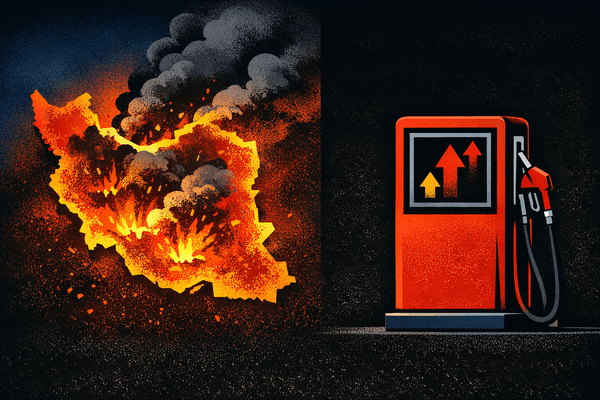
As the war drags on, European Union leaders met in Brussels on Tuesday to discuss skyrocketing energy prices resulting from the conflict. It comes after US President Donald Trump issued a stark ultimatum to European and NATO allies on Sunday: help reopen the Strait of Hormuz, or risk the future of the alliance itself. Europe at large, which has enormous economic and security stakes in the Iran war, has so far refused.

“It’s only appropriate that people who are the beneficiaries of the Strait will help to make sure that nothing bad happens there,” Trump warned during an interview with the Financial Times. “If there’s no response or if it’s a negative response, I think it will be very bad for the future of NATO.” Germany, France, and the Europe as a whole have effectively declined after being sidelined from the decision of whether to strike Iran in the first place.

But make no mistake: whether European boots ever touch the ground, Europe is already paying for this war.

The energy bill. The most immediate cost is energy. The EU’s gas stockpiles were depleted before the war began by a harsh winter, leaving them at just 29% of capacity, and down from 90% in November. Then, Iranian strikes disrupted Qatari LNG production, which accounts for about one-fifth of global output and 50% of the EU’s gas imports. European benchmark gas prices have surged more than 50% since the war began.

While the continent imports relatively little fuel directly from the Gulf, it's facing fiercer competition in the markets, which is driving up prices. In 2025, the EU sourced less than 4% of its gas from Qatar, the Middle East’s biggest gas exporter, and a mere 6% of its crude oil from the region as a whole. The bulk of its pipeline gas comes from Norway, and nearly 60% of its LNG from the United States.

But as shipping through Hormuz grinds to a halt, Asian countries like Japan, South Korea, and India, which rely heavily on Gulf energy exports, are scrambling for alternative supplies and are now competing directly with European buyers. If the shipping freeze extends or deepens, European gas, already trading at its highest level since 2023, will come under further supply strain. Fears are growing of a repeat of the energy crunch following Russia’s full-scale invasion of Ukraine in 2022, which slashed gas supplies and sent prices soaring.

But this time around, rising energy prices threaten to slow already weak economic growth and ratchet up inflation, which would be disastrous for Europe’s industries facing increasing competition from Chinese production.

Domestic consequences. The domestic political fallout may prove just as significant. High gas prices and inflation could create a tough backdrop for European centrist leaders.

France is a clear case in point. With the 2027 presidential election on the horizon, any sustained rise in energy costs and cost-of-living pressure would further weaken the political center. President Emmanuel Macron isn’t running again, and the race to succeed him is already taking shape in an environment that favors anti-establishment candidates. If a war with Iran keeps inflation elevated or deepens the sense that France is paying for decisions made in Washington or the Middle East, it would hand a powerful narrative to the far-right.

Marine Le Pen’s National Rally, in particular, has long capitalized on economic frustration and distrust of elite crisis management. The real risk for Europe, then, isn’t just slower growth: it’s that another energy shock further chips away at the electoral base of the pro-EU center at exactly the wrong moment.

Security consequences. After years of painful weaning from Russian energy following the 2022 invasion and subsequent energy crisis, the EU finalized a regulation in January that phases out Russian gas imports by 2027. The European Commission is also expected to announce a similar ban on oil next month. But with Gulf supplies now disrupted and prices surging, some EU leaders are asking whether the bloc can afford to divorce from Russian energy.

On Monday, Belgium’s Prime Minister Bart De Wever called for normalizing relations with Russia to access cheap energy supplies. While the idea faced public rebuke as caving to Russia and risking European security, De Wever claims that privately, “European leaders tell me I am right, but no one dares say it out loud.”

As Europe deliberates, all that’s clear is that they are stuck paying for a war that they didn’t ask for, or potentially acquiescing to a trading partner that they have been desperate to drop.



Israel says it has killed Iran’s security chief, as war drags on

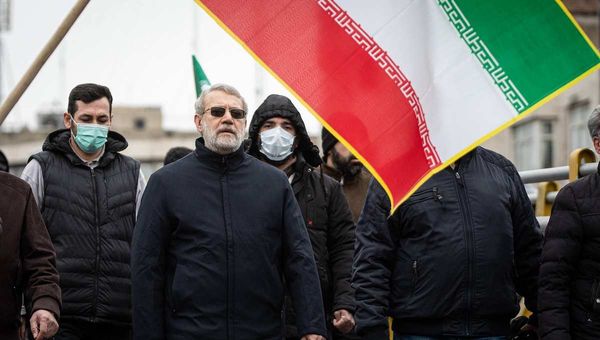
Ali Larijani, who was head of the Islamic Republic’s influential security council and had effectively run the country since Supreme Leader Ali Khamenei’s death, was killed in a strike overnight, Israel has said. Tehran has not confirmed his death. If it is true, Larijani would be the latest senior Iranian official to be assassinated, following Khamenei, IRGC Commander Mohammad Pakpour, and National Defense Council leader Ali Shamkhani. Larijani was seen as a pragmatist who had the capacity to negotiate with the United States, so his killing could potentially embolden hardline figures in the regime. Israel, meanwhile, said it will continue to hunt down the Islamic Republic’s leaders, as the conflict shows no immediate signs of ending. Gulf states are now reportedly pushing Washington to continue hitting Iran hard and crush the regime’s ability to threaten the region’s oil industry.

Separately, Iran appears to be allowing certain fuel tankers to pass through the Strait of Hormuz, including two that were headed to India, a move that may provide some relief to energy markets.

US considers linking HIV aid to critical minerals in Zambia

drafted US memo to Zambia shared with The New York Times on Monday showed Washington is considering withholding HIV assistance unless the southern African nation grants the US more access to its critical minerals. The memo marks the latest example of the “trade not aid” approach the Trump administration is taking to Africa. In a similar move last month, Washington agreed to help the Democratic Republic of the Congo combat HIV/AIDS and other diseases weeks after the nation handed US companies increased access to the country’s rich minerals. For decades, Zambia has benefitted from the Emergency Plan for AIDS Relief, or PEPFAR, which is an HIV treatment program that has been one of the most successful and bipartisan US programs in Africa – it was created by the Bush 43 administration. Losing the aid potentially risks treatments that 1.3 million Zambians rely on daily.

Cuba hints at opening to US investment

A top Cuban official has said the crisis-stricken nation, which suffered yet another island-wide blackout yesterday, will open to more investment from the US, especially from Cuban Americans. Details have yet to emerge, but the shift comes as the communist-run island runs out of fuel due to a de facto blockade on oil deliveries imposed by US President Donald Trump, who said on Monday he could now “take” the country and “do whatever I want with it.” Rumors are swirling of a possible US-Cuba deal in which Cuba’s president, Miguel Díaz-Canel, would resign in order to pave the way for closer economic relations between Washington and Havana. Since 2020, as much as 10% of the Cuban population has fled an economic crisis brought on by economic mismanagement, US sanctions, and the tourism-killing effects of the pandemic.


Is Silicon Valley and the Trump administration on the verge of divorce?

According to Brookings Institution’s Thomas Wright, pressure from the Pentagon could make tech companies more cautious about working with the government. If companies take the wrong step, he warns, officials could “either partially nationalize your company or… ruin your company and burn it to the ground by designating you as supply chain risk.”

Wright’s comments come after Anthropic got into a dispute with the Defense Department late last month. Washington wanted to have unfettered access to its AI systems, but CEO Dario Amodei ​refused this request. Subsequently, the Trump administration labeled Anthropic a “supply chain risk,” prompting Anthropic to sue the government, in turn.

Wright’s view: AI systems should still have a human safeguard. He explains that means keeping a person “on the loop” and able to intervene or shut down a weapon system if necessary.

Watch the video here.


Are you in the New York area? Join us for a live taping of GZERO World with Ian Bremmer tomorrow, March 18, at the 92nd Street Y.

What’s the impact of America’s political revolution at home and its shifting approach to foreign policy abroad? Ian will dive into this question in a spirited conversation with the former ambassador to Japan and chief of staff to President Barack Obama. You don't want to miss it!

Get tickets here.


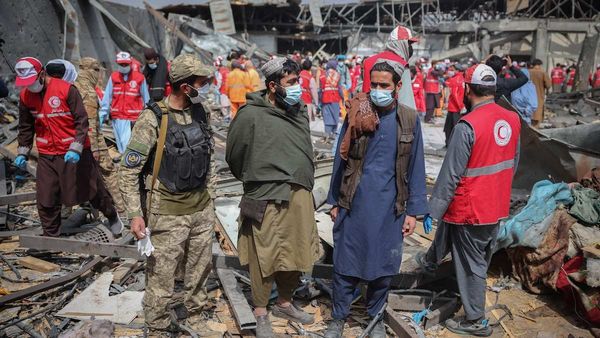
408: The number of people killed in the Afghan capital of Kabul, after a Pakistani strike hit a drug rehabilitation center there, according to Taliban officials. Another 250 were reported injured. Islamabad claimed the facility was being used as an ammunition depot, as the conflict between the two neighbors, which started as border clashes last year, continues to spiral.

5: The number of Iranian women’s soccer team members – including the team captain, Zahra Ghanbari – who withdrew their asylum claims in Australia, per Iran’s state media. Now, only two out of the seven women offered asylum remain in Australia – they had sought asylum after they refused to sing Iran’s national anthem at the Asian Cup. Human rights activists suggested that these women’s families may have been threatened, prompting the reversal.

13: The number of people who contracted meningitis, an infection that’s most common among children and young adults, in the English county of Kent over the last four days. Two of the cases proved fatal. Meningitis is caused by a contagious viral or bacterial infection, and the outbreak has prompted widespread panic at the University of Kent and high schools in the area.

2,000: The number of live ants that a Chinese citizen tried to take out of Kenya last week. On Tuesday, a Kenyan court charged him and one other man with transporting wildlife illegally. Why smuggle ants, you ask? Certain enthusiasts of the insect are willing to pay large sums to watch how the complex social structures of these colonies develop.


This edition of GZERO Daily was produced by Riley CallananZac WeiszAlex Kliment, and Natalie Johnson.

No comments:

Post a Comment