
‘Speed is necessary, and haste is harmful,’ said Russian Marshal Prince Alexander Suvorov in The Science of Victory (1765). That captures a tension that has remained embedded in Russian strategic culture: how to combine long-term endurance with timely opportunism.
Russia is often portrayed as a ponderous bear. But in practice, it frequently resembles a more calculating predator – patient, adaptive, and inclined to strike when the cost-benefit ratio turns decisively in its favour.
Those instincts are clearly visible in Moscow’s conduct since the outbreak of the Iran war. Rather than committing decisively or remaining aloof, Russia has calibrated its engagement to extract advantage while limiting its exposure – mindful of the risks of pushing Washington too far.
Honouring the partnership with Tehran, but avoiding entrapment
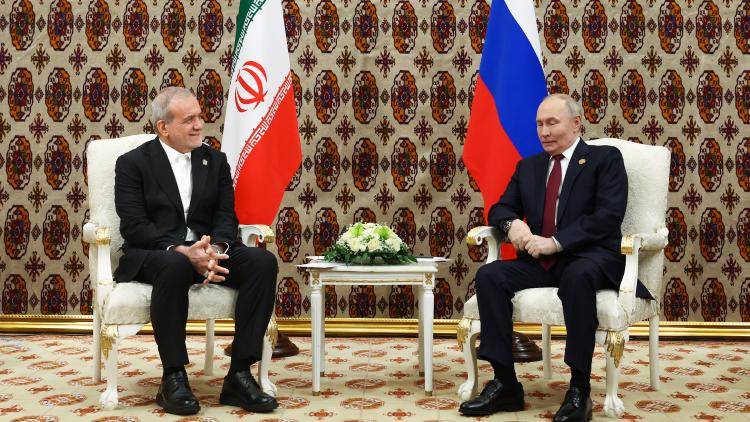
Nowhere has this calibrated approach been clearer in recent years than in Russia’s relationship with the Mullahs. Moscow has provided sustained diplomatic backing, expanded military-technical cooperation, and deepened economic coordination between their two heavily sanctioned systems. A strategic partnership, alongside collaboration in nuclear energy and defence-industrial sectors, reflect a convergence of interests shaped by opposition to Western pressure.
Yet this support has been deliberately bounded – with no mutual-defence commitment. That has allowed Russia to avoid direct military involvement in Iran’s confrontation with Israel and the United States (US).
This is not hesitation but design. Tehran is valuable to Moscow as a partner that complicates Western strategy and reinforces a sanctions-resistant axis. But Russia is not willing to incur open-ended risk on Iran’s behalf.
President Vladmir Putin’s objective is to remain close enough to shape outcomes in the war, but distant enough to preserve freedom of action.
As strikes between Israel and Iran intensified, Moscow issued public condemnations and stepped-up diplomatic engagement with Tehran. And some discreet forms of support, including intelligence exchanges, have likely taken place. But no additional Russian forces were deployed, no air defences activated on Iran’s behalf, and no direct attempt made to challenge Israeli or US operations.
Meanwhile, Russia maintained deconfliction channels with Israel and a limited posture in Syria, insulating its assets from the conflict. The result is visible alignment without operational exposure – enough to retain influence in Tehran, but not enough to become a belligerent.
A Financial Times report of 25 March suggests Moscow may be providing drones to Iran. If true, this would represent a shift in Russian calculations – perhaps based on Iran’s continued resistance to US pressure – and raise the level of strategic risk Moscow is willing to take in the conflict. But this support would be hard to prove: some Russian drones are copies of Iranian models. And it would fall far short of the kind of military backing the US has provided to Ukraine.
Cuba: asymmetric signalling at low cost
A similar logic underpins Russia’s posture in the Western Hemisphere, particularly towards Cuba.
As President Donald Trump has ratcheted up pressure on Cuba this year, Russia has despatched oil shipments as ‘humanitarian aid’ and provided political backing to the regime.
But such steps can be achieved at relatively low cost. Unlike Soviet commitments, current Russian support to Cuba is limited, reversible, and primarily symbolic. Recent Russian oil deliveries are modest and intermittent in nature.
Russian actions do not really alter the regional balance of power. But they introduce friction into the US strategic environment and serve as a reminder: that geopolitical competition can never be geographically contained, and that Moscow retains options beyond its immediate theatre.
Moscow’s message to Washington
From a US perspective, Russia’s behaviour over the past weeks appears opportunistic, if not deliberately provocative. Moscow has combined diplomatic backing for Tehran with continued oil flows to Cuba, while simultaneously benefiting from tighter global energy markets.
This undermines the premise that Russia can be effectively isolated. And it reinforces Moscow’s claim to relevance across multiple theatres.
Perhaps more importantly, this posture exploits a moment of US overstretch. Washington continues to bear some share of the political, military, and financial burden of sustaining Ukraine’s war effort, albeit significantly smaller since the return of Donald Trump. Simultaneously it is responding to escalation in the Middle East and maintaining commitments in the Indo-Pacific.
Russia’s approach has been to act selectively within each theatre without triggering direct confrontation. The objective is not to confront the US everywhere, but to demonstrate that it cannot be excluded anywhere. The effect is cumulative: each calibrated action reinforces a broader narrative of Russian resilience and indispensability, to which Moscow knows Trump cannot stay insensitive.
Tactical gains
The last three weeks of conflict in the Middle East have undeniably strengthened Moscow’s hand, albeit unevenly. Disruption in the Gulf has tightened global energy markets, increasing demand for Russian crude among those buyers willing to operate within or around sanctions constraints.
At various points, the now traditional discount on Russian oil has narrowed, and in some cases disappeared. This has translated into higher export revenues for Moscow and a short-term improvement in Russia’s fiscal position.
However, these gains should not be overstated: economic fundamentals remain constrained by structural factors. Russia is still dogged by limited access to technology, labour shortages, and ongoing fiscal pressures linked to the war in Ukraine.
Growth has slowed, and the government continues to reduce non-priority expenditure. Planned cuts to civilian and administrative spending will likely go ahead, to preserve fiscal space for defence and strategic sectors.
The Middle East crisis has therefore provided a tactical windfall rather than a strategic transformation. It has enhanced Russia’s room for manoeuvre but not resolved its underlying vulnerabilities.
Moscow’s end game: converting leverage into political outcome in Ukraine
These dynamics ultimately converge on the war in Ukraine. Under Donald Trump, US policy has shown a greater emphasis on transactional outcomes and visible leverage.
In this context, Russia’s ability to demonstrate resilience under sanctions, maintain influence in energy markets, and project strategic reach strengthens its relative standing.
Recent US decisions to ease certain restrictions on Russian energy flows are primarily aimed at stabilizing global markets amid disruption caused by the war. They are not intended as support for President Putin. Nonetheless, by being forced to alleviate pressure on Russia’s most critical revenue stream, Moscow’s economic resilience is reinforced to Washington.
Ukraine, by contrast, risks being framed less as a US strategic partner than as a protracted liability that is resistant to rapid resolution. The longer external crises sustain elevated energy prices and divert political attention, the more credible Moscow’s argument becomes that it is the more durable and consequential actor.
The implication is not necessarily a reversal of US commitments, but a shift in emphasis. If Washington moves from seeking to weaken Russia to managing it, the balance of pressure may increasingly fall on Kyiv to accept compromise. In this sense, Russia’s gains in the Middle East are not peripheral to the Ukraine war; they feed directly into the diplomatic and strategic situation.
Moscow’s best currency: global instability
Russia’s approach to the Middle East war is best understood as selective engagement structured across three layers: spectator, beneficiary, and player.
By avoiding full entanglement and intervening only where the returns justify the risks, Moscow has positioned itself to extract maximum advantage without assuming proportional costs.
Article 2nd half
The strategy is not without danger, particularly if the Iran war intensifies or economic gains prove temporary. But for now, Russia has succeeded in turning a distant conflict into a multiplier of influence – one that extends from Tehran to Havana, and ultimately back to Ukraine. In that sense, the Suvorov maxim remains instructive.
Russia has moved quickly where opportunities presented themselves but avoided the kind of ‘haste’ that might convert advantages into liabilities. That balance – between patience and opportunism – may be insufficient to secure outright victory. But it could ensure that no major outcome can be decided without Russian consent. Europeans might want to have a plan…

No comments:
Post a Comment