Wednesday, July 1, 2026

BBC NEWS - Trump loses Supreme Court battle to end birthright citizenship - 30 June 202

 BBC NEWS 

Trump loses Supreme Court battle to end birthright citizenship

30 June 202


Summary

The US Supreme Court has struck down President Donald Trump's executive order limiting birthright citizenship


The president says on social media that the ruling is "too bad for our country" and suggests Congress can legislate an end to the Constitutional law


In a 6-3 decision, the justices upheld a 150-year-old precedent giving automatic American citizenship to babies born in the US - how it works


Trump earlier issued an order to end automatic citizenship for babies born to parents who are in the country illegally or on temporary visas


The ruling definitively slams the door on Trump's efforts, and there is little the president can do to reverse it, our correspondent writes


The court has also ruled that states can ban transgender athletes from women's sports in schools and struck down a ban on how campaign spending is coordinated


20:51 30 June


Kwasi Gyamfi Asiedu

Live reporter


A view of the US Supreme Court exterior in Washington, DC.

Image source,Bloomberg via Getty Images

The US Supreme Court has issued several important decisions during its 2025-2026 term culminating in today's landmark decision upholding birthright citizenship and striking down President Donald Trump's attempts to limit it. Today, the court also ruled that states can ban transgender women from competing in female school and college sports.


Chief Justice John Roberts has indicated today will be the last day for opinions, so it's a good time to look back at some of the monumental rulings over the course of the term.


In February, the court voted in a 6-3 majority decision to invalidate most of President Donald Trump's global tariffs, dealing a major blow to the president's trade agenda.


In March, the court struck down Colorado's state law banning so-called conversion therapy - a practice which seeks to change the sexual orientation and gender identity of gay, lesbian, and transgender people.


In April, the justices restricted the ability of state lawmakers to take race into account when drawing electoral maps, a decision that has spawned new voting maps in Republican-led states that could impact the midterm elections in November.


Yesterday, the court blocked Trump's attempts to immediately fire Federal Reserve Governor Lisa Cook, saying she had not been given due process to contest allegations of mortgage fraud.


But it has also handed several wins for the Trump administration. It allowed the government to end Temporary Protected Status for Haitians and Syrians living in the US.


The court also allowed Trump to remove officials from some independent federal institutions.


We are closing our coverage of the Supreme Court for now. You can read more about today's rulings below:


US Supreme Court upholds bans on transgender women in female school and college sports

US Supreme Court upholds birthright citizenship in blow to Trump


Share

Trans sports case is a legal ruling with cultural shockwaves

published at 20:48 30 June

20:48 30 June


Gary O'Donoghue

Chief North America correspondent, reporting from Washington DC


This trans sports case decision is a legal ruling — but its cultural shockwaves will reverberate far beyond the gleaming marble columns of this Supreme Court.


In upholding state laws in West Virginia and Idaho barring transgender women and girls from female sports teams in schools and universities, it has handed down one of the most consequential decisions of Donald Trump's second term.


The ruling is squarely in line with Trump's direction of travel on the issue. Its reach goes well beyond two states. Two dozen others have similar laws on the books; today's decision validates all of them — and confirms a pattern from the court.


This is a court that has already backed Trump's ban on transgender people in the military and blocked passport applicants from listing their gender identity.


It marks a striking reversal of trajectory, in recent history. The court's own 2020 ruling protecting transgender people from workplace discrimination felt, at the time, like a watershed. Today makes clear the position of transgender people in US society is far from settled.


Share

Trans sports case ruling praised and rebuked

published at 20:44 30 June

20:44 30 June

The Supreme Court issued other rulings today besides the one on birthright citizenship.


In on decision, the court upheld state bans on transgender women from competing in female sports in schools and colleges.


The attorney general for West Virginia - one of the two states which was being challenged - lauded the ruling as a "landmark win for female athletes and the future of women's sports".


In a statement on X, Attorney General JB McCuskey said the decision would give "all states, not just West Virginia, the clarity and confidence to ensure fairness and safety for female athletes today and for generations to come".


The Human Rights Campaign (HRC), which advocates for the LGBT community, criticised the court's decision.


“This ruling is heartbreaking for transgender student athletes who are being forced to sit on the sidelines simply for who they are,” said HRC President Kelley Robinson.


Share

What were Trump's arguments for his order limiting birthright citizenship?

published at 20:34 30 June

20:34 30 June


Sakshi Venkatraman

US reporter


Today's Supreme Court ruling on birthright citizenship stemmed from an executive order signed by Donald Trump last year. Challenges to the order made their way to the Supreme Court earlier this year, with oral arguments focused on the text of the 14th Amendment of the US Constitution.


This is the section of the 14th Amendment of the US Constitution that the Supreme Court heard argument earlier in April:


All persons born or naturalized in the United States, and subject to the jurisdiction thereof, are citizens of the United States and of the State wherein they reside.

The Trump administration honed in one one particular phrase: subject to the jurisdiction thereof.


That phrase has previously been believed to only exclude children of foreign diplomats or occupying armies from having birthright citizenship.


But Trump said it should exclude children of people who are not in the country permanently or lawfully.


The president argued that it should exclude immigrants who do not have a "permanent domicile" here.


People "who are domiciled elsewhere, and are only temporarily present in the United States, owe primary allegiance to their parents' home countries, not the United States", the administration argued.


Many constitutional and civil rights law experts take issue with this.


"People who are here out of status, that doesn't change that they are residents here," says Margo Schlanger, a law professor at the University of Michigan.


The court today appeared to agree with that assessment in their decision.


Share

Democrats celebrate court's landmark ruling

published at 20:26 30 June

20:26 30 June

Minority Leader Hakeem Jeffries (D-NY) speaks during a dedication ceremony of the Semiquincentennial Congressional Time Capsule in Emancipation Hall at the U.S. Capitol Building. He is wearing a navy blue suit and there are four flags behind him

Image source,Getty Images

Image caption,

Hakeem Jeffries


Democrats have praised today's Supreme Court ruling.


"The Supreme Court finally affirmed, by applying the law and being guided by the Constitution, that all persons born in the United States are American citizens," Hakeem Jeffries, who leads Democrats in the US House of Representatives, says. "There is, and shall be, no question."


Those sentiments were echoed by Chuck Schumer, the US Senate's minority leader.


"Despite Trump’s best efforts to bully them, the Supreme Court just reaffirmed that if you are born in America, you belong in America... The Supreme Court confirmed today that those born in America are American."


Massachusetts Senator Elizabeth Warren says there was still more work to be done.


"Even Trump’s hand-picked Supreme Court knows that birthright citizenship is guaranteed by the Constitution," Warren says in a statement. "The fight to defend immigrant rights from Trump's cruelty is not over, but today the Court upheld the law."


New York Mayor Zohran Mamdani also hailed the decision.


“Today’s Supreme Court ruling affirms a promise that was written into our Constitution more than 150 years ago: if you are born on American soil, you are an American citizen," he says. "This should never have been in doubt."


Read more of Republicans' responses here and here.


Share

Immigrant advocacy group 'relieved' by ruling

published at 20:20 30 June

20:20 30 June

Paul Christian Namphy, the policy director for Family Action Network Movement (FANM), an immigrant advocacy organisation, says the group is "relieved" by today's ruling.


"This could have been an absolute absolute nightmare," he says of if the majority of justices had ruled in favour of Trump.


But, Namphy adds, he was "shocked that [three] justices would rule in the way that they ruled, given that there is absolutely zero legal ground for taking that position".


"The very fact that Justice Clarence Thomas really lunged at the court in a 91 page dissent, it’s just crazy," he says.


In his dissent, Thomas argues the 14th Amendment, passed in the wake of the US Civil War in the late 1800s to secure rights for freed slaves, is now being "repurposed for political projects".


Share

The biggest legal defeat of Trump's second term?

published at 20:12 30 June

20:12 30 June


Gary O'Donoghue

Chief North America correspondent, reporting from Washington DC


This birthright citizenship ruling is probably the biggest defeat of President Trump’s term in the White House. He also lost the case on foreign tariffs, but this is a pretty big one because he made it a big one.


He made this executive order on day one of his second term. He said he was ending birth tourism, he said it was abuse, a waste of resources, and that it should have been done years ago.


He said no other country in the world has this right which isn’t true – Mexico and Canada both have versions of birthright citizenship, along with more than two dozen others.


After he came to the Supreme Court and sat listening to oral evidence – the first president to ever do that – he started to talk about expecting a defeat, so he clearly did expect a defeat and he got it.


And he got it pretty resoundingly. It wasn't close in any particular way. The upholding of this right reaffirms the status quo, but for the president, it's a huge blow.


And if he wants to try and change it, he has to try and change the constitution. And that, in modern-day America is virtually impossible.


Share

Ruling 'should be very reassuring' - legal expert

published at 19:51 30 June

19:51 30 June


Kwasi Gyamfi Asiedu

Live reporter


Legal experts have been reading over the decision on birthright citizenship handed down today by Chief Justice John Roberts, who authored the majority's opinion.


David Leebron, professor of legal studies at Rice University and former dean of Columbia University's law school, says Roberts "issued an excellent opinion that faithfully interprets the history of the 14th amendment, and the understanding of the 14th amendment."


The 6-3 decision was supported by the three liberal justices and three conservative justices - even though one supported the ruling on different grounds.


Leebron says despite disagreements, that composition of justices shows that court is more complex than its six conservatives versus three liberals make up might suggest.


"We have seen many unusual coalitions on the court," he says. "Here are six justices of the court, affirming some principles of interpretation in a very important and controversial matter and have said the president cannot exceed the bounds of the Constitution. That part should be very reassuring to people."


Share

Court's ruling 'too bad for our country', Trump says in initial reaction

published at 19:35 30 June

19:35 30 June

Breaking

President Donald Trump has now made his first comments following today's Supreme Court ruling striking down his executive order limiting birthright citizenship.


"The Supreme Court upheld Birthright Citizenship, which is too bad for our Country," Trump says in a post on social media platform Truth Social.


His statement goes on to suggest Congress will be able to limit birthright citizenship through legislation, despite the court's ruling.


Quote Message

...We can easily make it up in Congress through Legislation, with the support of the President, that has now been determined during this process. No long and unwieldy Constitutional Amendment is necessary! Congress should start TODAY to work on ending expensive and unfair to our Country, Birthright Citizenship. They will have my Complete and Total Support!


Donald Trump, US President


Share

Ruling 'one of the most destructive' in court's history, Stephen Miller says

published at 19:25 30 June

19:25 30 June

Stephen Miller wearing Aviator sunglasses and pointing upwards

Image source,Getty Images

We have not still not heard President Donald Trump's reaction to the court's decision to strike down his execuitive order limiting birthright citizenship.


But we can bring you comments from Stephen Miller, the White House deputy chief of staff for policy and the official often described as the architect behind the executive order and Trump's immigration policies.


Miller says in a statement, the ruling is "one of the most destructive and outrageous decisions in the long history of the Supreme Court".


Quote Message

American citizenship is not the birthright of the world. It belongs only and solely to Americans. No provision of the Constitution can be read to require our national self-obliteration.


Stephen Miller, White House's deputy chief of staff for policy


Share

Immigration advocates declare victory after court ruling

published at 19:14 30 June

19:14 30 June


Bernd Debusmann Jr

White House reporter


While today's Supreme Court ruling is clearly a defeat for the Trump administration, immigration advocates and lawmakers are declaring victory.


Since the ruling, my inbox and phone have been buzzing with statements and messages from the organisations that have long condemned Trump's immigration policies as being too harsh.


"Today, the Fourteenth Amendment proved once again that it is stronger than the forces trying to hollow it out," said Krish O'Mara Vignarajah, President and CEO of Global Refuge.


Dariely Rodriguez, chief counsel at the Lawyers' Committee for Civil Rights Under Law, said that the ruling "solidifies what we have known to be true for over a hundred years".


"Anyone born on American soil, regardless of the legal status of their parents, is born an American citizen," she added. We have endured an incredible test of our collective will as a nation and have prevailed.


A Democratic lawmaker and frequenty critic of Trump's, Illinois represesentative Jesus "Chuy" Garcia, described Trump's attempt to end birthrighrt citizenship as "a cruel and racist attempt" to render millions without legal citizenship.


"Even right-wing justices like Roberts and Barrett wouldn’t buy it," he added.


Share

US House Speaker 'disappointed' by court's ruling

published at 19:03 30 June

19:03 30 June

Mike Johnson in a suit and tie

Image source,Reuters

House Speaker Mike Johnson, a Republican, was holding a press conference when he heard about the Supreme Court's ruling on birthright citizenship.


As a reporter read out the court's decision in which the majority of justices ruled against Trump, Johnson growled and other Republicans standing nearby shook their heads.


The House Speaker said he was "disappointed" in the ruling and noted it is a "textualist, originalist view" under the 14th amendment.


"I do think this has been grossly abused in recent years," Johnson said of birthright citizenship.


Share

Kavanaugh voted to strike the birthright order - but also said it was constitutional

published at 18:48 30 June

18:48 30 June

Lisa Lambert

BBC News


Justice Brett Kavanaugh joined five others in voting against Trump's executive order, but his reasoning was all his own.


"In my view, the Executive Order does not violate the Fourteenth Amendment," he wrote in an opinion explaining his divergence. "The constitutional issue is not straightforward, much as we might want it to be."


Basically, Kavanaugh's problem with the executive order stems from immigration legislation passed early in the 20th century - the Nationality Act of 1940 and Immigration and Nationality Act of 1952. Lawmakers used language from the 14th amendment and also parts of the Court's Wong Kirk Ark decision in 1898 that created four exceptions to the amendment (such as someone born to a foreign sovereign is not a citizen) in their legislation.


For Kavanaugh, that means creating further exceptions for the children of illegal immigrants or people in the US temporarily should be an act of Congress - not a presidential order.


Then Kavanaugh lays a possible case at to why Congress should pass a law on those two exceptions.


The Constitution is applied "to modern situations that were unknown or unanticipated by the Constitution’s Framers", and the crafters of the 14th amendment after the Civil War could not have foreseen current issues with immigration, he argues.


They could not have anticipated - or even intended - the US would grant citizenship to children whose parents break the law in coming to the country, but deny citizenship to people "who follow US immigration law and have children in their home countries while seeking to lawfully immigrate to the United States".


It also would have been hard to imagine people traveling to the US temporarily to give birth to babies, and thereby make them citizens, given how different travel and immigration laws were when the amendment was ratified in 1868, he says.


Brett Kavanaugh behind a microphone wearing a blue tie with his hands up

Image source,Getty Images


Share

Trump attended oral arguments for this case

published at 18:29 30 June

18:29 30 June

The motorcade carrying US President Donald Trump departs the Supreme Court after President Trump attended oral arguments.

Image source,AFP via Getty Images

Image caption,

Trump's motorcade outside the Supreme Court


President Donald Trump has yet to respond to his loss in a case in which he has shown a strong personal interest. He signed the executive order seeking to prohibit birthright citizenship on his first day back in the White House for his second term.


But more extraordinarily, he attended oral arguments for the case in April. He sat in the audience as his Solicitor General D. John Sauer argued on behalf of the Trump administration.


Critics said his appearance was an improper effort to influence the court on a decision with major repercussions for his domestic policy.


The president left after Sauer's presentation, which was subjected to intense scrutiny from the justices, suggesting that a majority of the court was unconvinced by Trump's justifications to end birthright citizenship.


Afterwards, Trump berated the justices in public remarks saying that judges who he appointed but vote against him are "stupid people."


Share

Supreme Court slams door on Trump's effort to deny birthright citizenship to children of undocumented migrants

published at 18:15 30 June

18:15 30 June


Anthony Zurcher

North America correspondent


By citing the Fourteenth Amendment to the US Constitution, the Supreme Court definitively slams the door on Donald Trump’s efforts to deny birthright citizenship to the children of undocumented migrants and most temporary foreign residents.


According to Chief Justice John Roberts, writing for the majority, the language of the amendment – passed shortly after the end of US civil war – is clear: “All persons born or naturalised in the United States and subject to the jurisdiction thereof, are citizens of the United States”.


Trump and his legal team had argued that undocumented migrants were not “subject” to US jurisdiction. Roberts and the court majority emphatically disagreed.


Because the court’s majority held that the US Constitution is explicit in this regard, there is little that Trump can do to reverse its ruling – and deny birthright citizenship – short of amending America’s founding document. That is an arduous task that has only been accomplished 27 times in US history.


Share

Trump comments on court's transgender case ruling

published at 18:12 30 June

18:12 30 June

We're waiting to hear from the president about the birthright decision, a defeat for him and his administration.


In the meantime, he's posted on social media platform Truth Social about the transgender athletes case we reported on earlier.


"The United States Supreme Court just RULED AGAINST MEN PLAYING IN WOMEN’S SPORTS. Wow! That takes that ridiculous situation off the table!!! President DONALD J. TRUMP," he wrote.


Share

Which justices dissented from the court's majority opinion?

published at 18:02 30 June

18:02 30 June

People waliking into the US Supreme Court

Image source,EPA

Three justices dissented from today's decision to uphold birthright citizenship: Justices Clarence Thomas, Neil Gorsuch and Samuel Alito.


The three justices cite several reasons for disagreeing with the majority decision.


Justice Thomas argues in his dissent that the 14th Amendment is now being "repurposed for political projects" that go beyond its "sad history" of securing equal right for freed slaves, whom he argues were entitled to citizenship because "they were Americans" with no other homeland or allegiance to another foreign power.


Justice Alito used more dramatic language in his dissent, saying the ruling was "one of the most important decisions in the history of the Court, and in my judgment, the Court has made a serious mistake".


He says Tuesday's ruling "confers citizenship on virtually everyone who happens to be born in this country, including the children of 'birth tourists,' women who come here solely for the purpose of giving birth to a child and then promptly return home".


Alito argues that "careful analysis" of the 14th Amendment gives citizenship to "only those children who, at birth, owe allegiance solely to this country".


Share

Silence so far from President Trump after court defeat

published at 17:56 30 June

17:56 30 June


Bernd Debusmann Jr

White House reporter


We've yet to President Trump, who is likely to be furious at being handed a defeat by the Supreme Court.


Trump has, for years, made ending birthright citizenship a corner of his immigration policies. As far back at 2015, Trump - then still a candidate - called for an end to the practice, describing it as "the biggest magnet for illegal immigration".


His executive order attempting to end birthright citizenship was signed within hours of his return to the White House last year, and the topic is one he has brought up frequently in both public remarks and on Truth Social.


Just a few weeks ago, for example, he posted that the US "cannot live with the shackles" of birthright citizenship.


"It is not economically, or otherwise, sustainable and no other country in the world, of consequence, does it," he added.


The US president has reacted angrily in past instances in which the Supreme Court thwarted his policy objectives, such as tariffs. We are likely to hear more of that today.


Donald Trump sitting behind the desk in the Oval Office

Image source,Getty Images


Share

A ruling that will be studied in constitutional law classes for years to come

published at 17:53 30 June

17:53 30 June


Gary O'Donoghue

Chief North America correspondent, reporting from Washington DC


This is a ruling that will be studied in constitutional law classes for years to come. The Supreme Court — a bench reshaped by Trump himself — has delivered a clear message: the 14th Amendment guaranteeing birthright citizenship can't simply be annulled with the stroke of the Presidential pen.


The personal and political dimension for Trump cannot be underestimated. This is a court he fundamentally reshaped — and one that has now ruled against one of the signature promises of his political career. That is not merely a legal setback — it is a pointed institutional rebuke — a slap in the face — from a bench he genuinely believed would serve not just as an ally, but as an instrument of his will.


This is right up there with the defeat the court has already handed out on the President's attempts to impose hefty tariffs on foreign imports. That drew some searing words from Donald Trump who said two of his own appointees "sickened him" after the decision; adding they were an embarrassment to their families and disloyal to the constitution.


He expected to lose on tariffs; he expected to lose on birthright; that's unlikely to stop him from lashing out at those on whom, not long ago, he would have heaped on the adulation and praise. Loyalty is everything to this President, and any sign that it's anything other than total is usually met with bitter vitriol.


Share

Justice Roberts says 14th amendment extended 'right to have rights' to every free-born person

published at 17:50 30 June

17:50 30 June

US Supreme Court Chief Justice John Roberts

Image source,Getty Images

Today's Supreme Court decision was a 6-3 ruling in favour of upholding birthright citizenship.


The ruling was written by Chief Justice John Roberts, who says that children born to parents who are in the US unlawfully or temporarily are "citizens at birth" under the US constitution.


In the ruling, he invokes the history of the 14th Amendment, which was passed in the wake of the US Civil War to settle the question of the citizenship of freed, American-born former slaves.


"Citizenship, then and now, was the right to have rights - to freely participate in our political community. The Framers of the Fourteenth Amendment extended that promise to 'every free-born person in this land,'" Roberts writes. "We keep that promise today."



FOX NEWS - Trump's Turkey arms sale proposal sparks congressional questions before NATO summit - By Chris Massaro Fox News Published June 30, 2026 9:32am EDT

 FOX NEWS 

Trump's Turkey arms sale proposal sparks congressional questions before NATO summit

The package is seen as a major foreign policy win for President Erdogan ahead of the 2026 NATO summit in Ankara

By Chris Massaro Fox News

Published June 30, 2026 9:32am EDT


New report examines Turkey’s ties to Muslim Brotherhood, implications for NATO


FDD Senior fellow Sinan Ciddi explains why he believes Ankara’s policies are reshaping how terrorism is defined and raising concerns inside NATO.


The Trump administration is moving forward with a controversial arms sale worth $700 million to NATO ally Turkey despite apprehension over Ankara’s closeness with Russia and terrorist groups in the Middle East.


Rep. Gregory Meeks, D-N.Y., ranking member of the House Foreign Affairs Committee, said the administration notified him of the State Department’s decision to bypass Congress and send Turkey the $700 million in defense articles, mostly fighter jet parts.


"In this case, the State Department did not even attempt to justify its decision. It did not invoke any emergency authority, did not present a written rationale, and for months refused to make a good-faith effort to brief me on implications of the sale for the U.S.-Turkey relationship, Turkey’s continued possession of the Russian S-400 system, and other regional security concerns," Rep. Meeks said in a statement shared with Fox News Digital.


TURKEY DETAINS OVER 200 SUSPECTS, INCLUDING ALLEGED ISIS MILITANTS, IN SWEEPING RAID AHEAD OF NATO SUMMIT


Erdogan

Turkish President Recep Tayyip Erdogan observes a military exercise in Izmir, Turkey, on June 9, 2022. (Xinhua via Getty Images)


Turkey signed a deal with Moscow in 2017 to purchase the Russian S-400 air defense system and acquired it in 2019, causing alarm within the NATO alliance. The U.S. and NATO considered the move an intelligence threat that undermines NATO cohesion and readiness.


The S-400 is designed to detect, track, and exploit stealth aircraft like the F-35.


"Turkey’s possession of both the S-400 and the F-35 is so dangerous because the two systems operating in proximity or networking together could give Moscow valuable intelligence for shooting down F-35s flown by Americans and our allies," according to a report from the Foundation for Defense of Democracies.


The U.S. sanctioned Turkey in 2019 for the purchase and excluded Ankara from the F-35 fighter jet program. Congress also passed a law banning Turkey from the F-35 program while it continues to possess the S-400 air system.


The State Department dismissed concerns about the U.S.' arms sales and Turkey’s possession of Russian-made air defense systems.


TRUMP SQUEEZED BETWEEN ISRAEL AND TURKEY AS NETANYAHU, ERDOGAN ESCALATE FEUD


Helicopter during a military exercise

A military helicopter takes part in the press stage of Turkey's military exercise Sea Wolf (Denizkurdu) in Mugla, Turkey, on Jan. 12, 2024. The exercise, supervised by the Turkish navy, was conducted in the eastern Mediterranean, Aegean and Black Sea. (Orhan Cicek/Anadolu via Getty Images)


"The president has been clear; Türkiye is a strong member of NATO. Türkiye is a significant contributor to Alliance operations and missions," a State Department spokesperson told Fox News Digital.


The package is a major boon for Turkish President Recep Tayyip Erdoğan as he prepares to host the 2026 NATO summit in Ankara.


"The U.S. engine sale is critical for Turkey’s most important defense project, the KAAN fifth-generation fighter jet. Turkey is developing its own engine, but it won’t be ready for several more years. Without U.S.-made GE engines, KAAN would struggle to move from a prototype to a serially produced combat aircraft," Gonul Tol, senior fellow at the Middle East Institute, told Fox News Digital.


Tol, who’s in Ankara for the NATO summit, said the deal is more meaningful than just a defense sale for President Erdogan, it’s a cornerstone of his foreign policy and a major source of domestic political legitimacy.


President Donald Trump and Turkey's President Recep Tayyip Erdogan

President Donald Trump greets Turkey's President Recep Tayyip Erdogan during a summit to support ending the more than two-year Israel-Hamas war in Gaza, Oct. 13, 2025, in Sharm El Sheikh, Egypt. (Evan Vucci AP Photo/ Pool)


"If the aircraft succeeds, Ankara believes it will not only expand Turkey’s defense exports but also strengthen NATO’s overall industrial capacity and reinforce Turkey’s strategic importance within the alliance," Tol said.


President Erdogan, who has a warm relationship and receives frequent praise from President Trump, has continued to aggressively lobby the United States to readmit Turkey to the F-35 program, despite pushback from Congress.


On Monday, four Republican allies of President Trump — Reps. Jimmy Patronis, R-Fla., Gus Bilirakis, R-Fla., Mike Haridopolos, R-Fla., and Nicole Malliotakis, R-N.Y., — released a joint statement over the proposed sales. "As Greek American Members of Congress, we are deeply concerned regarding reports of a proposed military sale of jet engines to Turkey. Turkey continues to be a destabilizing force in the region through its expansive and disputed maritime claims, continued illegal occupation of Cyprus, and rhetorical demonization of Israel."


CLICK HERE TO DOWNLOAD THE FOX NEWS APP


The statement continued, "The Eastern Mediterranean region holds significant potential to become a beacon of commercial opportunity, energy cooperation, and regional security, an effort we have actively supported through legislation and engagement, but Turkey’s rhetoric and actions increasingly threaten these efforts, key American allies, and regional stability. For example, Turkey's harboring of Hamas and position as the only NATO member to refuse sanctions against Russia is deeply troubling. We are actively engaging with the Administration and House leadership to obtain additional information regarding this reported sale and to express our strong opposition to any prospect of Turkey’s reintegration into the F-35 program without complete compliance with CAATSA requirements," their statement said.


A spokesperson for the Turkish government did not reply to a request for comment.


Yetkin Report - Yazar: Selim Yenel - 01 Temmuz 2026 - Türkiye Avrupa Birliği Genişlemesiyle Hâlâ İlgileniyor mu?


Türkiye Avrupa Birliği Genişlemesiyle Hâlâ İlgileniyor mu?

/ / Siyaset


Ankara Türkiye’nin savunma ve güvenlik alanındaki stratejik önemini

 vurgulamaya devam ederken, Brüksel daha ziyade yasa dışı göç 

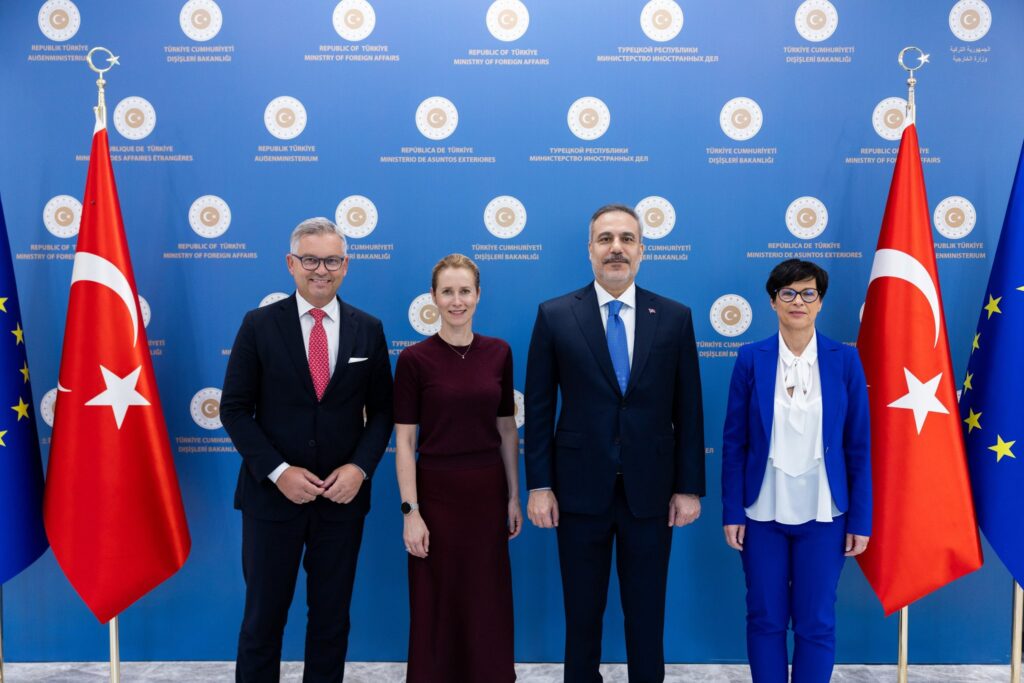
penceresinden bakıyor. Dış İlişkilerden sorumlu Komiser Kaja Kallas, 

Genişlemeden sorumlu Komiser Marta Kos ve Göçten sorumlu Komiser Magnus 

Brunner Ankara’ya yaptıkları son ziyarette Dışişleri Bakanı Fidan ile

 görülüyor. (Foto: TC_Disisleri)


Geçtiğimiz ayın başında Almanya ve Fransa’nın Avrupa Birliği’nin genişlemesine ilişkin ortak önerileri basınımızda pek yankı bulmadı. Bunun başlıca nedeni, Rusya’nın Ukrayna’ya saldırmasının ardından Kiev’in AB üyeliğine başvurması ve kısa süre içinde aday ülke statüsü kazanmasıydı. Ancak AB, bundan sonraki genişleme sürecini nasıl yöneteceği konusunda hâlâ net bir yol haritası oluşturabilmiş değil.

Avrupa Birliği’nin genişlemesi uzun süre Brüksel’in çok başarılı bir dış politika aracı olarak anılmaktaydı. Ancak genişleme şu anda çözümlenmesi gereken bir mesele olarak görülüyor. Daha önce en fazla dokuz yıl aralıklarla yeni üyeler kabul eden Avrupa Birliği, Hırvatistan’ın 2013 yılında üye olmasından sonra on üç yıldır genişlemedi. Bilakis Birleşik Krallığın ayrılmasıyla daraldı dahi diyebiliriz.

Avrupa’nın Güney Doğusunu kapsayan Balkan ülkelerinin hepsi uzun süredir adaylık kapısında bekliyorlar. Bu durum, “genişleme yorgunluğu” kavramının ortaya çıkmasına yol açtı. 2004’teki büyük genişlemeden üye olan Merkezi ve Doğu Avrupa ülkelerinin zaman zaman Birlik içinde ortak tutumu zorlayan politikaları, Brüksel’i yeni genişlemeler konusunda daha temkinli davranmaya yöneltti. Bundan dolayı örneğin üyelik müzakerelerinde en ileri safhada bulunan Karadağ bir türlü üye olamadı. Şu anda on ülke aday konumundadır.

Adaylar uzun süredir beklemede

Ülkemizi saymazsak en çok uzun süre bekleyen Kuzey Makedonya yirmi iki yıl önce üyelik başvurusunda bulundu. Kuzey Makedonya önce Yunanistan’ın sonra da Bulgaristan’ın sırasıyla isim ve azınlıklarla ilgili engellemeleri ile karşılaştı. Karadağ da 2008’de üyelik için başvurmuştu ve 2028’de müzakereleri bitirmeyi amaçlıyor. Bu durumda Katılım Antlaşmasının imzalanıp tüm üyelerin onay süreçlerinin tamamlanmasından sonra üyelik 2030’da gerçekleşebilir.

Diğer adaylardan Arnavutluk ve Sırbistan 2009’da üyelik için başvurdular. Bosna – Hersek ise on yıl önce girişimde bulundu. Kosova bile dört yıl önce başvuruda bulundu ama henüz adaylığı kabul edilmedi zira AB içinde beş ülke Kosova’yı tanımıyor.

AB bu ülkelerle zaman zaman Zirveler yapıp bir araya geliyor ve ağızlarına deyim yerindeyse bir parmak bal çalıp bırakıyor.

AB’nin yeni arayışları

AB’nin bu konuda silkinmesi ve yeni arayışlara yönelik çabaları Rusya’nın Ukrayna’yı işgale kalkışması ile gerçekleşti. Ukrayna Moskova’nın bu girişiminden hemen sonra AB’ye üyelik için başvurdu ve bunun bir hafta sonra Gürcistan ve Moldova takip etti. Bu durum AB’yi çıkmaza soktu. Bir yandan Ukrayna’ya yardım etmek istese de üyelik için hiçbir açıdan hazır olmadığını biliyor. Ama buna rağmen bazı fasıllarda müzakerelere geçildi. Mesele elbette siyasi.

Genelde bu gibi açmazlarda Fransa kapsayıcı önerilerde bulunur. Nitekim Belarus ve Rusya dışındaki tüm Avrupa ülkelerini içerecek şekilde 2022’de “Avrupa Siyasi Topluluğu” önerisini ortaya attı. Son toplantısı geçen ay Erivan’da yapılan bu oluşum liderlerin altı ayda bir araya gelmesini sağlamanın ötesinde somut bir işlev kazanabilmiş değildir.

Brüksel genişleme sürecini bilinçli bir şekilde yavaşlattı. 2004 yılındaki genişleme öncesinde adaylara belli bir tarih verilmiş ve ülkeler buna göre çabalarını artırmışlardı. Şimdi Arnavutluk gibi  2030 tarihi için bastıran ülkeler olmasına rağmen Brüksel buna yanaşmamaktadır.

Öte yandan, üyelik koşulları zaman içinde hem artmış hem de ülkeden ülkeye farklılık göstermeye başlamıştır. Demokrasi, hukukun üstünlüğü ve temel haklar gibi alanlar, diğer müzakere başlıklarında ilerlemenin ön koşulu haline gelmiştir.

Üyelik sürecinde farklı modeller

Bugün Avrupa Birliği’nin içinde bulunduğu tablo daha da karmaşıktır. Bir yandan aday ülke sayısı artarken, diğer yandan Rusya’nın Ukrayna’ya yönelik saldırısı, genişleme konusunu yeniden stratejik bir çerçevede gündeme taşımıştır.

Bu çerçevede, Avrupa Birliği içinde farklı genişleme modelleri de tartışılmaya başlanmıştır. Bu fikirler yeni değildir. Son kırk yıldır AB çevrelerinde farklı biçimlerde gündeme gelmektedir. AB zaman içinde bir çok konuda nitelikli oy sistemine geçse de üyelik hakkında karar almak için kimse oy birliğinden, diğer bir deyişle veto hakkından vazgeçmeye niyetli değildir.

Aday ülkelerin Birliğin bazı alanlarına kademeli olarak dahil edilmesi ve belirli koşulları yerine getirdikçe üyeliğe geçmeleri gibi öneriler gündeme gelmektedir. Bu yönde AB’nin kurucu antlaşmalarında değişikliklerinin gerekip gerekmediği de tartışma konusudur. Ancak antlaşma değişikliğinin bazı ülkelerde referandumları zorunlu kılacak olması AB’yi daha pragmatik yollar aramaya itmektedir.

Avrupa Birliği’nin öncelikleri arasında Batı Balkan ülkelerinin Birliğe bağlanması yer almaktadır. Ancak bu ülkeler için net bir takvim ortaya konulamaması, sürecin inandırıcılığını zedelemekte ve alternatif arayışları güçlendirmektedir.

Bütün bunlara rağmen Komisyon ve bazı üye yetkilileri Balkan ülkeleri üzerinde Çin, Rusya ve hatta Türkiye’nin etkisinden endişe ile söz edebilmektedir. Ayrıca sadece Ukrayna’ya bazı kapıların kısa sürede açılması halinde iki yüzlülükle suçlanacaklarını biliyorlar. Kısacası AB bir açmaz içindedir.

Alman – Fransız önerisi

İşte bu noktada Alman – Fransız önerisi ortaya çıktı. Buna göre “aday ülkeleri daha yapılandırılmış bir kademeli entegrasyon yoluyla fiilen AB’ye daha fazla yaklaştıracak ve böylece reformlar için ilave teşvikler sağlayacak çeşitli araçlardan oluşan bir katılım öncesi strateji” önerilmektedir. Devam edelim:

“Bu araçlar, katılım müzakerelerinde kaydedilen ilerleme üzerine inşa edilmeli ve ilgili aday ülkenin reform sürecinde geriye gitmesi veya AB’nin temel değer ve ilkelerinden uzaklaşması halinde geri alınabilir nitelikte olmalıdır.

Her aday ülke için ihtiyaçlarına uygun, özel olarak tasarlanmış bir yaklaşım benimsenmekle birlikte, yeni yaklaşım tüm aday ülkelere derhal ve somut ilerleme imkânı sunacaktır.

Tam üyelik hedefi değişmeden devam etmektedir. Amacımız ne tam üyeliğin yerine başka bir model koymak ne de üyeliğe giden yolu uzatmaktır. Tam tersine, bu yolda daha hızlı ilerlemeyi teşvik edecek yeni özendirici unsurlar oluşturmak istiyoruz.

Bu çerçevede Komisyonu, aday ülkelerin AB’ye katılım yolunda kademeli entegrasyonunu kolaylaştıracak öneriler hazırlamaya davet ediyoruz.

Bu öneriler, özellikle müzakerelerde kaydedilen somut ilerlemeye bağlı olarak İç Pazara ayrıcalıklı erişim ile AB’nin günlük karar alma süreçlerinde Avrupa kurumlarıyla daha yakın bağlar kurulmasını kapsamalıdır. Örneğin, AB’nin karar alma özerkliğine halel getirmeyecek koşullar altında aday ülkelere AB kurumlarının toplantılarında kademeli olarak gözlemci statüsü verilmesi değerlendirilebilir.”

Türkiye’nin Adının Geçmediği Belge

Ayrıntılı olarak değerlendirildiğinde bunun aslında “ara formül”den çok, üyelik öncesi aşamalı entegrasyon modeli olduğu yönünde. Ancak iki nokta dikkat çekiyor.

Birincisi, belgede sürekli “tam üyelik hedefi değişmemektedir” denmesine rağmen önerilen en ileri aşama Avrupa Ekonomik Alanı modeliyle Tek Pazara tam katılım. Bu, ekonomik açıdan üyeliğin en büyük kazanımlarından birini üyelik gerçekleşmeden sunuyor. Bu nedenle Batı Balkan ülkelerinin “Üyelik yerine yeni bir bekleme odası mı oluşturuluyor?” diye sormaları şaşırtıcı olmaz. Nitekim ülkemizin AB ile 30 yıl önce gerçekleştirdiği Gümrük Birliği bazı AB ülkelerince ilişkilerdeki en ileri safha olarak görülmüyor muydu?

İkincisi belgede Türkiye’nin adı hiç geçmiyor. Zaten belge yalnızca Batı Balkanlar ve Moldova’yı örnek gösteriyor.

Bunun tesadüf olduğu söylenemez. Önerilen araçların büyük bölümü –SEPA, Dijital Tek Pazar, enerji piyasası, Horizon Europe, Erasmus+, siber güvenlik ve savunma iş birliği gibi– teknik açıdan Türkiye’ye de uygulanabilecek niteliktedir. Buna rağmen Türkiye’nin belgede yer almaması, AB’nin iki büyük ülkesinin Ankara’yı genişleme politikasının dışında değerlendirdiğini göstermesi bakımından dikkat çekicidir.

AB, genişleme politikasında yeni bir “kademeli entegrasyon” modeli geliştirmektedir. Ancak bu modelin bütün aday ülkelere eşit şekilde uygulanıp uygulanmayacağı ve özellikle Türkiye’yi kapsayıp kapsamayacağı belirsizliğini korumaktadır. Ancak mevcut siyasi atmosfer dikkate alındığında, bu modelin Türkiye’ye uygulanmasını beklemek gerçekçi görünmemektedir. Türkiye resmen aday olsa da AB çevrelerinde farklı değerlendirilmektedir.

Şimdi Komisyonun resmen bir öneri ile gelmesi beklenmektedir.

Türkiye’nin AB ile ilişkilerinde gelişme bekleyemeyiz

Birçok kere yazıldığı gibi Türkiye – AB ilişkileri bırakın üyeliği, Gümrük Birliği’nin güncellenmesi veya vize muafiyeti gibi temel unsurlardan arınmış bir şekilde farklı ele alınmaktadır. Ankara Türkiye’nin savunma ve güvenlik alanındaki stratejik önemini vurgulamaya devam ederken, Brüksel daha ziyade yasa dışı göç penceresinden bakıyor. Ankara’yı bugünlerde ziyaret etmekte olan Dış İlişkilerden sorumlu Komiser Kaja Kallas, Genişlemeden sorumlu Komiser Marta Kos ve Göçten sorumlu Komiser Magnus Brunner daha ziyade kendi önceliklerini ele alırken ilişkilerin diğer alanlarda düzelmesi için hukukun üstünlüğü ve ifade özgürlüğü gibi gerekli koşulların sağlanması gerektiğini tekrar edeceklerdir.

Gerçekten de son yıllarda hukukun üstünlüğü, yargı bağımsızlığı ve temel haklar alanlarında yaşanan gerileme, Türkiye’nin üyelik perspektifini zayıflatan başlıca unsurlardan biri olmuştur. Dolayısıyla bugün yaşanan tıkanıklığı yalnızca AB’nin siyasi tercihleriyle açıklamak mümkün değildir; iki tarafın da bu tablodaki sorumluluğunu görmek gerekir.

Avrupa Parlamentosunun son aldığı tavsiye kararında bunlar daha sert bir şekilde vurgulanıyor. Değerli meslektaşım Büyükelçi Selim Kuneralp bunu ayrıntılı bir şekilde izah etti. Komiserler bunları makamlarımıza daha kibarca ifade edeceklerdir ancak sözünü sakınmayan ve bir bakıma Komisyonun aynasını oluşturan Avrupa Parlamentosunun çoğunluğu gibi düşündüklerini bilmemizde fayda var.

Bu konuyu diğer meslektaşlarım ve uzmanlarla defalarca yazdık. Ne Brüksel ne de Ankara mevcut tabloyu değiştirecek siyasi iradeyi ortaya koymaktadır. Bu nedenle ilişkiler, stratejik önemi inkâr edilemeyen ancak üyelik perspektifi giderek silikleşen tuhaf bir denge içinde sürdürülmektedir. Tarafların bu durumu değiştirmek üzere harekete geçmemeleri halinde uzun bir süre daha devam edeceği anlaşılmaktadır.

Önümüzdeki aylarda Komisyonun hazırlayacağı öneriler, AB’nin genişleme konusunda gerçekten yeni bir sayfa açıp açmayacağını gösterecektir. Ancak bugünkü tablo, Türkiye açısından yeni modellerin dahi siyasi engellerden bağımsız değerlendirilmeyeceğini ortaya koymaktadır.

Yetkin Report - Muharrem Sarıkaya - 30 Haziran 2026 - Yeni partinin kuruluşu Kıbrıs veya Lozan’ın yıldönümünde


Yeni partinin kuruluşu Kıbrıs veya Lozan’ın yıldönümünde

/ / Siyaset


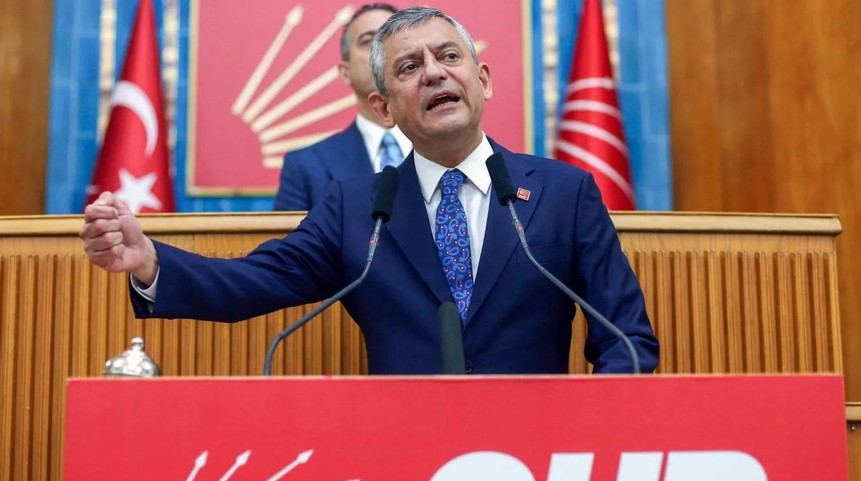
İstinaf mahkemesinin butlan kararı ile yönetimden uzaklaştırılan Özgür Özel ve arkadaşlarının üç ayaklı yol haritası kesinleşirken, yeni partinin kuruluşuna ilişkin süreç de netleşiyor.
İçinde “Özgürlük…” kelimesinin geçmesi muhtemel partinin adı ise gelecek hafta kesinleşecek. Partinin kuruluşu için de iki tarih belirlendi: Türkiye’nin emperyalizme karşı mücadelesinin ve CHP’nin simge iki tarihi olan 1974 Kıbrıs Barış Harekâtı’nın başlangıç günü olan 20 Temmuz veya 1923 Lozan Antlaşması’nın imzalandığı 24 Temmuz.
Yeni partinin kurucular kurulu ile birlikte kuruluş dilekçesinin 20 Temmuz Pazartesi veya 24 Temmuz Cuma gününden birinde İçişleri Bakanlığı’na sunulması hedefleniyor.

Bülent Tezcan: 26 Temmuz’dan önce olmalı

Bu tarihlerin seçilmiş olmasının nedenini Kemal Kılıçdaroğlu yönetiminin kaldırdığı Cumhurbaşkanlığı Aday Ofisi Koordinatörü Bülent Tezcan sorum üzerine şöyle dile getirdi:


• “Evet, sözünü ettiğiniz o iki tarihi belirledik. Nedeni de Türkiye’nin emperyalizme karşı mücadelesinin en önemli simgesi olan iki tarih olması. Mücadelenin de CHP hükümetlerinin öncülüğünde gerçekleşmesi.


• “Zorlayıcı neden ise 26 Temmuz Pazar günü CHP’nin kurultay yapması için zorunlu olan altı yıllık sürenin dolması. Bu tarihten sonra CHP’nin seçime girme yeterliliğini kaybettiği konusunda Erdoğan’ın eline güçlü bir koz verilmiş olur.


• “Kurultayını 6 yıl içinde yapmadığı için CHP’nin seçime gireme hakkını kaybettiği hükmedilebilir. Dolayısıyla butlan yönetimi bu tarihten önce kurultay kararı almazsa süreç bitmiş olacak.”


Tezcan, mahkeme 2023 kurultayını mutlak butlan, tümden hükümsüz saydığı için, ondan önceki CHP kurultayı olan 24-25 Temmuz 2020 tarihine dikkat çekiyor; 6 yıl hesabı oradan kaynaklanıyor.


20 ve 24 Temmuz’un önemi

Özel ve arkadaşlarının yeni partinin kuruluş dilekçesini İçişleri Bakanlığı’na sunmak için tercih ettiği 20 veya 24 Temmuz tarihleri Türkiye siyasi tarihinde iki dönüm noktasını oluşturuyor.
Türkiye’nin Mustafa Kemal Atatürk önderliğinde verdiği Kurtuluş Savaşı’nı bitirip 29 Ekim 1923’te Cumhuriyet olarak yeniden kuruluşunun teminatı olan Lozan Antlaşması İsmet İnönü tarafından 24 Temmuz 1923’te imzalanmıştı.
20 Temmuz 1974 Kıbrıs Barış Harekâtı da hem Türkiye hem CHP tarihinde de önemli bir yere sahip.
Çünkü Barış Harekâtı emrini dönemin başbakanı ve CHP lideri olan Bülent Ecevit vermişti. Kıbrıs’taki EOKA darbesinin ardından Kıbrıs Türklerinin can güvenliğini korumak için CHP lideri Bülent Ecevit ve RP lideri Necmettin Erbakan’ın koalisyon hükümeti askeri müdahale kararı almış, bunun devamında KKTC kurulmuştu.

Yargıtay ve adli tatil

Tezcan, bir diğer zorlayıcı nedenin ise 20 Temmuz’da başlayacak Adli Tatil olduğunu vurguluyor.
Özgür Özel’in, İstinaf Mahkemesi’nin butlan kararına karşı Yargıtay’da açtığı dava, 20 Temmuz’a kadar sonlanmazsa Adli Tatil sonrasına kalacağı anlamına geliyor.
Tezcan da bu duruma dikkat çekip devam etti:
• “Yargıtay Adli Tatil öncesi kararını vermemesi demek, tatil sonrasına bıraktığı anlamına gelir. Bu da kurultayın 6 yıldır yapılmadığı anlamına gelen 26 Temmuz sınırının sonrasına kalacağına işaret eder. O nedenle biz partiyi bunun öncesinde kurma kararlılığındayız.”
Tezcan, yeni partinin kurucuları arasında milletvekillerinin bulunup bulunmayacağına ilişkin kararın da adı gibi gelecek hafta kesinleşeceğini söyledi.
Özel’in kurmay ekibinden bir ismin aktardığına göre, bu konuda iki farklı görüş var.
İlki, yeni partinin kurucuları arasında mevcut siyasilerden hiç kimsenin bulunmaması; tamamen yeni isimlerden oluşması.
Hatta milletvekillerinin de ilk aşamada geçişlerinin olmaması, sürecin beklenmesi yönünde.

Mevcut parti yedeklemesi

Tezcan’ın aktardığına göre süreç sadece yeni parti kurmakla da kalmayacak.
CHP’nin iptal edilen 2023’teki 38’inci kurultayı kapsamında yaşananların burada da tekrar etme olasılığı dikkate alınarak, örgütlenme sürecini tamamlamış, seçime girmeye hak kazanmış bir parti de yedekte tutuluyor.
Adı henüz açıklanmayan o partinin illerdeki örgütlerinin güçlendirilmesi sağlanacak. Siyasi Partiler Yasasına göre yeni kurulan bir partinin seçime girebilmesi için il sayısının yarısından fazlası, yani en az 41 ilde kongrelerini tamamlaması yetmiyor, bu illerin merkez ilçe dahil üçte birinde de kongrelerini bitirmiş olma şartını koşuyor.
Özel’in yakın çevresi o partinin bugüne dek medyada adı geçenlerden biri olmadığını belirtiyor. Özel bir süre önce yaptığı açıklamada ismi geçen partilerle bir temaslarının olmadığını belirtmişti.

“Sosyal demokratlar seçime girmeli”

Özel’in hukuk ekibinden Gül Çiftçi ise, bu düzenlemelerin sosyal demokratların mutlaka bir sonraki seçime katılabilmesini sağlama amacına yönelik olduğuna dikkat çekiyor. Çiftçi, dünkü konuşmamızda şunları söyledi:
• “20 Temmuz Adli Tatilin başlangıcı; dolayısıyla bu tarihten sonra Yargıtay karar almadıysa, partideki butlan yönetimi de olağanüstü kurultay ile ilgili adım atmadıysa, sosyal demokrasinin seçime girmesi için başka yol kalmıyor.
• “Biz sosyal demokrasinin seçim dışı kalmasını engellemek için adım atmak zorundayız. Çünkü başka çare kalmamış olacak. Bir yeni parti, iki kurulmuş partiyle yola devam edeceğiz.’’

DEM Parti DBP örneği

Bir diğer görüş ise yeni partiye, iki milletvekilinin temsili ile TBMM’de yer bulan Demokratik Bölgeler Partisi’ne (DBP) benzer bir yapılanmanın sağlanması.
DBP, DEM Parti’nin yedeği işlevi görüyor. Milletvekilleri de zaten kendilerini geçmişten bu yana süregelen DEP, HEP, HDP’nin devamı olarak görüyor.
Yeni partinin isminin kamuoyuna yerleşmesini sağlamak için hakkında dokunulmazlık dosyası bulunmayan en az iki olmak üzere toplamı 5’i geçmeyecek sayıda milletvekilinin geçişinin sağlanması. Bu konu hakkında da gelecek hafta karara varılması amaçlanıyor.

New statement dated today ( 30 June 2026) this time regarding Cyprus- by Türkiye's enemy and propagandist for Israel, Michael Rubin, submitted to the House of Representatives bipartisan Ton Lantos Human Rishts Commission

 New statement dated today ( 30 June 2026) this time regarding Cyprus- by Türkiye's enemy and propagandist for Israel, Michael Rubin, submitted to the House of Representatives bipartisan Ton Lantos Human Rights Commission 

 https://www.aei.org/wp-content/uploads/2026/06/Human-Rights-in-Turkish-Occupied-Cyprus.pdf?x97961


Chairman Smith, Chairman McGovern, and honorable members, thank you for the opportunity to testify. 

Less than one month ago, I testified before you about human rights in Turkey. The problems Cyprus today faces are inexorably linked to Turkey and its more than six-decade occupation. 

For those who justify or apologize for Turkey’s invasion, the narrative is simple: Turkey invaded to protect Cypriot Muslims from ethnic violence if not genocide at the hands of the Greeks. To justify the occupation of Cyprus, however, would be by analogy to accept not only Nazi Germany’s 1938 Anschluss of Austria, but also the annexation of Czechoslovakia’s Sudetenland. More recently, Russia’s 2014 invasion and annexation of Ukraine’s Crimea to protect ethnic Russians rested on nearly identical arguments and false claims as Turkey had used in Cyprus four decades previously. Put simply, the notion that human rights or a desire to protect the Cypriot Muslim community motivates let alone justified the Turkish occupation is a historical nonsense. 

The Background to a Crisis 

History matters, if only to show the emptiness of a narrative that Turkish school books indoctrinate and Turkish diplomats continue to embrace. The roots of the conflict date back nearly a century before the Turkish landgrab. The British had occupied Cyprus in 1878 after the Russo-Turkish War and formally incorporated it as a crown colony in 1925. At the time of the British occupation, Cyprus was more than two-thirds Greek and one third Muslim. This should not surprise as, in the years before the Armenian and Pontic Greek genocides, many of the towns and cities along the Anatolian coast were also Christian.  

Indeed, while Cypriot nationalists may resent the British occupation of Cyprus and the island’s consolidation as a unit separate from Greece, the fact that the United Kingdom was the suzerain in the early 20th century likely saved its population from suffering the same fate as the Armenians and the Greeks of Smyrna, neither of whom had a foreign power to protect them from the predations of the Young Turks.  

Still, as decolonization swept the globe, many Greeks embraced the idea of enosis to unify Greece and Cyprus. Most Greeks and Cypriots envisioned achieving that unity peacefully, but some quarters were impatient. Beginning in the early 1960s, politicians and nationalist movements in both Athens and Ankara instigated communal violence on Cyprus. While some Greek Cypriots advocated enosis, Turkey encouraged the taksim movement which envisioned Turkish annexation of the island. For some Cypriot Turks, it was an alluring movement: After all, if they suddenly became a Turkish possession, the Cypriot Muslim minority might instantly transform into part of a supermajority that could impose their will on a dhimmi community.   

Enter the military junta that had seized power in Athens in 1967. It was conservative, nationalist, antiCommunist, punished dissent and was brutal in its suppression of student unrest. It was not monolithic, however. As Georgios Papadopoulos, one of the coup leaders eventually sought to liberalize and reform the junta’s rule, disgruntled hardliners led by Dimitrios Ioannidis staged an internal coup to re-establish hardline rule.  

On July 15, 1974, Ioannidis instigated a Cypriot National Guard coup against Archbishop Makarios III, Cyprus’ democratically-elected president, and the installation of Nikos Sampson whom Ioannidis intended to use to achieve enosis. Five days later, the Turkish Army invaded, ostensibly to protect Cypriot Muslims under the 1960 Treaty of Guarantee. This is traditionally where Turks and their apologists in universities and various think tanks end their narrative. They both disregard what happened next and ignore that under the Treaty of Guarantee, Turkey should have restored the constitutional order, not kicked off an occupation lasting more than half a century. 

Regardless, on July 24, 1974, the junta in Greece collapsed. Greece returned to democracy and forfeited its claims to Cyprus. It was only then, as peace talks continued in Geneva to compel withdrawal, that Turkey invaded again in a blatant land grab, this time absent any casus belli. Turkish troops seized and ethnically cleansed a third of the country; the occupation continues to the present. 

At the time, Secretary of State and National Security Advisor Henry Kissinger sided with the Turks. “There is no American reason why the Turks should not have one-third of Cyprus,” he told President Gerald Ford. 

“The Turkish tactics are right — grab what they want and then negotiate on the basis of possession.” 

Kissinger, perhaps like U.S. Ambassador to Turkey and Envoy Tom Barrack today, also embrace cynical realism to justify aggression.  

Kissinger’s realpolitik have not stood the test of history. Today, Greece and Cyprus are America’s most reliable allies in the Eastern Mediterranean. From Libya to Gaza and from Syria to Somalia, Turkey is a source of instability. While Kissinger conflated cynicism with sophistication, he never understood the weakness of his realism: While short-term deals might appeal alluring, their long-term consequence could devastate not only human rights but also American interests. President Recep Tayyip Erdoǧan’s government currently poses more of a danger to Cypriots and democracy than the junta ever did. 

The U.S. State Department, though, does U.S. policy no favors when it continues a policy to avoid deeming northern Cyprus “occupied.” Fear of moral clarity and a failure to recognize international law does not encourage peace-making; rather, it rewards aggression. If Secretary of State Marco Rubio worries that Barrack and Turkish officials might complain at such a stark description of northern Cyprus’ condition, then the proper response is not word play, but a clear message: End the occupation. 

Cypriot Muslims Face a Cultural Genocide Perpetrated by Turkey, Not Greece 

Whereas successive U.S. administrations have been content to consider Turkey’s occupation a frozen conflict and to abandon the idea for all practical purposes of ending the island’s de facto division, that status quo neither serves the interests of Cypriot Muslims nor does is it even tenable. 

Shortly after the Turkish invasion, Turkey began transferring settlers into its occupied zone. To bolster the numbers of ethnic Turks and Muslims on the island, successive governments in Turkey encouraged the migration. For poor agricultural workers and low wage urban workers, often conservative Muslims, the economic benefit was clear, as they left ramshackle shacks and shantytowns to move into the houses from which advancing Turkish troops had expelled Greek Cypriots. 

The lack of credible international response has consequence, as in March 2018, Turkish forces and their proxies invade the Syrian canton of Afrin, ethnically cleansing Kurds and expelling Christians and Yazidis, taking control over their property. Turkey has since expanded that model across northern and northeastern Syria as it has sought to change the demographic balance. 

European diplomats, State Department officials, and self-described human rights activists often focus on Israeli settlement activity in the West Bank, but the two issues are not analogous. The West Bank is technically disputed territory without clearcut sovereignty, as there was no recognized, independent Palestine at the time Israel took military possession from Jordan in 1967. Cyprus, however, was a sovereign country when Turks invaded 14 years after its independence.  

There has been no scientific census in Turkish-occupied Cyprus but estimates now place the number of Turkish settlers and their offspring at more than half the population of the Turkish-occupied zone. Settlers likely outnumber true Turkish Cypriots. There has been a surge in settlement since Erdoǧan came to power. 

Between 2013 and 2023, for example, the population of the occupied zone increased by more than a third. 

The reason for the acceleration of settlement, Article 49 of the Fourth Geneva Conventions notwithstanding, appears a deliberate decision by Erdoğan to drown out Turkish Cypriots. What Turkey now does to the native Cypriot Muslims is not far different from what the Han Chinese do in East Turkestan, the Uyghur-region China’s communist government refers to as Xinjiang.  

While Turks and occupation authorities in Cyprus hide the true numbers at play in northern Cyprus, the State Planning Organization of the Turkish entity on the island places the population of the occupied zone is just shy of 500,000. Of these, Cypriots Muslims who can document family lineage to Cyprus before 1974 number only around 230,000. 

Too often, American policymakers assume that all ethnic Turks or Turkish Muslims are the same. This is wrong. Turkey traditionally had a diverse sectarian landscape, even among Muslims. Up to 20 percent of the Turkey’s Muslim population are Alevi, with a higher percentage among Turkey’s Kurds. Of Turkey’s Sunni Muslims, most are traditionally moderate, influenced by Anatolian Sufism. Erdoǧan, however, follows a more austere exegesis influenced by the Muslim Brotherhood.  

In Cyprus, meanwhile, as in many island nations, Muslims were traditionally cosmopolitan and tolerant. 

Turkey’s flood of settlers, especially under Erdoǧan, were the opposite: Austere, conservative, and intolerant not only of Christians, but also of Muslims who were not as observant. The longer the occupation continues, the more Cypriot Muslim culture and the promise it holds for healing and peace, withers.  

From Real Estate to Weaponry, Erdoǧan Shreds the Status Quo 

While the United States, Europe, and perhaps even the United Nations continue to approach Cyprus as a frozen conflict, Erdoǧan has systematically shredded that understanding. 

Prior to the Turkish invasion, Famagusta—and its southern Varosha quarter—was a major tourist hub that attracted European and Western glitterati to its pristine beaches and resorts, earning it the nickname of “the Cannes of the Eastern Mediterranean.” In 1974, Turkey first bombed the city to force residents to flee, and then occupied it, refusing to allow its residents to return, even after establishing the ceasefire. Varosha became a ghost town. Billions of dollars of real estate sat fenced off and empty. 

Diplomats have long expected the return of its residents to Famagusta to be the key step in any negotiated peace. That Varosha remained vacant gave Cypriots, Western Europe, and UN diplomats hope that Ankara was still interested in a resolution to the Cypriot conflict. Now, however, Erdoğan signals that Turkey may act unilaterally to populate and develop Varosha. In 2020 and 2021, the Turkish forces removed fences to allow tourists and visitors to re-enter the neighborhood. The fear now is that Erdoǧan, perhaps with the backing of Barrack, will seek to redevelop the beach town, prospect that could net investors billions of dollars. This, of course, would violate UN Security Council resolutions that state that Varosha’s residents must first return to their documented property, especially of Turkish redevelopment tore down old structures. 

Resort development and beach front construction may make certain individuals wealthy, but it would be tragic for human rights, Cypriot peace, and U.S. reputation if individual enrichment trumped international law and U.S. national interests.  

Some violations of the status quo are even more dangerous. Cyprus has a National Guard combining ground, maritime units, and helicopters, but it does not have a formal military as many other European states do. Balance is crucial. 

That balance is now in jeopardy. President Donald Trump now makes headlines for his proposal both to sell F110 Turbofan Engines to Turkey prior to the July 7-8, 2026 NATO Summit in Ankara and to welcome Turkey back into the F-35 Joint Strike Fighter program. Both moves would privilege Turkey’s own defense industry over America’s given Ankara’s desire to reverse engineer American technology to utilize in Turkey’s own Kaan jet fighter program. NATO member or not, from the perspective of intellectual property, transferring cutting-edge military technology to Turkey is as dangerous as providing America’s military technology and trade secrets to China.  

That such sales would move forward after Turkey betrayed its previous understandings by redeploying U.S.-provided F-16s to occupied northern Cyprus should generate bipartisan outrage in Congress and end forever the notion that Turkey seeks American aircraft for NATO defense. On March 9, 2026, as Trump focused on the ongoing war in Iran, Erdoǧan ordered the deployment of six F-16s to occupied northern Cyprus, a blatant attempt to change the status quo and, also, for the Turkish audience, to make Erdoǧan appear strong and Trump impotent.  

The Turkish F-16s now based in Turkey serve no military purpose; after all, the İncirlik is only 150 miles away in mainland Turkey. Cruising, that represents a 15-minute flight, but at its top speed, an F-16 could cover that distance in just six minutes. Rather, the sole purpose of Erdoǧan’s move was to obstruct diplomacy and make Turkey’s landgrab permanent. In August 1990, after overrunning Kuwait, Iraqi President Saddam Hussein deployed Iraq’s Soviet MiG-29s, Su-22s, and French Mirage F1s at captured Kuwaiti airfields as he sought to consolidate his gains. The United States must see Erdoǧan’s recent moves in the same light. 

Turkey’s Drone Base in Occupied Cyprus Endangers the Region 

Too often, U.S. presidents, be they Republican or Democrat, believe they enter the Oval Office with a blank slate. History does not restart every four or eight years, however. Precedents matter. It is doubtful Erdoǧan would have sent F-16s to occupied Cyprus had the United States not earlier gone silent when Turkey altered the military balance by transforming an occupied airport in northern Cyprus into a drone base.  

On December 16, 2019, İsmail Demir, the head of Turkey’s Defence Industry Directorate, reported that Turkey had flown drones to Lefkoniko Airport, which it restyled Geçitkale Air Base. Turkey has now transformed Lefkoniko into perhaps the Eastern Mediterranean’s largest drone base.  As Erdoǧan explained in May 2021, “There are two airports in Cyprus. One is Ercan which our citizens in Turkey know, and another one that was there before but which now has a new name to which we transfer our unmanned aerial vehicles.” 

Almost immediately, Turkey used its drone base to undermine peace and security in Cyprus It launched surveillance drones to monitor vessels exploring offshore waters for gas and oil before harassing ships from NATO states such as Italy. It subsequently moved attack drones such as the Bayraktar-TB2 onto the base, posing a threat to countries ranging from Libya to Israel. Just as Trump and Barrack do now, so too did Deputy Secretary of State Wendy Sherman when she visited Ankara on May 28, 2021. In an interview with Hürriyet, she declared, “The relationship with Turkey is a very critical one to the U.S. Turkey is a NATO partner, a strategic ally, a force in the world….” Rather than creating diplomatic space, her praise convinced Erdogan that the United States was weak and would bend to further aggression. Had the Biden administration stood up to Erdoǧan’s assault on the status quo and compelled the withdrawal of the drones and the shuttering of the airfield through any number of means, it is doubtful Erdoǧan would have later redeployed the F-16s.  In a quip commonly misattributed to Mark Twain, Insanity is “doing the same thing over and over again and expecting different results.” By such a definition, U.S. policy is pure craziness.  

Northern Cypriot Money Laundering Endangers Human Rights and Regional Security 

About two million tourists visit northern Cyprus each year, almost 80 percent of whom come from Turkey explicitly to take advantage of its beaches and unregulated economy. Russians and Iranians also flood the territory, while other European take advantage of the cheap deals and the unregulated economy without recognizing that they are profiting off the systematic Turkish looting of a European Union member state.  

Like other unrecognized states—Russian puppets Abkhazia and Transnistria, for example—northern Cyprus has become a hub for money laundering and other illicit activity. While Transparency International ranks Cyprus as cleaner than Italy, Spain, and Poland, the Turkish-occupied zone is a sector where criminality thrives—and deliberately so.  

Both casinos and universities have become hubs for money laundering. In recent years, the casino industry has thrived in northern Cyprus. While the United States and Europe regulate big-name outlets that operate in their territory, there is no such regulation or transparency in northern Cyprus, which now boasts 25 casinos, or roughly one per every 20,000 residents, roughly the proportion of casinos per resident in Nevada. 

Only Erdoǧan and the Turkish intelligence service—not even the political leadership of the so-called Turkish Republic of Northern Cyprus—know where the casino profits go, though some likely ends with cash transfers to Hamas, Hezbollah, Al-Shabaab, various Al Qaeda affiliates, and other Islamist projects. 

Both Edi Rama’s Albania and the Turkish Republic of Northern Cyprus are today hubs for drug smuggling into Europe. 

The nearly two dozen universities that operate in northern Cyprus represent another organized crime scheme. The diplomas they issue are as fraudulent as the one Erdoǧan himself showed to prove college acceptance. While Erdoǧan was motivated by academic fraud and the desire to bypass the prohibition of non-university graduates rising to the premiership and presidency, the northern Cypriot scheme is simply to collect money from and help organizations like Iran’s Islamic Revolutionary Guard Corps and Lebanon’s Hezbollah place their operatives under cover in Europe. Because Cyprus is a European Union member, many rogue elements and terrorist rightly believe that the occupied north can be a useful beachhead to infiltrate operatives further into Europe. The universities also provide cover for human traffickers to attract and exploit desperate Iranians, Afghans, and Syrians. Occupation, even in frozen conflicts, can have a tremendous and deleterious impact on human rights. 

U.S. Policy Moving Forward 

Too often, when diaspora activists complain, be they Greeks, Armenians, Uyghurs, Kurds, or Biafrans, policymakers dismiss their concerns as exaggerated or, when they do recognize them as representing real human rights abuses, they like Kissinger, create a firewall between justice and U.S. national interest. In almost every case, the passage of time shows what one generation saw as sophisticated and a necessary sacrifice of human liberty, the next generations recognized as a cynical own-goal not only to America’s image, but also to its national interests. This has certainly been the case with the Turkish occupation of Cyprus. 

In the partisan meatgrinder of Washington, however, Cyprus also could be the exception to the rule. Beyond the White House, Democrats and Republicans broadly recognize the value and importance of ending the conflict in Cyprus and rolling back Turkish aggression and occupation. There simply put is no difference between what Turkey seeks in terms of independence for the so-called Turkish Republic of Northern Cyprus, and what Russia had tried to achieve with the Donetsk and Luhansk People’s Republic. Erdoǧan and the diplomats he purchases may talk about a binational Cyprus, but what Turks seek is taksim. Put another way, Erdoǧan today is no different than Ioannidis. Like Ioannidis, Erdoǧan should face prison for his crimes.  

Between 1940 and 1942, President Franklin D. Roosevelt and Secretary of State Cordell Hull recognized Vichy France; it was a mistake that the United States should not repeat. The State Department should no more ascribe legitimacy to the Turkish Republic of Northern Cyprus than it does for Russia’s puppet-states carved out of the territory of independent neighbors like Moldova, Georgia, or Ukraine.  

Such a policy would require two changes. First, Rubio should direct the U.S. ambassador or chargé d’affaires in Cyprus, as well as all U.S. diplomats to state handling Cyprus issues to state clearly that Turkey illegally occupies Cyprus. Second, the State Department must only grant Turkish Cypriots visas to the United States on Cypriot passports. For Turkish Cypriot politicians to attend the United Nations General Assembly for sidebar meetings with U.S. officials and other world leaders with U.S. visas issued on Turkish passports undermines recognition of Cypriot sovereignty. The State Department should further shutter any Turkish Republic of Northern Cyprus offices in the United States.  Europeans should not treat an occupation and human rights tragedy as an opportunity for a cheap vacation. 

Just as the Trump administration requires special visa scrutiny for those who have traveled to Iran or Iraq and seek to visit the United States, so too should the same procedure apply to Germans, French, and Scandinavians who despite their rhetoric of human rights, contribute to the Turkish occupation machinery by booking vacations in occupied Cyprus. No airline that services the occupied zone should have overflight or landing rights in the United States. 

The U.S. State Department and the Department of the Treasury should further support adding Turkey to the Financial Action Task Force (FATF) blacklist for its involvement in money laundering in occupied northern Cyprus. Even for those who consider Turkey an ally, there is precedent. The United States, for example, once listed both Israel and South Korea respectively on its Tier 3 and Tier 2 blacklists for their failure to counter human trafficking. In both cases, the governments responded by working with U.S. authorities to reform and rectify the problem. Washington should always make such designations on objective criteria, rather than bend standards to assuage diplomatic umbrage. If Turkey wishes to win U.S. support to remove any blacklisting, it should simply stop its criminality.  

Cyprus’ own case is also instructive. For decades, concerns about Cypriot financial dealings, especially regarding Russia, overshadowed U.S.-Cypriot relations. Beginning around 2004, however, Cyprus began working actively in partnership with the United States to resolve concerns. This was especially true after Cyprus’ 2012-2013 financial crisis, after which Cyprus’ extraordinary effort enabled the country to make the Organisation for Economic Co-operation and Development (OECD) whitelist. The 2019 Eastern Mediterranean Security and Energy Partnership Act of 2019 which passed with true bipartisan support, included a condition that the State Department had to certify that Cyprus remain committed to anti-money laundering efforts, a condition that it has repeatedly fulfilled.  

In short, failure to hold Turkey to an account for financial irregularities and money laundering in northern Cyprus does not represent standard or realist diplomatic practice but runs counter to how the United States treats its allies and to best diplomatic practice consensus.  

Finally, and most radically, the United States should consider pressuring the United Kingdom to abandon its Sovereign Base Area in Cyprus. London granted Cyprus independence on August 16, 1960, but retained sovereign control over Akrotiri and Dhekelia. Article 1 of the Treaty between the United Kingdom and Cyprus recognizing Cypriot independence declared, “The territory of the Republic of Cyprus shall comprise 

the Island of Cyprus, together with the islands lying off its coast, with the exception of the two areas… referred to as the Akrotiri Sovereign Base Area and the Dhekelia Sovereign Base Area. The base area represents approximately three percent of Cypriot territory that essentially remains a colonial possession. 

While the Cypriots were unhappy at the British conditionally independence upon their continued presence, they did not want to obstruct the broader goal of independence.  

Britain justified its presence as a sign it would protect Cyprus. But after a Turkish invasion and more than five decades of occupation, it is clear British authorities simply lied. After Brexit and with Britain’s ability to project force in decline, it is time for the United Kingdom to go home, and to transfer sovereignty fully back to Cyprus. 

The Cypriot government might then lease the military portion of the bases—a tiny fraction of the Sovereign Base Area’s total territory—to the United States. The logic here is simple: Turkey seeks to bully Cyprus and through Cyprus, the European Union. The United Nations has been at best ineffective and at worst deleterious as it has allowed time to launder Turkey’s occupation. The 2004 Annan Plan, rightly rejected by Greek Cypriots, exposed the emptiness of UN officials since it would have rewarded aggression but impose no consequences should the Turks continue their occupation. A deployment of U.S. forces, including F-35 Joint Strike Fighters, electronic warfare planes, anti-drone and anti-ballistic missile defenses would not only augment sovereign Cyprus’ qualitative military edge and show Turkey that its salami-slicing aggression will not succeed, but it would also relieve the Pentagon from Turkish extortion over the use of Incirlik.  

The best diplomacy is bipartisan, rooted in moral clarity and respect for human rights and backed, when necessary, by force. It is time to make ending Turkey’s illegal occupation of Cyprus and, for that matter, portions of Syria and Iraq, core components of U.S. foreign policy. 


Tom Lantos Human Rights Commission hk. bilgi :

The Tom Lantos Human Rights Commission is a unique body in the House of Representatives, and its function as established in the resolution is notably different from other commissions in the United States Congress, such as the Congressional-Executive Commission on China or the Commission on Security and Cooperation in Europe. Though the resolution states that the Tom Lantos Human Rights Commission must collaborate with the Senate and the Executive branch, the Commission itself is composed only of Members of the House of Representatives. Members are not appointed to the Commission, but are able to join by request at any time, similar to a caucus. The Commission also does not compile an annual report. It is the only body in the House of Representatives that is intended to frame all issues through the lens of international human rights norms.


Similarly, there are significant differences between the Tom Lantos Human Rights Commission and committees in the House of Representatives. Most notably, the nonpartisan structure of the Commission grants both parties equal power within the Commission, regardless of which side is in the majority or minority. Unlike a committee which has a Chair from the majority and a Ranking Member from the minority, the Commission is led by two Co-Chairs who have equal say. The leadership of the Commission is composed of one Co-Chair and four Executive Committee Members from each party. The two Co-Chairs and eight Members of the Executive Committee are appointed by the Speaker and Minority Leader.[1]