Friday, May 2, 2025

U.S. Department Press Briefing – May 1, 2025 05/01/2025 07:43 PM EDT Tammy Bruce, Department Spokesperson Washington, DC


Department Press Briefing – May 1, 2025

May 1, 2025

2:15 p.m. EDT

MS BRUCE: Better put my phones on Do Not Disturb. Hi, Matt.

QUESTION: Hey. Happy Thursday.

MS BRUCE: Happy 101st day.

QUESTION: Happy Mayday.

MS BRUCE: Happy the beginning of the second 100 days.

QUESTION: It started with a blast.

MS BRUCE: That’s right. I’m sorry, ma’am?

QUESTION: It started with a blast.

MS BRUCE: It did, didn’t it? It did, so to speak. All righty. I hear it’s beautiful outside.

QUESTION: It is.

MS BRUCE: I wouldn’t know.

QUESTION: Well, we could do these outside.

MS BRUCE: We could, as a matter of fact. We could. Don’t tempt me.

QUESTION: (Inaudible.)

MS BRUCE: It is, and then that beautiful garden atrium area that no one’s in at the C Street entrance of this – of this lovely building with the lovely statue that’s – I’m recommending tables and umbrellas and chairs. Vitamin D. Be a lot of that.

All right, you guys. So thank you all very much for being here. Happy May, Mayday celebrated in a very different way in my world than the usual Mayday. But yes, thank you, everyone, for being here. We do have an announcement here at the top as well, and let’s get started, and then I’ll be taking your questions. I won’t answer all of them – (laughter) – but I’ll be certainly taking them. We’re going to try. We’re going to try. That’s always my effort.

All righty. So as President Trump passes 100 days in office, he continues to deliver for the American people. President Trump has nominated, and the Senate has confirmed, more key foreign policy leadership positions in his first hundred days than during the same period of any of the last four administrations.

On Tuesday, Tilman Fertitta has been confirmed by the Senate as our new ambassador-designate to Italy and San Marino. Yesterday afternoon in the Oval Office, Secretary Rubio swore in Warren Stephens as the new U.S. ambassador to the United Kingdom. Thomas Barrack also took the oath of office yesterday as the new U.S. ambassador to Türkiye. And David Perdue took the oath of office yesterday as ambassador to the People’s Republic of China. President Trump selected each of these talented individuals as his ambassadors to advance U.S. priorities in each of those countries.

Yesterday, Treasury Secretary Bessent also announced the signing of a historic agreement to establish the U.S.-Ukraine Reconstruction Investment Fund. This economic partnership marks a significant milestone in U.S.-Ukraine relations. This initiative will attract private-sector investment, create jobs, develop secure supply chains, and drive economic growth, providing a solid foundation for Ukraine’s recovery from the war. President Trump envisioned this partnership between the American people and the Ukrainian people to show both sides’ commitment to lasting peace and prosperity in Ukraine.

With that in mind, President Trump and Secretary Rubio have identified Ambassador Julie Davis to serve as the chargé d’affaires in Kyiv during this critical moment as we move toward a peace agreement to stop the bloodshed. Ambassador Davis is a distinguished career member of the Senior Foreign Service, holding the rank of Minister Counselor. With a robust background in international diplomacy, she has served in pivotal roles over the last 30 years. Ambassador Davis is currently serving as the United States ambassador to Cyprus, a position she has held since February 2023. This moment in time is one that calls for the department’s best, and Ambassador Davis is the President and Secretary’s choice.

Also a quick point of personal privilege. In 100 days, I and the Spokesperson’s Office have had 100 press engagements. This is on top of the Secretary’s unprecedented transparency in interviews, gaggles, and other press. The Trump Administration is, as we now can tell, the most transparent administration in history, and this matters because it allows the American people to not just see what’s going on, but which they of course deserve, but to be a genuine part of it. It’s also a reminder to all of us who is in charge here. The American people tapped President Donald Trump to represent them in this historic endeavor.

And with that, I will take as many of your questions as I possibly can.

QUESTION: Can we get – oh, can we – do you want to do the –

MS BRUCE: Well, let’s do that. We’ll do – we’ll talk to Andrea Mitchell. Yes, ma’am.

QUESTION: Would the Secretary consider a request from the President to replace Mike Waltz temporarily in other – in another fashion if that is something that the President thinks would be good for the country? Is that something that the Secretary would consider?

MS BRUCE: Obviously, I’m not going to jump ahead of thinking what the Secretary might say or do in any context. What we do know is that the President is in fact the one who is running this country. It is his leadership and vision that has set the tone and the trajectory and the policy. He has put together a cabinet that understands and operates within a commitment to the nature of the President’s vision. And we do know, of course, within all aspects of this, especially with foreign policy, there has been tremendous success in our foreign policy and, of course, it continues.

And that is a dynamic that’s not going to change but is a result of President Trump’s vision and his day-to-day work in making this situation possible and functional. And of course, I would say certainly with what we’ve done in 100 days with getting people to the table, the nature of what is happening with the Houthis, the fact that Iran is at the table – it is a tremendously successful foreign policy. And whatever the President decides, it will be successful.

QUESTION: Tammy, just on the —

MS BRUCE: All right. Now, so we’ve gotten a lot of activity down here in the first row.

QUESTION: Can we just read something that’s just come out from the President?

MS BRUCE: All right. Great, terrific, terrific.

QUESTION: The President has just written on Truth Social that Mike Waltz is going to become the new U.S. ambassador to the United Nations.

MS BRUCE: Well, there you go.

QUESTION: Therefore no longer the National Security Advisor.

MS BRUCE: Fabulous.

QUESTION: And in addition to that, he says that in the interim, Secretary of State Marco Rubio will serve as National Security Advisor while continuing his strong leadership at the State Department. Do you know how long he’s going to be serving in both roles?

MS BRUCE: It is clear that I just heard this from you. I had – this is – the magic —

QUESTION: You had no heads-up that this was going to happen?

MS BRUCE: Well, l have some insights as to the potential of certain things that might happen. But when the President – and this, of course, is all presidential decisions, right? So I’m with the State Department. It is – as I think would be clear to all of you, you don’t want to get ahead of your skis in drawing conclusions or speculating about what may occur. And you can have a general sense of what’s possible, and then you see that manifest usually, but I think that one thing – I certainly have had – I’ve learned is that things don’t happen until the President says they’re going to happen. So the fact that that is – which, was that – obviously Truth Social?

QUESTION: (Inaudible) the President.

MS BRUCE: Yeah. So that is the miracle of modern technology and social media. So that is an exciting moment here. I think that as I know Secretary Rubio, this is a man who, as I think you all know, has worn several hats from day one in managing the nature of what’s happened here at the State Department, at USAID, and it is – he’s someone who is well-known by the President. The President makes perfect assessments about who would implement his agenda, and in this case he has chosen certainly the Secretary and Mr. Waltz to facilitate his agenda moving forward. Not – not entirely surprising, I have to say, and good news for the American people.

QUESTION: You said you had some insight that this might happen. Could you just —

MS BRUCE: Well, I think the —

QUESTION: — elaborate on that a little bit?

MS BRUCE: No, no I can’t but thanks for asking. (Laughter.)

QUESTION: And do you have any —

QUESTION: How, from the insights that that you do have, knowing the Secretary —

MS BRUCE: Sure.

QUESTION: — and knowing this building, how do you see this working? And what advantages do you see with Secretary Rubio’s experience in this new role?

MS BRUCE: Well, and also his experience certainly in the Senate for so long. He knows everyone in the city. He knows how the city and how the departments, how the government works. He has a great connection certainly with – as a senator with his constituents, here in this building with the people who work in this building, and with the American people now as they get to know him.

So his experience also really – we’ve seen him be at the White House several times a week. His close working relationship day-to-day with the President happens for a reason because they work well together. They clearly have been in an environment where they’ve gotten to know each other very well. And we’ve seen the Secretary operate in – with – we have to admit these last hundred days, it’s like hanging on to a freaking bullet train. I mean, it is a fast dynamic with people who have a journey that is set with a goal that has been determined, and it’s staffed with men and women who understand what the agenda is and how to get it done.

Now, this is – obviously, the President knows everybody in his Cabinet and all those Cabinet members have staffs, and every department has people that he gets to know and that make a difference in how the departments work. So when we think about how is Secretary Rubio going to do this, well, it’s like how does President Trump run the United States? You have people around you – it’s not just you, right, these aren’t single individuals – working every day and pulling the levers. It’s about managing people. It’s about assigning people to the right roles, as the President has just done. And if anybody can do it, certainly with the Secretary, as I’ve gotten to know him, it will be Marco Rubio.

QUESTION: So Tammy, can we move away from the —

MS BRUCE: All right now. Are you – were you finished in the sense of —

QUESTION: Away from the —

QUESTION: Well, about (inaudible) I did want to ask you about the Houthis, because Secretary Hegseth had a very sharply worded warning —

MS BRUCE: He did. So let’s do this. If we’re – are you going to continue on this line regarding —

QUESTION: No, no, I want to get away from —

MS BRUCE: We’re going to move on. All right. So we’re – well, we’ve done three and four.

QUESTION: All right.

MS BRUCE: And I know – look, this is – and you’re going to all be writing stories that I’m going to be fascinating – fascinated to read, but I think that’s pretty much as much as I can say about the nature of what’s going to happen from this point forward today. And so let’s go ahead with Andrea and see what else – the Houthis.

QUESTION: I just want to – presumably Deputy Secretary Landau would step up to the daily management here at State? Is this a temporary —

MS BRUCE: I – the – Secretary Rubio is a very involved, energetic man. Many of you have traveled with him. You see what he’s capable of; the American people have seen it. And there’s been no point where there is a question about whether or not he could do something or how is he going to manage it. So there’s no question about that. But he’s not a man who does things in a partial way, and he would not have accepted an assignment if he didn’t think he could do it. And he’s, of course, working both.

With that said, I can tell you that the other leadership in this building – as a newbie to politics – are remarkable. And certainly, Deputy Secretary Christopher Landau – never met him, never knew him, and – he chairs certain meetings. You see him in the hallway. This is a man with an extraordinary experience, cares about the individual, has a terrific sense of humor, asks all kinds of questions, and is one of the most transparent people I’ve met.

He’s also very, very good at his job, with the diplomatic aspect and moving policy forward. He is a remarkable person. And I think you will – whatever had happened today, you would see more of him. And there’s dozens of people in a framework of leadership in this building that have made me comfortable to accept this job, to be in this job, to speak to you in this manner, and the deputy secretary is one of them, but there are dozens of others as well who I have faith.

QUESTION: Do you see this as a Kissinger model, who was the only other president that I know of who has done both State Department and national security.

MS BRUCE: Well, I guess we’re going to have another one. All righty. Now, Matt —

QUESTION: Tammy, can I —

MS BRUCE: Matt, let’s go – no, we —

QUESTION: Follow up on —

QUESTION: Tammy, just one follow-up.

QUESTION: Let – let them go.

MS BRUCE: Oh.

QUESTION: Because I don’t you’re going to have anything to say – so go ahead.

QUESTION: Based on the – based on the insights that you have, do you have an – do you have any indication when Secretary would have received a call from the President? This morning, last night, anything?

MS BRUCE: No, I can’t reveal the nature of the details of any exchanges like that.

QUESTION: Can I just —

MS BRUCE: All right. So now – yes, back to you in a moment.

QUESTION: Just staying on the same subject —

MS BRUCE: Matt is – are you – you’re not ready?

QUESTION: Oh, let them —

MS BRUCE: He’s relaxing at this point —

QUESTION: I have an actual substantive non-personal question.

MS BRUCE: All right. That’s fine. That helps me – that helps me know where we need to go.

Yes, go ahead, dear.

QUESTION: Can you help us understand why this reshuffle is happening or what it says about the administration’s policies as far as these – that these moves are taking place?

MS BRUCE: I think what it says is what his first term said to people, is this is a man who is very active day to day, involved, knows what he wants to accomplish. Things also sometimes change. I’m not going to guess at the decisions President Trump makes. What we do know is the results of those decisions. And I’ve said a few times in this room, as people try to look at the minutiae of necessarily the why or how many of one thing or a piece of gossip in a newspaper, that what really matters is the end result and what gets delivered. And I think that it is – for all of us – whether it’s any kind of business – is being able to be flexible in a dynamic, in a moment when you feel the need to be flexible. Clearly, this is the President’s decision and he made it for a reason, and I trust him, and the American people will see the results.

All right. Go ahead, please.

QUESTION: Can I – Tammy, can I —

MS BRUCE: Well, now – right after him now. We’ll continue, sir.

QUESTION: Can we do a follow-up on this one? On this one?

MS BRUCE: Go ahead. Go ahead. Thanks.

QUESTION:  Thanks so much.  In light of your topper on Ukraine minerals deal, I have two questions.

MS BRUCE: Yes.

QUESTION: May I get – please get your response to Russian reaction? As you know, Medvedev criticized the President for a deal and called Ukraine, quote/unquote, a nation that will soon disappear.

MS BRUCE: I’m not going to comment on that particular remark. What we do know from this deal, and what the President has said and what has been made clear now in this arrangement, is that it cements a partnership – an economic partnership – between the United States and Ukraine. And it is something that also speaks to the nature of how Ukraine will rebuild after this catastrophe. It is a terrific deal. I think that it is – and again, it’s the U.S.-Ukraine Reconstruction Investment Fund, and it involves much more than just the critical minerals. And I think some of the – certainly what I think Ukraine understands and what we intend is that this is not just a financial arrangement. This is a bonding between two countries that will make a difference for a nation, certainly in Ukraine’s situation, where they have a friend, and the rest of the world would notice that when you have a friend like the United States and when we are in business with you and in your nation, it creates a stronger national security for everyone involved.

And certainly in this case, when it comes to the profits that are generated, that that is then reinvested into Ukraine for the rebuilding dynamic that is going to obviously have to – have to happen. It’s a time where, as the Secretary has noted just a few days ago, as I mentioned to you as a matter of fact on Tuesday, that it’s time for both of the nations involved in this conflict to come up with concrete proposals about how this conflict ends. And this relationship now with Ukraine reinforces the commitment of the United States to that nation, and it’s – for the world, it’s better off. It also reminds the American people and the world that support of another country can take many forms and that national security can be reinforced in many different ways. And that’s what this arrangement accomplishes.

QUESTION: And on that line, Tammy, the President last week was explicitly clear when he tweeted out – posted out a clear message to Putin saying, “Vladimir, STOP!” Is there any disappointment on the end that Vladimir has not stopped?

MS BRUCE: Well, this is, again, why the President is the President. The American people wanted Donald Trump in office. He has shown, certainly in his first term, that he is willing and capable of taking the action that’s necessary to achieve his goals. He has done more than one would expect on the issue of diplomacy because he truly believes that people can come to a decision here to stop carnage and a meat grinder in that area, and for the world and for the American people to see what that outreach has been and how certain people have responded, which then clearly informs the President and those who work with him, including Secretary Rubio, about the decisions that they need to make.

So I think that it’s – certainly the Secretary has been clear that we are watching Putin’s actions, right, not his words. And in the process, he’s refined a very specific timeline. Weeks ago it was weeks; a few days ago it was days, that this would be a pivotal week. And look at that, it has been.

All right. Yes – yes, sir.

QUESTION: Thank you very much, Tammy. Last week I had the opportunity to attend a Kurdistan National Prayer Breakfast in Erbil, which was attended by 800 guests from the around the world, particularly from the U.S. My question is: What is your view of such an event and of religion’s freedom in the Kurdistan more broadly.

MS BRUCE: That’s – I have many opinions about that, which I can’t speak about here, of course, at this podium. So on the issue of the event, if we want some answers and some commentary from State Department, we’ll send that away for you, but we’ll take it from there. Did – here we go. Shaun?

QUESTION: Sure. Thanks. Switching topics – India-Pakistan?

MS BRUCE: Yeah.

QUESTION: The Secretary made calls yesterday to the Indian external affairs minister and the Pakistani prime minister. I know you issued readouts of that, but what’s your take on how things have gone since then? Were there asks of the two sides? Do you think his calls for de-escalation have been taken to heart?

MS BRUCE: Again, there – the details of what has transpired in those conversations – he spoke with the foreign ministers of both countries, of course, but we’ve also spoken to – not just the Secretary but there’s been communication at all levels in that regard. And there is a few more things, though, that I do have for you, and I want to make sure I get to them as we watch this unfold. It’s not unfamiliar to us regarding the region.

Obviously it does continue to evolve, right? There’s – that’s something we’ve all seen. We are monitoring closely. Yesterday, for those of you who were unaware of this, the Secretary spoke with Indian External Affairs Minister Jaishankar and Pakistani Prime Minister Sharif. As the President articulated to Prime Minister Modi last week, the United States stands strong with India against terrorism, and Prime Minister Modi has our full support. The Secretary encouraged both countries to work toward a responsible solution that maintains long-term – I should say – let me correct that – a responsible resolution that maintains long-term peace and regional stability in South Asia. We continue to be in touch with the governments of both countries, as I mentioned, at multiple levels. And that’s what I have for you, in the sense of the general overview after those phone calls.

QUESTION: Follow-up?

QUESTION: Follow-up?

MS BRUCE: You have – you want to follow up on that?

QUESTION: Sure. (Laughter.)

MS BRUCE: And we have – I see all of you. We’ll continue. We’ll continue.

QUESTION: I think there are other – there are other people who are eager as well. But just to follow up on that, you said that there’s been since then – I mean, the calls to de-escalate, do you think those are being heeded? I know there are particular asks particularly of the Pakistani side in terms of cooperation.

MS BRUCE: I know that what – all I can say is that – and what has been conveyed here – is that there’s constant involvement. This government is in constant communication. We are asking for a responsible resolution from both parties. And beyond that, there’s nothing I can give you, any other details.

QUESTION: Follow-up, Tammy?

MS BRUCE: But we’re involved.

QUESTION: Follow-up?

QUESTION: Tammy, follow-up?

MS BRUCE: All right. Now, you had some other – all right. Back right there.

QUESTION: Thank you. Thank you, Tammy. Two questions, one on Syria and another one on Iran.

MS BRUCE: I’m sorry. Please, please. Please, one at a time, please. Syria and Iran?

QUESTION: And Iran. Yeah.

MS BRUCE: Iran or Iraq, please?

QUESTION: Yeah.

QUESTION: (Off-mike.)

MS BRUCE: All right. Now, please, let’s not – I know there’s a lot of – this is a room where many of you are reporting for certain regions and for certain countries. There is a lot of passionate things going on. These are existential issues. I’m in a position where I think many of you know me to some degree, where the decorum has to be maintained for us to be able to have these kinds of conversations. And I want all of you to be in here. And I want all of us, as much as we can, to speak about these issues. So please be patient. And sometimes people leave here unsatisfied. Other people leave here early because they’re unsatisfied early on. But I – we are all – we are doing our best, and I’m representing an entity that is working constantly on the issues you all care about and that everyone watching around the world cares about. So let’s proceed here.

QUESTION: Yeah.

MS BRUCE: Yes, sir.

QUESTION: (Off-mike.)

MS BRUCE: Now, let’s not continue with the interruptions. For your – the sake of your colleagues, let’s take some time and allow your colleagues to participate here. Thank you.

Go ahead.

QUESTION: Yeah. Thank you so much, Tammy. Let’s start with Iran. Today the Omanis’ foreign minister announced that the fourth round of the indirect talks with Iran has been postponed. Can you confirm that it’s postponed or it’s canceled? And then what do you have to share on this with us?

And the second one, do you have any reactions about the sectarian violence against the Syrian Druze population with two days of deadly clashes near Damascus has left over 100 —

MS BRUCE: I can speak to both of those. This is what I can say about Iran, is that the United States was never confirmed to be participating in a fourth round of talks with Iran, which people had believed were Saturday in Rome, despite what – there had been some reports. The timing and the venue had yet to be confirmed. I think – again, there’s – I would say this is a fluid situation, and I’m obviously saying things to you that are somewhat indistinct. But we expect another round of talks will take place in the near future. So those details – it’s – that’s what I have here, is that that’s what I can tell you. And we aren’t though going – of course, as you might imagine, going to get into the details of any of the negotiations themselves.

QUESTION: And about —

MS BRUCE: So – and about – and that was about, of course, the —

QUESTION: Sectarian violence in Syria.

MS BRUCE: Yes. So let me – let’s get to this here. We – as we always are in these regions, we’re closely monitoring, so we’re aware of this, to say the least, including the recent violence against members of the Druze community. So that – we are watching that for sure. We urge the interim authorities to hold perpetrators of violence and civilian harm accountable for their actions and ensure the security of all Syrians, every single one of them. And it is – that’s all I can say. That’s all I can say on that.

All right. All right? All right, go. Yes, sir.

QUESTION: Thank you, Tammy. Two questions for you. Number one, Trump Administration, first term and second term, its foundational part of foreign policy – we’ll talk to anybody, whether inviting the Taliban to Camp David or Kim Jong-un or Putin or whoever. It’s no secret the Syrians are here in the States for talks with a lot of people. Why is the Trump Admin kind of tiptoeing around the subject of meeting with the Syrians this week?

MS BRUCE: I don’t think it’s about tiptoeing; I think it’s about what’s appropriate. I can tell you that Department of State officials met on April 29th with the Syrian interim authorities in New York. But just like any meeting with anyone, we’re not going to tell you the details of that. As a general matter, we – as you – some of you might not know, but we don’t comment on private diplomatic conversations. That would kind of ruin the point of them. We continue, though – can tell you – to urge the interim authorities to choose policies that reinforce stability for Syria’s citizens, assure peace with Syria’s neighbors, develop Syria’s economy, and result in good-faith cooperation with the international community.

And any future normalization of relations – or a lifting of sanctions, as an example, which we are asked a lot at this podium – will depend on the interim authorities’ actions and positive response to the specific confidence-building measures we have communicated. And those are that they should fully renounce and suppress terrorism, exclude and remove foreign terrorist fighters from any official roles, prevent Iran and its proxies from exploiting Syrian territory, continue taking steps to verifiably destroy Assad’s chemical weapons, assist in the recovery of U.S. and other citizens who have been disappeared in Syria, and ensure the security and freedoms of Syria’s religious and ethnic minorities.

QUESTION: I appreciate you talking to me. Thank you.

MS BRUCE: That’s it. Humeyra. Yes.

QUESTION: Thank you, Tammy. I actually have a follow-up on that.

MS BRUCE: Okay.

QUESTION: So those were the demands that U.S. basically sent to the Syrian interim authorities, and then they sent back in writing a response saying we have done some of these things and then we’re working on other things. So what is the U.S. assessment at the moment on Syrian interim authorities’ progress? And was there any – because they want a clear roadmap for permanent sanctions relief. Was that somehow, like, discussed in that meeting? And did you guys give them a clear timeline on when that would happen?

MS BRUCE: Obviously, I can’t tell you that. But you’ve got to ask; I understand that. Look, you’re going – I think we can all determine what the framework is and if it has been met when there’s action. So it’s – I don’t want to – I can’t say what I was just going to say, because it was – no, I know I could, but I won’t. I shouldn’t. So there’s things you can do and then there’s things you should do, but no —

QUESTION: So it does sound like the U.S. is not that satisfied yet with what they’ve done.

MS BRUCE: No, no, I – no, do not draw conclusions —

QUESTION: Okay.

MS BRUCE: — which sometimes people tend to do. My point is – is that if you’re wondering when our requirements, of which I’ve detailed some of, are met, you will see action from this government. If there is no action from this government, I – we would have to presume that that’s – that certain things haven’t been met yet. As far as to what was discussed in New York, that can’t be discussed. I certainly have not been told what the details are of that particular meeting. And if I was, even though you’re wonderful, I would not share it with you. I’m sorry.

All right. Yes, sir.

QUESTION: Yes, thank you.

MS BRUCE: Yes, sir.

QUESTION: Can we go back —

MS BRUCE: No, no, no, there – and then – and we’ll then move. But yes, in the white shirt. Yes, sir.

QUESTION: I’ll move to Gaza, if you don’t mind.

MS BRUCE: Of course. Please. Sure. Certainly.

QUESTION: For two months now there have been a blockade of Gaza, that no aid is coming in from the Israelis. There are so many reasons for that, I understand, but the President a few days ago said that food and medicine should enter Gaza.

MS BRUCE: Yes, he did. He said more than that, even.

QUESTION: Yeah, yeah. And – but the Israelis are not – it doesn’t seem that they are listening yet. I mean, food is still not there. There is a lot of signs inside Gaza – according to a lot of international organizations, a sign of famine growing, the fear of famine is growing in Gaza. What the administration is doing more to push or pressure the Israelis to allow food aid?

MS BRUCE: Well, obviously at this point we’ve – as I’ve noted, we’ve always – we have a policy. We want the aid to resume. We want humanitarian supplies and assistance to resume, as long as it can be safely moved in and there’s no looting and people aren’t getting mugged and it’s not being stolen and – I mean, there are some standards about when you’re going to send somebody into essentially a war zone, and I don’t think that’s a very high bar.

At the same time, what are we doing? Well, the President of the United States is engaging in this as well. We have wonderful envoys, people who have changed the world and saved people’s lives and get the impossible done. And then you have Donald Trump, who said in more detail – I have it for you here. He said regarding Gaza we’ve got to get – “We’ve got to be good to Gaza … These people are suffering … a very big need for medicine … food … and taking care of it.”

How that is manifesting – and we talked about this a little bit on Tuesday – I can’t give you those details. But when the President of the United States is describing and effectively announcing that action is being taken, and especially this President, you know that is happening, the details of which I can’t share with you.

I know that of course we stand with Israel. They are one of our greatest allies, our relationship with them is excellent, and we work with them and support them in what their needs are. But in this case, I think we have the best answer regarding the attitude of the United States, and that comes from President Trump.

Yes, sir. Behind you, sir. Behind you, sir.

QUESTION: (Off-mike.)

QUESTION: Aid is not —

MS BRUCE: Yes, behind you, sir.

QUESTION: Thank you so much —

MS BRUCE: Sir, sorry – this is not going to —

QUESTION: Thank you, Tammy. So this is —

MS BRUCE: Said, Said, I will – we will – please – I’ve never had to do it.

QUESTION: Just a follow-up, just a clarification.

MS BRUCE: Said, I’ve never had to do it –

QUESTION: You said it’s not going —

MS BRUCE: — and I will – and I will do it.

QUESTION: (Inaudible.)

MS BRUCE: Said, for the – there is – there are many other people here. Obviously, many also who have concerns about the same city or have different kinds of questions and want the same kinds of answers.

QUESTION: Just to clarify —

MS BRUCE: This is – this is not the fifth grade. This is the State Department of the United States. You’re here; it is a privilege. I like —

QUESTION: (Inaudible.)

MS BRUCE: Said, I see you during the gaggles and every day, and I like you very much, and I understand your passion.

QUESTION: (Inaudible) clarify something that you said —

MS BRUCE: But you are – but you are not directing this conversation or this room.

QUESTION: Thank you.

MS BRUCE: Yes, sir. Please go.

QUESTION: Do you believe that the recent mineral deal with Ukraine sends a clear message to those who have accused President Trump of being sympathetic to Russia?

MS BRUCE: I think that the – there’s a lot of media that goes on when you’re dealing with issues of negotiations. The answer, of course, is not to not speak to people. And that has been – that was the idea and the theory for the last administration, where Russia wasn’t spoken to for at least three years, and so even a lot of heat of the idea of speaking to Putin. There was a lot of heat when he went to visit Kim Jong-un. But Secretary Rubio is very similar when it comes to what President Trump’s view is, is that people have to be spoken with – face to face, one on one; that this – that diplomacy is about human beings making arrangements, talking about things, finding a common ground. And you really – in all honesty, I know we got used to a lot of, like, non-human contact during COVID, and that is one of the biggest disasters to hit humanity that we can imagine that was enforced on us. So it is now clear that there is a commitment and an understanding of the importance of this kind of diplomacy.

So don’t – I’m not going to guess at the nature of what President Trump and Putin might discuss. I do know that President Trump is doing it for a reason, and that is to accomplish an end to bloodshed and massacres. It’s – when you think about it, it’s something that has to happen. That is what has always driven him. And with Ukraine, the same situation. You have the president of that country in your house, in the Oval Office, you’re supposed to have signed this deal that day when President Zelenskyy decided that was just not going to happen, I guess. And yet it didn’t end the relationship. They meet in Rome. They sit down with each other. And then this happens again.

We know this is important to all of us, and to those men and the women as well involved in these negotiations. But it is something that is with a goal to solve something, and it’s a – I don’t think we should look at the minerals deal as a statement about Russia, or if you talk to Putin on the phone it’s not a statement about something else. Trump has been very clear about his mission, and that is how we should have – we should look at through that lens.

All right, yes, Andrea, again.

QUESTION: Just a quick follow-up on that. The President did indicate on his way back from the Vatican that he would consider secondary sanctions if Russia kept bombing.

MS BRUCE: He did.

QUESTION: Russia has kept bombing, hasn’t agreed to the ceasefire. And he’s now apparently agreed to secondary sanctions on people who deal oil business with Iran. Is he considering secondary sanctions on Russia?

MS BRUCE: Well, we know, again, that he’s stated his willingness to do that, about the nature of – clearly we’re not removing any sanctions that currently exist. The President wants in every action that we’ve taken as a nation to do it diplomatically; that he – clearly, because of the commitment to it. And yet he knows also that there is another part of the world, a whole globe that needs some attention. And the Secretary’s also made it very clear that while our style will change, the methodology of how we contribute to this will change in that we will not be the mediators. That is what I mentioned on Tuesday, and the nature of how this would change is we would not – we certainly are still committed to it and will help and do what we can. But we are not going to fly around the world at the drop of a hat to mediate meetings, that it is now between the two parties, and now – now is the time that they need to present and develop concrete ideas about how this conflict is going to end. It’s going to be up to them.

Yes, Eric.

QUESTION: Thank you.

MS BRUCE: Eric.

QUESTION: Yes, excuse me. Yes, Tammy, thank you. I wanted to ask – so many times in here we’re asking about the day-to-day things, but since we just passed 100 days of the administration, if you could describe kind of writ large what you think the biggest accomplishments of the administration have been on the Russia and Israel fronts, and also what you see as the biggest challenges at this point three months in.

MS BRUCE: Well, it’s – I think it’s very simple. It’s the fact that the parties are talking. In every single dynamic, the parties are talking, and that is an accomplishment no one else has been able to do. I think this reinvestment fund, this deal that has just been signed, is so critical in that it is going to be generational and it will make the difference for Ukraine at every stage and provides a kind of national security that nothing else really could when it comes to the way the world views Ukraine. So I think getting them to the table, changing the idea of the world of what’s possible, and this critical minerals deal are the – are three really very big things.

QUESTION: Challenges?

MS BRUCE: All right.

QUESTION: Tammy?

MS BRUCE: Said, would you like to say something, sir? Thanks for your patience.

QUESTION: I want – thank you very kindly. I just wanted to follow up.

MS BRUCE: Yes, sir.

QUESTION: For you to clarify.

MS BRUCE: Yes, sir.

QUESTION: You said that aid was not going in because of security issues, that they cannot provide —

MS BRUCE: No, I said that we want the aid to go in –

QUESTION: I understand.

MS BRUCE: — and support humanitarian aid —

QUESTION: But —

MS BRUCE: — as long as —

QUESTION: Right.

MS BRUCE: — there are guarantees regarding looting and safety and all – I think that’s reasonable.

QUESTION: Okay. Yeah, I understand.

MS BRUCE: Yes.

QUESTION: I just want you to confirm that that is the reason as to why —

MS BRUCE: Well, I’m not saying – no, I’m describing our standard.

QUESTION: Right. I understand.

MS BRUCE: I’m not giving you a reason for something.

QUESTION: Right. Because you – in the past when the war was full-scale, let’s say, before the ceasefire, it was still going in, and security was provided for the aid to be distributed properly and so on. So there is basically, like, a pattern for that. There is a – there’s a system and agenda for that.

MS BRUCE: There’s ways. There’s ways. Yes.

QUESTION: That’s what I – that’s all I wanted. I’m sorry if I seemed to —

MS BRUCE: Well, no, no, I appreciate that. Thank you.

QUESTION: That was just a follow-up, yeah.

MS BRUCE: And – but it’s important to know that I will manage the room —

QUESTION: Yes, absolutely.

MS BRUCE: — in any way that I need to. And I really – don’t break my heart for needing to do it in a way that I’d prefer not to.

QUESTION: No, I understand.

MS BRUCE: In the back, sir. Yes.

QUESTION: Me?

MS BRUCE: Yes, sir. Yes, you.

QUESTION: Thank you very much. There are nine wrongfully detained U.S. citizens in Venezuela. Their families are asking for engagement or at least that the administration do something to get them back. Is it true that Special Envoy Claver-Carone is engaging directly with the Maduro regime for some kind of exchange, maybe Venezuelans in El Salvador for these nine U.S. citizens, or what is the engagement?

MS BRUCE: Well, I cannot speak on any alleged or real diplomatic efforts of what’s happening in certainly not just that situation but any other situation either.

Yes, dear.

QUESTION: Thank you. Related to a hundred days. So wrongful detention, yesterday the Secretary, he said, quote, “In the first 100 days of the 47th presidency, 47 wrongfully detained Americans have been returned to the United States thanks to leadership.” I just wanted to ask whether he was aware that wrongful detention is a specific determination made by the State Department and that it involves looking at the criteria within the Robert Levinson Act to determine whether a case of an American detained abroad is wrongful detention or whether that – that term, wrongful detention, has now changed under this administration to encompass a bigger group of Americans detained abroad even if they don’t fit that criteria.

MS BRUCE: Well, I believe he also – he has a tweet out that refers to 47 unjustly detained Americans, and so that’s what I’ll speak to here. And that is, of course, a correct number. It will be higher, I believe, soon, including in Afghanistan, Russia, and Venezuela through diplomatic efforts. These are huge wins for the United States and it is because of President Trump’s leadership.

What we can also tell you – I think this happened – was it yesterday, I believe? I’m pleased to report that President Trump has secured the release of another U.S. citizen, Youras Ziankovich from Belarus since President Trump took office. He was released on April 30th and returned to the United States. There is – we want to thank, of course, the Government of Lithuania, who remain incredible allies and who have offered critical support to our efforts these past few months to bring more Americans home.

All right, thank you. And yes, sir.

QUESTION: A follow-up on Iran. The Iranian foreign minister just tweeted that, “Together with Omani and U.S. interlocutors, we have decided to postpone the fourth round of talks for logistical and technical reasons.” Can you confirm that the reason was logistical?

MS BRUCE: Well, there – I can’t confirm the details, or nor would I speak to what someone in Iran might tweet no matter their position. But again, I said earlier and I’ll repeat it that the United States was never confirmed to participate in a fourth round of talks anywhere. The timing and venue – there could be one in that it would take place in the near future, but we won’t discuss the where or the when. And so it’s – what the Russians would say or what the Iranians might say or anyone who would tweet is, of course, not something I can speak to. But I can tell you that from what our people say and what our envoy says is that we – I guess something would take place in the near future. And as soon as we have those details, we’ll let you know.

And that is – it’s a very big day. That is going to be it for me. Thank you, everyone. It’s a beautiful day outside, and thank you. It got very, very – it got very saucy in here, and I want to thank everyone for caring about their region and their issues, and I appreciate everyone behaving as much as they possibly could. Thank you.

(The briefing was concluded at 2:57 p.m.)

# # #


Kişisel not: Sözcü Tammy  Bruce,ya bir şey bilmiyor ya da söylemesine izin verilmiyor. Boş laflarla geçen bir basın toplantısı


ASPI - The Strategist - 2 May 2025 - John Coyne and Henry Campbell - Australian critical minerals reserve would put country on the right track

 Australian critical minerals reserve would put country on the right track

Australia’s future prosperity will not be built on nostalgia for past booms.

It’ll be forged in the critical supply chains of tomorrow. That’s why Prime Minister Anthony Albanese’s announcement of a $1.2 billion Critical Minerals Strategic Reserve, should Labor be re-elected, is an essential move.

The reserve is smart, pragmatic policy targeting both supply and demand aspects of Australia’s critical minerals sector. Executed properly, it will shore up Australia’s economic and geopolitical interests in the face of the global energy transition, geopolitical fragmentation and economic coercion.

Although it’s an important step, if policymakers and industry leaders are serious about delivering sovereign capability, they must build durable partnerships and plan for market instability.

Building a resilient and competitive alternative to China’s critical minerals dominance is a global strategic challenge. It’s a task far bigger than Australia alone can solve.

It demands deep, sustained co-operation with like-minded partners, particularly Japan, the United States, South Korea, India and the European Union.

While calling the announcement visionary may be a stretch, it’s a crucial addition to Australia’s long-term strategy. It signals a serious move beyond simply mining and exporting raw materials, toward making Australia a reliable supplier of refined, high-value minerals.

The reserve’s structure mirrors recommendations made at ASPI’s Darwin Dialogue meetings in 2023 and 2024. It’ll operate through two key mechanisms: government-backed offtake agreements and selective stockpiling.

Offtake agreements are already a familiar tool in the mining sector.

The innovation here is that the Australian government will become the buyer, anchoring investment, setting stable price limits and smoothing market volatility for producers and customers alike.

Stockpiling will complement this by building reserves of priority minerals to sell strategically into trusted domestic and international markets rather than simply holding resources in reserve.

Together, these mechanisms will stabilise supply, support market confidence and direct value chains away from politically coercive actors.

China’s dominance in the global critical minerals sector results from decades of deliberate policy.

Early action, subsidies, export controls and aggressive price manipulation have created structural dependencies that cannot be overcome through goodwill alone.

There have been few viable options but selling into Chinese-controlled markets.

Supply chains that depend overwhelmingly on a single actor, particularly one willing to weaponise economic relationships, are inherently insecure.

Labor’s proposed reserve accepts this reality and offers a practical response.

Australia cannot assume that action alone will be sufficient. The uncertain trajectory of US industrial policy only reinforces the need for Canberra to work harder with Japan, South Korea, India and the EU.

Building joint stockpiles, pursuing shared downstream investments and integrating offtake arrangements will be essential if Australia and its partners are to create a genuinely diversified and resilient supply chain.

Genuine engagement with Australian industry leaders who have fought to stay viable in a hostile global market will be equally important.

Companies such as Lynas Rare Earths, Iluka Resources and Arafura Rare Earths have hard-earned experience navigating the commercial, technological and political challenges of critical minerals supply.

Their operational knowledge, market intelligence and risk management lessons will be crucial in shaping a strategic reserve that is commercially realistic and strategically effective.

These companies know firsthand the difficulties of competing against state-backed Chinese giants that benefit from subsidies, price manipulation and market coercion. Despite these distortions, they’ve built capabilities that are globally competitive. Ignoring their experience would be a strategic mistake.

The proposed reserve fits neatly into the broader Future Made in Australia agenda. It complements the $7.1 billion in production tax credits designed to reduce production costs and strategic investments in Australia’s advanced battery and solar industries.

This layered approach to supply, demand and value-add is exactly what Australia needs.

In time, Australia must pursue co-investment strategies with trusted international partners, moving beyond simple export models to building integrated supply chains.

Strong partnerships with industry will also be essential to scaling up capability and de-risking future investments. As will investment into educating and training the necessary workforce.

The next government should continue to implement critical mineral policy not just as a national security imperative but one that would be seen by the US and other allies as in their interests too.

The critical minerals sector offers Australia a once-in-a-generation opportunity. It is a chance to move beyond the traditional resource economy and lead in enabling the global energy transition and building high-value technology ecosystems.

The Critical Minerals Strategic Reserve is a smart foundation and a necessary one. But Australia must act decisively, build strategically, work with trusted partners and listen to its battle-hardened industry leaders if it’s to fully realise this moment’s economic and strategic promise.

FPIF (Foreign Polcy in Focus) - by John Feffer - April 30, 2025 - Ending the War in Ukraine


Let me be clear about my preferences.

I would very much like to see Ukraine regain all of its territory, including Crimea. Russia should decisively lose the war that it started. In the best of all possible worlds, Vladimir Putin would be deposed and transferred to The Hague to face charges of war crimes. A more democratic Russia could then be welcomed back into the international community and an expanded European security system.

But this is not the best of all possible worlds—not even close.

Three peace deals are currently on the table to end the war in Ukraine: from Russia, from the United States, and from the Europeans (including Ukraine). Russia’s offer is nakedly imperialist. The U.S. plan is basically capitulation to Russia. And the Europeans offer something close to an authentic compromise.

Is a peace deal to end the three-year conflict even remotely close? If a deal is struck, will Russia resume its war after getting a breather for a year or so? And can the West and Russia avoid another half-century Cold War or, incomparably worse, a world-destroying nuclear war?

Donald Trump thinks that he can push the parties to the negotiating table, achieve an agreement, and walk away with a Nobel Prize that he can wave in Barack Obama’s face. Trump also thought that tweeting “Vladimir, STOP!” would persuade the Russian leader to end his aerial assaults on Ukrainian cities (it didn’t). The U.S. president is thus powerful and delusional. It is a dangerous combination.

But he also might, through no particular diplomatic genius or perhaps because of his powerful delusions, precipitate a deal. Given the various constraints—Russia’s imperialist ambitions, Ukraine’s relative weakness, NATO’s internal divisions, and Trump’s near-desperate desire to fulfill a campaign promise—what is the best agreement that can be salvaged from a very bad situation?

What Russian Wants

The primary obstacle to any peace deal is Putin himself. War is a self-gift that just keeps giving to him: a reason to suppress all dissent, a way to excuse the economic mistakes that his administration has made and the daily sacrifices ordinary Russians are making, and an opportunity to focus all the energies of Russian society on an external adversary (rather than an internal autocrat).

Putin thinks that he’s in the catbird seat—his political position is more-or-less secure, Russia has made incremental progress on the battlefield, the economy is still functioning—so he has instructed his foreign minister, Sergey Lavrov, to present uncompromising terms. Russia wants the world to recognize its territorial gains, not just Crimea or the land that Russian troops presently occupy but all of the four Ukrainian provinces it has constitutionally absorbed into the Russian Federation. In other words, Russia wants to grab land with a pen that it hasn’t so far been able to acquire by military force. Although Russia controls nearly all of Luhansk province, it only commands about three-quarters of Donetsk, Kherson, and Zaporizhzhia provinces.

Russia wants NATO membership off the table for Ukraine. It also wants the country demilitarized, thus rendering it forever vulnerable to Russian interference and, ultimately, absorption. Lavrov has demanded legislative changes that restore the status of Russian language and culture in Ukrainian society. And, of course, Russia wants the economic sanctions against it lifted immediately.

This isn’t even Putin’s maximalist position. If he can’t occupy all of Ukraine, he wants at least to expand Russian territorial control around Kharkiv in the north and across Ukraine’s southern regions, cutting off the country’s access to the Black Sea. This ambition is consistent with the concept of Novorossiya (“New Russia”), which expands Russia in various directions. Short of Russian soldiers squatting in Kyiv, Putin wants Volodymyr Zelensky replaced by a more Kremlin-friendly leader.

Putin’s ambitions beyond Ukraine are less clear. The expansion of Russian bases near Finland and the Baltics as well as the increase in military capacities that have little to do with the war in Ukraine (hypersonic missiles, an upgraded nuclear arsenal) suggest preparations for a looming conflict with the West.

But how can Putin be preparing to fight NATO when his army couldn’t even subdue Ukrainian forces? Like Trump, he could simply be powerful and delusional. But in fact, despite a plethora of threats, Russia has assiduously avoided direct confrontation with NATO forces. It hasn’t, for instance, bombed supply lines into Ukraine. Although Russia is interfering in European politics—for instance, in the last Romanian presidential election—it doesn’t have the economic base or the military capabilities to take on a modern European military, even one that might in the future be abandoned by Trump’s America.

So, Putin is not likely preparing to attack. But he may well have genuine concerns about being attacked. If Putin had the military power of NATO and he was facing a hobbled superpower like Russia, he would probably launch a preemptive invasion to eliminate a future threat. Putin imagines that other leaders think the same way he does (even when they don’t).

The problem is that Putin isn’t bothering to distinguish the signals he sending about his colonial desire to absorb Ukraine—or at the very least “Finlandize” the country—from his rhetoric about confronting the “Anglo-Saxons,” his preferred label for the threat coming from the West. That doesn’t bode well for Ukraine or the rest of the world.

What Ukraine Wants

The Ukrainian position is quite simple. It wants to regain its lost territory and acquire enough security guarantees to deter future Russian aggression. It needs reconstruction funds. It aspires to join the European Union.

The Europeans have put on the table, with the support of Ukraine, a proposal vastly different from what the Russians offer. There would be no discussions of territorial changes until after an unconditional ceasefire goes into effect. The United States would participate in the monitoring of the ceasefire. There would be no restrictions on the Ukrainian military. In terms of security guarantees, the United States would provide an “Article 5-like agreement,” while NATO membership would remain in play. The coalition of the willing that supports Ukraine could send equipment and troops to Ukrainian territory. Ukraine would regain control of the Zaporizhzhia nuclear power plant and the Kakhovka dam. Ukraine would receive reconstruction assistance while Russia would have to wait for sanctions relief until a stable peace is achieved.

The war has been so devastating for the Ukrainian population and the economy that Kyiv is willing to consider at least temporary territorial concessions in order to end the bloodshed and acquire those elusive security guarantees. A possible compromise would involve Ukraine de facto acknowledging Russian occupation while holding out the hope that a future referendum in those areas could return them to Ukrainian control.

If Ukraine joins the European Union, receives considerable reconstruction assistance, and manages to approach the economic level of a Romania or Bulgaria, then it’s not inconceivable that the current residents of Crimea, the Donbas, or the occupied sections of Kherson and Zaporizhzhia would opt for the freedoms of Europe rather than the autocratic mediocrity of Russia.

That is, if the Russian government ever again lets anyone in the lands under its control freely express their preferences.

What Trump Wants

Who knows: it changes from day to day, hour to hour.

What the United States Wants

The consensus in the United States is:

  • Russia is the aggressor (including 69 percent of Republicans)
  • Russia would violate any agreement reached (including 69 percent of Republicans)
  • The conflict is important to U.S. national interests (69 percent of all respondents)
  • The United States should not send troops to Ukraine to support its military (70 percent of all respondents)

On pretty much all other questions—providing additional military assistance, supporting Ukrainian membership in NATO, whether the war should end quickly or not—the partisan divide is too wide to identify consensus positions.

The Trump administration has put a proposal on the table that reflects Russian positions: de jure recognition of Crimea by Washington, de facto acceptance of Russian occupation of other territory, NATO off the table, lifting of Russian sanctions, and a new economic relationship with Moscow. Ukraine would get a weak security guarantee, a tiny sliver of Russian occupied territory in Kharkiv province, and some reconstruction aid (maybe). The United States would gain control of the Zaporizhzhia power plant and access to an unknown quantity of Ukrainian minerals.

But even within the Trump administration, there are differing positions. Steven Witkoff—ostensibly the envoy to the Middle East, so what’s he doing in Moscow?—seems eager to be Putin’s best American friend. He’s also one of Trump’s oldest buddies, so he’s become a conduit for the Kremlin propaganda poured into the president’s ear. He’s also the U.S. representative most responsible for the administration’s latest peace deal.

Keith Kellogg, who’s the actual envoy for Russia and Ukraine, seems to have a better grasp of the geopolitical stakes. So, obviously, he’s been excluded from some of the high-level negotiations, presumably because the Kremlin considers him “too pro-Ukraine.” Kellogg came up with a territorial carve-up similar to the zones imposed on Germany (and Berlin) after the end of World War II. He was quick to follow up with a comment that he wasn’t recommending the partition of Ukraine (no?).

Some Republican members of Congress still haven’t jumped on the pro-Russia bandwagon. But they are pushing back against Kremlin mouthpieces largely behind closed doors.

What Comes Next?

The Trump administration could give up on a peace deal in the face of Putin’s intransigence, which it has threatened to do on several occasions. The Ukrainians could dig in their heels on the issue of insufficient security guarantees or territorial concessions. The Russians could redouble their current spring offensive—Putin’s illusory ceasefires notwithstanding—and push to acquire as much territory militarily before returning to the negotiating table in the late fall to try once again to get diplomatically what it couldn’t get by force.

But let’s say that the stars somehow align. Here’s a 10-point plan that all sides might agree on:

  1. A “permanent ceasefire” along the line of fire as well as by air and sea
  2. The United States recognizes Crimea as Russian territory
  3. Ukraine recognizes Russian occupation of Ukrainian territory, including Crimea, as de facto but not de jure
  4. NATO is off the table for the foreseeable future
  5. Ukrainian membership in the European Union is fast-tracked
  6. Ukraine has unfettered freedom to upgrade its military
  7. The “coalition of the willing” of mostly European countries monitors the ceasefire along a demilitarized zone and deploys a limited peacekeeping force in Ukrainian territory
  8. Russia receives sanction relief after all other aspects of the agreement are implemented
  9. Ukraine receives economic assistance, part of which comes from Russia’s frozen assets in the West and which is also used for the reconstruction of the occupied territories
  10. Ukraine determines the timing and nature of its elections

Compare this list to my ideal preferences at the top of this article and obviously I’d be disappointed with such a deal. But it would satisfy some of the demands of both sides while providing some slender safeguards that the war wouldn’t just break out again after a few months. Now let’s see if Trump will impose Russian terms on Ukraine, get fed up with notoriously difficult peace negotiations, or somehow facilitate a deal that makes the best of a bad situation.

Thursday, May 1, 2025

30 Nisan 2025, Dışişleri Bakanlığı Sözcüsü Öncü Keçeli’nin Suriye’nin Güneyinde Yaşanan Gelişmeler Hakkındaki Soruya Cevabı

 30 Nisan 2025, Dışişleri Bakanlığı Sözcüsü Öncü Keçeli’nin Suriye’nin Güneyinde Yaşanan Gelişmeler Hakkındaki Soruya Cevabı


Suriye’nin güneyinde yaşanan şiddet eylemlerinin, Suriye yönetimi ile bölgedeki yerel unsurlar arasında diyalog ve sağduyu yoluyla sona erdirileceğine ve olaylarda rolü olan kişilerin adalet önüne çıkarılacağına inancımız tamdır.


Suriye’nin bu hassas döneminde, başta bölge ülkeleri olmak üzere uluslararası toplumun üzerine düşen görev, Suriye’de güvenlik ve istikrarın tesis edilmesine katkı sağlamak ve toplumsal uzlaşı yolunda atılan adımları desteklemektir. Bu çerçevede, İsrail’in Suriye’deki birlik ve bütünlük çabalarına zarar vermekte olan hava saldırılarını sona erdirmesi gerekmektedir.


Türkiye, Suriye toplumunu oluşturan tüm unsurlar arasında uzlaşı ve barış çabalarına destek vermeye devam edecektir.


Wednesday, April 30, 2025

EURONEWS Ukraine ready to sign controversial minerals deal with the United States, officials say - By Gavin Blackburn with AP Published on 30/04/2025 - 20:11 GMT+2

 EURONEWS 

Ukraine ready to sign controversial minerals deal with the United States, officials say


(A view of an ilmenite open pit mine in a canyon in the central region of Kirovohrad, 12 February, 2025

Copyright AP Photo)


By Gavin Blackburn with AP

Published on 30/04/2025 - 20:11 GMT+2


US President Donald Trump indicated in February that he wanted access to Ukraine's rare earth materials as a condition for continued US support in the war, describing it as reimbursement for the billions of dollars in aid Washington has given to Kyiv.


Ukraine is ready to sign an agreement that would give the US access to its valuable rare minerals in the hopes of ensuring continues American support for Kyiv in the war with Russia, senior Ukrainian officials have said.


Ukraine's economy minister and deputy prime minister, Yulia Svyrydenko, flew to Washington on Wednesday to help finalise the deal, according to two senior Ukrainian officials who spoke on condition of anonymity.


For Ukraine, the agreement is seen as key to ensuring its access to future US military aid.


"Truly, this is a strategic deal for the creation of an investment partner fund," Ukrainian Prime Minister Denys Shmyhal said on local television.


"This is truly an equal and good international deal on joint investment in the development and restoration of Ukraine between the governments of the United States and Ukraine."


US President Donald Trump indicated in February that he wanted access to Ukraine's rare earth materials as a condition for continued US support in the war, describing it as reimbursement for the billions of dollars in aid Washington has given to Kyiv.


A worker controls extraction of ilmenite, a key element used to produce titanium, in an open pit mine in the central region of Kirovohrad, 12 February, 2025

A worker controls extraction of ilmenite, a key element used to produce titanium, in an open pit mine in the central region of Kirovohrad, 12 February, 2025AP Photo

But talks on that agreement stalled after a tense Oval Office meeting between Trump and Zelenskyy in February and reaching an agreement since then has proven difficult.

It wasn't immediately clear if the Trump administration was also ready to finalise the deal Wednesday.

The US is seeking access to more than 20 raw materials deemed strategically critical to its interests, including some non-minerals such as oil and natural gas.

Rare earth minerals

Among them are Ukraine's deposits of titanium, which is used for making aircraft wings and other aerospace manufacturing, and uranium, which is used for nuclear power, medical equipment and weapons.

Ukraine also has lithium, graphite and manganese, which are used in electric vehicle batteries.

After Kyiv felt the initial US draft of the deal disproportionately favoured American interests, it introduced new provisions aimed at addressing those concerns.

According to Shmyhal, the latest version would establish an equal partnership between the two countries and last for 10 years.

US President Donald Trump during a fiery meeting with Ukrainian President Volodymyr Zelenskyy in the Oval Office at the White House, 28 February, 2025AP Photo

Financial contributions to a joint fund would be made in cash and only new US military aid would count toward the American share.

Assistance provided before the agreement was signed would not be counted. Unlike an earlier draft, the deal would not conflict with Ukraine’s path toward European Union membership, a key provision for Kyiv.

The Ukrainian Cabinet was expected to approve the agreement’s text before it could be signed in Washington.

The deal would then need to be ratified by the Ukrainian Parliament before it could take effect.

Putin wants answers before committing to ceasefire

The negotiations come amid rocky progress in Washington's push to stop the war.

Russian President Vladimir Putin backs calls for a ceasefire before peace negotiations, "but before it's done, it's necessary to answer a few questions and sort out a few nuances," Kremlin spokesman Dmitry Peskov said.

Putin is also ready for direct talks with Ukraine without preconditions to seek a peace deal, he added.

Firefighters put out a fire following a Russian drone attack that hit apartment buildings in Kharkiv, 30 April, 2025

Firefighters put out a fire following a Russian drone attack that hit apartment buildings in Kharkiv, 30 April, 2025AP Photo

"We realise that Washington wants to achieve quick progress, but we hope for understanding that the Ukrainian crisis settlement is far too complex to be done quickly," Peskov said during his daily conference call with reporters.

Trump has expressed frustration over the slow pace of progress in negotiations aimed at stopping the war.

Western European leaders have accused Putin of stalling while his forces seek to grab more Ukrainian land. Russia has captured ne early a fifth of Ukraine’s territory since Moscow's forces launched a full-scale invasion on 24 February 2022. arly a fifth of Ukraine’s territory since Moscow's forces launched a full-scale invasion on 24 February 2022.


Yazar: Mehmet Öğütçü / 30 Nisan 2025, Çarşamba / Kerkük–Baniyas: Türkiye’yi devre dışı bırakabilecek petrol hattı projesi


Kerkük–Baniyas: Türkiye’yi devre dışı bırakabilecek petrol hattı projesi

/ / Ekonomi

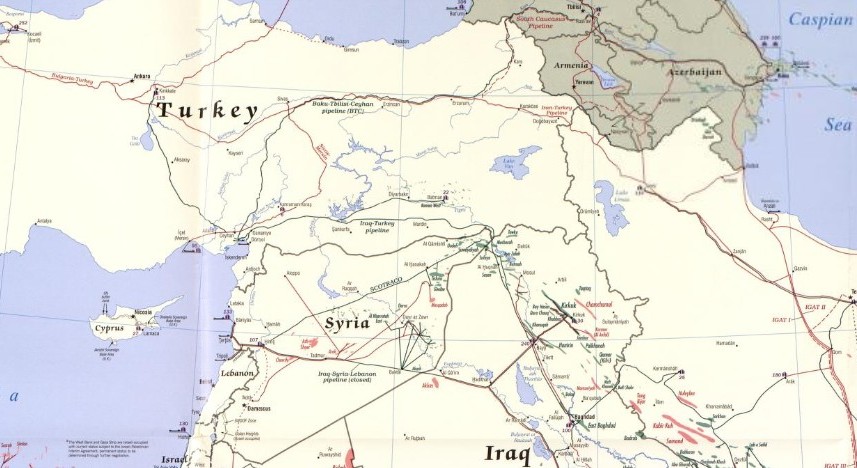
Irak petrol ihracat kanallarını çeşitlendirmek için Kerkük ile Suriye’nin Baniyas şehri arasındak petrol boru hattını canlandırmak istiyor. Bu hattın işletmeye alınması Türkiye’ye zarar verebilir. Bölgedeki petrol ve doğal gaz boru hatları. (Harita: US Library of Congress)

Ortadoğu’nun enerji haritası Türkiye’yi devre dışı bırakabilecek Irak-Suriye petrol boru hattı projesiyle değişebilir. Irak’ın 2003’ten bu yana pasif bekleyen Kerkük–Baniyas petrol boru hattını tekrar canlandırma kararı, yalnızca bir altyapı yatırımı değil; bölgedeki güç dengelerini sarsacak stratejik bir hamle anlamına geliyor. Türkiye, bu koridorun devreye alınması halinde hem transit gelirlerini hem de bölgedeki “enerji dağıtım merkezi” iddiasını kaybetme riskiyle karşı karşıya. Ankara’nın artık uykuya yatma lüksü yok.

Irak: yeni ihracat kanalları

Irak, Petrol İhracatçısı Ülkeler Örgütü OPEC’in Suudi Arabistan’dan sonra ikinci büyük üreticisi olarak günde 3,5 milyon varili aşkın petrolüyle küresel enerji piyasasında kritik bir oyuncu. Ancak bu üretimin yüzde 85’i Basra Körfezi’ne bağımlı. Hürmüz Boğazı’ndaki bir gerilim, ambargo ya da deniz güvenliği krizi, Bağdat’ın milyarlarca dolarlık gelirini bir gecede sekteye uğratabilir.
Kerkük–Ceyhan hattı bir zamanlar 400–500 bin varil/gün sevkiyat kapasiteli olsa da son yıllarda hukuki anlaşmazlıklar ve güvenlik sorunları nedeniyle adeta durmuş halde. Ankara bunu müzakerelerde koz olarak kullanıyor.
Irak’ın önceliğiyse ihracat kanallarını çeşitlendirmek; Kerkük–Baniyas koridoru da tam bu noktada öne çıkıyor.

Ceyhan yerine Baniyas mı?

Suriye iç savaşıyla ekonomik altyapısı ağır darbe alsa da Akdeniz’e kıyısındaki Baniyas Limanı hâlâ işlevsel.
Kerkük’ten Baniyas’a uzanacak hat, Irak petrolünü hem doğrudan Akdeniz’e dökecek hem de Avrupa’ya kısa yoldan nakletme fırsatı sunacak.
Gerçi Ceyhan/Yumurtalık terminali sadece Kerkük ve Musul petrolünü değil, Azerbaycan petrolünü de Akdeniz’e taşıyor. Ancak Kerkük-Baniyas hattıyla Suriye, yeniden inşa sürecinde petrol gelirlerinden beslenen önemli bir enerji dağıtım merkezi konumuna gelebilir. Bu da hem Şam yönetimine yeni bir gelir kaynağı hem de bölgesel güç dengelerinde Suriye’nin eski statüsünü kısmen de olsa geri kazanması demek.

Irak ve Suriye Kürt bölgeleri

Irak Kürdistan Bölgesel Yönetimi (KBY) kontrolündeki petrol sahaları yıllardır Ceyhan üzerinden fiili bağımsız gelir sağlıyordu. Uluslararası Tahkim Kurulu’nun 2023’te aldığı karar, bu kanalı büyük ölçüde tıkadı ve KBY’yi mali krizle karşı karşıya bıraktı.
Kerkük–Baniyas hattı işletmeye alınırsa Bağdat, kuzeydeki petrol gelirinin kontrolünü tamamen eline alabilecek. Bu, Kürt özerkliğinin ekonomik dayanaklarından birini daha zayıflatıp bölgeyi merkezi yönetimin gölgesine çekecek güçlü bir araç olarak işlev görecek.
Suriye cephesindeyse Deyrizor ve Haseke gibi doğu sahalarında ABD destekli SDG/PYD kontrolü sürerken, Şam yönetimi bu koridoru canlandırarak ilgili bölgeleri yeniden ulusal enerji şemsiyesi altında toplamayı amaçlıyor. Dolayısıyla PYD/SDG oluşumlarının siyasi ve ekonomik özerklik talepleri de ciddi bir sınavdan daha geçecek.
Kerkük–Baniyas koridoru faal hâle gelirse bu Türkiye’nin en hızlı ve güvenilir çıkış imajını sarsabilir, taşımacılık gelirlerini sarsabilir, bölgesel pazarlık gücünü azaltıp stratejik etkisini zayıflatabilir.

Dört önemli nokta

Uyuyan güzel uyanıyor ve Türkiye’nin şimdi uykuya yatma zamanı değil. Bu koridorun enerji haritasını yeniden çizmesine fırsat vermeden, Ankara şu adımları derhal hayata geçirmeli:
1- Kerkük–Ceyhan hattı modernizasyonu: Boru hattının bakım, güvenlik ve dijital izleme yatırımlarını hızla tamamlayarak Irak’a hâlâ Türkiye’nin en uygun çıkış kapısı olduğu kanıtlanmalı.
2- Yeni ticaret ve yatırım modelleri: Ortak rafineri projeleri, serbest enerji bölgeleri, yatırım teşvikleri ve doğrudan alım garantileriyle Kerkük–Ceyhan güzergâhı ekonomik açıdan da çekici hale getirilmeli.
3- Irak KBY ve Bağdat’ın arası bulunmalı: Kürt bölgesinin ekonomik çıkarlarını da gözetecek, gelir paylaşımı mekanizmaları kurarak Ceyhan’a olan güveni yeniden inşa etmek.
4- Suriye ile enerji diplomasisi: SDG/PYD kontrolündeki sahalarda teknik rehabilitasyon teklifiyle Şam yönetimiyle enerji iş birliğini derinleştirmek; Baniyas hattını bir alternatif değil tamamlayıcı bir seçenek olarak sunmak.

Acele etmek gerekiyor

Kerkük–Baniyas koridoru, dört duvar arasında kalmış “uyuyan güzel” değil; operasyonel hale gelirse Türkiye’nin stratejik menfaatlerini zedeleyecek şekilde Ortadoğu’nun dengelerini yeniden kuracak bir hamle. Enerji hiçbir kaba sığmaz, engellenemez, akacak mecrayı mutlaka bulur. Türkiye eğer bu süreçte kritik eşiği kaçırırsa, “enerji merkezi” hayali suya düşer, bölgesel nüfuz ve gelir kaybı kaçınılmaz olur.
Ankara artık kısa vadeli çözümler değil, kapsamlı, stratejik bir seferberlikle hem kendi çıkarlarını hem de bölge istikrarını garanti altına almak zorunda.
Aksi takdirde “uyuyan güzel” uyanacak ve Türkiye’nin bu oyunun dışında bırakılması süreci başlayacak.

Cumhuriyet - Emperyalizmin Kemalizm saplantısı Ahmet Süha Umar (Emekli Büyükelçi) 30 Nisan 2025


Cumhuriyet

Emperyalizmin Kemalizm saplantısı

Ahmet Süha Umar (Emekli Büyükelçi)

30 Nisan 2025


Ermeni terörü, aralarında, kaybına hâlâ alışamadığım dostum Bahadır Demir’in de bulunduğu onlarca meslektaşımı öldürdü. Batı, yıllarca kol kanat gerdiği ASALA-Ermeni terörüne desteğini ancak 1983 Orly Havaalanı baskınından sonra kesti.


PKK terörü ise 1984 Siirt-Eruh baskını ile başlatıldı. Arkasında yine Batı vardı.


Batı’nın bu tutumunun nedeni, Mustafa Kemal Atatürk’ün, Batı’nın, Sevr Antlaşması ile Türkleri ve Türkiye’yi, Orta Anadolu’ya hapsetmek ve ekonomik kurtuluşunu önlemek amacını boşa çıkarmasıdır. Batı emperyalizmi, Kemalizmin ve Türklerin bu başarısını hiçbir zaman kabullenemedi, sindiremedi.


Bu gerçeği gördüğümüzde, her yıl 24 Nisan öncesindeki sıkıntılı bekleyişin de ABD başkanının hangi sözcüğü kullandığını tartışmanın veya buna tepki göstermenin de bir anlamı yoktur. Ermeni ve Kürt terörü, Türkiye Cumhuriyeti’ni meşgul etmeye, enerjisini verimsiz alanlarda tüketmesini sağlamaya yönelik planlardır. Ciddiye almaya değmez. Halk değişiyle “Erkekseniz gelin, alın!” demek yeter.


Günümüzde üzerinde durulması gereken konu ise farklıdır ve önemlidir.


DEĞERLİ MADENLER


Batı’nın değerli madenlere gereksinimi, özellikle bilişim teknolojilerindeki ilerleme nedeniyle bugün büyük ölçüde artmıştır. Bu madenler için yapmayacağı yoktur. Bunun en son kanıtı, Trump’ın, Ukrayna’nın değerli madenlerine zorbalıkla el koymasıdır.


Osmanlı’nın son döneminde, “padişahlarımız, efendilerimizin!” gösteriş ve ihtişam merakı nedeniyle devletin borç batağına saplanması sonrasında da Batı, alacaklarının tahsili için Düyunu Umumiye aracılığı ile Türkiye’nin başta tuz gelirleri olmak üzere, büyük gelir kaynaklarına el koymuştur.


YENİ DÜYUNU UMUMİYE


Türkiye bugün yine, 2002’den bu yana Cumhuriyetin bütün varlıklarını yabancılara satan yöneticilerinin dirayetsizliği, yanlış ekonomi politikaları ve ihtişam-gösteriş merakı nedeniyle bir kez daha borç batağına saplanmıştır. Tarih tekerrür etmekte, Türkiye’nin, başta altın olmak üzere, tüm değerli madenleri, kişisel çıkar peşindeki içerideki işbirlikçilerin desteğiyle çıkarılıp yurtdışına götürülmektedir. Bu arada Türkiye’nin zenginlikleri -ormanları, denizleri, meraları, turizm alanları hatta tarihi ve arkeolojik sit alanları- amansızca yok edilmektedir.


BATI EMPERYALİZMİNİN AMACI


Batı emperyalizmi, onu dünyada ilk kez alt eden, Sevr’i çöpe atan, sonra da onca yoksulluk içinde bile Batı’nın kapısına gitmeyen; Cumhuriyetin ilk 15 yılında, dünyada eşi görülmedik bir ekonomik kalkınmaya imza atan, bazı hadsizlerin küçümsedikleri Atatürk Türkiye’sine, her ne pahasına olursa olsun diz çöktürmek, böylece Kurtuluş Savaşı’nın intikamını almak amacını tek bir gün bile aklından çıkarmamıştır.


Batı emperyalizminin, geçmişte olduğu gibi bugün de araçları aynıdır. Kürt ayrılıkçı hareketini teşvik eder, destekler. Türkiye’yi, ekonomik tutsak haline getirmeye çalışır. Gerek duyduğu destek, ülke içindeki işbirlikçilerdir.


TÜRKIYE GÜÇLÜDÜR: SORUN, YÖNETİM ZİHNİYETİDİR


Batı’nın Türkiye Cumhuriyeti’ne böylesine diş bilemesinin nedeni, Türk ulusunun, Kurtuluş Savaşı’nda ve sonrasında gösterdiği direnç, sergilediği başa çıkılmaz güç, bunu her an tekrarlama potansiyeli ve Türkiye Cumhuriyeti’ni o dönem yöneten Kemalist iradenin, kendisini kanıtlamış, emperyalizmi alt eden niteliği ve gücüdür.


Türkiye ancak 1950’lerde başlayan ve son 23 yılda en üst düzeyine varan, Atatürk Türkiye’sinin kurucu değerlerinden kopan yönetim zihniyetinden kurtulduğu takdirde Batı’nın kurduğu tuzağı ve onun, Cumhuriyeti, ulusuyla, ülkesiyle ortadan kaldırma planını boşa çıkarabilir.


Yapılması gereken, egemenliğin tek kişiye değil ulusa ait olduğu; laik, demokratik ve sosyal hukuk devleti; ülke sınırlarının Misakı Milli ile belirlendiği; yurtta ve dünyada barış ilkelerine bağlı olarak başta komşular olmak üzere, NATO, AB, Rusya ve Çin ile her zaman ülke çıkarlarını titizlikle koruyan iyi ve dengeli ilişkiler politikasına dönmektir.


Türkiye’nin, bilinçli olarak içine düşürüldüğü duruma ve bunun nedenlerine bu gözle bakmadıkça ve umarım, bu yönetim zihniyetini her ne pahasına olursa olsun değiştirmekte olduğunu görmedikçe, Batı emperyalizminden kurtuluşu yoktur.