Tuesday, August 7, 2018

The Real History of the Liberal Order

The Real History of the Liberal Order
Neither Myth Nor Accident
Michael J. Mazarr
MICHAEL J. MAZARR is Senior Political Scientist at the RAND Corporation.


For 70 years, U.S. commentators have, by and large, supported the idea of a U.S.-led, rules-based international order. Yet recently, more and more scholars [1] and experts [2], including the political scientist Graham Allison writing in the latest issue [3] of Foreign Affairs, have started dismissing [4] it as a “myth [5].” Their argument has more than academic significance: given the accelerating assault on the institutions and practices of the postwar order by politicians around the world, the idea that the system is more mythical than real implies that the United States can get along perfectly well without it.
Yet these critiques typically conflate three different orders: the postwar institutional order, the components of that system that espouse liberal values, and the U.S.-led global military order with its goal of U.S. primacy. Allison rightly worries that a “surge of triumphalism” after 1989 tempted the United States to overreach in promoting liberal values and in its ambitions for primacy. But the foundational postwar order isn’t responsible for that overreach. Allowing that order to melt away would sacrifice perhaps the greatest competitive advantage that a leading power has ever enjoyed.

NO ACCIDENT

Allison’s thoughtful essay makes many important points but goes wrong in three related ways: it misreads the history of the postwar order, exaggerates its goals, and mistakes undue U.S. global activism for the operation of the order itself.
Start with the history. Allison argues that the order was an “unintended consequence” of the Cold War, essentially a historical accident. It emerged out of “fear” and the pursuit of a balance of power, not any intention to reshape world politics. It was, he implies, always a realist power grab dressed up as a way to spread liberal values.
That is at best a one-sided portrait of a complex history. Different officials held different views of the order as they went about building it, but broadly speaking, the United States in the 1940s invested in the United Nations, the international trade regime, and global institutions of economic stability in order to fashion a more ordered world that would be less likely to fall victim to the disasters of the 1930s. These concepts predated the recognition by U.S. diplomats that the U.S. relationship with the Soviet Union was destined to sour. Allison is wrong to say that ideas for postwar institutions emerged “only when [U.S. officials] perceived a Soviet attempt to create an empire.” U.S. President Franklin Roosevelt was deep into discussions with British Prime Minister Winston Churchill and others about the creation of the UN by 1941, and formal UN organizations had been put in place by 1943. The Bretton Woods conference, which created the postwar monetary and financial order, was held in 1944.
The scholar Stewart Patrick, an expert on international institutions, examines this history in detail in his magisterial book, The Best Laid Plans. The United States’ interest in multilateralism, he explains, “not only preceded containment as the organizing framework for U.S. foreign policy, it also outlasted it, into the 1990s.” The goal, he makes clear, “was to create an open world—a rule-based global order in which peace-loving countries could cooperate to advance their common purposes within international institutions.” Only when the hope of including the Soviet Union in that order died away did the United States move “to safeguard the independence and prosperity of a narrower ‘Free World’ community.” Within this vision, the Bretton Woods institutions quickly assumed the most elaborate character. As the historian Mark Mazower notes in Governing the World, the postwar economic order “represented a concerted intervention to manage international capitalism far beyond anything the League [of Nations] had ever attempted.”
The importance of such ordering mechanisms appears in U.S. national security documents from very early on. Allison quotes NSC-68, a major Truman administration national security policy paper written in 1950, but he leaves out its powerful endorsement of ordering mechanisms. “Even if there were no Soviet Union,” the paper argued, the United States would still “face the fact that in a shrinking world the absence of order among nations is becoming less and less tolerable.”
The United States did not, then, aim merely to play power politics or deter the Soviet Union after World War II. U.S. officials hoped to establish the foundation for a more collaborative and rules-based world politics. Yet as Allison rightly notes, Roosevelt and others blended realpolitik with their idealism in the shape of the UN Security Council, which puts great powers at its center. The order’s institutions and rules focused on geopolitical and economic stability, not on spreading U.S. values.

DEFINING ORDER

From a narrow view of the order’s founding objectives, Allison moves on to an exaggerated description of what its advocates think it has achieved. He argues that the order’s proponents believe it “has been the principal cause of the so-called long peace among great powers for the past seven decades.” I am not aware of anyone who holds such an extreme view of the order’s importance. All meaningful treatments of the order recognize that U.S. power and credibility have been essential to the postwar system and view the order’s institutions as a complement to other factors underwriting peace and prosperity. This mindset was apparent from the beginning: Mazower explains that the U.S. government made the case for the UN to the American people by preaching “a pragmatic realism—the new international organization was a vital necessity, even if it would not solve all the world’s problems.”
That leads to the problem of terminology. Allison rightly worries that the idea of the international order is “conceptual Jell-O.” But his argument mixes three different phenomena: the bedrock postwar order, the liberal elements of that order, and the global posture of U.S. power. To suggest, as Allison rightly does, that forcible value promotion and efforts to sustain U.S. primacy must be reined in does not imply that the foundational postwar order is a myth.
In fact, the institutional and normative core of the postwar order lies in a large but straightforward set of institutions: the UN system, not only the Security Council and the General Assembly but also the peacekeeping and development units; the major global economic institutions, including the World Bank, the International Monetary Fund, the Bank for International Settlements, the World Trade Organization, and other institutions for trade negotiations; regional political and economic organizations, such as the EU, the Association of Southeast Asian Nations, and the African Union; more informal organizations and processes, from the G-7 and the G-20 to recurring conferences and dialogues; and the rules and conventions associated with all those organizations.
The system formed by those institutions is the descendant of the order that U.S. officials consciously set about creating in the mid-1940s. It is the order that has featured prominently in every U.S. National Security Strategy since the 1950s. And it is the order that dozens of other countries have placed at the center of their own conceptions of security and prosperity. I have spoken to many current and former officials from countries around the world over the last two years as part of a broad assessment of the post [6]war order [6] conducted by the RAND Corporation, and it is clear that a long list of countries other than the United States—Australia, France, Germany, India, Japan, New Zealand, South Korea, the United Kingdom, and many more—view the order as a real thing and deeply fear its passing.
What Allison has sensed, more than some mythological nature of the postwar order, is the growing difficulty of reconciling such an order with an intrusive U.S. approach to international politics and U.S. efforts to force other countries to adopt American values. As other countries grow in power, they are demanding a greater say in the operation of the order and raising more objections to unilateral U.S. interpretations of the rules. But that tension doesn’t mean the order is a myth; it only suggests that the United States must temper its impulses to push liberal values and find a way to share influence. (These are two of the leading findings [7] of our study.) That restraint should be coupled with efforts to renew and rehabilitate, not abandon, the core institutions of the order.

KEEPING IT TOGETHER

With 70 years of hindsight, it is clear that some of the hopes of the architects of the postwar order have been at least partly fulfilled. The multilateral processes those architects created have helped stabilize the global economy and deter aggression [8]. By aligning three-quarters of the world economy around [9] a broad set of norms [9], they created a powerful gravitational pull [10] toward stability at the center of world politics. Nations knew that to sustain their competitiveness, they could not oppose the prevailing order.
By joining its own power to this multilateral project, moreover, the United States helped legitimize its role in the world—and earned forbearance for the times when it failed to live up to its own ideals. Allison argues that the order-busting hypocrisy of U.S. military action since 2001 “speaks for itself.” But few international behaviors speak for themselves. They are interpreted by other countries in the context of wider understandings of power and purpose. The association of U.S. power with a shared order has helped mitigate reactions to its misuse. The United States may well have reached the end of this tolerance, which is why Allison’s instinct for restraint hits the mark. But the answer is to reinvigorate, not forsake, the multilateralism that once assuaged antagonism toward U.S. power.
The creators of the postwar order set out to do something both limited and revolutionary. They aimed to work within the constraints of national self-interest and international balances of power to build institutions and processes that could shape the character of world politics. The system they made has succeeded in important ways, even if only as one of several factors that have kept the peace and made the world rich. As the world enters an era of greater international competition, U.S. policymakers should take care not to underestimate the importance of the postwar system. The order is far from a myth; it is the United States’ most important competitive advantage.

Sunday, August 5, 2018

How to Save the U.S. - Turkey Relationship


SNAPSHOTJuly 30, 2018EuropeTurkey
How to Save the U.S.-Turkey Relationship
For the Sake of the Alliance, Erdogan Must Fold

The tense relationship between the United States and Turkey is reaching an inflection point. As the Turkish government has taken an increasingly authoritarian turn and made questionable foreign policy choices in recent years, Washington has tried to exercise strategic patience and engage Turkish leadership to resolve differences between the two countries. But that patience is wearing thin, as Ankara has repeatedly failed to respond to Washington’s concerns—chief among them right now the imprisonment of Andrew Brunson, a Christian pastor from North Carolina, on specious terrorism charges. The handling of the Brunson case, which came to a head last week when he was moved to house arrest rather than released, will affect the future of bilateral ties. If negotiations fail, the United States may feel compelled to shift its approach away from diplomacy and toward economic leverage. In this game of foreign policy poker, Turkey’s struggling economy may force President Recep Tayyip Erdogan to fold first.
The United States and Turkey have collected long lists of grievances against each other over the last few years. On one side, the Turkish government feels that the United States has failed to take seriously its security challenges. It has been frustrated with U.S. support for a faction of Syrian Kurds (People’s Protection Units, YPG) in the fight against the Islamic State (ISIS). Given the group’s links to a domestic Kurdish terrorist organization (Kurdistan Workers’ Party, PKK), Ankara’s primary goal in Syria has been preventing the YPG from creating an autonomous Kurdish region along the Turkish border, which it fears could lead to an independence bid or be used to stage attacks on Turkey. Ankara pressed the point by launching military action against YPG forces in January 2018, which diverted some fighters away from U.S.-led operations against remaining ISIS elements.
Many Turks remain hurt by the perceived failure of Western leaders to comprehend the trauma of the July 2016 coup attempt and to express immediate support for the country’s democratically elected leader. Despite opposition to Erdogan within the electorate, there was rare consensus across the political spectrum that a military overthrow was not the solution. There is further consternation that the accused mastermind, Islamic cleric Fethullah Gulen, is residing legally in Pennsylvania. Ankara has provided boxes of documents to the U.S. Justice Department in an attempt to prove his guilt. Washington has not found the evidence sufficiently compelling to persuade a federal judge of probable cause meriting extradition. In an effort to address this impasse, U.S. officials have held several technical meetings with their Turkish counterparts to discuss the evidence presented. They have also continued separate investigations, which predate the coup, into U.S.-based charter schools run by Gulen’s followers.
For its part, the United States has begun questioning whether Turkey is still a reliable ally. Americans are troubled by the Turkish government’s overzealous response to the attempted putsch: initial efforts to detain suspected coup plotters turned into a maximalist purge of affiliated Gulenists and a witch-hunt against political opponents. A three-month state of emergency was imposed immediately following the coup, extended repeatedly, and only allowed to lapse in mid-July when parliament introduced anti-terrorism legislation that enshrines many emergency measures in Turkish law. Fluid definitions of terrorism under the state of emergency led to the imprisonment of several American citizens, as well as Turkish employees of two U.S. consulates, on baseless charges of links to the PKK and Gulen. Brunson’s case has provoked the loudest outcry in the United States and received high-level attention across the government. Turkish officials insist that the case is solely within the competence of the independent judiciary, but Erdogan’s remarks have suggested otherwise. He has engaged in hostage diplomacy, stating publicly last September that he would hand over one cleric in exchange for another: Brunson for Gulen. 
The United States is also concerned about Ankara’s plans to purchase the S-400 missile defense system from Russia. This system would not be interoperable with NATO and could compromise the security of F-35 stealth fighter jets, which the United States is selling to Turkey as part of a European consortium. These plans have raised broader questions about whether Turkey is shifting its strategic orientation away from the alliance.
TOO LITTLE TOO LATE
When Trump took office, Erdogan hoped he would rectify Obama-era grievances by taking steps such as extraditing Gulen and ceasing cooperation with the YPG. However, the new administration did not deviate significantly from existing U.S. policies on Turkey. (This is notwithstanding the improprieties of Michael Flynn, former Trump campaign adviser and briefly U.S. national security adviser, who was allegedly offered $15 million by representatives of the Turkish government to return Gulen to Turkey, among other favors.)
Tensions spiked in the fall of 2017 when, in response to the arrests of its local staff, the U.S. embassy suspended non-immigrant visa services. Turkey promptly took reciprocal action. The United States lifted the suspension after Ankara assured it that no additional local employees were under investigation, staff would not be arrested for performing official duties, and advance notice would be given before any future arrests. But Ankara failed to release the jailed employees and even placed a third staffer under house arrest. The bilateral relationship faced additional strain in January 2018, when the Turkish military drove Russian-backed YPG fighters from the Afrin region of northwestern Syria. Ankara’s threats to expand this operation 60 miles east to Manbij, where U.S.-backed YPG fighters and U.S. Special Forces were based, raised the worrying prospect of Turkish and American soldiers pointing guns at one another.
The Trump administration has sought to improve relations through diplomatic engagement. During the same week in February 2018, the national security adviser, secretary of defense, and secretary of state all met with their Turkish counterparts. A lengthy conversation between former Secretary of State Rex Tillerson and Erdogan in Ankara led to the creation of several working groups to resolve bilateral irritants. One group has been quietly discussing judicial issues, including American political prisoners. It was later announced that prior to Tillerson’s visit the U.S. attorney’s office had dropped charges due to insufficient evidence against 11 of 15 presidential bodyguards indicted after brawling with protesters during Erdogan’s May 2017 visit to Washington.
Another group has focused on military issues. In order to dissuade Ankara from purchasing Russian S-400s, the Trump administration has improved the long-standing offer to sell Turkey the U.S.-made Patriot missile defense system by addressing the Turkish desire for more technology transfer and co-production capabilities. The two sides also developed a road map to address the continued presence of YPG forces in Manbij, Syria, which violated an Obama Administration promise that they would withdraw after eliminating ISIS fighters. Although Tillerson’s firing caused delays, his successor Mike Pompeo has continued these efforts.
In keeping with his admiration for strongmen leaders, Trump has refrained from criticizing Turkey’s democratic backsliding or imprisonment of its own citizens on dubious charges. He called Erdogan to congratulate him on winning a controversial constitutional referendum in April 2017 that created a highly centralized presidential system, and again to congratulate him on his re-election as president in June 2018. The one exception to Trump’s silence on rule of law issues has been the case of Andrew Brunson, which he and Vice President Mike Pence have raised repeatedly. Their advocacy seems driven in large part by the outcry of Christian evangelicals in the Republican base, as well as Pence’s shared Christian faith. Trump administration officials stress they are also working to resolve the cases of wrongfully imprisoned dual nationals and the Turkish employees of the consulates.
In the U.S. Congress, a growing litany of grievances against Turkey has heightened calls for punitive actions. Some members of Congress have introduced measures targeting the Turkish economy, Erdogan’s greatest domestic vulnerability. But they have also exercised strategic patience, deferring to diplomatic solutions and playing bad cop alongside the Trump administration’s outreach. For example, Senators Jeanne Shaheen and James Paul Lankford co-sponsored visa bans on Turkish officials responsible for unlawfully detaining U.S. citizens. In March, the senators dropped the sanctions when the administration requested that they allow time for Tillerson’s new diplomatic effort. On June 29, Senators Shaheen and Lindsey Graham visited Turkey and told Erdogan directly their concerns and the consequences for failing to address them. Two weeks later, when Brunson remained imprisoned after a scheduled court hearing, a bipartisan group of senators introduced a bill that would restrict loans from international financial institutions to Turkey until it releases U.S. citizens. In addition, concerns about the S-400 purchase prompted the inclusion of a provision in the National Defense Authorization bill that creates a way for the administration to remove Turkey from the F-35 consortium and potentially to block the transfer of the aircraft.
When the Turkish government moved Brunson to house arrest on July 25, Washington viewed the gesture as too little too late. The next day, the Senate Foreign Relations Committee passed the bill on loan restrictions, while Trump and Pence issued tweets calling for sanctions. Additional flashpoints are looming. Implementation of the Manbij road map is still in the honeymoon phase, and challenging negotiations on governance and security arrangements lie ahead. If Turkey does purchase the S-400s, it could be liable to existing sanctions under the Countering America's Adversaries Through Sanctions Act (CAATSA) that prohibit transactions with Russian defense entities and possible removal from the F-35 program. Pending actions by the Treasury Department could further hurt the Turkish economy. For example, Treasury may decide to fine state-owned Halkbank for fraud and conspiracy to violate Obama-era Iran sanctions, and impose new sanctions on countries that do not cease all imports of Iranian oil (which is difficult for Turkey given the lack of alternative suppliers).
ERDOGAN’S WEAK HAND
Where do bilateral relations go from here? If Washington fails to reach a negotiated agreement with Ankara on the political prisoners, it will feel compelled to assume a tougher stance. At the same time, Turkey’s strategic geography, NATO membership, and centrality to several U.S. regional objectives make the relationship one worth preserving. As Russia and other U.S. rivals benefit from the rift with Turkey, it is ultimately not in the interest of the United States to turn away from its challenging ally. Any policy response to the current diplomatic crises should take care to prioritize the longer-term potential of the relationship. 
The United States can take a page from Germany’s playbook; Germany experienced a similarly strained relationship with Turkey in recent years. Erdogan accused German authorities of “Nazi practices” after they blocked Turkish ministers from holding rallies targeting diaspora voters during the referendum campaign. The Turkish government refused to allow a Bundestag delegation to visit troops at a Turkish air base. It also arrested several German citizens on baseless charges. Berlin responded by implementing policies with economic costs while preserving lines of communication with Ankara, a strategy that has proved successful so far. It updated its travel advice to warn German nationals of the risk of arbitrary detention and its limited capacity to help; announced a review of German state guarantees for financing exports to Turkey and said it could no longer guarantee German corporate exports; and withdrew its support for near-term upgrade of the EU-Turkey customs union. Following Turkey’s release of German political prisoners earlier this year (including journalist Deniz Yucel) and its recent decision to lift the state of emergency, Berlin announced that it was relaxing its travel advice and lifting sanctions.
Russia, too, has achieved results in its relationship with Turkey using economic measures. After the Turkish military shot down a Russian jet that violated its airspace in November 2015, Moscow issued sanctions and travel restrictions that ultimately led to an apology from Erdogan the following summer.
The Turkish economy is even more vulnerable to external shocks now than it was then, making it an important potential leverage point for the United States. In early July, inflation reached 15 percent, a nearly 15-year high. The Turkish lira has lost a third of its value against the dollar since the start of emergency rule in July 2016 and dropped 20 percent since the beginning of this year. Foreign policy developments have caused further fluctuations. The Turkish economy has been sustained by cheap credit, which increases consumption and government spending. Many big holding companies are on the verge of bankruptcy, while banks would suffer from a series of defaults. There are structural weaknesses, including a current accounts deficit, external debt stock, and growing unemployment (averaging 11 percent, with youth unemployment at 25 percent). The unpredictable political environment—including deteriorating rule of law, weakened due process, and limited judicial independence—has scared off investors. The president’s new cabinet, which rewards loyalty over knowledge amid efforts to centralize power, lacks financial expertise, as evidenced by Erdogan’s appointment of his son-in-law to manage the economic portfolio.
Given Turkey’s serious economic challenges, Erdogan has overplayed a weak hand with the United States. The American government has been quietly sitting on a straight flush amid a year of painstaking efforts to improve relations, offering diplomatic carrots rather than economic sticks. The movement of Brunson to house arrest, a half measure seemingly intended to appease the U.S. without upsetting his own base, was Erdogan’s attempt to make Washington fold. Trump’s tweets threatening sanctions signal his intent to double down on his own hand, backed by congressional support for strong measures. Both the Trump administration and Congress have exhausted their strategic patience; they are now postured to change their approach and take steps intended to inflict economic pain on a NATO ally of 66 years. There is still time for a diplomatic solution if both sides return to quiet talks rather than angry rhetoric. If not, there is a real risk of ruptured relations, which could have a devastating effect on the Turkish economy, complicate the pursuit of U.S. objectives in the region, and embolden those who do not want to see Turkey facing west. 


Tuesday, July 31, 2018

The grand turning point

The grand turning point

Jean-Dominique Giuliani, Chair of the Robert Schuman Foundation

The summer of 2018 will possibly mark a turning point in international relations.

Developments in American policy, brutally highlighted by a "take-it-or-leave-it" president is nothing new. They are part of the same basic trend as Brexit, the emergence of populist regimes in Europe, the expression of Russian revisionism and the return of nationalism across the globe.

The inexorable spread of globalisation, hurried along by scientific progress and its dissemination, seem to mark a pause in political time.

The map of the world might find itself reshaped because of this.

Because we are indeed witnessing a major turning point.

The emergence of a good number of nations is pulling billions of people from misery; the use of force no longer leads to victory in conflict; never have men and women been as mobile, and more than 250 million of people have migrated; the geographical stretching of chains of value has possibly reached its limits; the most comfortable countries are no longer producing children; never has there been as much financial liquidity to hand, and as many public and private needs going unsatisfied. Inequality has become unbearable to public opinion, even when they have been reduced as in Europe. All of this leads us to believe that we have really changed world and era. And, although the planet has not seen as little conflict as it is witnessing now, the general feeling is that many battles are in preparation.

The result of this is that the democratic model which we have aimed to spread world wide is now being contested, to the benefit of authoritarian "illiberalsim", whose number of supporters is growing. Autocracy is gaining ground.

Multilateralism and free-trade are being challenged by national and even local withdrawal.

Traditional politics is being rejected to the benefit of extremes and nationalism.

A new era has therefore commenced for Europe, which embodies so perfectly the old world and the new challenges forced upon it by a real revolution. For many, Europe broadly typifies the model to destroy. Once it had rivals, now it has real enemies.

The smallest continent in the world from a geographical point of view, Europe has largely benefited to date from growth in trade and has had the best results in terms of improvements made to the living standards of its inhabitants.

Democracy, rule of law, solidarity, multiple protection, healthcare, comfort - all of these successes were in fact improbable just 70 years ago.

If we are simply to defend them, further battles will be necessary. The continent is playing for more than just its survival, the same applies to its place and role in the world.

In the race for world leadership it does not have to pretend to taking first place. It would be enough

to ensure that it remains in the leading three. And this is what is at play now.

China is running for first place, the USA is fighting to retain it, Europe, for its part, can, if it remains united, still produce good results that will make it an inevitable partner. The planet's leader in terms of its GDP, unequalled champion in trade, Europe is now only lacking the assumed traits of power. For its security, diplomacy, trade, economy it must now act for itself and by itself. We know that for Europe, this is of vital importance. By learning to defend itself, it will learn to fight. It has to do this. Fighting for its values, its interests, its model and its vision of the world, for itself. It has to imagine itself as autonomous and independent with everything that ensues from its work in terms of defence, protection and projection.

We have a long way to go before we convince the Europeans, who have been sheltered, half-asleep under the wing of their grand ally, that there is no better ally than oneself.

To do this we have to love ourselves. We have to be proud of our achievements, of what we do and of what we want. "Europe first?" A major task! It is a major turning point too.

Monday, July 30, 2018

Lozan'ı doğru anlamak Prof.Dr. Rıdvan Karluk

Lozan’ı Doğru Anlarsak Cumhuriyet Sonsuza Kadar Yaşar

Prof. Dr. Rıdvan Karluk

Kurtuluş Savaşı’nda kazanılan zafer sonrası Lozan Anlaşması, 24 Temmuz 1923 tarihinde İsviçre’nin Lozan kentinde Türkiye Büyük Millet Meclisi temsilcileriyle İngiltere, Fransa, İtalya, Japonya, Yunanistan, Romanya, Bulgaristan, Portekiz, Belçika ve Yugoslavya temsilcileri tarafından Beau-Rivage Palace’ta imzalanmıştır. Yıllar önce Paris’te görev yaptığım dönemde burayı ziyaret ettiğimde, Cumhuriyet döneminde doğan ve bu Cumhuriyet’in imkanlarından yararlanan biri olarak çok duygulanmıştım.

Lozan Konferansı’na TBMM Hükümeti adına katılan heyet; Misak-ı Milliyi gerçekleştirmeyi, Ermeni devletinin kurulmasını engellemeyi, kapitülasyonları kaldırmayı, Türkiye ile Yunanistan arasındaki Batı Trakya, Ege adaları, nüfus değişimi, savaş tazminatı sorunlarını çözmeyi amaçlamış, Ermenistan ve kapitülasyonlar konusunda anlaşma sağlanamazsa görüşmeleri kesme kararı almıştır. Temel konularda taraflar anlaşamayınca 4 Şubat 1923 tarihinde görüşmeler kesilmiş, 23 Nisan 1923’te yeniden başlamıştır.
24 Temmuz 1923 tarihinde Lozan Barış Anlaşması imzalanmış, Türkiye 23 Ağustos 1923’de anlaşmayı onaylamıştır. Yunanistan 25 Ağustos 1923, İtalya 12 Mart 1924, Japonya 15 Mayıs 1924, İngiltere ise 16 Temmuz 1924 tarihinde onaylamayı gerçekleştirmişlerdir. Gecikmenin sebebi, hükümet krizleri sebebiyle İşçi Partisi’nin 29 Şubat 1924’te iktidara gelmesiyle parlamentoya sunulmuş olmasıdır. (Daniel-Joseph Macarthur-Seal, Intelligence and Lloyd George's Secret Diplomacy in The Near East, 1920–1922, The Historical Journal, Volume 56, Issue 3 September 2013, s.707-728)
Anlaşma, tarafların onaylarını Paris’e gönderdikten sonra 6 Ağustos 1924 tarihinde yürürlüğe girmiştir. ABD Lozan’ı onaylamamıştır. Bunun iki sebebi vardır. Türkiye topraklarında bir Ermeni devletinin kurulmayarak Wilson Prensiplerine ters düşülmesi, ikincisi ise kapitülasyonların kaldırılmasıyla gayri Müslimlere sağlanan imtiyazların son bulmasıdır. ABD Lozan’ı onaylarsa, Ermenilerin Türkiye'den toprak taleplerini reddetmiş olacağı için ABD’deki kuvvetli Ermeni diasporasını karşısına almış olacaktır. Aslında onaylamamasının bir hukuki sonucu da bulunmamaktadır. ABD ile son günlerde gerginleşen ilişkiler sebebiyle konu gündeme gelir mi, bilemem.
Lozan Anlaşması, Türkiye Cumhuriyeti’nin kuruluş senedi olduğu için Cumhurbaşkanı Erdoğan her 24 Temmuz’da bir bildiri yayınlamaktadır.
Sayın Cumhurbaşkanı 24 Temmuz 2018 tarihinde Anlaşma’nın imzalanmasının 95’nci yıldönümü için şu açıklamada bulunmuştur: “Bugün, Türkiye Cumhuriyeti'nin kurucu belgelerinden olan Lozan Barış Antlaşması'nın imzalanmasının 95. yıldönümünü kutluyoruz.
Ülkemizin özellikle son 16 yılda elde ettiği başarıların gerisinde güçlü bir siyasi iradenin mevcudiyeti yanında milletimizin birlik, beraberlik ve dayanışma ruhuyla hareket etmesinin de çok büyük payı vardır…Lozan Barış Antlaşması'nın 95. yıldönümü vesilesiyle, Cumhuriyetimizin banisi Gazi Mustafa Kemal Atatürk başta olmak üzere bugünlere ulaşmamızda emeği olan tüm devlet adamlarımızı saygıyla yâd ediyorum.”
Cumhurbaşkanı Erdoğan’ın 2017 yılında yayınladığı mesaj şöyledir: “Aziz milletimizin her türlü yokluğa, yoksulluğa ve imkânsızlıklara rağmen yazdığı istiklal destanı, Lozan Antlaşması ile diplomasi ve uluslararası hukuk alanında tescil edilmiştir. Türk Milleti, Lozan Anlaşması ile bu topraklardaki bin yıllık varlığını hedef alan Sevr'i yırtıp atmış, bağımsızlığından asla taviz vermeyeceğini tüm dünyaya kabul ettirmiştir.”
2016 yılındaki mesajında ise Lozan Anlaşması için çok önemli bir tespitte bulunmuştur: “Bugün, Cumhuriyetimizin kurucu belgesi olan Lozan Barış Antlaşması’nın imzalanmasının 93. yıldönümüdür. Aziz milletimizin inanç, cesaret ve fedakârlıkla elde ettiği zafer, Lozan Antlaşması ile diplomasi ve uluslararası hukuk alanına taşınarak tescil edilmiştir. Bu anlaşma, yeni kurulan devletimizin tapusu niteliğindedir. Lozan Antlaşması’nın içeriği, bu anlamda başta milli irade ve demokrasi olmak üzere Türkiye Cumhuriyeti’nin sahip olduğu temel ilkelerin değeri, bugünlerde çok daha iyi anlaşılmaktadır. Bu düşüncelerle, Lozan Barış Antlaşması’nın 93. yıldönümünde, Cumhuriyetimizin banisi Gazi Mustafa Kemal başta olmak üzere, anlaşmanın mimarı olan tüm devlet adamlarımızı rahmetle anıyorum.”
Bu olumlu mesajların aksine sayın Cumhurbaşkanı 29 Eylül 2016 tarihinde muhtarlarla yaptığı konuşmada “Tarihte bize ne yaptılar. 1920'de bize Sevr'i gösterdiler, 1923'te Lozan'a bizi razı ettiler. Birileri de Lozan'ı 'zafer' diye yutturmaya çalıştı. Her şey ortada” diyerek bir tartışma da başlatmış, Lozan Anlaşması’nın “zafer” diye sunulmasına karşı çıkmıştır. Lozan Barış Anlaşması hakkında kitap yazan Kadir Mısırlıoğlu da kitabının adını “Lozan, Zafer mi, Hezimet mi?” (Sebil Yayınevi, 2009) koymuştu.
Sayın Cumhurbaşkanın son 3 yıldaki Lozan mesajları bence önemlidir. Çünkü 29 Eylül 2016 tarihindeki açıklamasını ortadan kaldırır niteliktedir. Taha Akyol 24 Temmuz’daki yazısında çok doğru bir tesit yapmıştır: “Bugün Lozan’ı kötülemek ancak bilgisizlik ve önyargıyla mümkündür.”
Türkiye’de bazıları Lozan Barış Anlaşmasını küçümserken Birinci Dünya Savaşı sırasındaki İngiltere Başbakanı olan ve Osmanlı’yı yok eden Sevr (Sevres) Anlaşması’nın en büyük destekçisi olan Lloyd George, İngiliz Daily Telegraph gazetesinde 28 Ağustos 1923’de yer alan demecinde, “Türkiye’nin Lozan başarısı, medeniyetin yenilgisidir” demiştir. 6 Haziran 1924 tarihinde de Avam Kamarası’nda Sevr’i savunarak Lozan’ı İngiltere’nin yenilgisi olarak nitelemiştir. (Lloyd George and the Turkish Question, file:///C:/Users/w10/Downloads/UBC_1978_A8%20H57.pdf)
Türk kamuoyunda pek bilinmeyen bir gerçek vardır. Türklere düşman olan Lloyd George’un Türkiye'yi Birinci Dünya Savaşı'ndan çekilmeye ikna etmek için gizli bir ajan aracılığıyla 25 milyon dolar rüşvet vermeye hazır olduğu, Kew Ulusal Arşivlerinde yayımlanan yabancı ofis istihbarat dosyalarında ortaya çıkmıştır. Bu miktar günümüzde 200 milyon sterline eşittir. (Lloyd George was prepared to pay $25 million in bribes through a secret agent to persuade Turkey to pull out of the First World War, Lloyd George tried to bribe Turks out of Great War, 1 April 2005, https://www.telegraph.co.uk/news/uknews/1486861/Lloyd-George-tried-to-bribe-Turks-out-of-Great-War.html)

Türkiye Cumhuriyeti’nin tapu senedi olan Lozan Anlaşması’nın 95’nci yıl döneminde başta Mustafa Kemal Atatürk ve İsmet İnönü olmak üzere tüm emeği geçenleri saygı ve sevgi ile anıyorum. Bu kapsamda Lozan Anlaşması Cumhuriyetimizin 100’ncü yılı olan 2023’te son bulacak diyenleri kınıyor, onları tarihi gerçekleri saptırmamaya davet ediyorum.
Turgut Özal Üniversitesi KHK ile kapatılmadan önce Hukuk Fakültesi son sınıftaki iki öğrencim bana Lozan Anlaşması’nın gizli maddeleri olduğunu, 2023 yılında son bulacağını, bunun doğru olup olmadığını sormuşlardır. Anlaşma metninin gerek Türkçesinde ve gerekse orijinal Fransızca metninde böyle bir maddenin bulunmadığını onlara söyledim. Lozan’ın 2023 yılında son bulmasını isteyenlerin Sevr (Sevres) Anlaşması’nı geri getirmek istediklerini, çünkü Sevr’de Türkiye topraklarında Kürdistan ve Ermenistan devletlerinin kurulmasının yer aldığını, Cumhuriyetin değerlerine karşı olduklarını, bu sebeple bir algı operasyonu yaratmaya çalıştıklarını açıkladım.

143 madde arasında gizli maddenin bulunmadığını, Lozan Anlaşması’na taraf çok sayıda ülke olduğunu, onaylı birer örneğinin tüm imzacı ülkelere verildiğini, Lozan’ın, bir veya birkaç ülke için gizli maddelerinin olmasının mümkün olmadığını sınıfa kabul ettiremedim. Sevr Anlaşması’nın 62, 63 ve 64’ncü maddelerinin bağımsız bir Kürdistan kurulmasını öngördüğünü, bu maddelerin Kürtlere self determinasyon hakkı verdiğini söylememe rağmen öğrencileri ikna edemedim.
İki öğrencime ve tüm sınıfa Paris’in Sevr (Sevres) banliyösünde bulunan Seramik Müzesi’nde Anlaşma’nın imzalandığını, daha sonra bu Müze’nin önüne Ermenilerin bir sözde Ermeni soykırımı anıtı diktiklerini, böylece Sevr Anlaşması’ndaki büyük Ermenistan’a atıfta bulunduklarına dikkatlerini çektim. Lozan Anlaşması’nın Fransızca aslının Paris’te, Fransız Dışişleri Bakanlığı Arşivi’nde muhafaza edildiğini de belirttim. (Anlaşma’nın görüntüleri, tıpkı basımının yayınlanması amacıyla İş Bankası Kültür Yayınları tarafından Türkiye’ye getirtilmiştir.)
Lozan Anlaşması’na husumet duyanları anlamak mümkün değildir. İstiklal Savaşı için Yunan kazansaydı diyebilecek kadar ileri gidenlere acaba ne demeli? Bu kişinin Ortodoks çanları altında ibadet ederse kendini daha mutlu hissedeceği için bu açıklamayı yaptığı kanısına vardım. Öncelikle bilgi sahibi olmadan fikir sahibi olanlara Taha Akyol’un Bilinmeyen Lozan kitabını okumalarını öneririm. Akyol’un ilk Meclis, İngiltere Avam Kamarası ve Lozan Konferansı tutanaklarına dayandırdığı kitabında tüm gerçekler açıklanmaktadır.
Lozan’da büyük Türk zaferi düşmana onaylatılmış, eksikler olsa da yapılabilecek olanın azamisi o günkü şartlarda yapılmış ve Türkiye Cumhuriyeti kurulmuştur. 23 Temmuz 1923 günlü Tevhid-i Efkar gazetesinde Ebuzziya Zade Velid, imparatorluk topraklarının
kaybından üzüntüsünü belirtmiştir ama Lozan Anlaşması hakkında da şu doğru tespiti yapmıştır: “Delegelerimiz siyasi ve iktisadi istiklalimiz açısından mevcudiyetimizi ve milli inkişafımızı sağlayacak bütün esasları kurtarmaya muvaffak oldular.”
Lozan Barış Anlaşması’nı imzalayan İsmet İnönü, Lord (George) Curzon ile ilgili önemli bir anısını şöyle anlatmaktır: “Bir gece toplantısında bulundum. Beraberdik. İkimiz vardık, bir de Amerika Murahhası Mr. Chaild vardı. Lord Curzon bana dedi ki ‘hiçbir dediğimizi makul olduğuna, haklı olduğuna bakmaksızın kabul etmiyorsunuz. Hepsini reddediyorsunuz. En nihayet şu kanaate vardık ki, ne reddederseniz hepsini cebimize atıyoruz. Memleketiniz haraptır. İmar etmeyecek misiniz? Bunun için paraya ihtiyacınız olacaktır. Parayı nereden bulacaksınız? Para bugün dünyada bir bende var, bir de bu yanımdakinde. Unutmayın, ne reddederseniz hepsi cebimdedir. Nereden para bulacaksınız, Fransızlardan mı?
Ben, evet dedim. Curzon sözlerine devam etti: Para kimsede yok. Ancak biz verebiliriz. Memnun olmazsak kimden alacaksınız? Harap bir memleketi nasıl kurtaracaksınız? İhtiyaç sebebiyle yarın para istemek için karşımıza gelip diz çöktüğünüz zaman, bugün reddettiklerinizi cebimizden birer birer çıkartıp size göstereceğiz.’ Lord Curzon’un bu sözleri kulağımda kalmıştır ve sözünün geçtiği her yerde hatırlamışımdır. Lozan Konferansı olalı 45 sene geçti. Bu sözleri hiçbir zaman unutmadım. Bu 45 sene içinde para almak için müracaat ettiğimiz her yerde bu ihtimalleri görmüşümdür.
Lord Curzon’un sözleri bittiği zaman, kendisine dedim ki: ‘Şimdi meseleleri halledelim, para istemek için gelirsem o zaman gösterirsiniz.’ Hakikat şudur ki, İkinci Cihan Harbi kapı önünde görününceye kadar mali bakımdan bize kolaylık gösterilmemiştir. Ve Türkiye kendisini kendi alın teri ile tamir ederek İkinci Cihan Harbi’ni idrak etmiştir.” ((http://www.ismetinonu.org.tr/lozan-antlasmasi.htm, http://www.trtarsiv.com/izle/84688/ismet-inonu-nun-lord-curzon-a-cevabi)
Lozan’da kapitülasyonların kaldırılmasını, Osmanlı borçlarının makul ölçüde ödenerek tasfiye edilmesini, Duyun-u Umumiye İdaresine son verilmesinin karara bağlanmasını, Musul petrollerinden pay alınmasını, ekonomik kalkınma için çok önemli bir zırh olan gümrüklere gecikmelide olsa egemen olunmasını, kabotaj hakkının elde edilmesini çok önemli ekonomik kazanımlar olarak değerlendiriyorum. Lozan Anlaşması ve ona ekli Ticaret Sözleşmesi ile beş yıllık bir gecikme ile Türkiye gümrüklerine hakim olabilmiştir. Böylece Osmanlı’dan farklı olarak genç Cumhuriyet sanayileşme sürecinde önemli adımlar atmış, Batılı ülkelerin açık pazarı olmaktan kurtarılmıştır.
Erhan Bener’in Bürokratlar (Remzi Kitapevi, 2002) kitabının üçüncü cildindeki tespitler çok önemlidir. Bener’in 1960 yıllardaki OECD Nezdinde Türkiye Büyükelçiliğindeki anılarının bilinmesinde yarar vardır. O yıllarda Daimi Temsilci olan Cahit Kayra, OECD Türkiye’ye Yardım Konsorsiyomu’nun Türkiye’ye yapılacak yardım için ileri sürdüğü şartları, Osmanlı devletine kabul ettirilen Duyun- u Umumiye şartlarına benzetir. Fransız Devlet Yayınları Kurulu’ndan aldırdığı Sevr Anlaşması’ndaki ekonomik ve mali hükümlerle, OECD Konsorsiyomu’nun şartları arasında büyük benzerlik vardır. Konsorsiyomun hazırladığı metinlerdeki bazı ifadeler, Sevr Anlaşması’nda da yer almaktadır.
Bunun üzerine Cahit Kayra da şu tespitte bulunur: “Bizim okullarda Sevr Anlaşması’nı sadece imparatorluğun coğrafya bakımından parçalanmasını sağlayan bir anlaşma diye okuturlar. Oysa içindeki ekonomik, mali hükümler bu parçalanmadan çok daha önemlidir. Daha sonra, Lozan Anlaşması sırasında, toprak parçalanmasına önem vermeyen sömürgeci
devletler, Sevr’in ekonomik ve mali hükümlerini uygulamakta çok direnmişlerdi. Bana kalsa, okullarımızda, Lozan’dan çok, Sevr Anlaşması’nı okutmak gerekir. O zaman gençlerimiz bugünü daha iyi anlayabilirler.”
Kayra’nın tespitlerine aynen katılıyorum. Çünkü, Paris’te görev yaptığım 1985-1990 döneminde OECD Türkiye’ye Yardım Konsorsiyomu toplantılarını Devlet Planlama Teşkilatı adına Planlama Müşaviri olarak izliyordum. Buradaki gelişmeleri ve Türkiye’nin Lozan’daki ekonomik kazanımlarını Türkiye Ekonomisi kitabımda (Beta, İstanbul, 2014, 13. Baskı) ayrıntılı olarak açıkladım.
Lozan’daki en büyük ekonomik başarı kapitülasyonların kaldırılmasıdır. 22 Temmuz 1909 tarihinde Cumhuriyet’in ilanından 14 yıl önce Kalem dergisinde yayınlanan karikatürde Osmanlı askeri elinde silah ineğin bekçiliğini yapıyor, yabancılar gelip kovalarla süt sağarak götürüyor.
İsmet İnönü Lozan’da müttefiklerin kendisinden çok daha yaşlı ve tecrübeli diplomatların karşısına çıktığında henüz 38 yaşındaydı ve bir asker olmasına rağmen ekonomik baskılara boyun eğmemişti. Kendi ifadesiyle Lozan’da en önemli baskı, mali ve ekonomik yönde olmuştur. Yeni Türk devletinin yaşamasında ve kalkınmasında hiçbir yardım yapılmamıştır. Kabotaj hakkı bile iki yıl sonra kullanılmak üzere kayda bağlanmıştır.
Lozan Anlaşması konusunda son sözü büyük önder Mustafa Kemal Atatürk söylemiştir: “Saygıdeğer Efendiler, Lozan Barış Anlaşması’nın içine aldığı esasları, diğer barış teklifleriyle daha çok karşılaştırmaya gerek olmadığı kanısındayım. Lozan Barış Anlaşması, Türk Ulus’una yüzyıllardan beri hazırlanmış ve Sevr Anlaşması ile tamamlandığı sanılmış büyük bir suikastın yıkılışını anlatan bir belgedir. Osmanlı tarihinde benzeri bulunmayan bir siyasal utku eseridir” (1927, Söylev, II, s. 76, 24 Temmuz 1933, Hakimiyet-i Milliye Gazetesi)
Birleşik Krallık açısından değerlendirmeyi ise İngiliz Sir Andrew Ryan yapmıştır: “Lozan’da onursuz bir barış imzaladık. Lozan, Birleşik Krallığın şimdiye kadar imzalamış olduğu anlaşmaların en uğursuzu, en mutsuzu, en kötüsüdür.”
Lozan, sayın Cumhurbaşkanı’nın söylediği gibi Türkiye Cumhuriyetinin tapu senedir. Bir kere delinirse bir daha yapıştırmak, Orta Doğu bataklığında mümkün değildir. Lozan Anlaşması Cumhuriyetimizin 100’ncü yılı olan 2023’te son bulacak diyenler, Lozan Anlaşmasını delmek isteyenlerdir. Bu konuda yanlış bilgilerle donatılan iyi niyetli bazı üniversiteli gençleri de gerçekleri görmeye davet ediyorum.

Monday, July 16, 2018

Turkey's Last Failed Coup and Turkey - US Alliance

Turkey’s Last Failed Coup Still Plagues Turkey-US Alliance

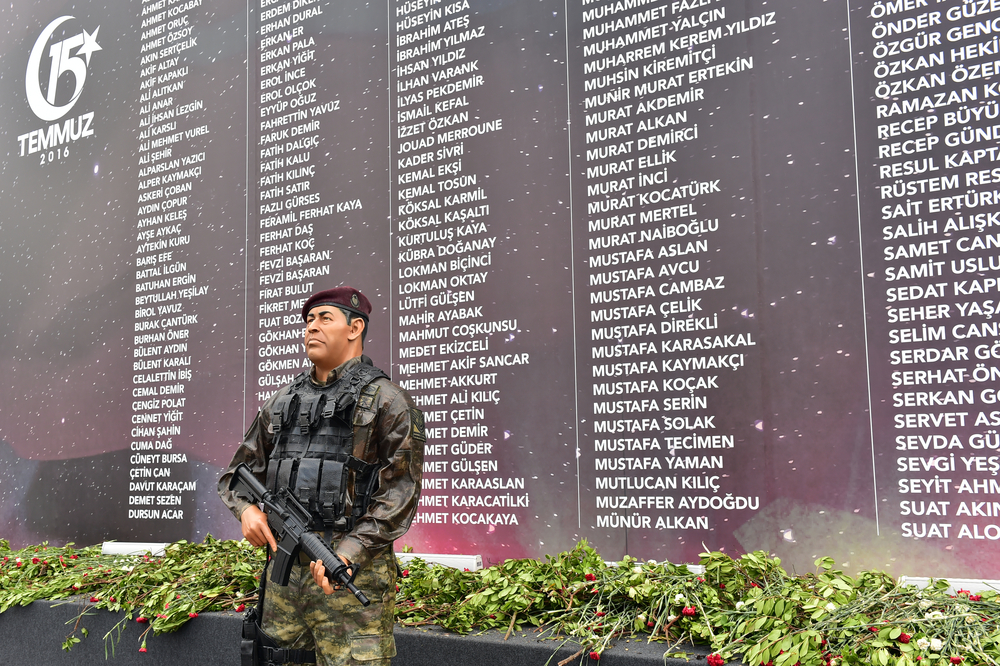
Memorial to the victims of the July 15 coup attempt (Thomas Koch via Shutterstock)Memorial to the victims of the July 15 coup attempt (Thomas Koch via Shutterstock)
by Giorgio Cafiero
Since the Ottoman era, the people of Anatolia have experienced military interventions in politics that have dramatically impacted the lives of millions. Arguably, the first such coup occurred in 1876, with Sultan Abdulaziz’s ouster. Following the establishment of the Republic of Turkey, four coups—three “traditional” (1960, 1971, and 1980) and one “post-modern” (1997)—have interrupted Turkey’s transition from one-party rule (1925-1945) to democracy, which commenced at the end of World War II when Turkey aligned with the Western bloc against the Soviet Union.
Turkey’s military justified the twentieth-century coups under the banner of protecting the ideology of Mustafa Kemal Atatürk, known as Kemalism. The coupists’ language always stressed defending Turkey from anti-secularism, Communism, turmoil, anarchy, and other threats to what the putschists defined as modern civilization.
The latest attempted military intervention in Turkish politics took place on July 15, 2016. The plotters presented their intentions as being in line with Kemalism. The pro-junta personnel, however, were linked, according to officials in Ankara, to the Fethullah Gulen Terrorist Organization (FETO).
Led by Fethullah Gulen, an Islamic cleric who been living in Pennsylvania in self-exile since 1999, the Gulen movement practices “civil Islamic” traditions, which emphasize spirituality, economic growth, ethics, interfaith dialogue, and social justice. Members of this movement consider themselves “apolitical” as Gonul Tol explains. When Turkey’s secular military closely controlled the country’s political environment, it oppressed both the Gulen movement and the predecessors of the ruling Justice and Development Party (AKP). The Gulen movement and the AKP worked together after the latter’s ascension to power in 2002 to weaken military tutelage. Yet the Gulen-AKP alliance came to an end once the ruling party began seeing Gulen’s community as a threat, especially after an incident in December 2013 when prosecutors, allegedly linked to the Gulen movement, charged AKP officials and their family members with corruption. Soon after, the AKP began accusing the movement of seeking to establish a “parallel state” in Turkey with the objective of removing the AKP from power. According to Turkish government officials, FETO’s members had actually begun infiltrating Turkey’s military decades ago.
Yet the coupists failed to achieve their goals in 2016 for numerous reasons. A primary factor was that, although putschists in the traditional coups and the post-modern one had a degree of legitimacy in the eyes of many Turks, there was no popular support in 2016 for such a military intervention in Turkey’s political arena. The plotters’ use of violence against unarmed civilians two years ago, which contrasted with the threatened (but not unleashed) violence of the twentieth-century coups, led many Turks, including political opponents of the AKP, to rally behind President Recep Tayyip Erdogan and demand that the US extradite Gulen to Turkey to face a judge.
Regardless of the reasons behind the government’s triumph, the turmoil of July 15, 2016 significantly changed Turkey, both internally and externally. Since that coup attempt, Turkish authorities have arrested tens of thousands of Turks, mainly in the country’s media, military, educational system, public sector, and civil society organizations, based on their alleged FETO affiliations. The roughly 250 Turks who sacrificed their lives in the anti-coup resistance are glorified today. The renaming of the Bosphorus Bridge to “July 15 Martyrs’ Bridge” and the upcoming inauguration of the “July 15 Martyrs’ Monument” in front of the presidential palace in Ankara embody such veneration.
Fingers Pointed at Washington
Turkish discourse has grown increasingly anti-American over the past two years. To be sure, prior to the 2016 plot, there was significant opposition to the US in Turkey due to the American-led invasion and subsequent occupation of Iraq, the “Hood Incident of 2003,” and, most recently, Washington’s support for the Kurdistan Workers’ Party-affiliated People’s Protection Units (YPG) in Syria. The commonly accepted narrative in Turkey that Washington had a hand in the events of July 15, 2016 has also increased friction in the Turkey-US strategic alliance.
The official US response to the coup plot fueled significant anger in Turkey. The Turkish leadership viewed Washington’s support for the country’s government as ambiguous, insufficient, and unprincipled. The first official response from the US government came from then-Secretary of State John Kerry, who called for “stability and peace and continuity in Turkey.” Although Kerry affirmed America’s “absolute support for Turkey’s democratically elected civilian government and democratic institutions,” many Turks took such words to be disingenuous.
First, Kerry never used the word “coup.” Second, the White House released another statement soon after that called on “all parties” to “act within the rule of law.” This caution from Washington fueled a Turkish perception that the US administration had given a degree of legitimacy to the putschists. Similar language came from the Obama administration after the Egyptian coup of 2013, which largely informed this Turkish perspective three years later. Ultimately, White House appeared to be hedging its bets with a wait-and-see approach, expressing firm support for Erdogan’s government only after it was abundantly clear that the coup plotters had failed, instead of during the hours of uncertainty.
Turkish suspicions of American involvement in the plot were fueled by the fact that Turkish fighter jets, which bombed civilians in urban areas during the attempted coup, took off from ?ncirlik, America’s military base in Adana. Turks in in high-policy circles and on the streets as well wonder how these fighter jets could have flown out of the base without the US military knowing.
The reaction of the major media outlets in the US and other Western countries also fueled much anger. A tweet from The New York Times read, “Those who took to the streets in Turkey were mostly yelling religious slogans in support of Erdogan, not democracy itself.” This reaction offended those who believed that the anti-coup resistance was about saving Turkey from a return to military rule, rather than promoting Islamism. The pro-putschist commentary of Fox News added insult to injury. Particularly outrageous was former CIA officer Robert Baer’s assertion on Anderson Cooper’s CNN show that the coup plot was “not professionally done” and that the putschists “should have taken CNN Turk and closed it down [during] the first minutes, the radio station, social media, the internet. Even if they didn’t arrest Erdogan, they should have taken care of all of that right at the beginning.”
The AKP’s struggle to civilianize Turkish politics has been hard fought. Turkish politicians who have spent their careers fearing that they could meet the same fate as former Prime Minister Adan Menderes—executed after the 1960 coup—have high stakes in thwarting a military takeover. Equally, many Turkish citizens, including the AKP’s supporters and critics, who recall the oppression that followed the 1980 coup, have a vested interest in preventing the military from, again, ousting civilian leaders. That such diverse segments of Turkish society resisted the coup plotters in 2016 received little media attention in the West.
Turkey’s Role in a World of Coups
“Turkey is not Panama.” Mehmet Bakaroglu, vice president of the Islamist Saadet Party, uttered these words in response to the George W. Bush administration’s negative reaction to the Turkish parliament’s vote against granting the US territory and airspace for the 2003 invasion of Iraq. Bakaroglu sought to distinguish Turkey from Latin American “banana republics.” Fifteen years after his comment, such rhetoric still speaks to many Turks who would like their government to assert its own sovereignty more strongly and demand that Washington treat Turkey not as a subservient state but rather as a rising power.
For Turkey, July 15, 2016 is not only a watershed date on a par with the founding of the Republic of Turkey almost 95 years ago. It also marks a major triumph over forces of Western imperialism from Ankara’s perspective, much like the 2002 failed coup attempt against Venezuela’s populist government.
A sensitive issue in Turkey was the Egyptian coup of 2013, which ousted the pro-Turkish/pro-AKP Muslim Brotherhood president, Mohammed Morsi. Now, with the Trump administration strongly supporting Egypt’s current regime and the three Arab Persian Gulf states blockading Qatar (Turkey’s closest Arab ally), Ankara perceives Washington as having backed Arab powers that have directly or tacitly supported such interventions in both Turkey and Qatar. In the immediate aftermath of the failed 2016 coup, Egypt opposed a UN Security Council statement that called on parties to “respect the democratically elected government of Turkey,” which was unsurprising given how President Abdel Fatah al-Sisi came to power. Nonetheless, Turkey saw this move as part of a united front of counter-revolutionary Arab forces and their Western allies. Two years after the plot, the AKP-ruled government believes that it stands on the “right side of history” for its opposition to twenty-first-century coups in the Middle East and serves as a model for Muslim countries that seek to civilianize their politics and keep the military forces in the barracks.
The events of July 15, 2016 did not end the Turkey-US strategic alliance. That said, unanswered questions about Washington’s alleged role in the coup attempt, the Obama administration’s response, and mainstream US media coverage have all increased anti-Americanism in Turkish discourse. As Turks talk about ending a centuries-long era of coups and institutionalizing the civilianization of their political system, the perception that the US and other Western and Arab countries are collectively hindering such efforts represents a serious challenge for the two NATO allies’ bilateral relationship.
This friction is underscored by the Turkish government’s detention of US citizen Andrew Brunson. This pastor from North Carolina has been held in Turkey since 2016 on charges of terrorism and espionage. Such accusations stem in part from Brunson’s ownership of books about Kurdish history, his meeting with an Amnesty International lawyer (also later arrested for alleged FETO ties), and “secret witnesses” who accused the pastor of seeking to establish a Christian Kurdish state in Turkey while working with the YPG and FETO.
Borrowing a page from the North Korean and Iranian regimes’ playbooks and, in flagrant violation of international law, Turkey is holding American citizens as political hostages to put pressure on the US government to extradite Fethullah Gulen. Turkey is playing an unhealthy game that significantly contributes to the erosion of trust between Ankara and Washington. At this juncture, two years after the failed coup, restoring trust will be essential for this strategic alliance to move forward, especially as Turkey pursues a highly ambitious foreign policy in the Middle East and Africa where support from the US will be crucial.
Print Friendly, PDF & Email
avatar

GIORGIO CAFIERO

Giorgio Cafiero is the CEO and founder of Gulf State Analytics, a Washington, DC-based geopolitical risk consultancy. In addition to LobeLog, he also writes for The National Interest, Middle East Institute, and Al Monitor. From 2014-2015, Cafiero was an analyst at Kroll, an investigative due diligence consultancy. He received an M.A. in International Relations from the University of San Diego.