The How and Why Behind The Global Stage |
by  |
|
|
The Grid: Where things are happening today |
|
|
What we’re tracking today: |
|
|
Good morning. I'm Matthew Tostevin, Newsweek's senior global affairs editor, with today's essential geopolitical briefing. |
| |
|
Ukraine’s President Volodymyr Zelensky is due at the White House with President Donald Trump having softened his previous tone. A mineral deal has been flagged, but the jury is out whether it will be a success or a disaster. The dynamic with Russia remains unclear. Would the deal help Ukraine fight on or to end the war? Russia’s Vladimir Putin fears “Western elites” are trying to disrupt the dialogue with Trump. China has put a damper on Trump’s proposal for massive cuts in nuclear weapons and defense budgets in the U.S., Russia and China. The message from China’s defense ministry was “America first.” News that Iran has massively stepped up uranium enrichment that could allow it to make nuclear weapons has added to speculation of a possible attack. The U.S. continues to step up sanctions to put it under pressure. Elsewhere in the Middle East, the ceasefire between Israel and Hamas is still holding up in Gaza with more hostage releases due on Saturday. Discussions have now started on the next phase. With Trump tariffs looming over Mexico (as well as Canada and China), the southern neighbor has handed over major criminal underworld figures to the U.S. Read on for takes on six of the most significant geopolitical stories you should know about today: |
|
|
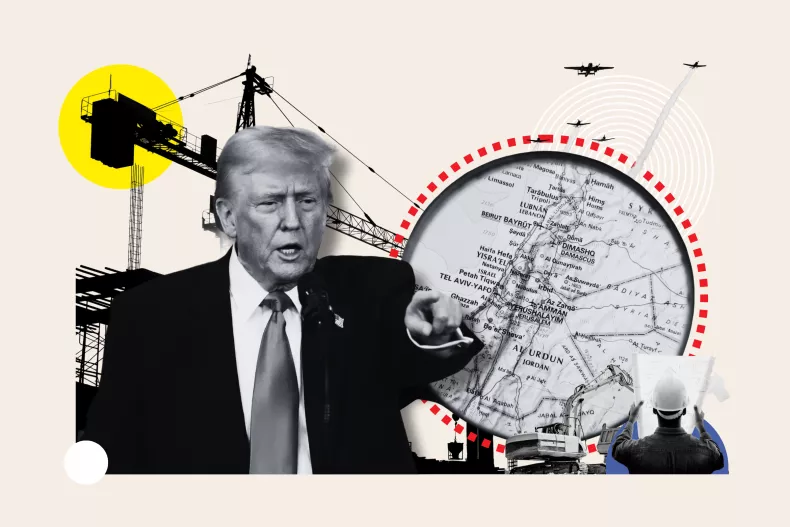
Need to know: President Donald Trump's ambitious vision for the Middle East foresees a new order, from Gaza to Tehran, in which stakeholders will be willing to put aside complex conflicts in order to pursue the potential for prosperity associated with peace. His transactional approach has drawn criticism from all sides, but it's also motivating regional leaders to respond with new solutions. From Tom O'Connor, deputy editor of national security and foreign policy at Newsweek: "Many in the Middle East anticipated that Trump would pursue an unconventional set of policies in his second term. Few expected him to propose the mass relocation of Palestinians in order to pursue real estate deals in Gaza while at the same time courting Iran for a new nuclear deal. Whether these positions constitute serious plans or serve as starting points for further negotiations, he's already succeeded in shaking up the dynamics of a region where U.S. diplomacy had long proved stagnant.”
|
|
|
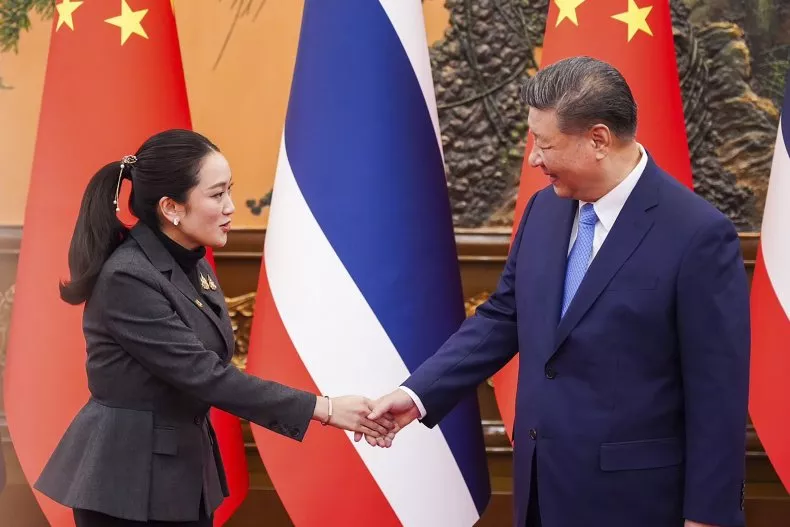
Need to know: Thailand has fulfilled a Chinese demand to deport dozens of Uyghurs Muslims who had taken refuge there despite appeals from the United States and an outcry from human rights groups who feared they would be tortured if sent back, in a sign that the U.S.-championed liberal world order—already increasingly challenged by China, Russia and other authoritarian powers—is crumbling under President Donald Trump. From Phil Robertson, director of Asia Human Rights and Labour Advocates: “Thailand recognized that the case of these detained Uyghurs was a major irritant in their bilateral relationship with China and they wanted to clear them out, regardless of the serious human rights implications. […] As the Trump administration walked away from any concern for refugee rights, and imploded the functioning of the State Department with so-called 'reforms,' the countervailing weight holding Thailand back just disappeared.”
|
|
|
STAT • KEY NUMBER TO KNOW |
— For the first time in years, Canada's Liberal Party has overtaken the Conservatives in federal election polling, marking a dramatic reversal just months before voters head to the polls. A new Ipsos poll for Global News shows the Liberals now at 38 percent support among decided voters, edging out Pierre Poilievre's Conservatives at 36 percent—and U.S. President Donald Trump may be partly to blame. |
|
|
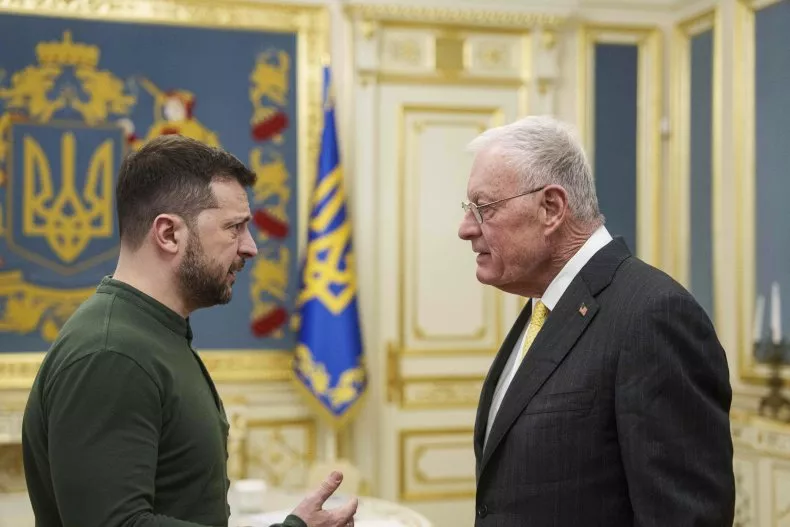
Need to know: A minerals deal to be signed this week by President Donald Trump and Ukrainian counterpart Volodymyr Zelensky could help reduce U.S. reliance on China—and other adversaries—for key resources essential to the defense, energy and high-tech industries. It could also reduce the long-term effect of China’s mineral export controls to the United States. From Gracelin Baskaran and Meredith Schwarts, analysts with the Critical Minerals Security Program at the Center for Strategic and International Studies: “Even in the long-term, the success of the bilateral agreement ultimately hinges on the ability of Ukraine to attract private investment in its mineral resources. The U.S. government cannot command private companies to mine in Ukraine as China and Russia can with their state-owned enterprises. While government-to-government agreements can be a helpful market signal to the private sector and spur investments that may otherwise not occur, the barriers to investment in Ukraine pose immense challenges that the bilateral agreement will be unlikely to surmount with additional financial and/or security resources.”
|
|
|
STATED • RECENT REMARKS FROM AROUND THE WORLD |
"If Russia gains more territory across the country and Ukraine loses its international support, we know the outcome far too well now—more Ukrainian men, women and children will undoubtedly be killed." |
— Wayne Jordash KC, president of international human rights foundation, Global Rights Compliance, told Newsweek as Russia is demanding control of cities in Ukraine that its forces don't currently occupy as part of a deal with President Donald Trump to potentially bring an end to the war, according to the Institute for the Study of War (ISW) |
|
|
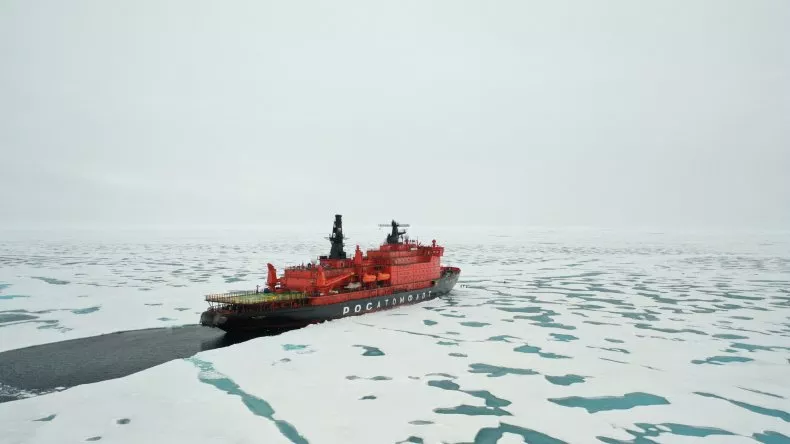
Need to know: Citing unnamed U.S. officials, Bloomberg reported that Moscow and Washington were discussing economic cooperation in the far north, which could "drive a wedge" between Russia and key trading ally China. It could also be part of a detente between the U.S. and Russia sought by U.S. President Donald Trump. From Jeremy Holt of Texas A&M University: "Any bilateral agreement between Russia and the U.S. concerning Arctic trade routes seems unlikely to reduce security tensions in the Baltic Sea, without a formal or tacit understanding that Russia reduces its hybrid activities in the region."
|
|
|
DAYBOOK • THE EVENTS THAT WILL MAKE NEWS |
Ramadan begins: For nearly 2 billion Muslims around the world, the holy month of Ramadan is a time of deep reflection, spiritual connection and community. Based on the moon cycle, it is largely regarded as ending on March 30. |
|
|
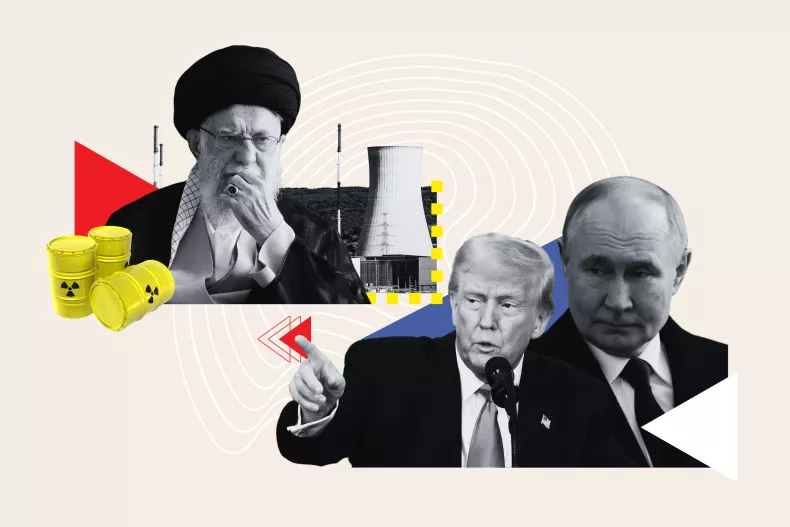
Need to know: President Trump's pivot toward improving ties with Russian President Vladimir Putin has raised new questions about the future of Russia's complex yet strategically important relationship with Iran, with whom Moscow just recently signed a historic treaty. From Javad Heirannia, director of the Persian Gulf Studies at the Center for Scientific Research and Middle East Strategic Studies in Tehran: "Russia knows that the U.S. and Israeli military threat against Iran, if implemented, could weaken Iran, which is not in Russia's interest... On the other hand, any regime changes in Iran and the possibility of the formation of a regime close to the West would be completely contrary to Russia's geopolitical and ideological interests... Therefore, Russia is trying to force Iran to come to the negotiating table and prevent a war."
|
|
|
Need to know: Costa Rica and Panama have received hundreds of deportees from various nations sent by the United States as Trump’s administration tries to accelerate deportations. At the same time, thousands of migrants shut out of the U.S. have started moving south through Central America. From Harold Villegas-Román, a political science professor and refugee expert at the University of Costa Rica: “There is no focus on human rights, there is only focus on control and security. Everything is very murky, and not transparent.”
|
|
|
1 World Trade Center, Floor 72 New York, New York 10007 |
|
|
|




No comments:
Post a Comment