Donald Trump’s Hidden Allies at the NATO Summit: Ranked
Published
Jul 07, 2026 at 10:23 AM EDT
updated
Jul 07, 2026 at 10:27 AM EDT
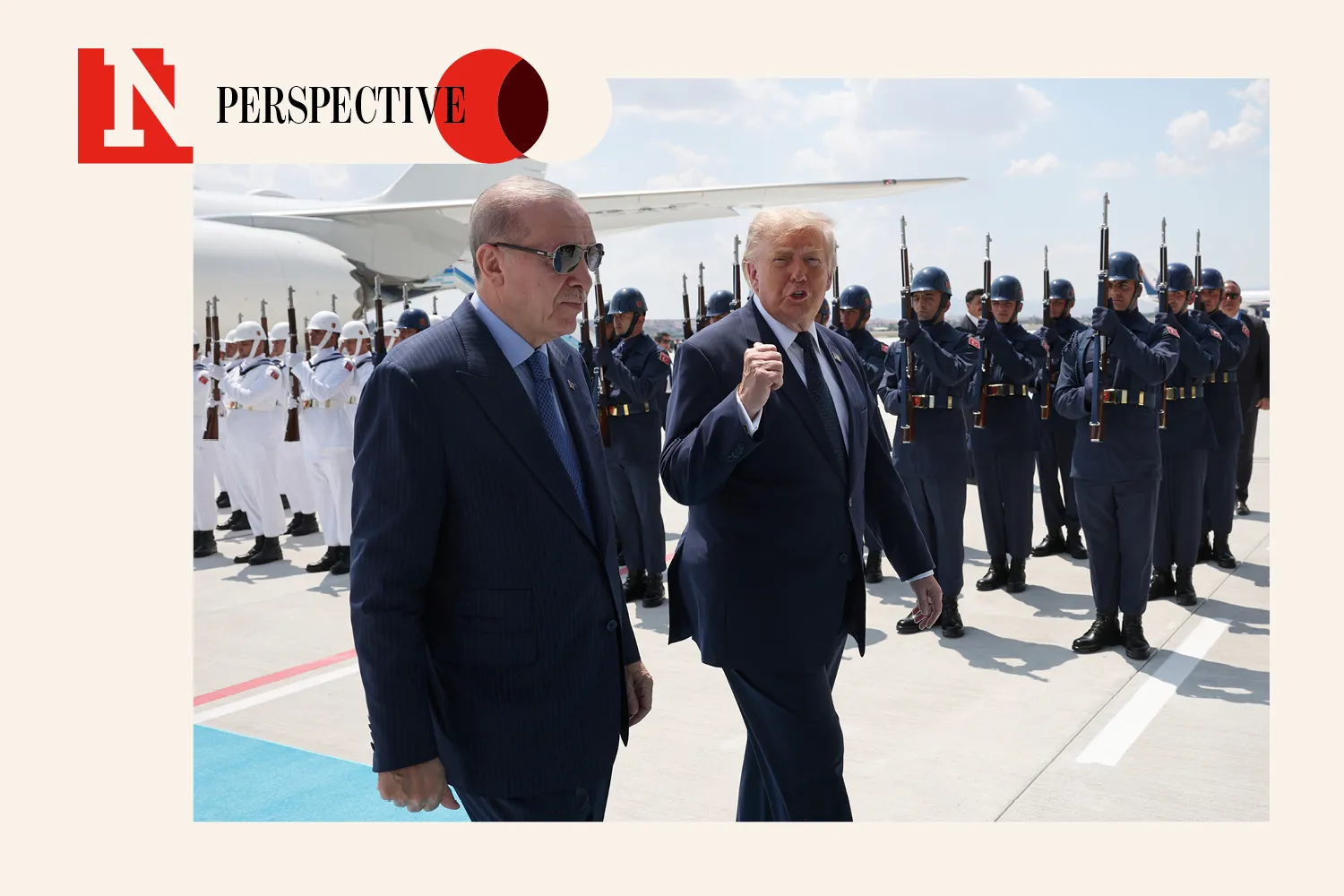

As NATO leaders gather in Ankara on July 7 for a two-day summit hosted by Turkey, most of the U.S.-led alliance has a clear overarching mission: keep President Donald Trump inside the tent by proving that Europe and Canada can carry more of their own defense costs.
It’s easy to see Trump's best NATO allies as the fellow leaders who flatter him or share his politics. But Trump's real allies are often hidden from view.
They are the people, governments, threats and industries that make the alliance look expensive, dependent on U.S. largesse, and ready for renegotiation in Washington’s favor.
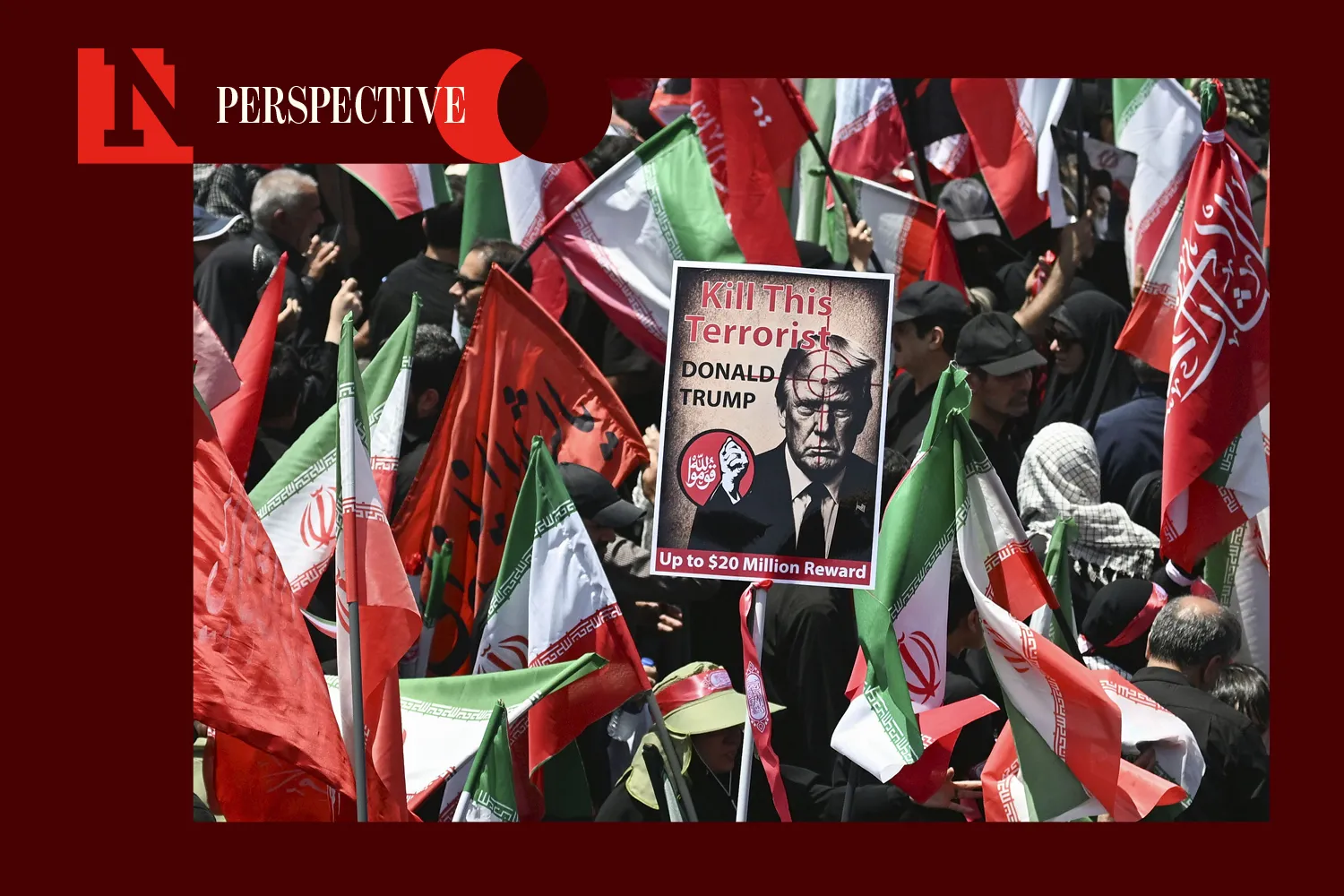

NATO is still, fundamentally, the treaty alliance it always was. Article 5 remains the core bargain, its 2025 Hague declaration reaffirmed Russia as a long-term threat, and members are now committed—thanks to Trump—to a 5 percent defense-investment target by 2035.
But even Trump himself says the cash is no longer the point. "We don't need their money—we don't need anything," he said after meeting NATO's Secretary-General Mark Rutte in June. "I just want loyalty."
Loyalty or fealty? Either way, Trump enters this summit with a list of hidden allies that give him another L-word in NATO—leverage. Here are 10 of them, ranked by Newsweek in reverse order.
10. Giorgia Meloni, the Cautionary Tale
Italian Prime Minister Giorgia Meloni once looked like the obvious European bridge to Trump because she led a right-wing nationalist government and cultivated a personal relationship with him. Now, she’s more useful as a warning label.
Trump lashed out at Meloni after the G7 summit in France, claimed she "begged" for a photo with him, and criticized what he said was Italy's lack of cooperation during the Iran war. On the eve of Ankara, Trump reignited the feud by casting her as an obsessed stalker.

Independent Journalism Needs You!
In March, Rome told Washington that U.S. bombers bound for the Middle East could not stage through a Sicilian base unless parliament signed off, a constitutional constraint sharpened by deep Italian opposition to the war. Trump was furious, seeing betrayal.
Meloni shows that ideological proximity to Trump doesn’t buy your safety from his caprice. It may get a leader into Trump's orbit, but usefulness to him is measured in more than vibes: it’s access, money, basing, weapons, and, above all, compliance.
9. American AI and Defense-Tech Gatekeepers
NATO's traditional dependency on the U.S. is built around troops, bases, nuclear weapons and high-end military hardware. But its newer dependency centers on advanced tech such as data, cloud capacity, battlefield software, and autonomous systems.
Again, helpfully for Trump’s leverage, the U.S. leads. NATO's revised AI strategy says "AI-ready, quality data" is needed for responsible AI adoption and calls for cooperation with allied industry and academia to integrate AI into the alliance.
Chatham House, a British global affairs think tank, said in a report that Amazon, Google and Microsoft account for about 70 percent of European cloud storage and that European officials increasingly view external technology dependence as a national-security risk.
Europe is trying to answer American dominance. Helsing and Mistral have announced a defense-AI partnership aimed at European military applications.
The European Commission's June technological-sovereignty package takes direct aim at the American cloud oligopoly's grip on sensitive government data, according to Lawfare's analysis.
But Europe can spend more and still find itself needing American-controlled computing power, models, software and targeting tools. There is not enough time and money for Europe to supplant the U.S. Trump still controls the tanks and the brain.
8. European Budget Strain
The 5 percent pledge gives Trump a headline victory, but the European fiscal hangover gives him a permanent argument.
NATO allies committed at the 2025 Hague summit to invest 5 percent of GDP annually by 2035, including 3.5 percent on core defense and up to 1.5 percent on related security investments.
Rutte pressed members before Ankara to produce “clear, concrete and credible plans” for meeting those targets, aware of intensifying U.S. pressure on allies to actually deliver on broader burden-sharing within the alliance.
The strain is already audible at the leaders’ table. On Ankara’s eve, Trump called German defense spending "ridiculous”. He didn’t mean it in a good way. Chancellor Friedrich Merz replied that Berlin is making "the greatest effort we have ever made" to rearm.
This tension helps Trump because it keeps NATO on probation. Every missed target, delayed procurement plan or domestic budget fight becomes fresh evidence for his case that an entitled and profligate Europe still expects American protection at a discount.
7. The Polish-Baltic-Nordic Spending Bloc
Trump’s best exemplars of self-sufficiency in NATO are the allies that let him shame everyone else.
U.S. Ambassador to NATO Matt Whitaker said before the summit that Poland, the Nordic countries and the Baltic states "lead the way" on defense spending, while "many others are lagging behind."
NATO says European allies and Canada raised core defense investment by $139 billion in 2025 alone, a real-terms jump of nearly 20 percent.
But it’s clear that some are doing much better than others. High-spending Poland, the Baltics, and the Nordics make the burden-sharing argument harder for Western Europe to dodge or delay on. They give Trump a contrast he can weaponize as leverage.
6. Vladimir Putin, the Enemy Behind Trump's Invoice
Russian President Vladimir Putin is no ally of Trump in NATO's formal sense. But he is an adversary whose war in Ukraine justifies the invoice Trump keeps presenting to the alliance, asking why Americans are paying so much more than everyone else.
The Ukraine war shadowed the summit's opening. Russian strikes hit Kyiv days before leaders convened, and Ukrainian President Volodymyr Zelensky traveled to Ankara, where he is scheduled to meet Trump on Wednesday.
The Ankara agenda is dominated by defense spending and Europe's effort to carry more of the burden as Washington steps back from its traditional security role.
Putin strengthens both sides of Trump's NATO line. Russia's aggression justifies keeping NATO alive. Russia's threat lets Trump argue that Europe should pay far more to keep it alive.
Moreover, NATO allies want Trump to put more pressure on Putin and give Ukraine more support in its defense against Moscow, putting more cards in the U.S. president’s hands.
5. Matt Whitaker, Trump's Good Cop Inside NATO
Whitaker is easy to miss because he is not a head of government. His value lies in translating Trump's pressure into the alliance's daily language.
The diplomat said Trump "fully expects" allies to step up immediately and move toward 5 percent with urgency. At the Atlantic Council last fall, Whitaker called 5 percent the alliance's "North Star" and said every ally needed year-over-year growth to meet it.
Trump does not need every NATO leader to like him. He needs a representative in Brussels who makes the price of American protection clear to allies, which Whitaker does, without antagonizing them.
His job is to reinforce Trump, and also reassure NATO allies. It’s a bit of a good cop, bad cop setup.
He rejected the conclusion from a Munich Security Conference report in February that the U.S. was threatening the liberal order.
"We’re trying to make NATO stronger, not to withdraw or reject NATO, but make it work like it was intended as an alliance of 32 strong and capable allies,” Whitaker said at the time.
4. Mark Rutte, the Trumpism Translator
Rutte's skill is spinning Trump's pressure into an institutional success story for NATO. The NATO chief did exactly that when he met Trump at the White House on June 24 to prepare the ground for Ankara.
In the Oval Office, Rutte unveiled large charts on easels—one labeled "The Trump Trillion" in gold letters—crediting Trump for $1.2 trillion in extra spending by European allies and Canada since 2017.
He also called for allies to show “clear, concrete and credible plans” to hit spending targets. Trump pocketed Rutte’s flattery and restated his terms anyway: not money, loyalty.
Rutte's role is court management. He takes Trump's threats, wraps them in NATO’s flag, and hands them back as proof that the alliance is strengthening because Trump forced it to change.
Seen as the Trump whisperer, given his friendly relationship, Rutte’s really Trump’s translator.
3. U.S. Defense Contractors
Trump's NATO policy is often described as isolationist, but the money trail points to a more commercial version of American power.
NATO members will showcase new arms contracts and military projects around the Ankara summit to show Trump that defense pledges are becoming equipment. Rutte has promised a trans-Atlantic "defense industrial revolution," with "tens of billions" of dollars in contracts to be announced.
Trump's February 2026 America First Arms Transfer Strategy says future arms sales should prioritize partners that invest in their own defense, hold critical strategic geography or strengthen U.S. economic security—and foreign purchases should help build American defense production capacity.
That makes U.S. defense contractors Trump's quiet NATO allies. Europe can call the new spending “strategic autonomy.” Trump calls it export demand.
2. Xi Jinping, the Enemy Who Makes Europe Look Off-Map
Xi Jinping is not Trump's friend, despite what he says. Where Putin justifies Trump’s invoice, Xi explains the change of address.
The rise of an assertive Chinese superpower—a key strategic ally of Russia’s—makes the old Atlantic security bargain look geographically mispriced.
China's Foreign Ministry said in June 2025 that Beijing opposed NATO moving eastward into the Asia-Pacific.
A NATO Parliamentary Assembly report warned that a Chinese use of force against Taiwan could force Washington to balance pressures from Beijing and Moscow, leaving Europe to assume greater responsibility for deterring Russia.
The shift is no longer hypothetical among geopolitical experts in niche think tanks.
The Trump administration is pitching what it calls "NATO 3.0", with Europe handling more of its own security while the U.S. looks elsewhere (i.e. the Pacific and the Western Hemisphere).
The Pentagon is planning a phased withdrawal of warplanes, destroyers and submarines from NATO countries alongside a six-month review of U.S. forces in Europe, announced previously by Defense Secretary Pete Hegseth.
Xi gives Trump the strategic map he wants. The more Washington defines China as the main theater, the easier it becomes for Trump to tell Europe to finance Europe.
1. Erdoğan, Fidan and Turkey's Security State
Recep Tayyip Erdoğan is the obvious winner because Turkey is hosting the summit—its second after Istanbul in 2004—also a big moment for Foreign Minister Hakan Fidan and Turkey's defense bureaucracy.
Trump has suggested he might have skipped the gathering entirely were it not hosted by Erdoğan—a compliment no other leader on this list can claim.
The payoff is that Trump is expected to throw his support behind selling Turkey F-35 fighter jets, reversing an exclusion he himself imposed in his first term, weeks after the administration formally notified Congress of jet-engine sales worth more than $700 million for Turkey's homegrown KAAN fighter.
Fidan says Erdoğan and Trump share a "strong political will" to lift U.S. sanctions on Turkey's defense sector, and Erdoğan has pressed allies to drop restrictions on defense trade.
Israeli Prime Minister Benjamin Netanyahu, for his part, publicly urged Trump to sell Turkey neither the jets nor the engines, warning it would "upset the power balance" in the Middle East.
Turkey is Trump's most useful NATO partner because it combines personal diplomacy, geography, defense trade, and institutional leverage all into one single friendly nation.
Leverage or Loyalty?
This list ends where Trump's NATO strategy begins.
Trump’s real, hidden allies are the actors that make NATO look like a bill to be collected, a market to be opened, and a dependency to be priced up.
In Ankara, friendship matters less than usefulness to Trump’s vision of NATO. He’s not looking for soulmates, but leverage—and then calling it loyalty when it works for him.
In a polarized era, the center is dismissed as bland. At Newsweek, ours is different: The Courageous Center—it's not "both sides," it's sharp, challenging and alive with ideas. We follow facts, not factions. If that sounds like the kind of journalism you want to see thrive, we need you.
When you become a Newsweek Member, you support a mission to keep the center strong and vibrant. Members enjoy: Ad-free browsing, exclusive content and editor conversations. Help keep the center courageous. Join today.



No comments:
Post a Comment