
How the Kurds Lost Eastern Syria
The autonomous administration in the country’s northeast replicated the authoritarian tactics of the regimes it fought, driving the Arab majority to revolt

In early January, my brother took me to Al-Hikma Hospital in the city of Hasakah to get treatment for the flu I had contracted upon arriving in the Kurdish-controlled region. As we were walking into the hospital, a woman was leaving with a 5- or 6-year-old boy. As she passed by, she placed her hand over the child’s mouth and yelled at him to shush. The kid was singing “Labbat, Labbat,” a folk tune from the Syrian eastern region (known locally as Jazira), which has become a nationwide trend in Syria after the collapse of the Assad regime on Dec. 8, 2024. I slowed down a little to see what would happen next. At the main gate of the hospital, there is a kiosk that sells coffee, tea and other items. The old man working at the kiosk told the woman, “Daughter, let the kid sing; he is just a kid.” The woman responded, “Uncle, don’t you see the police just entered the hospital? We don’t want trouble.”
Surprised by all of this, I asked my brother why the woman acted this way. My brother nudged me to look to my left as we entered the main hall. There were a few Asayish (internal security) members, about four or five, with another man who had a broken arm. It looked like they were bringing him to the hospital. I thought to myself, what is the relationship between the song and the police? Why wouldn’t they be fine with it? “Labbat, Labbat” (“It is lit”) is so popular in Syria now that all it takes is playing the song in any public square, starting to dance dabke on your own, and waiting a few minutes, and you’ll notice a few people joining in the dance.
“Labbat, Labbat” is a celebratory revolutionary chant that reflects Syria’s transition from years of despair and repression to a moment of perceived victory and hope. Using simple, everyday language, it honors the resilience of the revolution as an unstoppable idea, credits revolutionary fighters with restoring freedom and emphasizes national unity by mentioning cities across Syria. The song denounces humiliation, calls on history to record this struggle, and envisions Syria’s future as one of renewal, dignity and rebuilding after great sacrifice.
This is the well-known song that is banned in the Autonomous Administration of North and East Syria (AANES), which, until Sunday, Jan. 18, 2026, was fully controlled by the Syrian Democratic Forces (SDF), a governing structure established during the American-led fight against the Islamic State group in eastern Syria. “Labbat, Labbat” is banned by the AANES because of its symbolic and political message. It opposes the AANES’ stance, namely dismissing other Syrian revolutionary groups like the Free Syrian Army (which is named in the song) and Hayat Tahrir al-Sham (HTS) and declining to support a unified Arab-led victory. Additionally, there is no reference that celebrates the SDF in the song or the Kurds in general. In the AANES-controlled environment, such songs are seen as threatening authority, sparking dissent and strengthening rival identities.
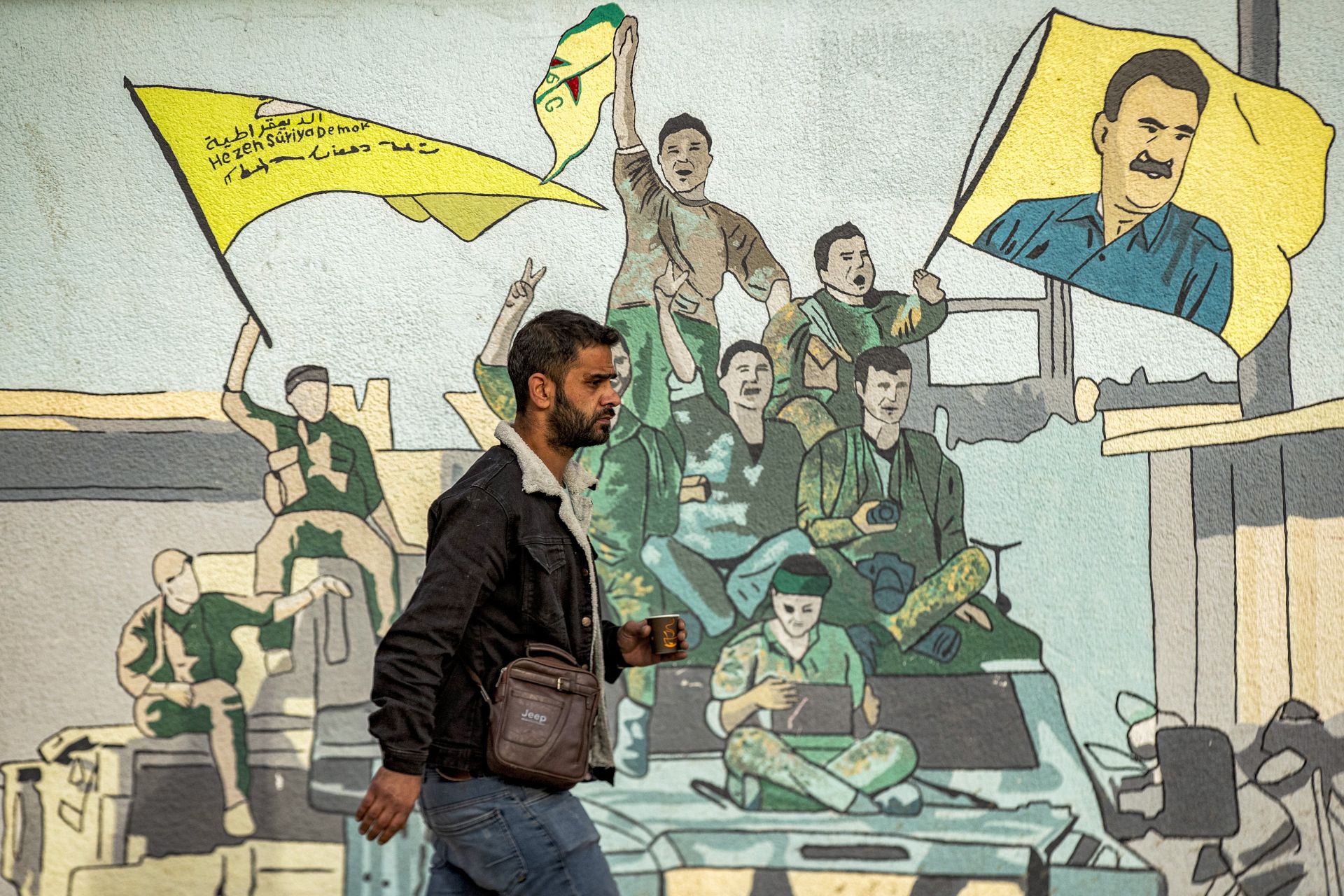
This incident reveals the gap between the SDF’s official rhetoric and its operational reality, and the deep disconnect between the region’s governance and its Arab-majority population. The administration formally follows the ideology of “democratic confederalism,” a system theoretically built on grassroots democracy, propounded by Abdullah Öcalan, the leader of the Kurdistan Workers’ Party (PKK) in Turkey. However, this framework was never truly implemented in the areas under SDF control. Actual decision-making power is monopolized by a shadow network of PKK-trained operatives known locally as “kadros” (cadres). These cadres are often foreign nationals (mainly from Turkey and Iraq) rather than Syrians. They operate as a parallel authority that consistently overrules local civil councils and military commanders.
In practice, this reduces the SDF’s partnership with local communities to mere window dressing. In Arab-majority regions like Deir ez-Zor, local military councils and tribal figures hold titles but possess little independent authority. Real control over security and oil revenue remained with the cadres until recently, when Ahmad al-Sharaa’s government took control of most of the region, spearheaded by members of local tribes. This exclusionary structure fostered a sense of enforced quiet rather than consent among the Arab population. They viewed the administration not as a partner in self-governance but as another form of minority rule that created opportunities for corruption and marginalization.
The repressive nature of the SDF is not widely known outside Syria. It is often celebrated as pursuing a tolerant and democratic model of governance, at least relative to others in the country and the region. Even a native like me, who stays in touch with family and friends at home, only learned about the true extent of this repression when I visited. The crackdown on songs and national symbols, including the new Syrian flag, is comparable to that of the former regime of Bashar al-Assad.
When the regime fell 13 months ago, there was hope that the region would be peacefully reintegrated into the country. A formal but fragile breakthrough came on March 10, 2025, when the two parties signed a framework agreement. Under intense pressure from the United States, the SDF’s commander in chief, Mazloum Abdi, agreed to a timeline that would see it fully merge into the Syrian army, and the Kurdish autonomous administration dissolve into the central government by the end of the year. The text promised respect for Kurdish culture and language. The deal was widely celebrated by supporters of both sides in the country, and there was national euphoria about charting a new path for Syria after Bashar al-Assad, based on citizenship and respect for cultural diversity.
But Mohammad Attallah Khleif from Hasakah would soon learn that it would not be so easy. He spent over six months in SDF prisons for merely raising the three-star Syrian flag publicly the day after the March 10 agreement. Khleif took the Syrian flag out of his car, raised it in front of a crowd on the street and said, “From this place, the Syrian Revolution started in our city.” Ten days later, the SDF police came to his house after midnight and arrested him. At the police station, he was told, “You displayed the terrorism flag.” He responded, “This same flag was raised by the well-known Syrian Kurdish founding father Ibrahim Hananu in 1946. It is not a terrorism flag!”
After this interaction, Khleif was first imprisoned for one month in solitary confinement, in very poor conditions. He described the cell as a dark place with no light during day or night, with a thin mattress on the ground that was stained with blood and human feces. During this month, an American visited, whom he thought was an inspector. He recalls the inspector saying through a translator to the prison guard, “Why is there no fan or light in this cell, and why is the cell filthy?” A month later, they took Khleif out of the solitary cell and tried to force him to say on video that he was a terrorist. Instead, he said, “We are one country, Arabs and Kurds, and I thank the American forces for standing by our side!”
While Khleif sat in prison, the political agreements that might have protected him were unraveling. By late May, the implementation phase of the March agreement stalled. Upon leading a delegation to Damascus on May 31, Abdi refused to meet with President al-Sharaa or Foreign Minister Asaad al-Shaibani, choosing instead to negotiate exclusively with U.S. envoy Tom Barrack. According to Damascus sources privy to the talks, the atmosphere turned toxic during a session between Kurdish negotiator Foza al-Yousef and al-Shaibani regarding the status of 12,000 Kurdish female fighters. Al-Shaibani was asked what would happen to the Kurdish female fighters in the case of integrating the SDF soldiers individually, not as a group. He responded that the female fighters could return to being mothers and wives. Additionally, following earlier hints from Damascus of constitutional recognition of Kurdish culture and politics, al-Shaibani responded by offering only a small amount of after-school Kurdish language instruction for children.
The breakdown was cemented by a miscalculation regarding American support. Barrack pressured the Kurds to submit to the Syrian government by warning that American military protection would not last forever. When he questioned how they would survive alone, al-Yousef snapped, “This is our business, not yours.” Her dismissal, which caused Barrack to walk out, reflected the Kurdish leadership’s conviction that the U.S. was actually formalizing a long-term presence, a belief that led them to reject his advice to capitulate based on what they viewed as the false threat of withdrawal.
Meanwhile, Khleif was put back in jail, but this time in a group cell with 20 other prisoners, all of whom were Arab, for four months. One of his memories is of another prisoner who used to recite the Quran, and every time he did so, the guards would yell at him, “Stop the bullshit!” I asked Khleif whether the treatment of prisoners in the group cell was better or worse than in the solitary confinement cell. His answer was, “Definitely better, to be fair!” He explained: “In the group cell, the food quality was better. They would get us chicken once or twice a week. There was plenty of food, but sometimes we did not eat it all.” He said that guards would make sure that they all ate and did not leave food behind. “They started letting us get more frequent visits,” he added. Yet the medical care was terrible.
Khleif eventually appeared before a judge at the Terrorism Court without a lawyer. In the first session, the general prosecutor asked him to recount everything about his life from 2003 to 2025. When I asked why 2003, he explained that it probably related to the violence that occurred in 2004 between the Kurds and the Assad government. In March 2004, violence between Arabs and Kurds erupted in the city of Qamishli after clashes at a football match escalated into mass protests by Kurds against decades of discrimination by the Assad state. Security forces under President Bashar al-Assad responded with live fire, mass arrests and a heavy military crackdown across Kurdish areas. Dozens were killed, hundreds were detained and the events became a defining moment in modern Kurdish-Damascus relations.
In his second appearance a few days later, Khleif was asked the same questions and returned to jail. A week later, he was brought before the same judge for the third time, but this time he was charged with joining terrorist military groups in 2011, referring to the Free Syrian Army, even though he never actually joined. This was irrelevant anyway, as the judge noted: In April 2024, the AANES adopted a law, approved by its legislative body (the Democratic Peoples’ Council), which grants amnesty for certain crimes committed before that date, fully pardoning misdemeanors and reducing sentences for some felonies. Khleif was pardoned by this amnesty, but the general prosecutor appealed against the judge’s argument, keeping him in jail another month.
Khleif was finally released after agreeing to strict conditions: prohibition from leaving the AANES region without permission, constant surveillance and mandatory reporting of his whereabouts every 15 days.
Along with the Syrian flag, the SDF was intolerant of many other gestures that showed support for the current Syrian government. Basil Obaid Ahmad, a local activist from al-Shaddadi, explained that photographing any street and posting it on social media was forbidden without permission. He said they did not want the outside world to see how dire the situation under their rule was. This pattern is well known in Syria, evident in the lack of independent journalists freely reporting from the area. Foreign journalists often entered the area under Kurdish supervision.
It was also prohibited to display images of al-Sharaa or the Syrian flag publicly or on social media. Using the official name of the country, “the Syrian Arab Republic,” was an obvious no. If mentioned, the word “Arab” must be removed. Also, discussing the region’s economic difficulties was prohibited. If you were caught doing any of these things, they would have ready charges for you as supporting terrorism.
Khleif knows a young man from his city, Hassan Al-Jibouri, who traveled to Damascus and faced retribution after returning. While there, Hassan took photos and videos of things related to the current Syrian government, such as flags, banners and official vehicles, and then posted them on social media. He was arrested when he came back and was sentenced to jail for three years under charges of supporting terrorism.
This tightening of control coincided with a total collapse of trust between the SDF and Damascus. By July, the Kurdish leadership seemingly began betting against the survival of the central government. Abdi boycotted a scheduled round of talks with al-Shaibani in Paris on July 24. Privately, he told confidants that he viewed al-Sharaa’s government as a temporary “face-lift” he had been “used” to legitimize, and he wished to avoid tethering his movement to a regime he believed would not last. The SDF began exploring alternative channels, even hoping for a comprehensive deal with Turkey involving the PKK leader Öcalan, to secure rights in exchange for ending the armed struggle.
In August, the political rift escalated into accusations of treason. On Aug. 8, the SDF chaired a conference in Hasakah that included Druze leader Hikmat al-Hajari and Alawite Sheikh Ghazal Ghazal via video link. Damascus viewed this coordination with minority leaders as a dangerous separatist plot, furiously labeling the organizers traitors and canceling future talks in France. In a clear signal that they were seeking alternative security guarantors, the SDF reactivated their relationship with Moscow; Sipan Hamo, a commander who had previously managed talks with the Russians, reappeared as a liaison at the Russian Hmeimim air base, coinciding with a Russian military patrol in Hasakah. Although Abdi and Kurdish leader Ilham Ahmad visited Damascus later in the month, they achieved nothing, and Abdi again declined to meet al-Sharaa.
This paranoia regarding political allegiance led to numerous illegal searches and seizures of civilians’ homes, phones and cars, said Basil Obaid Ahmad. For example, if someone from this area traveled to Damascus or other parts under al-Sharaa’s government, security forces would raid their home. If they discovered that the purpose of their travel wasn’t education or medical treatment, they might detain them and potentially jail them until the situation was clarified.
Dr. Ghalib Mohammad is a pediatrician from Hasakah who provides medical care to children at al-Hawl Refugee Camp. On one of his visits, he brought a wheelchair for a 4-year-old girl who lost both of her legs. He was arrested, interrogated and sentenced to five years for supporting terrorism. The source who shared this story with me wondered, “What kind of political system justifies imprisoning a pediatrician for five years for helping a handicapped kid just because this kid happened to be the daughter of an al-Hawl resident?!”
Anyone with relatives who have joined the transitional Syrian government or forces will face frequent and random home raids and detentions. Worst of all, said Ahmad, there’s a constant fear that anyone in your daily life and social circles “could be a spy for them, as they have recently increased the number of such people significantly due to the tensions in our region caused by the SDF not integrating into the rest of the country.” This “walls have ears” paranoia was another hallmark of the Assad regime and its Baathist counterpart in Iraq under Saddam Hussein.
Random searches of civilian phones are very common at security checkpoints. Abu Mazin, a public transportation van driver between Deir ez-Zor and Hasakah, told me: “At the checkpoint at the entrance of Hasakah city, the police searched the men among the passengers on my bus.” After searching the phones, they found a young man whose phone background featured a picture of al-Sharaa. They took the phone, handcuffed the young man and called a police car to take him for investigation.
Another of Abu Mazin’s stories was about two Arab SDF soldiers who were riding with him in his van. As they approached a checkpoint and saw that they were checking people’s phones, “the two soldiers immediately deleted their phones” (meaning they reset their phones to wipe all the messaging and social media content). When the checkpoint security personnel found out that the phones were wiped, they pulled the van aside and arrested the two soldiers. When Abu Mazin expressed his discontent with their behavior, especially since the two young men were soldiers (and part of the same organization), they arrested him too and interrogated him for four hours. Abu Mazin said he found out later that those two soldiers were jailed for four months.
Since the fall of the Assad regime, Arabs in SDF areas who once saw the SDF as a better alternative than the brutal Assad regime or the Islamic State have changed their position. Seeing a Sunni Arab government in Damascus, they have demanded to come under its control. The SDF, which had a proclivity for political repression even pre-2025, responded to this shift with force. Over the past year, arrests have skyrocketed, with hundreds of civilians detained simply for expressing support for the Damascus government.
Does the SDF treat Kurds who oppose them differently? I asked everyone I spoke with this question. The answer is yes; they are treated worse. They do not receive better treatment just because they are Kurdish. On the contrary, the SDF expects more loyalty and support from Kurds because it considers itself to be fighting for the Kurdish people’s rights.
Still, despite the hostilities, a new push for integration occurred in September. Proposals were floated to appoint Abdi as army chief of staff or deputy defense minister and allocate Cabinet posts to the Kurds. A plan was discussed to deploy Kurdish female fighters to Alawite, Christian and Druze areas to dilute Islamist influence, avoiding conservative Sunni regions. Yet al-Sharaa remained adamant on the political structure, offering only Law 107 (a local administration law from 2011 that provided for limited decentralization through elected councils while preserving strong central government control) and refusing federalism or any change to the state’s name. Al-Sharaa publicly criticized Kurdish “unrealistic ambitions,” warning that the northeast was a Turkish national security issue.
A final attempt at a breakthrough in the talks between Damascus and the Kurds happened in October. Damascus proposed the creation of a Northern Division of the Syrian Army responsible for territory east of the Euphrates. It would include four units, two appointed by al-Sharaa and two by Abdi. Abdi rejected the offer, demanding three of the four units for the SDF. Meanwhile, the Kurds continued digging trenches and preparing for the possibility of a military confrontation, reportedly with Israeli support.
On Oct. 13, the SDF launched a military offensive in Aleppo’s Sheikh Maqsood district, attempting to cut utilities and overrun the city before U.S. intervention halted the fighting. The SDF subsequently tabled a new set of demands that Damascus deemed “suicidal” for al-Sharaa to accept, including: 30% Kurdish representation across all government branches, including 28 ambassadorships; the creation of three Kurdish-majority governorates (Afrin, Kobani, Qamishli) with elected governors; a 70% to 75% share of oil revenue for the central government (implying a significant retained share); and the codification of Kurdish rights and language in the interim constitution.
On Jan. 17, in an attempt to move the negotiations forward, al-Sharaa issued a presidential decree affirming the rights of Syrian Kurds. The decree recognizes Kurds as an integral part of the Syrian nation, guarantees cultural and linguistic rights (including the use and teaching of Kurdish), addresses long-standing citizenship issues for stateless Kurds, and designates Nowruz as a national holiday. But Kurds say that lasting protections require constitutional guarantees rather than relying only on executive decrees.
The January 2026 offensive on SDF areas is the result of the failure of these negotiations. For many Westerners, feeling sympathy toward the SDF comes naturally, given their secular ideology, the full participation of women and their successful record of fighting the Islamic State. However, this sympathy often overlooks the rigidity of the SDF’s position as well as its adoption of Assad’s regime methods in dealing with opponents.
Nine months separated my last visit to the AANES in March 2025 and my current visit. One thing was very clear to me before the recent clashes played out: The region’s atmosphere was boiling, with the relationships between the SDF and the people under its rule filled with impatience, mistrust and fear. The Arab majority in the region was growing increasingly impatient that al-Sharaa and Abdi had not finalized the integration agreement. The Kurdish leadership was aware of this, and they feared that the majority of the region’s population, especially Arabs, might revolt against them.
Their fears proved right on Sunday. After receiving a green light from Damascus, tribes across eastern Syria rose up over the weekend in areas where government forces had not yet deployed. Initially, revolutionary factions that had contributed to Assad’s downfall, such as HTS and other groups later integrated into the new Syrian army, were prevented from crossing the river, largely to avoid direct confrontation with the SDF. When negotiations collapsed, it was tribal fighters who led the fighting against the SDF, with official Syrian government forces arriving only afterward to consolidate control. They were eager to throw off what they perceived as an occupying force, despite their fears that the government might not enter their areas and they might remain outgunned by the SDF. At the time of finalizing this article, most of the region is no longer under the SDF’s control. The SDF has lost many of its Arab components as they decided to defect. For instance, the Sanadid faction formally switched sides on Tuesday. The Sanadid Forces, an Arab tribal militia drawn primarily from the Shammar tribe in northeastern Syria, used to be closely aligned with the Kurdish-led SDF.
The testimonies and incidents I encountered or heard stand in stark contradiction to the democratic image projected by the Syrian Democratic Forces. The suppression of fundamental freedoms like free speech, freedom of movement, political symbols and even humanitarian efforts, along with arbitrary arrests, collective punishment and the weaponization of “terrorism” charges, echoes the very authoritarian practices Syrians protested against in 2011. Far from offering a pluralistic or rights-based alternative, the SDF’s actions increased fear, self-censorship and social division, especially among Arab communities, while damaging trust and legitimacy during a crucial stage of Syria’s postwar transition.
As the al-Sharaa government establishes control over the eastern and northeastern parts of Syria, it will do well to learn from the mistakes of the SDF and the Assad regime before it, and mend social ties and contain reprisals. Real and stable integration with the rest of the country will require accountability, respect for civil liberties and a clear break from the logic of authoritarian control that has deeply scarred the country.
Become a member today to receive access to all our paywalled essays and the best of New Lines delivered to your inbox through our newsletters.

No comments:
Post a Comment