Monday, June 1, 2026

Persuasion- It’s Ideology, Stupid Why Huntington's clash of civilizations thesis is even more wrong today than it was 1993. - Matt Johnson - Jun 1 ∙ Guest post


The Washington Institute for Near East Policy Policy Analysis PolicyWatch 4219 -- Turkey’s Limited Role in the Iran War - by Soner Cagaptay - May 26, 2026


The Washington  Institute for Near East Policy


Policy Analysis 

PolicyWatch 4219

Turkey’s Limited Role in the Iran War

by Soner Cagaptay

May 26, 2026


Also available in

العربية

Turkish president Erdogan at NATO headquarters in Brussels

About the Authors

Soner Cagaptay

Soner Cagaptay


Soner Cagaptay is the Beyer Family Senior Fellow and director of the Turkish Research Program at The Washington Institute.

Brief Analysis

Power parity informs the view from Ankara, which has a strong interest in preventing Iran from going nuclear or alternatively falling into chaos—even as the war’s outcome will be largely outside Turkish control.


On May 22, U.S. Secretary of State Marco Rubio met with Turkish Foreign Minister Hakan Fidan to discuss issues including the Strait of Hormuz and regional wars. The only NATO ally bordering Iran, Turkey has painstakingly avoided getting involved in the U.S.-Iran conflict, which is about to enter its fourth month. 


Despite Iran’s launching of several missiles at Turkish territory in the initial weeks of the war, Ankara has adopted a neutral approach, not unlike other NATO allies, such as the United Kingdom, whose Sovereign Base Areas in Cyprus were targeted by Iranian missiles. Instead of retaliating militarily, Turkey has joined Pakistan to find a political settlement to end the war. Deeper questions on the conflict relate to the drivers of Turkey’s policy, including short- and long-term implications for ties with Washington and Ankara’s overall Middle East posture.


A Historic Arrangement

Turkey’s policies regarding Iran are informed first and foremost by geographic proximity and a deep-rooted historic power parity between the two nations. Current dynamics can be traced to the Ottoman and Safavid Empires, precursors to the current Turkish and Iranian states, which engaged in inconclusive and debilitating wars beginning in the late fifteenth century—and spanning 166 years—that nearly bankrupted both. The two empires settled on an early version of mutually assured destruction, signing a 1639 peace treaty to fix their borders and agreeing on an unwritten nonaggression pact to avoid major warfare. Later wars were fought, but the power parity held. Setting aside minor land swaps in the twentieth century, the Turkey-Iran border today is nearly identical to the border four hundred years ago. 


Turkey and Operation Epic Fury

In the twenty-first century, Turkey-Iran power parity was visible during Syria’s civil war, when Ankara and Tehran backed opposing sides but nevertheless avoided direct conflict. It was therefore notable when earlier this year Iran launched four missile attacks at Turkey’s Adana province—which hosts a U.S. consulate—the Incirlik Air Base, and the Ceyhan oil terminal, from which Israel gets nearly 40 percent of its oil via a pipeline from Azerbaijan. 


Tehran’s goal might have been to compel Turkey and NATO to respond based on self-interest and persuade the United States to end the war. For its part, instead of escalating militarily, Ankara issued sharp public warnings, including one in which President Recep Tayyip Erdogan emphasized that Turkey would take all necessary measures to protect its territory “decisively and without hesitation.” This strategy has worked to the extent that Iran has refrained from launching additional missile strikes against Turkey since March 30.


Ankara’s Desired War Outcomes 

Except for some liquefied natural gas imports from Qatar, Turkey is largely unaffected by the closure of the Strait of Hormuz and unlikely to participate in a multinational mission to open the waterway, at least prior to a more permanent ceasefire. Yet even if Turkey will not take part in U.S. military action against Iran, it still seeks a middle ground between two objectives regarding its neighbor:


No nukes. Turkey does not want to see a nuclear Iran next door, given that such a development would undoubtedly end the four centuries of power parity between the two sides. An emboldened Iran would lose interest in navigating Ankara’s security interests and alliances in the Middle East, such as those involving the Syrian government led by former members of Hayat Tahrir al-Sham and the government in northern Iraq led by the Kurdistan Democratic Party. Instead, a nuclear Iran would likely push back aggressively against Turkey’s interests, while undercutting Ankara’s regional influence. Accordingly, one endgame for Ankara would be to support talks to prevent Iran from getting the bomb.


No chaos. Even as Turkey wants to see Iran’s nuclear wings clipped, it does not wish to see regime collapse to that end—or the state collapse its leadership believes would follow. Turkey’s leaders greatly fear chaos in a Middle East neighbor, recalling the significant economic and political cost of civil wars in Iraq and Syria. A first consequence of chaos in Iran could be fresh refugee flows toward Turkish territory, evoking the millions of Syrian refugees who arrived post-2011, creating a burden that has harmed President Erdogan’s domestic standing. While anti-refugee and anti-immigrant movements have grown in Turkey, the recent return of some refugees to Syria has helped Erdogan stabilize his position on this issue. Erdogan is facing a reelection challenge. The vote is currently scheduled for 2028, but the term-limited president may want to hold the election earlier to exploit a constitutional loophole and pursue one more term—and he recognizes the risks posed by a new inflow of refugees. 


Erdogan is also wary that chaos in Iran will further undermine Turkey’s fragile economic recovery following the 2018 crisis and ensuing instability—and with that his electoral prospects. The war has already cost the country in tourism and investment revenue, given its proximity to the conflict zone. Seeking to ease the economic fallout, the Turkish Ministry of Treasury and Finance has sold record amounts of foreign currency. What is more, Turkey imports almost all its oil. Each dollar increase in the price of a gallon costs its economy around $500 million. Should Iran descend into chaos, the consequences for Turkey would be so immense that even President Erdogan—notwithstanding his incumbency advantages—would have a difficult time winning the next election.


Ankara’s Security Concerns

The war has also added to Turkey’s security fears regarding two other actors:


The PKK. Ankara is currently in talks to end a multi-decade war with the Kurdistan Workers Party (PKK), which is designated as a terrorist group by both Turkey and the United States. The “terror-free Turkey” process, as the talks have been dubbed, aims to disarm the PKK and its Middle East affiliates in return for amnesty for the group’s fighters and increased political representation for the pro-Kurdish Peoples’ Equality and Democracy (DEM) Party. The faction has 7–10 percent support among the Turkish electorate, and its share of support to Erdogan, whose governing alliance is polling at around 40 percent, could help him win the next election. 


Reports early in the war suggesting that Israel sought to arm the PKK’s Iranian offshoot—the Party for a Free Life in Kurdistan (PJAK)—risked derailing Ankara’s strategy at home. Arming the PJAK would have allowed PKK hardliners seeking to maintain armed conflict against Turkey to migrate to the Iran-based affiliate, giving the PKK new life and thwarting Turkey’s plans to disarm the group. For the time being, Trump appears to have backed off reported plans to support the Kurdish insurgency, evidently owing to objections from Ankara and Erdogan personally. If active conflict resumes, however, and Washington revisits arming the PJAK, Ankara will almost certainly move from agnostic to pro-Iran in the U.S.-Iran conflict.


Israel. Reporting that Israel may have reached out to the PJAK has further frayed Ankara’s already weak ties with Jerusalem. Strategic competition between the two countries in Gaza, where Turkey backs Hamas, and Syria, where Israel backs Druze groups among others, could now spill into Iran. The United States should monitor Israel’s ties with Iranian Kurdish groups to prevent deeper deterioration between its two regional allies.


A “Third Pillar” in the Middle East

Turkey’s Iran war policy can be best described as nonbinary, rooted in equal worry about the Islamic Republic and Israel. Specifically, Ankara has pursued new strategic thinking in response to Iranian missile attacks against Turkey and its Persian Gulf allies—Qatar and Saudi Arabia—paired with rising competition against Israel across the Middle East. The new strategic model rests on deepening security cooperation with three like-minded states, Saudi Arabia, Egypt, and Pakistan. While unlikely to replace Turkey’s existing commitment to NATO, this quartet signals a third pole in Middle East politics (and also in South Asian politics considering strong Israeli and Turkish ties, respectively, with India and Pakistan), oriented to varying degrees against Iran and Israel.


Conclusion

Given Turkey’s desire to prevent Iran from going nuclear or being overtaken by chaos, Ankara would seem well positioned to serve as a go-between to end the war. Such a formulation also takes account of Erdogan’s strong chemistry with President Trump. But a competitive bilateral history will make Tehran unwilling to let Ankara earn credit for ending the war. This is why Turkey has followed Pakistan’s thus far unsuccessful lead toward a political settlement. It is also why the current scenario does not mirror the Syrian war, when Turkey occupied center stage on matters relevant to U.S. policy.


Soner Cagaptay is the Beyer Family Senior Fellow at The Washington Institute and director of its Turkish Research Program.

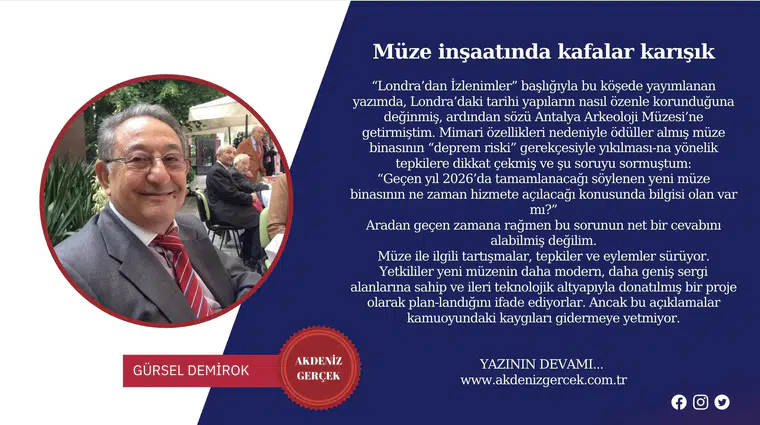
Gürsel Demirok - 01 Haziran 2026 - Müze İnşaatında Kafalar Karışık


Müze İnşaatında Kafalar Karışık

YAYINLAMA: | GÜNCELLEME:
Müze İnşaatında Kafalar Karışık

“Londra’dan İzlenimler” başlığıyla bu köşede yayımlanan yazımda, Londra’daki tarihi yapıların nasıl özenle korunduğuna değinmiş, ardından sözü Antalya Arkeoloji Müzesi’ne getirmiştim. Mimari özellikleri nedeniyle ödüller almış müze binasının “deprem riski” gerekçesiyle yıkılması-na yönelik tepkilere dikkat çekmiş ve şu soruyu sormuştum:
“Geçen yıl 2026’da tamamlanacağı söylenen yeni müze binasının ne zaman hizmete açılacağı konusunda bilgisi olan var mı?”
Aradan geçen zamana rağmen bu sorunun net bir cevabını alabilmiş değilim.
Müze ile ilgili tartışmalar, tepkiler ve eylemler sürüyor. Yetkililer yeni müzenin daha modern, daha geniş sergi alanlarına sahip ve ileri teknolojik altyapıyla donatılmış bir proje olarak plan-landığını ifade ediyorlar. Ancak bu açıklamalar kamuoyundaki kaygıları gidermeye yetmiyor.
Çünkü ortalıkta türlü söylentiler dolaşıyor. Kimi çevrelerde müze alanında başka ticari yapıların, hatta bir otelin de yer alacağı iddia ediliyor. Başka bir kesim ise müzeden taşınan eserlerin akı-beti konusunda kuşkular taşıyor. Doğru olsun ya da olmasın, bu söylentilerin ve kuşkuların orta-dan kaldırılmasının tek yolu açık, net ve şeffaf bilgilendirmeden geçiyor.
Bu konuda duyarlı bir hemşehrimiz, bilgi edinmek amacıyla CİMER’e başvurduklarını anlattı. Başvurunun Kültür ve Turizm Bakanlığı’na yönlendirildiğini, ancak verilen cevabın özetle “Her şey mevzuata uygundur” şeklinde olduğunu söyledi. Ayrıca bazı taleplerin “ticari sır” ve “kişisel verilerin korunması” gibi gerekçelerle karşılanmadığı ifade ediliyor.
Gözlemleyebildiğim kadarıyla Antalya Arkeoloji Müzesi projesiyle ilgili olarak kamuoyunda ciddi bir bilgi eksikliği ve buna bağlı bir kafa karışıklığı mevcut. İnşaatın amacı, hukuki statüsü, yapım süreci ve tamamlandığında nasıl bir yapının ortaya çıkacağı konusunda yeterli bilgi paylaşılmı-yor.
Oysa söz konusu alan sıradan bir inşaat alanı değildir. Burası yalnızca bir yapı değil; Antalya’nın kültürel hafızasının ve ortak mirasının önemli bir parçasıdır. Bu nedenle sürecin şeffaflık ilkeleri doğrultusunda yürütülmesi, demokratik bir zorunluluktur.
Bakanlığın yaklaşımını eleştirenler ise şu görüşü dile getiriyorlar:
“Antalya Arkeoloji Müzesi gibi kamusal niteliği bulunan bir projenin tüm aşamalarının kamuo-yuyla paylaşılması gerekir. Halkın doğru bilgilendirilmesi, yanlış anlaşılmaların ve söylentilerin önüne geçilmesi açısından bu zorunludur. Üstelik şantiye alanında standart bir bilgilendirme tabelasının dahi bulunmaması, bölge halkı ve ilgili çevrelerde haklı kaygılara yol açmaktadır.”
4982 sayılı Bilgi Edinme Hakkı Kanunu çerçevesinde vatandaşlar şu sorulara açık cevap veril-mesini istemektedir:
• İnşaatı süren Antalya Arkeoloji Müzesi hangi kurum adına ve hangi amaçla yapılmaktadır? Pro-jenin kapsamı nedir?
• Yapı ruhsatı, ilgili kurum onayları ve diğer proje belgeleri konusunda kamuoyuna neden ayrıntılı bilgi verilmemektedir? Şantiye alanında neden bilgilendirme tabelası bulunmamaktadır?
• Projenin başlangıç tarihi nedir? Planlanan bitiş tarihi ne zamandır? İnşaatın mevcut aşaması nedir? Tamamlandığında ortaya çıkacak yapıya ilişkin mimari görseller ve render çalışmaları neden paylaşılmamaktadır?
• Kamusal bir alanı ilgilendiren bu projede, kamuoyunun bilgilendirilmesinin önünde hangi yasal engel bulunmaktadır? “Ticari sır” gerekçesi bu kapsamda nasıl değerlendirilmektedir?
Kanaatimce vatandaşların dile getirdiği bu talepler son derece makul ve demokratiktir. Kamu kaynaklarıyla yürütülen, kentin kültürel mirasını ilgilendiren böylesine önemli bir projede şeffaflık istemek ne aşırılıktır ne de ayrıcalık talebidir. Bu, yurttaşlık hakkıdır.
Bu nedenle TBMM’de görev yapan Antalya milletvekillerinin hemşehrilerinin sesine kulak ver-meleri ve bu talepleri Meclis gündemine taşımaları gerekir. CİMER üzerinden yapılan başvurula-rın da daha doyurucu ve ayrıntılı biçimde yanıtlanması önem taşımaktadır.
Yerel medya da konuyu daha yakından takip etmeli; Antalya’nın geleceğini ilgilendiren bu önemli proje kamuoyunun gündeminde tutulmalıdır. Her Perşembe günü müze önünde bir araya gelen Antalyalılar yalnız bırakılmamalıdır.
Söylentileri, kuşkuları ve kafa karışıklığını ortadan kaldırmanın yolu bellidir:
Açık, net ve şeffaf bilgi paylaşımı.
Yetkililerden beklenen de tam olarak budur.

Ali Tuygan (Rtd. ambassador) - June 01, 2026 - Türkiye's Darkest Hour


Türkiye’s Darkest Hour Posted on June 1, 2026 by Ali Tuygan 
June 1, 2026 

The “darkest hour” captures a moment when things are at their worst. Türkiye’s 1950 general election, which brought the Democratic Party (DP) to power, was a major step toward democracy. During the twenty-seven years, a very short span of time, from the founding of the Republic to the 1950 election, Türkiye struggled to move beyond centuries of decadent Ottoman rule, realized fundamental reforms under Atatürk’s leadership, which charted a new path for our country, and successfully dealt with the challenges of the Second World War under President İnönü. 

Since then, Türkiye has witnessed periods of internal political conflict, one example being the establishment of the Investigation Commission by the DP in 1960, targeting the Republican People’s Party (CHP) to remain in power unrivalled, military interventions, and attempted coups, but nothing like what has happened during the past week.

 The title is part of the well-known proverb, “the darkest hour is just before dawn”, suggesting that things will get better. Winston Churchill had used part of it, “darkest hour”, to mark the collapse of France following the German invasion in 1940. 

Today, Türkiye is experiencing an unprecedented internal political crisis, and this compels one to use Churchill’s language. Nonetheless, the time will surely come to repeat the proverb in its entirety. In recent years, our democracy, our economy, and our sense of national unity have all lost altitude. The separation of powers, the essence of democracy, has been ignored. 

By staying on the democratic path, Türkiye could have become the northern star of the Middle East. The governing Justice and Development Party (AKP) squandered the opportunity. Instead, Türkiye, with its nose-diving democracy, became part of the Middle East. 

Thus, on May 21, the country witnessed the crash. The Ankara Regional Court of Appeal issued “an interim measure” declaring the elections held and the decisions taken by the 38th Convention of the CHP null and void. The court placed Kemal Kılıçdaroğlu at the head of the CHP and removed its elected leader, Özgür Özel. 

During Kılıçdaroğlu’s thirteen years at the helm of the CHP, the party lost thirteen elections. President Erdoğan won three presidential elections, the last against Kılıçdaroğlu, whose candidacy was secured through dubious “political deals.” And now he is partnering with them to divide the CHP and guarantee the AKP yet another victory in the next, perhaps not too distant, presidential/general election. 
It appears the endgame is to force the CHP into an election under Kılıçdaroğlu’s leadership, perhaps even to prevent the Party’s elected chairman, Özgür Özel, from running, like İstanbul Mayor İmamoğlu.

 Moreover, there are many confusing questions about party conventions, the founding of new parties, the conditions for participating in elections, including the urgency of a CHP congress. In brief, chaos reigns supreme. As for the economy, it was the AKP government that knocked off six zeros from the Turkish currency on January 1, 2005, as part of a massive redenomination. Thus, 1,000,000 “old” Turkish lira became exactly 1 “new” Turkish lira. At the time, the dollar was worth 1.4-5 Turkish liras. Today, it is worth more than 45 liras. The inflation rate is above 30% according to official figures, but above 50% according to unofficial sources. If the economic policy prioritizing election interests were to continue, the country would face galloping inflation immediately after the election. 

For Türkiye’s future, its stability and prosperity, the AKP leadership must return to the democratic path today, not tomorrow, not the day after. Against this gloomy background, on July 7-8, Ankara will host a NATO summit. What do we have in common with NATO countries today? Other than the selfish defense interests of our allies, hardly anything. Yes, we still have a membership card, but one with an expiry date.