Monday, November 25, 2019

GCC will never advocate regime change in Iran


Bahrain: GCC will never advocate regime change in Iran

The Gulf Cooperation Council (GCC) countries will never advocate a regime change in Iran, the Bahraini Foreign Minister said yesterday, as reported by Anadolu Agency. 
“We in the GCC, as responsible countries, have never and will never advocate for regime change in Iran. We have never and will never interfere in Iran’s internal affairs,” Sheikh Khalid bin Ahmed bin Mohammed Al Khalifa said in a speech at the Manama Dialogue.
“We call upon Iran to pay more attention to its neighbours than other international relationships and to seeking peace with us,” he said.
The top Bahraini diplomat said Tehran can’t solve its problems with international community while ignoring the countries of the region.
“Their interests are here, among others,” he said.
Bahrain severed diplomatic relations with Tehran in 2016, citing Iran’s interference in its internal affairs.
“We have experienced the full brunt of Iran’s interference for almost forty years. Despite periods of increased cooperation, and despite our numerous efforts over the years to have better relations, Iran just does not seem capable of viewing Bahrain as anything other than a target,” the Bahraini minister said.
The Gulf countries accuse Iran of interfering in their internal affairs, a claim denied by Tehran.
Iran has been rocked by protests since last week over a government decision to hike fuel prices, with Amnesty International saying more than 100 people have been killed in the unrest, while the government puts the death toll at only two.

The End of the Rule of Law (12 impeachable offenses committed by Donald Trump) by Chris Hedges

The End of the Rule of Law


Mr. Fish / Truthdig
Bruce Fein, a former senior official in the Department of Justice and a constitutional scholar, has identified 12 impeachable offenses committed by Donald Trump. But, as he notes, many of these constitutional violations are not unique to the Trump administration. They have been normalized by Democratic and Republican administrations. These long-standing violations are, for this reason, ignored by Democratic Party leaders seeking to impeach the president. They have chosen to focus exclusively on Trump’s attempt to get the Ukrainian president to open an investigation of Joe Biden and his son, Hunter, in exchange for $400 million in U.S. military aid and a visit by the Ukrainian leader to the White House. Ignoring these institutionalized violations during the impeachment inquiry, Fein fears, would legitimate them and lead to the death of democracy.
In a letter on Friday to House Speaker Nancy Pelosi, also signed by Ralph Nader and Louis Fisher, Fein warns that Trump is “shattering our entire constitutional order.” He lists as the president’s most serious constitutional violations the “defiance of congressional subpoenas and oversight; spending billions of dollars on a southern border wall not appropriated for that purpose; continuing or expanding presidential wars not declared by Congress; exercising line-item veto power; flouting the Emoluments Clause; and, playing prosecutor, judge, jury, and executioner to kill any person on the planet based on secret, unsubstantiated information.” But he also notes that many of these violations are not unique to Trump and were also carried out by Barack Obama and George W. Bush.
“Many of the Democrats in the past have been complicit in these violations,” Fein said when I reached him by phone in Washington, D.C. “They have unclean hands. They have acquiesced in illegal surveillance, as revealed by Edward Snowden. The most serious constitutional violations are the ones that are institutional usurpations. These usurpations [by both parties] have permanently weakened, if not eviscerated, the power of the legislature versus the executive.”
“We have a Congress whose members, by and large, do not want the responsibilities the Constitution entrusts them with,” Fein continued. “They like to give away everything to the president and then clamor if something goes bad. The most worrisome constitutional violations are, unfortunately, ones many members of Congress rejoice in. It enables them to escape making hard choices that might compromise their ability to win reelection. But you can’t rely on a past dereliction to justify its perpetuation indefinitely.”“If we take a narrow approach to impeachment, that will mean that all the more egregious violations will be viewed as having been endorsed and not rebuked and successive presidents will feel they have a green light to emulate Trump on everything except a Ukrainian shakedown,” Fein said. “This is dangerous for the country. This could boomerang, even if we get rid of Trump, by endorsing these usurpations forever. This would be a return to a one-branch government like the monarchy we overthrew in 1776. The unwitting result is to further the [power of the] executive rather than diminish it, which is what should be happening.”
Bush and Obama bequeathed to us nine illegal wars, if we include Yemen. None were declared by Congress, as is demanded by the Constitution. Bush placed the entire U.S. public under government surveillance in direct violation of the Fourth Amendment and the Foreign Intelligence Surveillance Act (FISA), which makes it a crime for the government to surveil any American citizen without authorization by statute. Under the Executive Order 10333 the president spies on Americans as if they were foreigners, although this surveillance has not been authorized by statute. Bush embarked on a global program of kidnapping and torture, including of foreign nationals, which Obama continued. Bush and Obama carried out targeted assassinations, usually by militarized drones, across the globe. And Obama, reinterpreting the 2002 Authorization for Use of Military Force Act, gave the executive branch the authority to assassinate U.S. citizens. The killings began with drone strikes on the radical cleric Anwar al-Awlaki and, two weeks later, his 16-year-old son. Such a violation denies U.S. citizens due process. By signing into law Section 1021 of the National Defense Authorization Act, Obama—whose record on civil liberties is even more appalling than Bush’s gutted the 1878 Posse Comitatus Act, which prohibits the use of the military as a domestic police force.
These two presidents, like Trump, violated treaty clauses that required Senate ratification. Obama did this when he signed the Iran nuclear deal and Trump did this when he walked away from the deal. Bush and Obama, like Trump, violated the appointments clause of the Constitution by appointing people who were never confirmed by the Senate as required. The three presidents, to override Congress, all routinely abused their right to use executive orders.
At the same time the courts, a wholly owned subsidiary of corporate power, have transformed the electoral system into legalized bribery through the Citizens United ruling, handed down by the Supreme Court in 2010. Corporations pouring unlimited money into elections was interpreted by the court as the right to petition the government and a form of free speech, essentially overturning the people’s rights by judicial fiat. Also, the courts have steadfastly refused to restore basic constitutional rights including our right to privacy and due process. “The constitutional rot is in all three branches,” Fein said.
The 12 impeachable offenses committed by Trump and singled out by Fein are:
1. Contempt of Congress
Trump made clear his contempt of Congress when he boasted, “… I have Article II, where I have the right to do whatever I want as president.”
“President Trump has repeatedly and unconstitutionally systematically undermined the congressional oversight power, including the ongoing congressional impeachment inquiry of the President himself, by instructing numerous current and former White House staff and members of the executive branch to defy congressional subpoenas on an unprecedented scale far beyond any previous President,” Fein wrote to Pelosi. “Without congressional authority, he has secretly deployed special forces abroad and employed secret guidelines for targeted killings, including American citizens, based on secret unsubstantiated information. He has unconstitutionally endeavored to block private persons or entities from responding to congressional requests or subpoenas for information, e.g., Deutsche Bank. He has refused to provide Congress information about nepotistic or other security clearances he granted in opposition to his own FBI security experts. He has refused to disclose his tax returns to the Chairman of the Ways and Means Committee contrary to a 1924 law, 26 U.S.C. 6103 (f).”
2. Abuse of the Powers of the President and Abuse of Public Trust
“Unlike prior presidents, he has made presidential lies as routine as the rising and setting of the sun, confounding civil discourse, truth and public trust,” the memo to Pelosi reads. “He has disrespected, belittled, and serially preyed upon women, mocked the disabled, incited violence against the mainstream media and critics, and encouraged and displayed bigotry towards minorities and minority Members of Congress, including intercession with Israel in serious violation of the Speech or Debate Clause, Article I, section 6, clause 1, to deny two Members visitor visas.”
3. Appropriations Clause, Revenue Clause
“Congress has consistently voted much less money than President Trump requested to build an extensive, multi-billion-dollar wall with Mexico,” the memo reads. “In violation of the Clause and the criminal prohibition of the Anti-Deficiency Act, President Trump has committed to spending billions of dollars far in excess of what Congress has appropriated for the wall. The congressional power of the purse is a cornerstone of the Constitution’s separation of powers.”
Article I, Section 7, Clause 1 of the Constitution requires all revenue measures to originate in the House of Representatives.
“In violation of the Clause, President Trump has raised tens of billions of dollars by unilaterally imposing tariffs with limitless discretion under section 232 of the Trade Expansion Act of 1962,” the memo reads. “He has become a Foreign Trade Czar in imposing tariffs or quotas or granting exemptions from his trade restrictions in his unbridled discretion to assist political friends and punish political enemies. Literally trillions of dollars in international trade have been affected. Riches are made, and livelihoods destroyed overnight with the capricious stroke of President Trump’s pen.”
4. Emoluments Clause
“Article I, section 9, clause 8 prohibits the President (and other federal officers), without the consent of Congress, from accepting any ‘present, emolument, office, or title, of any kind whatsoever, from any King, Prince, or foreign state.’
“President Trump has notoriously refused to place his assets in a blind trust,” the memo reads. “Instead, he continues to profit from opulent hotels heavily patronized by foreign governments. He has permitted his family to commercialize the White House. He has compromised the national interest to enrich family wealth on a scale unprecedented in the history of the presidency.”
5. Treaty Clause
Article II, Section 2, Clause 2 requires Senate ratification of treaties by two-thirds majorities. The text is silent as to whether treaty termination requires Senate ratification, and the Supreme Court held the issue was a non-justiciable political question in Goldwater v. Carter, 444 U.S. 996 (1979).
“President Trump flouted the Treaty Clause in terminating the Intermediate-Range Nuclear Forces Treaty (INF) with Russia unilaterally,” the memo reads. “The treaty assigned the termination decision to the ‘United States.’ The President alone is not the United States under the Treaty Clause.”
6. Declare War Clause
Article I, Section 8, Clause 11 empowers Congress alone to take the nation from a state of peace to a state of war. That power cannot be delegated.
“In violation of the Declare War Clause, President Trump has continued to wage or has initiated presidential wars in Libya, Somalia, Yemen, Syria, Iraq, Afghanistan, and Pakistan, and has used special forces offensively in several African nations,” the memo reads. “President Trump has claimed authority to initiate war against any nation or non-state actor in the world—not in self-defense—on his say-so alone, including war against North Korea, Iran, or Venezuela.”
7. Take Care Clause; Presentment Clause
Article II, Section 3 obligates the president to “take care that the laws be faithfully executed.”
“In violation of that trust, President Donald J. Trump deliberately attempted to frustrate special counsel Robert Mueller’s investigation of collaboration between the Trump 2016 campaign and Russia to influence the presidential election,” Fein points out. “Among other things, the President refused to answer specific questions relating to his presidential conduct; endeavored to fire the special counsel; dangled pardons for non-cooperating witnesses; and, urged Attorney General Jeff Sessions to reverse his recusal decision to better protect his presidency. In all these respects, the President was attempting to obstruct justice.”
“President Trump has also systematically declined to enforce statutory mandates of Congress by arbitrarily and capriciously revoking scores of agency rules ranging from immigration to the Consumer Financial Protection Board to the Environmental Protection Agency in violation of the Administrative Procedure Act or otherwise,” the memo reads. “He has routinely legislated by executive order in lieu of following constitutionally prescribed processes for legislation.”
“In violation of his constitutional duty to take care that the laws be faithfully executed, Mr. Trump has dismantled and disabled scores of preventive measures to save lives, avoid injuries or disease, help families, consumers, and workers, and detect, deter, and punish tens of billions of dollars of corporate fraud,” the memo continues. “He has disputed climate disruption as a ‘Chinese hoax,’ compounded the climate crisis by overt actions that expand greenhouse gas emissions and pollution, and excluded or marginalized the influence of civil service scientists.”
8. Due Process Clause
The Fifth Amendment provides that no person shall “be deprived of life … without due process of law.”
“In violation of due process, President Trump claims power, like his immediate two predecessors, to act as prosecutor, judge, jury, and executioner to kill American citizens or non-citizens alike, on or off a battlefield, whether or not engaged in hostilities, whether or not accused of crime, and whether or not posing an imminent threat of harm that would trigger a right of preemptive self-defense,” the memo reads.
9. Appointments Clause
“President Trump has repeatedly appointed principal officers of the United States, including the National Security Advisor and Cabinet officials, who have not been confirmed by the Senate in violation of the Appointments Clause, Article II, section 2, clause 2,” the memo reads. “On a scale never practiced by prior presidents, Mr. Trump has filled as many as half of Cabinet posts with ‘Acting Secretaries’ who have never been confirmed by the Senate.”
10. Soliciting a Foreign Contribution for the 2020 Presidential Campaign and Bribery
“President Trump has endeavored to corrupt the 2020 presidential campaign by soliciting the President of Ukraine to contribute something of value to diminish the popularity of potential rival Joe Biden, i.e., a Ukrainian investigation of Mr. Biden and his son Hunter relating to potential corrupt practices of Burisma, which compensated Hunter handsomely ($50,000 per month). In so doing, Mr. Trump violated the criminal campaign finance prohibition set forth in 52 U.S.C. 30121,” Fein’s memo reads.
“President Trump solicited a bribe for himself in violation of 18 U.S.C. 201 in seeking something of personal value, i.e., discrediting Joe Biden’s 2020 presidential campaign with the help of the President of Ukraine to influence Mr. Trump’s official decision to release approximately $400 million in military and related assistance,” it adds.
11. Violating Citizen Privacy
“Government spying on Americans ordinarily requires a warrant issued by a neutral magistrate based on probable cause to believe crime is afoot,” the memo reads. “President Trump, however, routinely violates the Fourth Amendment with suspicionless surveillance of Americans for non-criminal, foreign intelligence purposes under Executive Order 12333 and aggressive interpretations of the Foreign Intelligence Surveillance Act.”
12. Suppression of Free Speech
“President Trump is violating the First Amendment in stretching the Espionage Act to prosecute publication of leaked classified information that are instrumental to exposing government lies and deterring government wrongdoing or misadventures, including the outstanding indictment against Julian Assange for publishing information which was republished by the New York Times and The Washington Post with impunity,” the memo reads.
“The Republic is at an inflection point,” the letter to Speaker Pelosi reads. “Either the Constitution is saved by impeaching and removing its arsonist in the White House, or it is reduced to ashes by continued congressional endorsement, whether by omission or commission, of limitless executive power and the undoing of checks and balances.”


Lebanese Uprising No End in Sight for the current impasse

The Lebanese Uprising: No End in Sight for the Current Impasse

by Guest Contributor
By Joe Macaron
It has been over a month since the Lebanese uprising began and there are no indications that the country’s ruling oligarchy is willing or ready to offer concrete concessions in giving up power. The political class seems united in buying time to weather the storm of public anger while seeking to disperse and divide the protesters and undermine their cause. Lebanon is on the verge of economic collapse with no end in sight to the crisis of public confidence in the country’s current political system.
What has been fascinating about these unprecedented developments in Lebanon is the cross-sectarian unity among both the protesters and the political class. Protesters have been demonstrating in squares from the north to the south of the country while coordinating their actions via WhatsApp. This remarkable civic awareness is heralding a new sense of belonging where citizens feel they have a stake in governance without going through the leading oligarch of their sectarian community. The protests in both rural and urban areas have yet to convert this newfound collective power into a political platform and policy-making process. Only in the past decade has Lebanon begun to witness new civil society movements and political parties seeking to provide an alternative to the traditional ones. But there is still a long way to go. Lebanon needs a major constitutional and economic overhaul, a task that cannot be accomplished overnight.
Moreover, the members of Lebanon’s ruling oligarchy are clinging to each other and employing almost uniform tactics to quell the popular uprising. So far, there were multiple speeches by President Michel Aoun, Prime Minister Saad Hariri (who resigned on October 29 but is now heading a caretaker cabinet), and Hezbollah Secretary General Hassan Nasrallah. These speeches varied from embracing and acknowledging the demands of the protesters to condemning their behavior and insinuating they are receiving foreign support. Every speech by one of the oligarchs seems to incentivize the protesters to return to the streets while every move by the protesters seems to unite the political class. To sway the general public in their favor, the ruling class and their affiliates are warning of economic collapse and security deterioration if the protests continue. The lack of regret regarding their failures or empathy toward the protesters’ demands speaks volumes about how much the political class is disconnected from—or unconcerned about—the magnitude of these protests.
There are three crucial dynamics that will decide how this ongoing crisis will unfold: security, politics and the judiciary, and the economy.
The Security Environment
While the Lebanese military remains generally neutral and the interior ministry’s security forces have been largely idle during this uprising, paramilitary forces and gangs—officially and non-officially affiliated with the ruling political parties—have seldom assaulted the protesters. The Lebanese Army’s military intelligence, which is traditionally linked to the president1 and is now headed by Brigadier General Tony Mansour, has arrested and used force against protesters in recent weeks. The Republican Guard Brigade, also under President Aoun’s control, was deployed to deter the protesters’ march on the road leading to the presidential palace in Baabda. On November 12, a bodyguard for the military intelligence bureau chief, Colonel Nidal Daou (who is reportedly close2 to the Progressive Socialist Party leader Walid Joumblatt), shot and killed the protester Alaa Abou Fakher in Khaldeh, located near the highway connecting Beirut to south Lebanon. On November 13, a gunman opened fire on protesters in Jal el-Dib in the Mount Lebanon province. Previously, supporters of Hezbollah and the Amal Movement assaulted protesters in downtown Beirut and broke their tents. All these coercive attempts, however, did not dissuade the protesters from continuing their actions. The sticking point among the Lebanese public has been the road blockades by protesters—whether this is part of civil disobedience or a violation of the basic right of citizens to move. Since these demonstrations succeeded in forcing Hariri’s resignation, the protesters’ case for blockading the roads was weakened.
After these chaotic couple of weeks, the commander of the Lebanese military, General Joseph Aoun, defended the army’s posture during the protests and set the tone for the coming period, saying that the army would continue to secure the safety of protesters but that it would no longer accept the blockading of roads. This stance by the army means the current impasse might be reinforced, with the political class under no significant pressure to compromise and the protesters under no pressure to leave the squares where they have been demonstrating across the country.
Political and Judiciary Dynamics
The dynamics of Lebanese politics have significantly shifted since the start of the uprising in October 2019. The 2016 presidential deal between Aoun and Hariri has fizzled under public pressure but has not yet fallen apart. In general terms, the deal allowed for the election of Michel Aoun as president on October 31, 2016—following more than two years of a presidential vacuum—in exchange for Hariri becoming prime minister. Hezbollah, which is President Aoun’s political ally, pushed for and approved the arrangement. Hariri is deflecting the blame to Aoun’s son-in-law, Foreign Minister Gebran Bassil––considered the real deal maker in the president’s camp––who in return is pointing a finger at Hariri for the government’s failure to combat corruption. Instead of heeding protesters’ demands, the oligarchs sought to reach a deal behind closed doors on the formation of a new cabinet. Hariri, who resigned but seems to be eager to return to power, is putting his own preconditions on leading a purely technocratic cabinet. However, Aoun and Hezbollah do not want Hariri alone to have a free hand in a cabinet of technocrats; they are insisting on a mixture of technocrats and politicians whose names would not provoke a negative reaction from protesters. The name of former minister Mohammad Safadi was floated as a potential premier, but this seemed to be primarily a political maneuver that was denounced by the protesters, which led to Safadi’s withdrawal from consideration. Safadi, who is close to both Hariri and Bassil, was meant to be a compromise that would keep the 2016 presidential deal alive.
While Hariri’s departure gave the impression that he resigned in defiance of Hezbollah and Bassil, the parties of this deal (Aoun, Hariri, and Hezbollah) seem to be invested in continuing to negotiate a new version of their power-sharing formula. Hariri will lose what is left of his political capital if he is out of power or if he is not at least the kingmaker of the new cabinet, while Aoun and Hezbollah need the international community’s support so that Hariri can navigate the current economic crisis and avoid further US sanctions. The challenge, however, is that reaching a deal among the ruling political class is no longer sufficient since whatever they agree on must meet the high bar of the leaderless uprising. Protesters have recently been buoyed by the election of one of their supporters, independent Melhem Khalaf, as head of the influential Beirut Bar Association. They also succeeded in preventing the parliament on November 19 from holding a session to pass controversial bills behind closed doors and before the formation of a cabinet that meets the protesters’ demands.
However, the protests are yet to achieve their goal of holding corrupt officials accountable in the courts. While the state financial prosecutor Ali Ibrahim has ordered some officials to appear for an informal investigation, no official has yet been prosecuted, nor has stolen money been returned—as protesters are demanding. Moreover, the Aoun-Hariri friction was reflected in the judiciary that largely remains under the control of the political class. When Mount Lebanon prosecutor Ghada Aoun, who is close to the president, charged Hariri’s ally, former Prime Minister Najib Miqati, for making unlawful profits through subsidiary housing loans, a week later, State Prosecutor Ghassan Oueidat (who is close to Hariri) initiated disciplinary action against Judge Aoun and asked security agencies not to send her new cases. Unless there are fresh appointments of apolitical judges, the potential of accountability and reform remains limited.
The Economic Factor 
Perhaps the most pressing situation is the looming risk of economic collapse with growing signs in both the private and public sectors. Lebanon has one of the highest debt burdens in the world, projected to reach 155 percent of gross domestic product by the end of this year. In addition, the country’s local currency has weakened against the dollar by about 20 percent on the black market. Lebanon’s Central Bank is gradually losing foreign currency reserves and the banking system is imposing a de facto capital control to block the potential flight of foreign currency. In fact, citizens’ access to their funds in the commercial banks is now limited to $1,000 per week. The commercial banks closed for long stretches since the protests began on October 17; on November 19, they reopened again after they were provided government security protection around their branches, which is an additional public cost. It is noteworthy that even during the civil war, Lebanese banks did not close for such an extended period. These institutions, which primarily own Lebanon’s overall national debt, are concerned about potential activities by protesters, hence they asked and were granted security protection from the caretaker government.
Meanwhile, Lebanon’s Central Bank is still excluding any change in the country’s 22-year peg, which fixes the Lebanese pound at 1,507.5 to the dollar, asserting this move is crucial to stabilize the monetary crisis. However, the devaluation of the Lebanese pound might be inevitable since the black market is already doing so, and this will negatively impact the savings of a large segment of the population, most notably retirement funds. There might not be enough dollars in the Lebanese market to match the public demand for them.
If the political crisis persists and the country continues to be largely paralyzed, there might be an eventual economic collapse, including the state’s inability to pay wages. Containing the situation might need a default at some point and a bailout by monetary institutions like the International Monetary Fund. The suggested solution by protesters is that the wealthy who have benefited from the political system should pay the national debt either through a fair tax system or by returning stolen money. This mechanism is not in place and might not materialize given the current dynamics; therefore, there are open questions about whether a social safety net could mitigate the impact of the economic collapse and about who will end up paying for these social measures.
With a looming economic collapse and a deep political crisis, Lebanon requires an urgent implementation of genuine reforms and a fundamental shift in governance. These two preconditions are nonexistent at present. The ruling political class is settling scores and continuing business as usual while protesters are unable to shift the paradigm of power without having significant influence in the government or holding an early parliamentary election. Both these objectives are unattainable in the foreseeable future given the stated positions of the ruling political class.
Meanwhile, US policy in Lebanon remains ambiguous, ranging from withholding assistance to the Lebanese military to focusing statements on Hezbollah rather than on the larger context of the Lebanese crisis. The Trump Administration’s public rhetoric is typically counterproductive for protesters, as recent events have shown, given ongoing attempts in Lebanon to portray the protests as a US-funded plot. What Washington can do is to have the US embassy in Lebanon privately urge all Lebanese officials to acknowledge the gravity of the current crisis and heed the voices of protesters while encouraging the military to remain neutral. Beyond that, the Trump Administration could potentially aggravate an already protracted political crisis.
Joe Macaron is a Resident Fellow at Arab Center Washington DC, where this article was originally published. 
Guest Contributor | November 25, 2019 at 9:30 am | URL: https://lobelog.com/?p=5112

Brain dead No. NATO needs a new strategic concept by Mehmet Fatih Ceylan

NATO Security Euro-Atlantic Security
“Fear is not a panacea for death” – a Turkish Proverb
Next week, NATO’s 70th anniversary Summit will take place in London (on 3-4 December 2019) at yet another critical moment. President Macron’s declaration on the eve of the Summit about the ‘brain death’ of NATO further aggravated the doubts surrounding the Alliance.

It is not the first time that a European leader has spoken of ‘taking Europe’s fate into European hands.’ Almost the same language was used by Chancellor Merkel following U.S. withdrawal from the Paris Climate Agreement in the wake of the 2017 G-7 Summit at Taormina. But it is the first time that such clear, public doubt has been cast by a European leader on the credibility of NATO’s Article V security guarantee.

Increasing uncertainties about the transatlantic Alliance do not augur well for the future of NATO. So it is high time to relaunch the Alliance’s sense of purpose and direction. It needs to focus on its future. Continued lethargy could all too easily translate into an unnecessary crisis that further erodes the Alliance’s foundations.

A new Strategic Concept

A new Strategic Concept (SC) would be an effective way forward. Serious thought should be given to using the London meeting to initiate work on it. Now is not a time for timidity or blindness by Allied leaders. Fears that SC work would divide the most successful politico-military Alliance in history ought to be no excuse. Such fears ignore NATO’s built-in capacities, solid rule of consensus building, and working practices. Since its inception NATO has adopted seven SCs, whenever there was a compelling need to confront dramatic changes to Euro-Atlantic security and stability. It has repeatedly proven its ability to emerge from such processes with new strength, vitality and determination. In our present challenging conditions, inaction is no solution. And Allied leaders should not let potential resistance from the higher echelons of NATO bureaucracy be an obstacle. Instead, a solid, common understanding among Allies should point the way forward.

No one can deny the serious worsening of Euro-Atlantic security since Russia’s occupation and annexation of Crimea in 2014, not to mention the 2008 Georgian crisis, the ongoing destabilisation of the Donbas region of Ukraine, and the threats posed by ISIS still being faced by all. Accordingly, we all need to summon political will and courage to start a new SC to map out future Alliance tasks and missions.

The New SC’s shape

A new SC should be proactive for potential future missions and tasks and designed to give clear direction and taskings for the Alliance’s leadership and planners.
The structure and main tenets of the successive SCs adopted since the Cold War did not greatly alter. It would not be difficult to follow a similar pattern. In the five years since the Wales Summit enough important building blocks have been established in NATO’s work to guide and inform work on a new SC. A mere collage of previous decisions and recent policies should certainly not be the aim. Rather, we need a forward-looking strategy elaborating and extrapolating the needs and priorities of the Alliance in a wider timeframe.

Once political momentum is achieved on a new SC, it is highly likely consultations would focus on its title, structure, and content.
Rather than wasting energy at the outset on agreeing a title, it would be more productive to work towards consensus on the new SC’s structure and contents. Structure and contents are somewhat interlinked. But there is enough knowledge and experience within NATO to build both.

Structure and content

The new SC should start with a brief account of the Alliance’s future strategic context. The differing perceptions of this context and differing solutions offered by Allies will no doubt make this one of the hardest pieces of work. So the existing accords reached among Allies since 2010 should be leveraged to the maximum extent to overcome points of divergence. The level of ambition for future NATO tasks and missions will require out-of-the-box thinking. That, in turn, necessitates wider consultations going beyond the confines of Permanent Council consultations.

The new SC should reconfirm the transatlantic bond, which is clearly the backbone of the Alliance. We all need a renewed and unflinching commitment to it, despite recent backsliding. The transatlantic link should continue to serve the enduring, unequivocal principle of the indivisibility of security. Any deviation from this principle would be the gravest of aberrations. Hence, the clear need to preserve and strengthen the 360 degree approach that holds the Alliance together.

The three core tasks of the Alliance will have to be blessed as still valid. There should be more emphasis on the task of collective defence and deterrence, drawing on all the knowledge accumulated and steps taken to confront present challenges. And the scourge of terrorism not only in some partner nations but also on Alliance territory should also be addressed.

More visibility to collective defence and deterrence should not, however, overshadow the other two core tasks of crisis management and cooperative security. The three tasks constitute a whole, reinforcing each other.

We need more powerful crisis management instruments before ‘little green men’ reappear on the field. That requires additional resources to expand the Alliance’s early warning capabilities, increase its resilience against cyber and hybrid warfare, and improve its capacity to nip crises in the bud, thus avoiding wider conflicts.

We also need more innovative modernisation of our approach towards cooperative security by strengthening the existing network of partnerships and possibly exploring new areas of cooperation in an expanded frame.

On Russia, the modus vivendi agreed at NATO’s 2016 Warsaw Summit based on the dual track approach of deterrence and dialogue seems likely to guide our efforts for the foreseeable future. However, we should also leave some flexibility for the possibility, even if slight, that Russia concretely and visibly moves toward playing a ‘fair game’ in its relations with the Euro-Atlantic structures. The new SC should also briefly address Chinese security and defence policies that have implications for Euro-Atlantic security at large.

Arms control, disarmament, and non-proliferation must also feature, particularly given that the INF Treaty is no more and the NPT Review Conference is fast approaching. The new SC should give renewed direction to efforts on emerging and disruptive technologies which have already introduced phenomenal changes in security and defence.

NATO’s Open Door Policy towards potential new members should be reconfirmed since this has been one of the Alliance’s most influential instruments for stability projection. We should elevate the current level of partnerships certainly to include the NATO-EU relationship, but going beyond it to be complemented by further outreach activities extended to regional organisations such as the Organisation for Security and Cooperation in Europe, The African Union, the Arab League and the Gulf Cooperation Council. Establishing links with ASEAN could also be explored.
Finally, adaptation and transformation of the Alliance to prepare it for the 2040s and 50s will have to feature.

Process

Preparing a new SC is daunting and painstaking. To ease the process, a Wisepersons’ Commission of former Foreign and Defence Ministers and Chiefs of Defence could kickstart the work. The Commission should have access to Allied leaderships, as necessary, and should engage the Permanent Council at intervals. It should benefit from the expertise and insights of think tanks, academia, and opinion shapers. It should report its recommendations to the Permanent Council which should retain the custodianship of this exercise.

Conclusion

It is commonplace to say that NATO itself is ‘the grand strategy’ against uncertainties. But it is equally true that the Alliance in the past successfully found the will and courage to map out its vision and direction. To prepare it for the future, another courageous decision is essential. Turkey should play an active role in supporting this since ‘Ankara remains at the centre of NATO’ in the words of the Turkish Defence Minister in October 2019.

NATO’s 2010 Strategic Concept is the product of a different era. Radical developments since 2010 have totally changed the security context in which NATO operates. Current events make it more than ever necessary for the Alliance to reinforce its unity and solidarity and that requires a bold decision to initiate work on a new SC. London could well be the place to start. The sooner we all get into action, the better for a safer and more secure world.


The opinions articulated above represent the views of the author, and do not necessarily reflect the position of the European Leadership Network (ELN) or any of the ELN’s members. The ELN’s aim is to encourage debates that will help develop Europe’s capacity to address pressing foreign, defence, and security challenges.

Sunday, November 24, 2019

Turkey in the Gulf by Jacopo Spezia Depretto

Turkey In The Gulf: Between Regional Aspirations And Setbacks

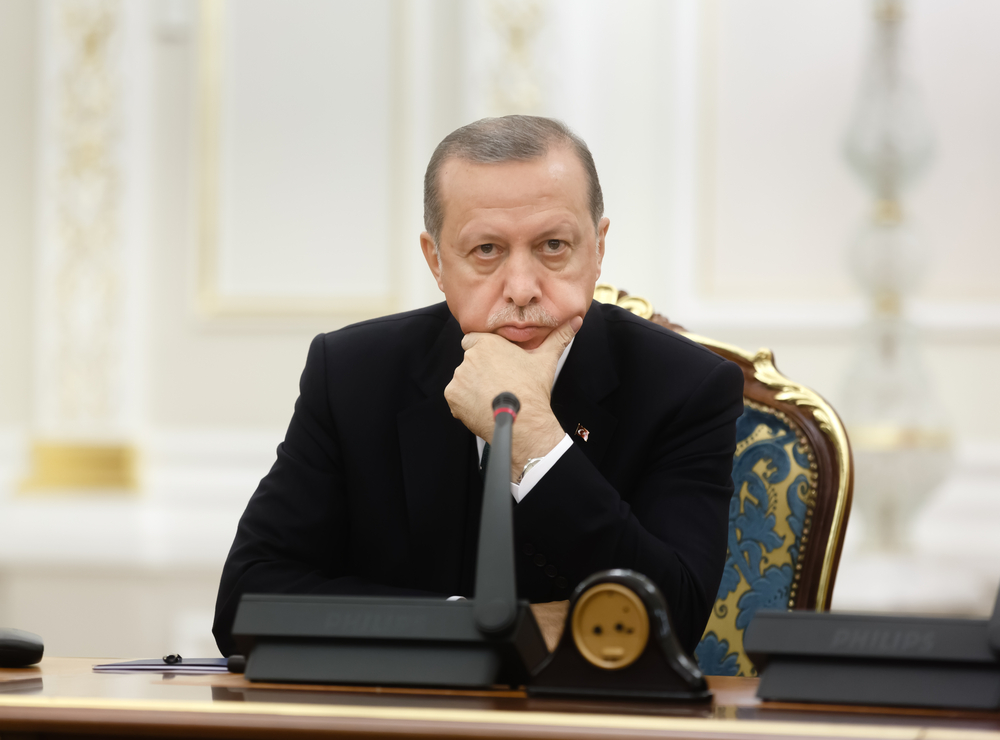
Recep Tayyip Erdogan (Drop of Light via Shutterstock)
By Jacopo Spezia Depretto
In recent years there has been remarkable upheaval between Persian Gulf countries. Iran and Qatar have been on mostly extremely negative terms with Saudi Arabia, the United Arab Emirates (UAE), and Bahrain. The U.S.’s “maximum pressure” campaign against Iran has received varying levels of support from Gulf Cooperation Council (GCC) members which welcomed the Trump presidency as an opportunity to see Iran weakened geopolitically and economically. The blockade of Qatar essentially shattered the notion that the GCC can be institutionally effective and functional in terms of mitigating and countering security threats. The Sultanate of Oman also has grave concerns about what it sees as Emirati expansionism in the southern Arabian Peninsula.
Within this context of tensions mounting between various countries of the Gulf, an outside power is asserting itself in the region more confidently: Turkey. Indeed, Ankara is a rising actor in the Arabian Peninsula and the Gulf. Only 25 years ago, Qatar was cosseted by Saudi Arabia and lacked much of an independent foreign policy, let alone a dynamic relationship with Turkey. Yet, since the GCC crisis erupted in mid-2017, Ankara has proven to be capable of influencing the outcomes of high-stakes standoffs between Gulf states. Over the years, the Qatari-Turkish relationship has become an important bloc in the region that holds influence over Muslim Brotherhood movements, parties, and causes, as well as some governments. Meanwhile, Turkey has also played a relatively significant role in terms of undermining international and regional efforts to isolate the Islamic Republic. 
Immediately after the blockade of Qatar began in June 2017, Turkish president Recep Tayyip Erdo?an condemned the move for violating Islamic values and compared it to a “death penalty.” Two days after the siege began, the Turkish Parliament ratified military deals authorizing the deployment of Turkish military personnel in Qatar to train the local security forces. In the following days, Turkish cargo planes and ships delivered massive amounts of food supplies to the Gulf monarchy, as exports from Turkey to Qatar increased by 50 percent from 2016 to 2017.
Following the Trump administration’s announcement on the “maximum pressure” campaign, Erdo?an announced that Turkey will not support “imperial” U.S. sanctions on Iran, claiming that they put regional security at risk. Additionally, he vowed to take all measures to minimize the impact of sanctions on trade between Iran and Turkey and to support Iran in difficult times. In April 2019, Turkey’s Foreign Minister Cavusoglu further reiterated President Erdo?an’s commitment to raise bilateral trade with Iran to $30 billion, a threefold increase in compared to current levels.  Furthermore, Qatar and Turkey have jointly spoken out against the designation of Iran’s Revolutionary Guards as a terrorist group, again highlighting how the decision will destabilize the region. Since the beginning of the Qatar crisis, Tehran, Ankara, and Doha have launched a joint working group to boost commercial relations and facilitate trade and transportation among the three countries.
For its part, the Al Thani royal family of Qatar has consistently backed Turkey’s actions in the region and pledged financial support to the lagging Turkish economy. In August 2018, the Emir of Qatar announced an investment of $15 billion in Turkey’s economy, including a $3 billion currency swap to support the depreciating Turkish lira. Remarkably, the Emir also donated a brand-new Boeing 747-8 (worth $500 million) out of his “special love for Erdo?an.” Conversely, since 2015 Turkey has established a military base in Qatar with 300 Turkish soldiers. In August 2019, it was reported that the base would be further expanded with the addition of an airbase and a military port, with the contingent growing into 2,000 soldiers.
Form the opposite shores of the Gulf, Ayatollah Khamenei and President Rouhani quickly offered Iran’s support to Erdo?an’s government in the aftermath of the attempted coup in 2016. Contacts and visits between the two countries have been considerably frequent, until recently, while economic cooperation—despite the U.S. imposed sanctions—has expanded. In 2018, the two countries planned on expanding bilateral trade to $30 billion.
Turkey’s geopolitical positioning within the Gulf and the broader Middle East region is not unwarranted. It derives from a recent and gradual shift in its foreign policy produced, in turn, by mutated circumstances both domestically and regionally. First, Erdo?an’s ascension and consolidation of power—also thanks to his religious rhetoric and the support from conservative Anatolian constituencies—led Turkey to increasingly abandon its Kemalist, secularist stance. Erdo?an’s worldview is currently much more aligned to Iran and Qatar’s foreign policies while drifting away from its NATO alliances.
On the international stage, considering its recent history, Turkey has always sought to gain a primary geopolitical role in the Middle East. After the end of the Cold War, Ankara adopted a “zero problems” foreign policy by promoting its role model image through economic and diplomatic ties across the region. In 2008, Turkey became the first country to sign a Memorandum of Understanding with the GCC, which established a Strategic Dialogue Mechanism for deepening cultural, economic and political ties with all Gulf monarchies. Despite siding with the Al Thani family at the outbreak of the Qatar crisis, Erdo?an visited various GCC countries seeking to ease the tensions. He also offered to establish a Turkish military base in Saudi Arabia as a sign of Turkey’s investment in the region’s security, but was promptly rejected by the Saudi-led coalition. In 2010, Turkey proved its balanced approach and mediation potential toward Iran by brokering, jointly with Brazil, a nuclear deal. The arrangement was presented by Turkey and Brazil as a diplomatic victory and as a guarantee on the civilian purposes of Iran’s use of uranium. However the deal was later dismissed by the U.S., as it continued with its negotiations that led to the Joint Comprehensive Plan of Action.
However, there has been a systemic shift in Turkey’s foreign positioning in the aftermath of the Arab uprisings. According to Bülent Aras and P?nar Akp?nar, senior scholars at the Istanbul Policy Center, during the protests that in 2011 wreaked havoc in the Arab world, the initial reluctance of the U.S. to intervene in the region created a power vacuum, which Turkey has sought to fill. Despite its previous balanced approach, the Turkish government promptly declared its support for the Muslim Brotherhood in Egypt and the Sunni opposition factions in Syria, while strongly opposing the NATO intervention in Libya. The AKP, Turkey’s ruling party, according to Aras and Akp?nar, bases a significant part of its propaganda on success stories in Turkish foreign policy. Hence, the incentive for Ankara to intervene in the Arab uprisings in line with the political vision that it promotes at home. Nevertheless, the toppling of the Muslim Brotherhood-led government in Egypt, the fall of opposition strongholds in Syria, as well as the intervention of Saudi Arabia in Bahrain and Yemen, have seriously hindered Erdo?an’s plans to establish Turkey as the region’s leading power. More importantly, the UAE and Saudi Arabia, wary of any interference with their international aspirations, have emerged as insurmountable strongholds against Turkey’s influence in the region. 
Furthemore, the transition from a parliamentary to a presidential republic and the failed coup on July 2016 have contributed to further undermine the tenets of Turkey’s “zero problems” foreign policy. Assertive policy making and the prioritization of domestic calculations over international concerns have pushed Turkey away from a position of regional super partes power and deeper into the region’s multilayered and unpredictable rifts. The involvement of Turkey in Syria’s Civil War and its regional repercussions are a clear example of what is at stake.
Since August 2016, the Turkish military has intervened in Syria on three separate occasions (Euphrates Shield, Olive Branch, and Peace Spring) with the aim of putting an end to the territorial control exerted by Kurdish forces (considered terrorists by Turkey) in northern Syria. Qatar has remained closely allied to Turkey and has supported such actions, despite being heavily criticized by other Arab countries for its stance. The Arab League Secretary General Ahmed Aboul Gheit however, following the most recent Operation Peace Spring, defined the intervention as “an invasion of an Arab state’s land and an aggression on its sovereignty.” Somalia and Qatar were the only Arab countries who voiced reservations. Egyptian Foreign Minister Shoukry told Reuters that “the Qatari reservation puts Qatar in one trench with the aggressor.” Clearly, the almost unanimous position of the Arab world against Turkey’s action and the cost paid by Qatar in siding with Turkey do not help Erdo?an’s aspirations to regional leadership. Along with Egypt, also Saudi Arabia—despite having previously supported Operation Euphrates Shield— harshly condemned the latest Operation Peace Spring, with Foreign Minister Adel al-Jubeir claiming that “the Turkish offensive deepens the suffering of the Syrian people.”
Iran, for its part, has found itself at odds with Turkey since the onset of the Syrian civil war. Turkey supported opposing Sunni factions while Iran proved to be Syrian President al-Assad’s first ally. Both sides accused the other of stirring up sectarian hatred and contributing to instability in Syria. Divisions became evident also in other contested territories such as Iraq and Yemen. However, frequently harsh clashes have not prevented the two countries from holding regular talks. They meet regularly, jointly with Russia, under the Astana Peace Process framework to discuss de-escalation and future peace prospects in Syria. Beyond rhetoric, pragmatism has characterized the relations between the two countries, or “frenemies,” as Farhad Rezaei, a researcher at the Centre For International Policy Studies, observed. However, deeper cooperation and mutual support will be hardly achieved if regional competition between the two countries is not addressed first.
Turkey’s foreign policy is at crossroads. In the last decade, Erdo?an has increasingly asserted Turkey’s voice in the Gulf, has involved the country in numerous regional issues, has consolidated a strong alliance with Qatar, and has extensively engaged with the otherwise largely isolated Islamic Republic of Iran. While such moves also responded to aspirations of geopolitical and Islamist grandeur, they have placed Turkey in a heavily polarized context without a clear path towards regional leadership. Turkey’s actions in Syria up to the recent Operation Peace Spring have demonstrated that Erdo?an has chosen to prioritize internal security concerns over uncertain prospects of regional influence. Consequently, Erdo?an’s Neo-Ottoman dreams are being staunchly held back—at least in its southern neighborhood—by the multi-layered and uncertain conflicts across the region as well as by more pressing domestic security concerns. In the future, all other variables being equal, Turkey will be pushed to decide whether it wants to maintain its clout in the region within such a polarized system or to withdraw and pursue more short-term, domestic interests.
Jacopo Spezia Depretto is a graduate student who is pursuing a master’s degree in comparative and Middle East politics and society at the Eberhard Karls University of Tübingen (Germany) and the American University in Cairo (Egypt). He holds a bachelor’s degree in political science and international relations from the University of Trento (Italy). Depretto is currently an intern at Gulf State Analytics, a geopolitical risk consulting firm. His research focuses on economic reform in the Middle East and North Africa, the political economy of Gulf oil exporters and the Israeli-Palestinian conflict.