Sunday, May 1, 2022

Remarks by President Biden at the White House Correspondents’ Association Dinner MAY 01, 2022


Remarks by President Biden at the White House Correspondents’ Association Dinner

MAY 01, 2022

•

SPEECHES AND REMARKS

Washington Hilton

Washington, D.C.


(April 30, 2022)

10:07 P.M. EDT


THE PRESIDENT:  Thank you.  Thank you, thank you, thank you.  Thank you, Steve, for that introduction.  And a special thanks to the 42 percent of you who actually applauded.  (Laughter.)

I’m really excited to be here tonight with the only group of Americans with a lower approval rating than I have.  (Laughter.)  That’s hard to say after what we just saw.  (Laughter.)

This is the first time a President attended this dinner in six years.  (Applause.)  It’s understandable.  We had a horrible plague followed by two years of COVID.  (Laughter and applause.)

Just imagine if my predecessor came to this dinner this year.  Now, that would really have been a real coup if that occurred.  (Laughter.)  A little tough, huh?  (Laughter.)

But I’m honored to be here at such an event with so much history.

As already referenced, the very first President to attend the White House Correspondents’ Dinner was Calvin Coolidge in 1924.  I had just been elected to the United States Senate.  (Laughter.)  And I reme- — I remember telling him, “Cal, just be yourself.  Get up there and speak from the heart.  You’re going to be great, kid.  You’re going to do it well.”  (Laughter.)

Of course, Jill is with me tonight.  Jilly, how are you, kid?  (Applause.)  I think — I think she’s doing an incredible job as First Lady.  (Applause.)  The First Lady to continue working full-time, and she does as a professor.

She doesn’t pay much attention to the polls, though she did say the other day: Instead of introducing myself as Jill Biden’s husband, maybe I should introduce myself as her roommate.  (Laughter.)

I’ve attended this dinner many times, but this is my first time as President.  And the organizers had — had it hard — made it pretty hard for me tonight.  Although the good news is, if all goes well, I have a real shot at replacing James Corden.  (Laughter.)

It was great having him over at the White House the other day, just as he announced he’s leaving the show.  A great performer is going out on top after eight years in the job.  Sounds just about right to me.  (Laughter and applause.)

And it’s tough to follow pros like James and Billy Eichner.   Billy, where are you again?  Do you — where is he? 

Well, Billy, you’re famous for interviewing — your interviewing skills.  Billy, you should know what you’re doing, pal.  You know it — you know it well.  And you should — I think you should host “Meet the Press.”  Maybe they’ll start to watch it again.  (Laughter.) 

I’ve never had — (laughs) — never had to — (laughs) — I’ve never had to open — I’ll never be — I’ll never be invited to “Meet the Press” again.  Anyway.  (Laughter.)

I’ve never had to open before Trevor Noah.  Trevor is great.  When I was elected, he did a show and he called me “America’s new dad.”  (Laughter.)  Let me tell you something, pal: I’m flattered anybody would call me a “new” anything.  (Laughter.)  You’re my guy.

And, folks, it’s been a tough few years for the country.  That’s one reason why it’s great to be here again.

Everyone at the White House is so excited.  I told my grandkids and Pete Buttigieg they could stay up late and watch this show tonight.  (Laughter and applause.) 

Tonight — tonight we come here and answer a very important question on everybody’s mind: Why in the hell are we still doing this?  (Laughter.)

I know there are — I know there are questions about whether we should gather here tonight because of COVID.  Well, we’re here to show the country that we’re getting through this pandemic.  Plus, everyone had to prove they were fully vaccinated and boosted.  (Applause.) 

So, if you’re at home watching this and you’re wondering how to do that, just contact your favorite Fox News reporter.  They’re all here, vaccinated and boosted — all of them.   (Laughter and applause.)

And, look, Fox — Fox News, I’m — I’m really sorry your preferred candidate lost the last election.  To make it up to you, I’m happy to give my Chief of Staff to you all so he can tell Sean Hannity what to say every day.  (Laughter.)

In fact, Ron Klain is here at the CBS table, which hired Mick Mulvaney.  Mick, on CBS?  I was stunned.  I figured he’d end up on “The Masked Singer” with Rudy.  (Laughter.)

Amazing hire, guys.  Really quite amazing. 

Look, I know this is a tough town.  I came to office with an ambitious agenda, and I expected it to face stiff opposition in the Senate.  I just hoped it would be from Republicans.  (Laughter.)

But I’m not worried about the midterms.  I’m not worried about them.  We may end up with more partisan gridlock, but I’m confident we can work it out during my remaining six years in the presidency.  (Applause.)

And, folks, I’m not really here to roast the GOP.  That’s not my style.  Besides, there’s nothing I can say about the GOP that Kevin McCarthy hasn’t already put on tape.  (Laughter.)

And, you know, at the same — at the same time, a lot of people say the Republican Party is too extreme, too divisive, too controlled by one person.  They say, “It’s not your father’s Republican Party.”

Ronald Reagan said, “Mr. Gorbachev, tear this wall down.”  Today’s Republicans say, “Tear down Mickey Mouse’s house.”  (Laughter.)   And pretty soon, they’ll be storming Cinderella’s Castle, you can be sure of it.

But Republicans seem to support one fella — some guy named Brandon.  (Laughter.)  He’s having a really good year, and I’m kind of happy for him.  (Laughter and applause.)

Let me conclude with a serious word. 

We live in serious times.  We’re coming through a devastating pandemic, and we have to stay vigilant.  I know Kamala wanted to be here, for example, and thankfully she’s doing well.  You should all know she sends her best.  (Applause.)

We’re in a time when what we so long have taken for granted is facing the gravest of threats.  And I’m being deadly earnest.

Oversear [sic] — overseas, the liberal world order that laid the foundation for global peace, stability, and prosperity since World War Two is genuinely, seriously under assault.

And at home, a poison is running through our democracy of all — all of this taking place with disinformation massively on the rise, where the truth is buried by lies and the lies live on as truth.

What’s clear — and I mean this from the bottom of my heart — that you, the free press, matter more than you ever did in the last century.  (Applause.)  No, I really mean it. 

I’ve always believed that good journalism holds up a mirror to ourselves to reflect on the good, the bad, and the true.  Tonight, I want to congratulate the awardees and the scholarship winners who carry on that sacred tradition.

We’ve all seen the courage of the Ukrainian people because of the courage of American reporters in this room and your colleagues across the world who are on the ground, taking their lives in their own hands.  (Applause.)

And although it’s not in Ukraine, it’s Russia — Mom, I’d like to meet you and Dad to talk about your son. 

We just — we just saw a heartbreaking video: Nine have been killed reporting from Kyiv — struck by a kamikaze drone strike after a shopping mall attack; shot in the neck while decounci- [sic] — while — while documenting Ukrainians fleeing; killed when Russian missiles hit the television tower in a residential neighborhood.  One journalist from Radio Liberty just killed days ago.

So many of you telling the stories and taking the photos and recording the videos of what’s happening there, the unvarnished truth shown — showing the — the destruction and the devastation and, yes, the war crimes.

Tonight, we also honor the legacy of two historic reporters, and that is Alice Dunnigan and Ethel Payne.  I’m glad you saw that tonight.  (Applause.)  I didn’t know you were doing that.  These are the first Black women to be White House reporters who shattered convention to cover a segregated nation.

We honor journalists killed, missing, imprisoned, detained, and tortured; covering war, exposing corruption, and holding leaders accountable.

We honor members of the press, both national and local, covering a once-in-a-century pandemic where we lost a million Americans, a generation reckoning on race, and the existential threat of climate change.

The free press is not the enemy of the people — far from it.  At your best, you’re guardians of the truth.

President Kennedy once said, and I quote, “Without debate, without criticism, no administration, no country can succeed,

and no republic can survive.”

The First Amendment grants a free press extraordinary protection, but with it comes, as many of you know, a very heavy obligation: to seek the truth as best you can — not to inflame or entertain, but to illuminate and educate.

I know it’s tough.  And I’m not being solicitous.  The industry is changing significantly.

There’s incredible pressure on you all to deliver heat instead of shed light, because the technology is changing so much, the system is changing.  But it matters.  No kidding.  It matters.  The truth matters. 

American democracy is not a reality show.  (Applause.)  It’s not a reality show.  (Applause.)  It’s reality itself.  And the reality is that we are a great country.

Our future is bright.  It’s not guaranteed, because democracy is never guaranteed.  It has to be earned.  It has to be defended.  It has to be protected.

As you’ve heard me say many times: There’s not a damn thing this country can’t do when we stand united and do it together.  And I know we can do anything we want to do that’s right. 

I’ve been around a long time, as has been pointed out many times tonight.  (Laughter.)  But I give you my word as a Biden: I’ve never been more optimistic about America than I am today.  I really mean it. 

At times of enormous change, it presents enormous opportunities.  For despite all the crises, all the partisanship, all the shouting and the showmanship,

I really know this and you know it too: We are a great nation because we’re basically a good people.

And here in America, good journalism, good satire about our leaders, about our society is quintessentially an American thing.  It demonstrates the power of our example.

And I, honest to God, believe it reveals our soul — the soul of our nation.  And that’s what I’d like to toast tonight, if I may.

(The President offers a toast.)

To the journalists and their families, to the people and their elected representatives, to the United States of America.  (Applause.)

And by the way, Madeleine Albright was right: We are the indispensable nation.  (Applause.)

Ladies and gentlemen, I’m going to turn this over to Trevor now, strap myself into my seat.  (Laughter.)

And, Trevor, the really good news is: Now you get to roast the President of the United States and, unlike in Moscow, you won’t go to jail.  (Laughter.)

The podium is yours.  (Applause.)


French Elections: The Bad And The Not So Bad by Amir Taheri


What To Do About China by Gordon G. Chang


What To Do About China

by Gordon G. Chang  •  May 1, 2022 at 5:00 am

Facebook Twitter WhatsApp Telegram Send Print
  • Since about 2018, Chinese officials have been talking about the moon and Mars as sovereign Chinese territory, part of the People's Republic of China. This means that China considers those heavenly bodies to be like the South China Sea. This also means that China will exclude other nations from going to the moon and Mars if they have the capability to do so. We do not have to speculate about that: Chinese officials say this is what they are going to do.

  • [W]hen Biden says, "Oh, the Chinese just want to compete with us," he is wrong. They do not want to "compete" within the international system. They do not even want to change that system... They want to overthrow it altogether, period.

  • Is Xi Jinping really that bold... to start another war? ... First, China considers the United States to be its enemy. Second the United States is no longer deterring China. China feels it has a big green light to do whatever it wants.

  • We Americans don't pay attention to propaganda... After all, these are just words. At this particular time, these words... [suggest] to me that China is laying the justification for a strike on the United States. We keep ignoring what Beijing is saying. We kept ignoring what Osama bin Laden was saying.

  • We have to remember that the Chinese regime, unlike the Japanese, always warn its adversaries about what it is going to do

  • The second reason war is coming is that America's deterrence of China is breaking down.

  • Di's message was that with cash, China can do anything it wants, and that all Americans would take cash. He mentioned two words in this regard: Hunter Biden.

  • In February, [Biden] had a two‑hour phone call with Xi Jinping. By Biden's own admission, he didn't raise the issue of the origins of COVID‑19 even once. If you are Xi Jinping, after you put down the receiver, your first thought is, "I just got away with killing hundreds of thousands of Americans."

  • We have news that China is building something like 345 missile silos in three locations: in Gansu, Xinjiang, and in Inner Mongolia. These silos are clearly built to accommodate the DF‑41. The DF‑41 has a range of about 9,300 miles, which means that it can reach any part of the United States. The DF‑41 carries 10 warheads. This means that China could, in about two years..., have a bigger arsenal than ours. ...we have to assume the worst because Chinese leaders and Chinese generals, on occasion, unprovoked, have made threats to nuke American cities.

  • In July, 2021 China tested a hypersonic glide warhead, which circled the world. This signals China intends to violate the Outer Space Treaty, to which China is a party.

  • As of today, more than eight million people have died outside China. What happened? No one imposed costs on China.

  • For at least a half‑decade, maybe a little bit longer, Chinese military researchers have been openly writing about a new type of biological warfare....They talk about a new type of biological warfare of "specific ethnic genetic attacks." In other words, pathogens that will leave the Chinese immune but sicken and kill everybody else, which means that the next disease from China can be a civilization killer.

  • A lot of military analysts talk about how the first seconds of a war with China are going to be fought in outer space. They are going to blind our satellites, take them down, do all sorts of stuff. Those statements are wrong. The first day of war against the United States occurs about six months earlier, when they release pathogens in the United States. Then we are going to have that day in space. The war starts here, with a pathogen ‑‑ a virus, a microbe, a bug of some kind. That is where it begins.

  • The One‑China policy is something many people misunderstand. Probably because Beijing uses propaganda to try to fuzzy up the issue.... China has a One‑China principle: that Taiwan is part of the People's Republic of China, full stop. We have a One‑China policy..., that the status of Taiwan is unresolved.... that the resolution of the status of Taiwan must be with the consent of people on both sides of the Strait.

  • We need a policy of "strategic clarity," where we tell China that we will defend Taiwan. We also say we will extend a mutual defense treaty to Taiwan if it wants it, and we will put American troops on the island as a tripwire.

  • We are Americans. We naturally assume that there are solutions, and good solutions, to every problem. After three decades of truly misguided China policy, there are no ... solutions that are "undangerous." ...The current trend of policy is unsustainable. There will be no American republic if we continue to do what we are currently doing and if we continue to allow China to do what it does. I do not think that enforcing a trade deal will start World War III.

  • China has not met its obligations. As of a few months ago, China had met about 62% of its commitments..... We should be increasing the tariffs that President Trump imposed under Section 301 of the Trade Act of 1974. Remember, those tariffs are meant to be a remedy for the theft of US intellectual property. China has continued to steal US IP. As matter of fact, it has gotten worse...

  • I do not think that we should be trying to foster integration of Wall Street into China's markets.... Do not take it from me, just look at their failure to comply with very simple, easy‑to‑comply-with requirements. It was a mistake.

  • The best response would be if we hit them with everything at once because China right now is weak. If we were going to pick the number one thing to do, I would think trade.

  • China now has a debt crisis, so they are not going to invest their way out of this crisis, which means the only way they can save their economy is net exports. We should stop buying their stuff.

  • China has bought the political establishment in the Solomon Islands, except for one brave man named David Suidani. Recently, somebody got the bright idea of publishing all of the specific payments that Beijing has made to Solomon Islands politicians.... We should be doing this with payments to American politicians, we should be doing this across the board.

  • What bothers me is that, although their assumptions about China have demonstrably been proven wrong, American policymakers still continue with the same policies. There is, in some people's mind, an unbreakable view that we have to cooperate with China.... This is what people learn in international relations school when they go to Georgetown, and they become totally stupid.

  • Clearly, Nike and Apple and other companies are now, at this very moment, trying to prevent Congress from enacting toughened rules on the importation of forced‑labor products into our country.

  • Moreover, the Chinese regime is even more casualty‑averse than we are. Even if Beijing thinks it can take Taiwan by force, it is probably not going to invade because it knows an invasion would be unpopular with most people in China. It is not going to risk hundreds of thousands of casualties that would result from an invasion.

  • Unfortunately..., we taught the Chinese that they can without cost engage in these dangerous maneuvers of intercepting our planes and our ships. That is the problem: because as we have taught the Chinese to be more aggressive, they have been.

  • [W]e should have made it clear to the Chinese leadership that they cannot kill Americans without cost. Hundreds of thousands Americans have been killed by a disease that China deliberately spread. From October 2020 to October 2021, more than 105,000 Americans died from fentanyl -- which China has purposefully, as a matter of state and Communist Party policy -- sold to Americans... we have to change course.

  • I would close China's four remaining consulates. I would also strip the Chinese embassy down to the ambassador and his personal staff. The thousands who are in Washington, DC, they would be out.

  • I would also raise tariffs to 3,600%, or whatever. This is a good time to do it. We have supply chain disruptions. We are not getting products from China anyway. We can actually start to do this sort of stuff.

  • I would... just hammer those guys all the time verbally. People may think, "Those are just words." For communists, words are really important, because they are an insecure regime where propaganda is absolutely critical.

  • I would be going after the Communists on human rights, I would be going after them on occupying the South China Sea, on Taiwan, unrelentingly -- because I would want to show the world that the United States is no longer afraid of China.... State Department people, they are frightened. We need to say to the Chinese regime, like Dulles, "I'm not afraid of you. I'm going after you, and I'm going to win."

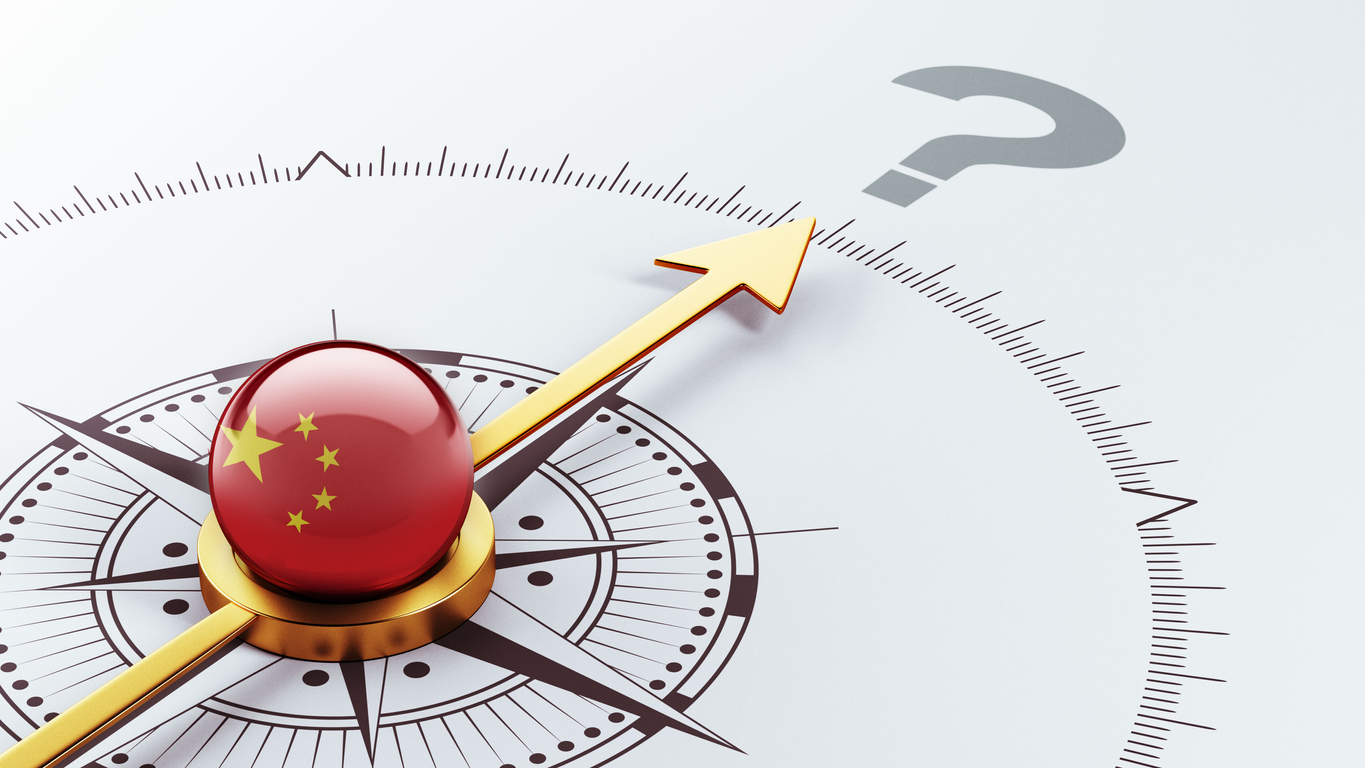
Is Xi Jinping really that bold... to start another war? ... First, China considers the United States to be its enemy. Second the United States is no longer deterring China. China feels it has a big green light to do whatever it wants. (Image source: iStock)

All the conditions for history's next great war are in place. Jim Holmes, the Wiley Professor at the Naval War College, actually talks about this period as being 1937.

1937 was the year in which if you were in Europe or America, you could sense the trouble. If you were in Asia in 1937, you would be even more worried, because that year saw Japan's second invasion of China that decade.

No matter where you lived, however, you could not be sure that the worst would happen, that great armies and navies around the world would clash. There was still hope that the situation could be managed. As we now know, the worst did happen. In fact, what happened was worse than what anyone thought at the time.

We are now, thanks to China, back to 1937.

We will begin our discussion in Afghanistan. Beijing has had long‑standing relations with the Afghan Taliban, going back before 9/11, and continuing through that event.


Opinion Harvard’s history with slavery reveals an ugly truth about America


Opinion  Harvard’s history with slavery reveals an ugly truth about America

By Eugene Robinson

Columnist

April 28, 2022 at 12:24 p.m. EDT

Listen to article

4 min

A headstone marks the grave of Cicely, a 15-year-old Negro "servant" of the Rev. William Brattle, a treasurer at Harvard College, at the Old Burying Ground just outside Harvard Yard in Cambridge, Mass., on April 27. (Charles Krupa/AP)

The French novelist Honoré de Balzac was right: “The secret of great fortunes with no obvious source is a crime, forgotten because it was well executed.” In the United States, Southern plantation slavery has dominated historical memory.

But Harvard University’s 134-page report on how slavery benefited the nation’s oldest, richest and most prestigious institution of higher learning bluntly illustrates a crime many Americans prefer to ignore: The whole nation, not just the South, grew rich and powerful from the unpaid labor of enslaved African Americans.

Between Harvard’s founding in 1636 and the outlawing of slavery in Massachusetts in 1783, “Harvard faculty, staff, and leaders enslaved more than 70 individuals,” the report says. But that is only the beginning.

More important is the fact that many major donors — whose gifts “helped the University build a national reputation, hire faculty, support students, grow its collections, expand its physical footprint, and develop its infrastructure” — made their money from the profits of slavery.

Let me quote one key passage from the report, released this week, at length:

“These financial ties include donors who accumulated their wealth through slave trading; from the labor of enslaved people on plantations in the Caribbean islands and the American South; from the sale of supplies to such plantations and trade in goods they produced; and from the textile manufacturing industry in the North, supplied with cotton grown by enslaved people held in bondage in the American South. During the first half of the 19th century, more than a third of the money donated or promised to Harvard by private individuals came from just five men who made their fortunes from slavery and slave-produced commodities.”

The crucial acknowledgment that Harvard makes is that this slavery-derived wealth compounded over the decades and centuries, much as money in an interest-bearing bank account grows in a steepening curve over time. The same thing happened on a far grander scale to the wealth that the nation as a whole realized from the coerced, uncompensated labor of enslaved Black men, women and children.

Guest Opinion: Here is a hard historical truth: Slavery powerfully shaped Harvard

The bounty that industrial-scale agricultural slavery produced in the South benefited the North as well. Some of the biggest slave traders were based in Rhode Island. The cotton grown in Alabama and Mississippi supplied the mills of Massachusetts. Financing slavery-based agriculture and trading in its products were so profitable for Wall Street that the powerful mayor of New York, Fernando Wood, lobbied — unsuccessfully — for the city to remain neutral during the Civil War and continue doing business with the South.

Universities have taken the lead, among U.S. institutions, in admitting the ways in which they benefited from slavery and are beginning to redress some of the grievous harm they caused. Universities Studying Slavery, a consortium of 94 schools founded by and based at the University of Virginia, meets twice yearly to further efforts at scholarship and atonement.

One of the most egregious episodes in the sordid history of financing higher education through slavery happened at Georgetown University, one of the premier Catholic universities in the nation. In 1838, with the university facing financial ruin, the Jesuits who ran the school sold 272 enslaved Black people to plantations in Louisiana, where living and working conditions for the enslaved were as harsh as anywhere in the country. The money from that sale kept Georgetown afloat. Like most U.S. colleges, Georgetown discriminated against African Americans in admissions and hiring well into the 20th century.

“Slavery’s legacies persist in racial disparities in education, health, employment, income, wealth and the criminal justice system,” Harvard President Lawrence S. Bacow and Harvard Radcliffe Institute Dean Tomiko Brown-Nagin wrote this week in The Post. “The question before us now is how best to reckon with these realities and atone for our past. Acknowledging the truth is not enough. We have a moral obligation to take action.”

The authors pledged that Harvard will spend $100 million to marshal “Harvard’s intellectual, reputational and financial resources ... to address the harms of the university’s ties to slavery,” with most of the money apparently earmarked for research and education.

The Georgetown revelations prompted even more concrete action: The Jesuit order has promised to raise a $100 million fund administered in partnership with the descendants of the 272 enslaved workers Georgetown sold. Some of that money will fund other organizations, but it will also support both education and elder care for the posterity of Georgetown’s former slaves.

Acknowledgment, research and scholarships are a start. And Bacow and Brown-Nagin may be right that “we can never fully remedy the incalculable damage caused by America’s ‘original sin.’ ” But they and their peers could try a lot harder. Most deserving Black students, after all, cannot identify an ancestor who was enslaved by a well-endowed major university.

The whole nation stole centuries of labor and wealth from African Americans. Any real recompense requires the nation as a whole to come to terms with this monstrous crime.

1684 Comments

Gift Article


War crimes in Ukraine verified by AP and Frontline

 The Associated Press and FRONTLINE are gathering, verifying and documenting evidence of potential war crimes in Ukraine, including direct attacks on civilians, and attacks on civilian infrastructure including hospitals, schools, residential areas and sites protected under international humanitarian law. We will be regularly updating War Crimes Watch Ukraine and publishing related stories.

Since Russia invaded Ukraine on Feb. 24, AP and FRONTLINE have verified 206 potential war crimes.


45

Attacks on medical facilities

44

Attacks on schools or universities

51

Attacks on residential buildings

17

Attacks where children were killed

6

Attacks in the city of Bucha

Nuri Said’in Menderes’e tavsiyesi ve Erdoğan’ın Suud ziyareti

 Nuri Said’in Menderes’e tavsiyesi ve Erdoğan’ın Suud ziyareti

Namık Tan
Cumhurbaşkanı Erdoğan’ın Suudi Arabistan ziyaretine gidip yakın zamana dek Kaşıkçı cinayetini azmettirmekle suçladığı Veliaht Prens Muhammed bin Salman ile samimi pozlar vermesi tepkilere yol açtı. (Foto: Cumhurbaşkanlığı)
Dönemin Başbakanı Adnan Menderes ve beraberindeki heyet, Irak ve Lübnan hükümetlerinin davetlisi olarak, 6 Ocak 1955 sabahı saat 10.30’da İstanbul Yeşilköy havaalanından kalkan özel bir uçakla, Irak’ın başkenti Bağdat’a gitti. Ziyaret, Irak’ın o devirde Türkiye’ye yakın duran Başbakanı Nuri Said’in 1954 yılı Sonbaharında Türkiye’ye yaptığı ziyaretin iadesi amacıyla düzenlenmişti.
Osmanlı askeri okulundan mezun ve gayet iyi Türkçe konuşan Nuri Said (Paşa) ile Başbakan Adnan Menderes arasında yakın bir şahsi ilişki mevcuttu. O dönemde imzalanan Bağdad Paktı iki ülkeyi birbirine iyice yaklaştırmıştı. Öyle ki, 1958 yılında Nuri Said Paşa ve Kral Faysal’ı darbecilerin elinden kurtarmak için Demokrat Parti iktidarı bir operasyon plânlamış, bu amaçla Ürdün’e bir ekip göndermişti. Ancak Kral Faysal ve Başbakan Said’in darbeci General Kasım güçlerince daha önce öldürülmesi üzerine, operasyon için Ürdün’ün başkenti Amman’a kadar giden özel ekip Türkiye’ye geri çağrılmıştı.
“Cami kula değil, kul camiye gider”
Türkiye o dönemde, 1952’de girdiği NATO’daki müttefikleri ABD ve İngiltere ile eşgüdüm içinde, kurulması tasarlanan bir Orta Doğu Savunma Paktına girmelerini sağlamak üzere bazı Arap ülkelerini ikna etmek için gayret göstermekteydi. Türkiye, bu amaçla Cumhuriyet döneminde özel ilgi göstermediği Arap ülkeleriyle ilişkilerini geliştirmeye başlamıştı. Ancak, başta Mısır olmak üzere birtakım Arap ülkeleri Türkiye’nin Arap dünyasına ulaşma çabalarını Osmanlı’yı yeniden diriltme girişimi olarak algılamakta ve bundan rahatsızlık duymaktaydı. Özellikle, Mısır rahatsızlığını, üst düzeyli açıklamalarla devamlı dile getirmekten ve Arap kamuoyuna yansıtmaktan da çekinmiyordu.
Nitekim, Başbakan Menderes Mısır’ın söz konusu rahatsızlığını Said’in dikkatine getirerek, onun görüşünü sorduğunda Said’in, mealen; “Arap dünyasında her zaman bir çekişme vardır. Kendi aramızda devamlı kavga ederiz. Siz bizim dünyamızda kime yakınlaşırsanız, bir diğerini küstürürsünüz. Siz, bir cami gibi olsanız ve bizlere bulaşmasanız çok daha iyi olur. Unutmayın, cami kula gitmez, kul camiye gider” dediği söylenir.
Erdoğan’ın Suudi Arabistan’a gidişi
Cumhurbaşkanı Tayyip Erdoğan’ın önceki gün gerçekleşen Suudi Arabistan ziyareti nedense, Nuri Said’in Menderes’e verdiği bu cevabı aklıma getirdi.
Son dönemde iktidar, yanlış politikaları sebebiyle Türkiye’yi içine düşürdüğü derin yalnızlıktan kurtarmak amacıyla çarpıcı adımlar atıyor. Bu uğurda, bütün ilkelerini çiğnemekten de kaçınmıyor. Zira, yine yanlış politikaları yüzünden ülkeyi içine düşürdüğü ekonomik felaketin yol açtığı çaresizlik iktidara başka bir seçenek bırakmıyor.
Nitekim, son olarak, Suudi Arabistan ile ilişkilerimizde yaşananlar, iktidarın dış politikadaki çaresizliğinin en bariz örneğini oluşturuyor. İktidar, bir anlamda duygusallığının ve öngörüsüzlüğünün kurbanı oldu. Büyük bir tutarsızlık sergileyerek, inandırıcılığını ve güvenirliğini zedeledi.
Her şeyden önce, Cemal Kaşıkçı cinayeti yüzünden liderliğine bir türlü gerçek anlamda meşruiyet kazandıramamış olan Suudi Arabistan Veliaht Prensi Muhammed Bin Salman (MbS) aklanmış gibi oldu. Hem de kendisini bizzat suçlayan, dünya kamuoyuna MbS’nin işlediği ağır suçun unsurlarını istihbarat yöntemlerini açıklama pahasına en ince ayrıntısına kadar sergileyen Cumhurbaşkanı Erdoğan tarafından.
Suudilerle yakınlaşma uğruna
Ancak MbS, başta ABD Başkanı Joe Biden olmak üzere demokratik ülkelerin liderleri nezdinde yitirdiği itibarını ihya etmekten henüz çok uzak. Nitekim, Suudi Arabistan’ın ABD ile Ukrayna krizi bağlamında yaşamakta olduğu gerginliğin temel sebeplerinden birisi, ABD’nin Kaşıkçı cinayeti ve insan hakları alanında Suudi Arabistan’a yönelttiği eleştirilerdi. Bu çerçevede, MbS’’ye baskı uygulamak bakımından ABD tarafına verilen en büyük koz Türkiye’nin sağladığı Kaşıkçı’nın infaz edildiğine dair delillerdi. Dolayısıyla, Türkiye, şimdi Kaşıkçı cinayeti dosyasını kapatmakla Suudi Arabistan nezdinde ihya ettiğini düşündüğü itibarını, ABD ve Batılı müttefikleri nezdinde misliyle yitirme riskiyle karşı karşıya.
Türkiye’nin Batılı müttefiklerinin, evrensel hukuk ilkelerinin pervasızca ihlâline somut bir örnek oluşturan Osman Kavala’nın mahkûmiyet kararı sebebiyle Türk adalet sistemine duydukları kuşku ve güvensizlik, Kaşıkçı hadisesi çerçevesinde daha da pekişmiş olsa gerektir. Zira, Türkiye’nin tek adamı, Suudi Arabistan ile yakınlaşma uğruna, Batılı müttefikleri nezdinde güven oluşturmak amacıyla kullandığı evrensel doğruları önceleyen ilkelerinden bir çırpıda fedakârlık edebilmiştir.
Sedat Peker ve Müslüman Kardeşler
Suudi Arabistan ile ilişkileri onarmanın, Türkiye açısından belki bazı sınırlı ekonomik getirileri olabilir. Ancak bu adımın orta vadede önemli siyasi maliyeti de olacaktır. Arap ülkeleri arasında bitmek bilmeyen bir rekabet hüküm sürdüğünü Orta Doğu’yu tanıyanlar iyi bilir.
Nitekim, Birleşik Arap Emirlikleri lideri Muhammed bin Zayed (MbZ) ile Suudi Arabistan veliaht prensi Muhammed bin Salman (MbS) arasında içten içe bir çekişme olduğu herkesin malumudur. Bu bağlamda, Cumhurbaşkanı Erdoğan Orta Doğu’nun iki ihtiraslı lideriyle de arasını düzeltmekle, aynı Nuri Said Paşa’nın Menderes’e yaptığı uyarıda vurguladığı gibi, ister istemez bu çekişmenin de bir parçası oldu. Nitekim, MbS ile gerçekleşen görkemli buluşmanın hemen akabinde Sedat Peker’in tekrar ortaya çıkması son derece manidardır.
Görünen o ki, yakın bir zaman içinde Mısır ile ilişkilerde de benzer gelişmeler yaşanacak ve Cumhurbaşkanı Erdoğan, ağır şekilde eleştirdiği Mısır Cumhurbaşkanı Abdulfettah Sisi ile de kucaklaşacak. Nitekim, Müslüman Kardeşler (MK) unsurlarının Türkiye dışına çıkarılması, örneğin MK çizgisindeki ana uydu TV kanallarından Mekamleen’ in Türkiye’deki faaliyetlerine Suudi Arabistan ziyaretiyle aynı günde son verilmesi buna delalet ediyor.
Öngörülebilirlik, tutarlılık, güvenilirlik
Böyle bir gelişme elbette son derece sevindirici olur. Ancak, dış ilişkilerinde bu kadar radikal değişimler sergileyen bir ülkenin muhatapları nezdinde öngörülebilirlik, tutarlılık ve güvenilirlik bakımından sorun yaşaması kaçınılmazdır.
Öte yandan, Ukrayna krizi çerçevesinde Batı bloku ile Rusya arasındaki gerginliğin iyice tırmanmış olduğu şu sırada hassas bir tarafsızlık ve denge politikası izlemeye gayret eden Türkiye’nin, dış ilişkilerinde bu tür tutarsızlıklar sergilemesinin, çatışan taraflar arasındaki arabuluculuk girişimlerinin samimiyeti bakımından uluslararası camiada soru işaretlerine yol açması da şaşırtıcı olmayacaktır.
İşin en üzücü yanı, iktidarın dış ilişkilerde görülmemiş bir pragmatizm sergilerken, yurt içinde son derece katı politikalar izlemekte ısrar etmesi. Bu bize, seçim sürecine girilmiş olduğu bir dönemde, iktidarın beka söylemini tekrar ön plana çıkaracağını, demokrasi ve özgürlükler üzerindeki baskıyı daha da arttıracağını göstermekte. Kısacası, önümüzdeki günlerin bugüne nazaran çok daha sıkıntılı geçeceği anlaşılıyor.
Namık Tan (Emekli Büyükelçi)
01 Mayıs 2022
Beğen
Yorum Yap
Paylaş

Secretary Blinken’s Call with Ukrainian Foreign Minister Kuleba 04/30/2022 07:44 PM EDT

 Secretary Blinken’s Call with Ukrainian Foreign Minister Kuleba

04/30/2022 07:44 PM EDT

Office of the Spokesperson

The following is attributable to Spokesperson Ned Price:

Secretary of State Antony J. Blinken spoke today with Ukrainian Foreign Minister Dmytro Kuleba to follow up on their April 24 meeting in Kyiv.  The Secretary emphasized the United States’ robust support for Ukraine’s sovereignty and territorial integrity in the face of Russia’s brutal aggression.   The Secretary provided an update on plans for U.S. diplomats to return to Ukraine, including initial visits to Lviv this week and plans to return to Kyiv as soon as possible.  The Secretary and Foreign Minister discussed the Administration’s April 28 request to Congress for $33 billion in security, economic, and humanitarian aid to empower Ukraine to defeat the Kremlin’s unconscionable war.