

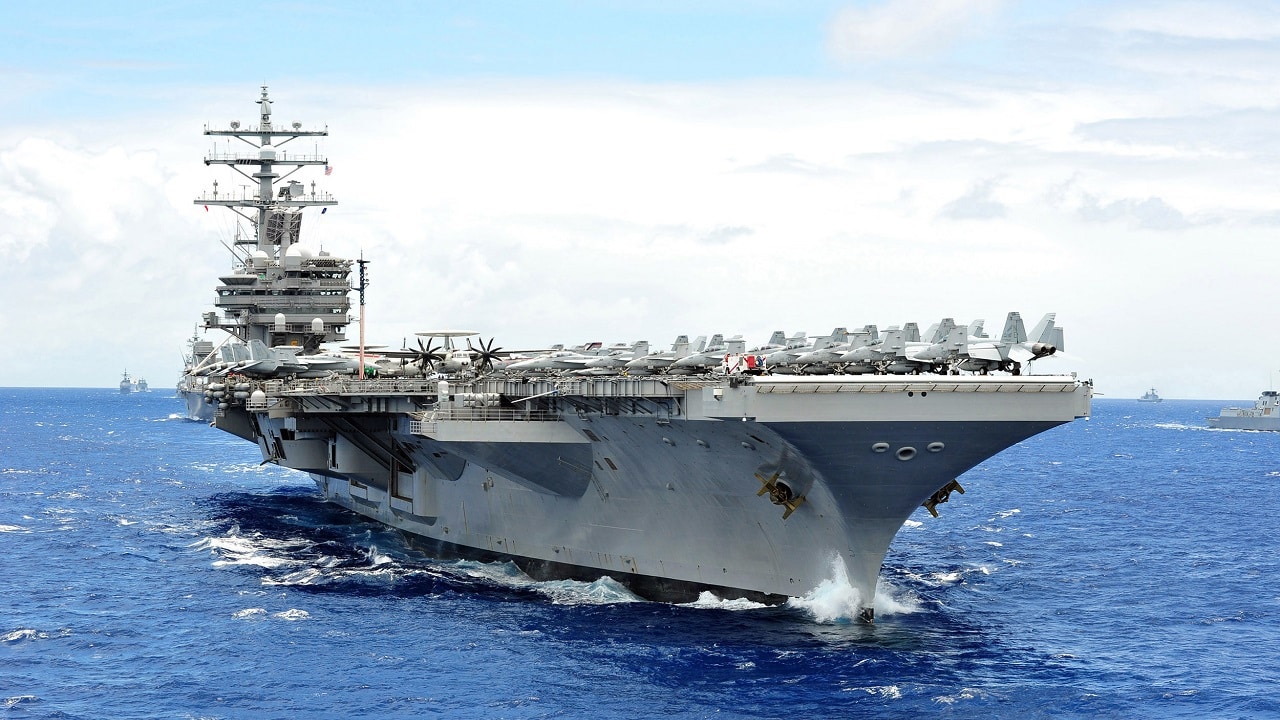
Key Points and Summary – In 2026, the United States will still field unmatched military power—but with almost no margin for error. A second Trump administration is far more likely to overreach than to hold back, and the real danger lies in five avoidable mistakes.
-Escalating too hard in the South China Sea could trap Washington on an escalation ladder with Beijing. Ignoring gray-zone pressure, mishandling alliance burden-sharing, and confusing volatility with strength would steadily erode deterrence.
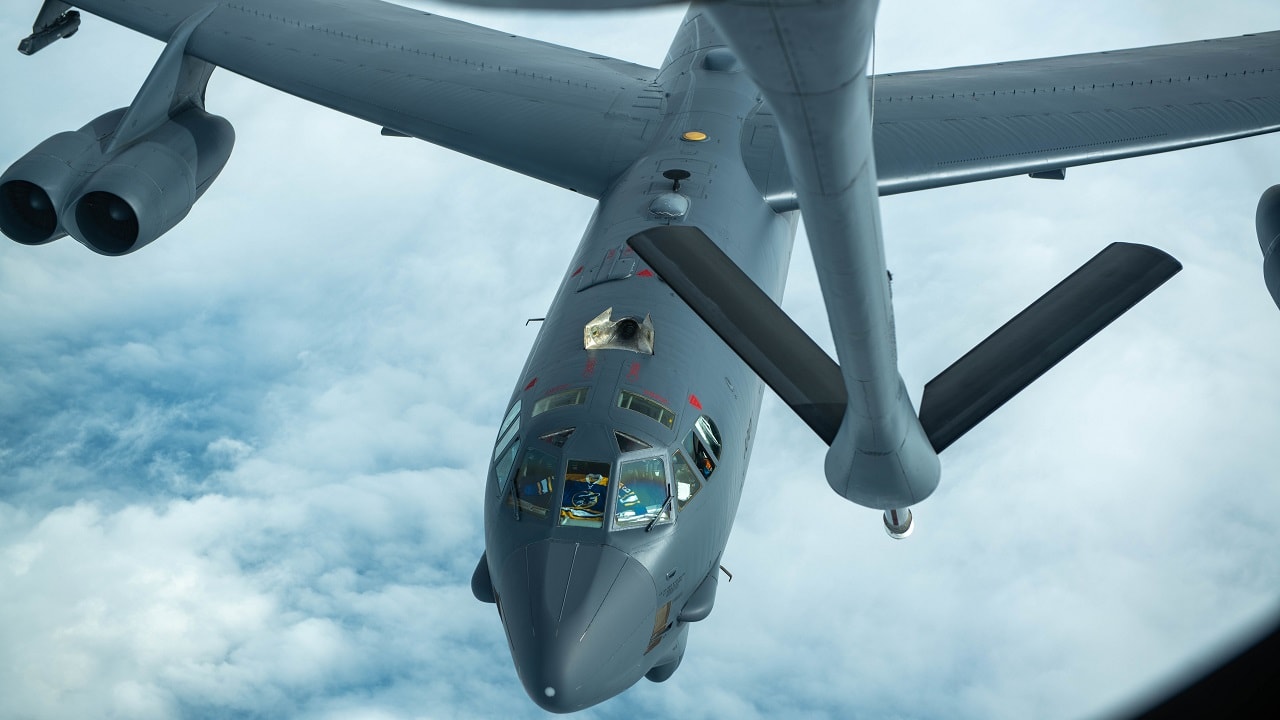
A U.S. Air Force 5th Bomb Wing B-52 Stratofortress approaches a U.S. Air Force KC-135 Stratotanker, assigned to the 909th Air Refueling Squadron, to perform aerial refueling over the Pacific Ocean, Oct. 27, 2022. Aerial refueling allows friendly aircraft to continue their mission without needing to return to the base for fuel. (U.S. Air Force photo by Airman Alexis Redin).
-Treating Venezuela as a military problem to “solve” would drain resources and legitimacy. Power, this piece argues, is spent by impatience—and preserved by disciplined restraint.
5 Military Mistakes Trump Can’t Afford to Make in 2026
In 2026, the United States will still command unmatched military force, global reach, and a defense budget its competitors can only envy. What it will not enjoy is margin for error. The strategic environment is already crowded with unfinished wars, persistent pressure short of open conflict, and rivals skilled at exploiting impatience and miscalculation. In that setting, a second Trump administration is unlikely to falter by acting too cautiously.
The greater danger is that it moves too quickly and commits a series of avoidable military mistakes—mistakes that burn through American power and narrow Washington’s room to maneuver at precisely the moment when, in this era of great-power competition, it can least afford to do so.
Mistake One: Treating Escalation as Leverage in the South China Sea
The most dangerous mistake President Trump could make in 2026 would be treating escalation as a form of leverage rather than what it is: a binding strategic commitment. Nowhere would that mistake carry greater risk than in the South China Sea.
Trump could find himself in the middle of a crisis sparked by an aggressive Chinese maritime move—a collision, a boarding, or the imposition of a temporary exclusion zone around a disputed feature. His response might be a visible surge meant to demonstrate resolve: expanded freedom-of-navigation operations, surface combatants pushed deeper into contested waters, and highly publicized bomber deployments across the region.
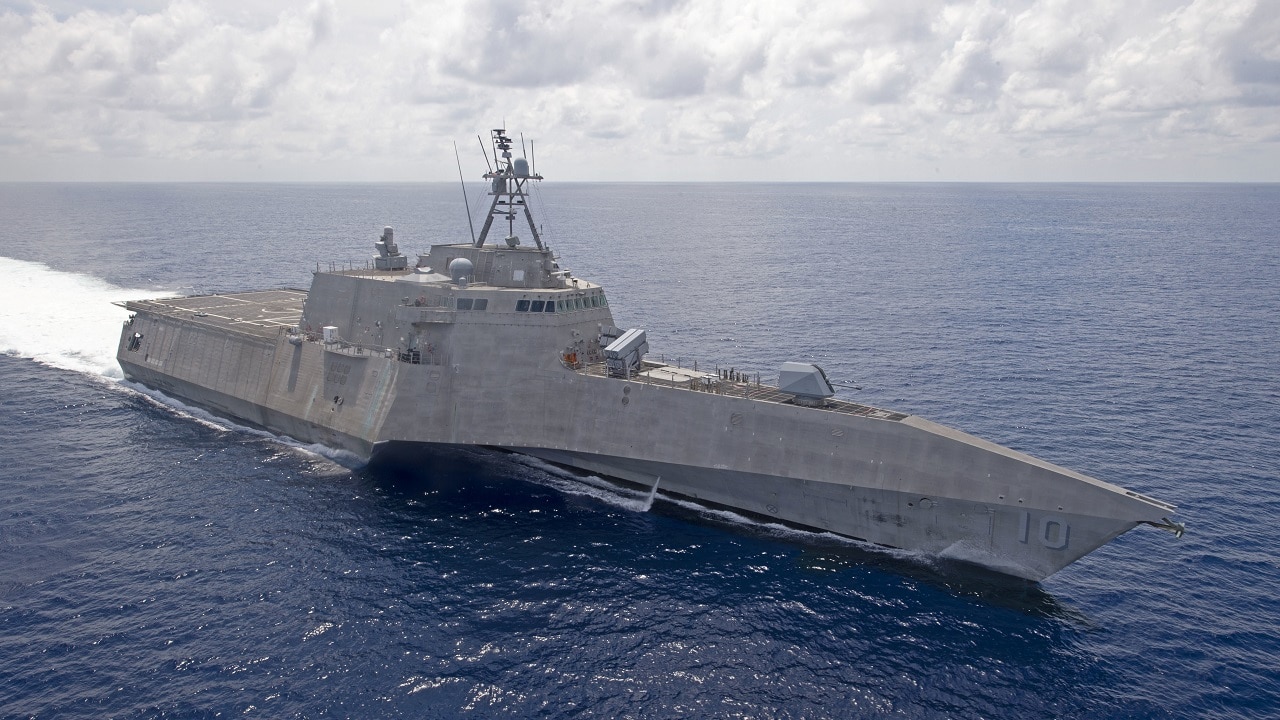
SOUTH CHINA SEA (March 20, 2020) The Independence-variant littoral combat ship USS Gabrielle Giffords (LCS 10) patrols the South China Sea, March 20, 2020. Gabrielle Giffords, part of Destroyer Squadron (DESRON) 7, is on a rotational deployment, operating in the U.S. 7th Fleet area of operations to enhance interoperability with partners and serve as a ready-response force.(U.S. Navy photo by Mass Communication Specialist 2nd Class Brenton Poyser/Released)
The intent would be deterrence through strength. The effect would be entrapment. Once forces are committed publicly and at scale, prestige attaches. Beijing would respond incrementally—shadowing vessels, tightening enforcement zones, daring Washington to climb another rung.
What begins as signaling would become a ladder of escalation with narrowing off-ramps. In a theater where neither side is inclined to blink, escalation would not create leverage. It would lead to a standoff that could easily slide into kinetic conflict.
Mistake Two: Ignoring Gray-Zone Conflict as the Main Arena of Competition
A second mistake Trump could make in 2026 would be focusing on dramatic military gestures while neglecting the quieter forms of competition that shape outcomes over time. The defining contests of the year would not arrive with declarations of war. They would unfold through interference, disruption, and coercion designed to remain below the threshold that triggers decisive response.
Trump could confront a pattern of persistent anomalies across the Arctic and North Atlantic: GPS interference along key sea lanes, unexplained satellite disruptions, intermittent damage near undersea cable junctions.
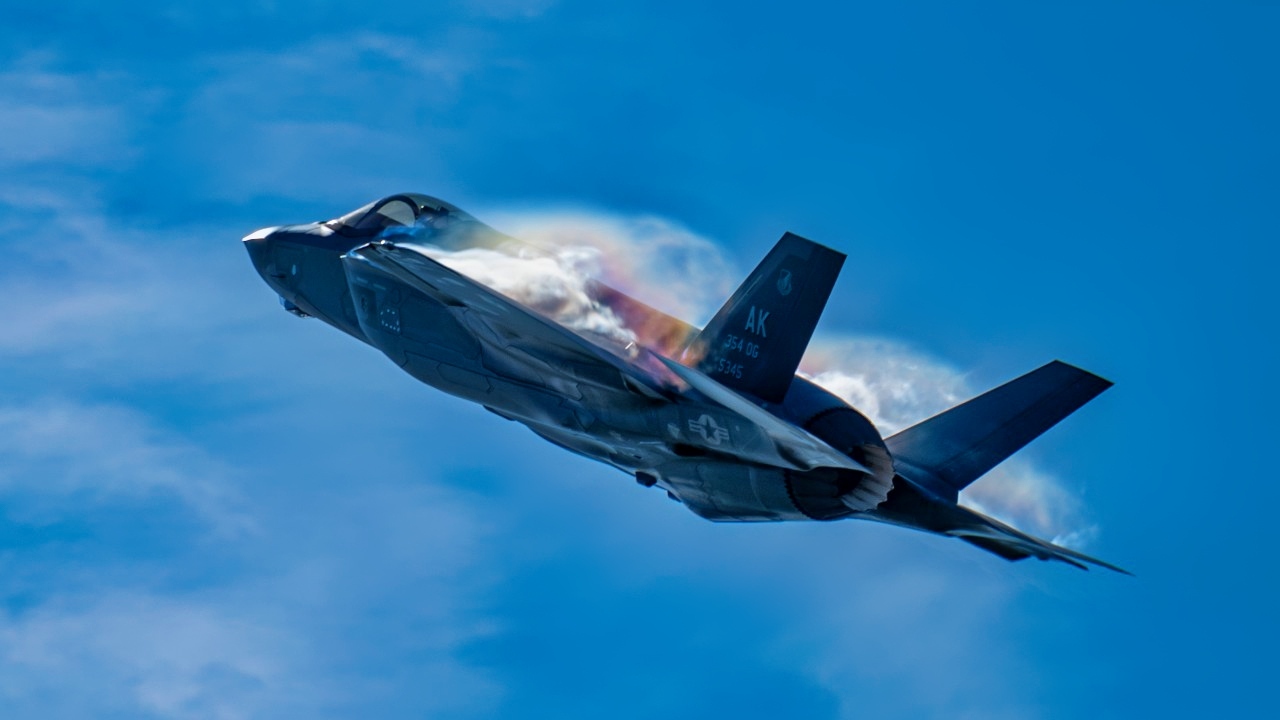
U.S. Air Force Maj. Kristin “BEO” Wolfe, F-35A Lightning II Demonstration Team pilot and commander, flies an aerial performance for the 2021 Arctic Lightning Air Show, July 30, 2021, Eielson Air Force Base, Alaska. The F-35 Demonstration Team utilized F-35s from the 354th Fighter Wing in order to showcase the combat capability of the Pacific Air Force’s newest F-35 units. (U.S. Air Force photo by Capt. Kip Sumner)
If his administration treated each incident as a discrete technical problem to be investigated, condemned, and compartmentalized—rather than as the hybrid threats they are—it would miss the campaign-level intent. Insurance premiums would rise. Commercial routes would shift. Allies would invest in national workarounds rather than collective resilience. Deterrence would erode not through defeat, but through normalization.
By the time Washington recognized the pattern, the operating environment would already have changed – and not to America’s benefit.
Mistake Three: Pressuring Allies Without Sequencing the Transition
Alliance management would present a third trap. The case for greater allied responsibility—especially in Europe—is sound. The mistake Trump could make would be forcing the outcome faster than reality allows.
In 2026, Trump might decide to draw down U.S. rotational forces in Eastern Europe and withdraw key American enablers from the region, framing the move as a long-overdue correction to European free-riding. The strategic objective—rebalancing burden-sharing—would be defensible.
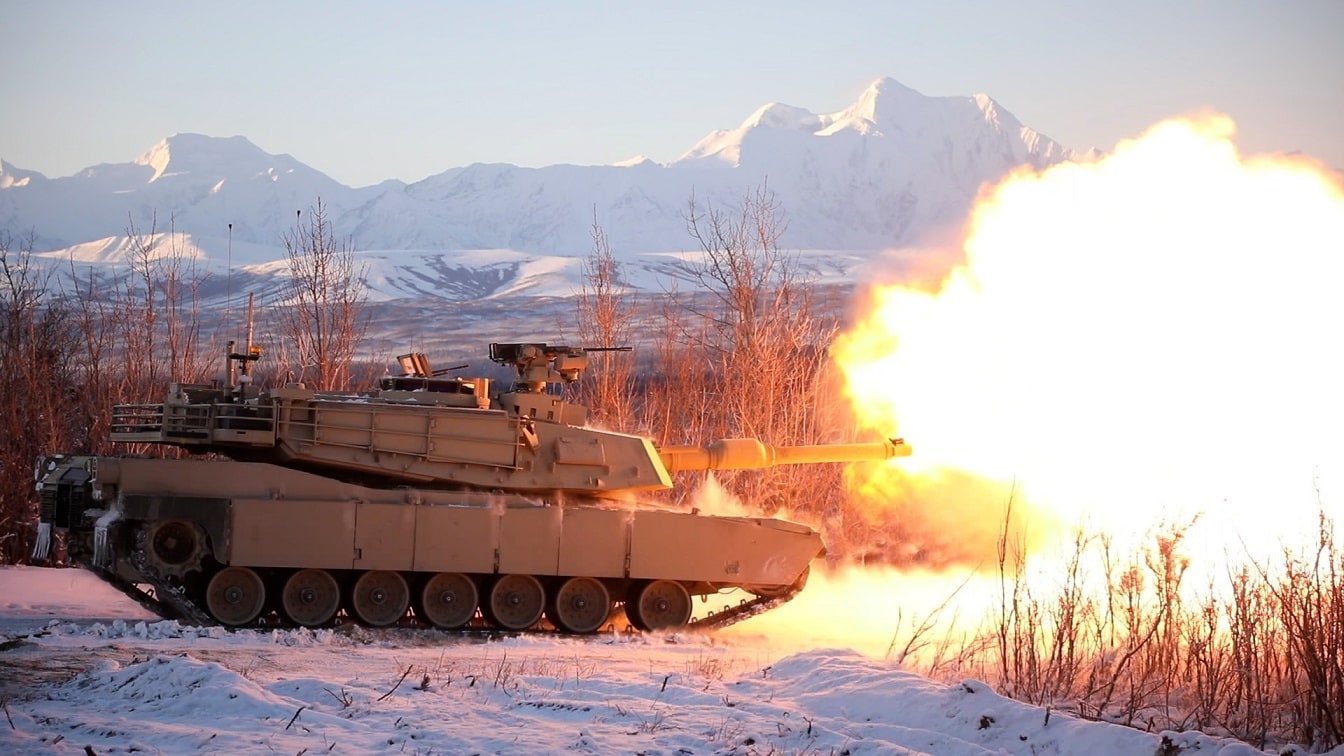
Since testing at U.S. Army Cold Regions Test Center, the Department of Defense’s lone extreme cold natural environment testing facility, began in January 2020, the M1A2 System Enhancement Package version 3 main battle tank was driven more than 2,000 miles in rugged conditions across three seasons of sub-Arctic weather, fired hundreds of rounds for accuracy in extreme cold, and underwent testing of its auxiliary power unit.
Though the platform was extensively tested at U.S. Army Yuma Test Center prior to being put through its paces in Alaska, the sub-zero temperatures brought forth glitches that would have been unimaginable in the desert.
The error would lie in the sequencing. European states would not be able to generate integrated air defenses, logistics, and sustained readiness on demand. In the transition gap, deterrence would thin. Russia would not need to invade to exploit the moment; a “shadow war” involving calibrated airspace violations, hybrid pressure, and selective intimidation would suffice to test resolve.
Allies would hedge rather than invest. A move intended to accelerate responsibility would instead produce strategic drift at precisely the moment deterrence depends on clarity.
Mistake Four: Confusing Unpredictability with Effective Signaling
Running through all of these errors is a fourth mistake Trump could make in 2026: confusing volatility with strength. In domestic politics, surprise can disrupt opponents and generate momentum.
In military affairs, it often has the opposite effect. Deterrence rests on disciplined signaling—messages that are stable enough to be read, weighed, and acted upon over time. Allies require clarity to plan and commit. Adversaries require clarity to calculate risk.
When posture and rhetoric begin to swing too freely, signaling degrades, credibility blurs, and the space for misinterpretation widens.
Trump could allow U.S. signaling in the Western Pacific to swing erratically during a crisis. One week might bring public warnings and demonstrations of resolve; the next, conciliatory rhetoric aimed at de-escalation—both reinforced by visible but easily reversible force movements.
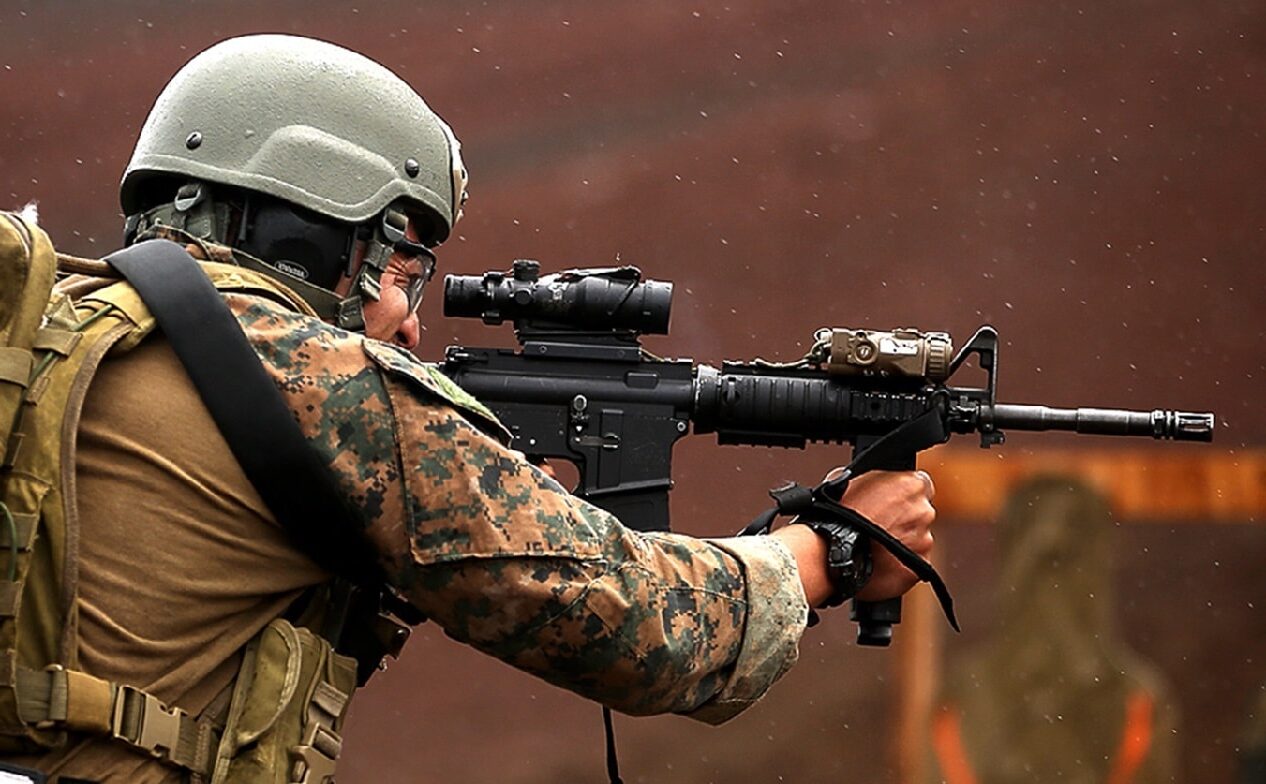
ROC/Taiwan Soldier. Image Credit: Creative Commons.
The intent would be flexibility. The effect would be confusion. Beijing would probe to see which signals matter. Allies would struggle to plan around a posture that keeps shifting. Markets would react to uncertainty rather than resolve. What is meant to unsettle an adversary would instead invite testing, increasing the risk of escalation on terms Washington does not control. This, too, could potentially lead to war.
Mistake Five: Treating Venezuela as a Strategic Problem to Be Solved Militarily
A fifth and distinct mistake Trump could make in 2026 would be treating Venezuela as a military problem to be solved rather than a strategic challenge to be managed. Frustration with the Maduro regime, its ties to external adversaries, and its role in regional instability could tempt Trump to attempt a more dramatic solution than the problem requires.
Trump might opt for regime change through force, framing a limited invasion as a way to restore order, secure energy infrastructure, or end a criminalized state on America’s doorstep. The initial military phase could succeed quickly.
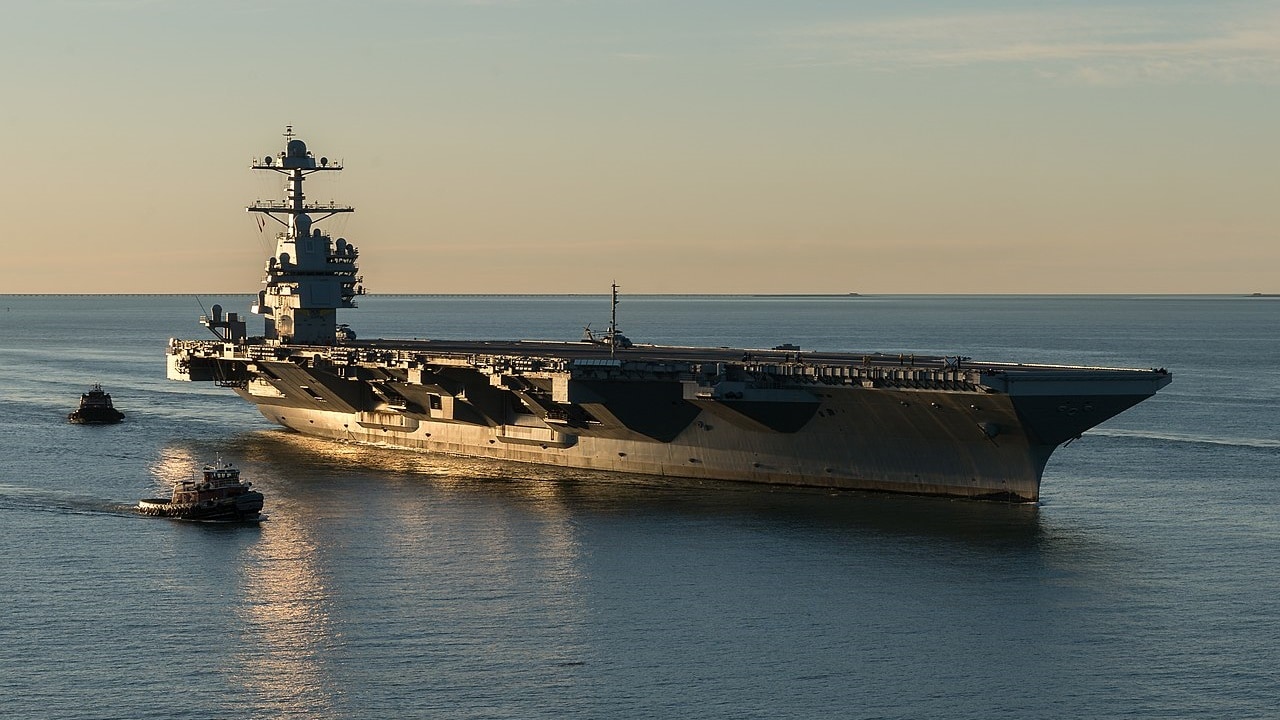
Ford-Class Aircraft Carrier. Image Credit: Creative Commons.
The strategic costs would not. An invasion would entangle the United States in occupation, legitimacy disputes, and long-term stabilization in a region poorly suited to external control. It would strain relations across Latin America, divert attention and resources from higher-priority theaters, and hand rivals a powerful narrative about American coercion in the hemisphere. Power applied this way would not solve the problem it targets. It would multiply it.
Power Is Spent, Not Displayed
These five mistakes share a common root: impatience cloaked as resolve. Military power is not preserved through theatrics. It is preserved through sequencing, restraint, alliance cohesion, and disciplined signaling. None of these are glamorous. All of them are decisive.
The United States does not need to prove in 2026 that it can act forcefully. That is already understood. The real test is whether President Trump avoids the most damaging errors—escalating where restraint would preserve leverage, ignoring gray-zone pressure until it becomes normalized, destabilizing alliances during transition, substituting noise for clarity, and mistaking regime change for strategy.
Power burned this way fades quickly. Power used deliberately shapes the balance long after the headlines pass.
About the Author: Dr. Andrew Latham
Andrew Latham is a non-resident fellow at Defense Priorities and a professor of international relations and political theory at Macalester College in Saint Paul, MN. You can follow him on X: @aakatham.


No comments:
Post a Comment