Thursday, April 30, 2026

FPIF - By John Feffer - April 29, 2026 - Why Russia’s Backwardness Benefits Putin


The source of Russia’s global power derives not from sophisticated technology, an advanced service sector, or a cadre of entrepreneurs. Russia’s power is almost entirely backward-looking. Its geopolitical position rests on a base of prehistoric vegetation.

That vegetation, of course, has ended up as Russia’s reserves of oil, natural gas, and coal. About one-quarter of the country’s government revenues comes from fossil fuel sales. Those revenues ensure that Russia’s superpower status can’t be boiled down simply to its possession of nuclear weapons. Russia is not “Upper Volta with nukes” as the Soviet Union was famously dismissed. Petrodollars give it considerable geopolitical leverage as well as the means to wage war, most recently in Ukraine.

Consider how crudely Russia uses its crude. For some time, the dependency of certain European countries on Russian fuel imports—notably Hungary and Slovakia—has made it challenging for the European Union to forge consensus on anything related to Russia or Ukraine. Leadership change in Hungary has reduced, though not eliminated, this problem. The election of Peter Magyar has simultaneously gotten money flowing again from Brussels to Kyiv and oil flowing again, via the Druzhba pipeline, from Russia to Hungary.

It’s not just Eastern Europe. Although Europe as a whole has radically reduced imports over the last five years—from 45 percent of its gas imports to 19 percent and 27 percent of its oil to 3 percent—France, the Netherlands, and Belgium are still importing considerable amounts. Last year, the prime minister of Belgium blocked the use of Russian funds frozen in Brussels to help Ukraine. When money is blocked, follow the oil (also, don’t discount outright intimidation).

Russia, in other words, has used its energy exports to drive wedges between countries that might otherwise be allies.

These energy exports, subjected to sanctions and price caps, have also strengthened Russian ties with China and India, with those two countries combining to purchase 80 percent of Russian oil. Especially now, with the war in Iran and the U.S. blockade of the Strait of Hormuz, Russian energy beckons as a lifeline for many countries. Ukrainian attacks on Russian energy infrastructure have cut into the profits, but sales are still up.

Russia’s chief asset is also its chief weakness. Even before it launched its full-scale invasion of Ukraine in 2022, Russia depended a little too much on its own natural resources. Instead of investing in greater value-added production, Russia took the easier route of selling what it could extract from the ground, in the form of minerals and fossil fuels and timber. Like other countries caught in a “resource curse,” Russia lazily failed to diversity.

Windfall profits have also fueled corruption, from the Black Sea palaces of Gazprom officials to the money-laundering associated with Russia’s ghost fleet of aging tankers. Like Norway, a country that has singularly avoided the resource curse, Russia has a national wealth fund. But much of it has gone to pay for the war in Ukraine, as well as serving to “launder money, evade sanctions, and secure resources for both influence campaigns and military needs.” Russia ranks 157 out of 182 countries in the Transparency International index of corruption perceptions, lower than Iran and Congo.

It’s tempting to conclude that Russian politics is to blame for this lack of diversification. Vladimir Putin has cultivated a set of friendly oligarchs who have subordinated their economic decisions to the needs of the state. Diversification could disrupt this cozy relationship. The Russian economy has not been performing spectacularly—booming when commodity prices are up, plummeting when those prices drop—but it is good enough to sustain public support for the current government.

Let’s push this argument further.

Between the middle of the eighteenth and the middle of the nineteenth centuries, a succession of tsars continued to maintain serfdom in the face of rising protests and thwarted revolution. The Russian royals considered this unpaid labor to be integral to the Russian economy of the time. But as Marshall Berman argued in his pioneering study of modernism, All That Is Solid Melts into Air, keeping the serfs in bondage also ensured that Russian landlords and other wealthy individuals would not invest in the kind of modernization taking place in Western Europe and the United States. The tsars understood that such modernization would create pressures for political reform that might dislodge the tsars themselves. It wouldn’t be until 1861 that Tsar Alexander II freed the millions and millions of serfs in Russia.

Likewise, Vladimir Putin may well understand that modernizing the Russian economy away from reliance on natural resources would create other potential centers of power. Imagine a Russian Silicon Valley, for instance, wealthy enough to support rival political candidates and finance a wave of disruptive entrepreneurs. Despite his claims to the contrary, Putin is content with his country’s underdevelopment. Better that entrepreneurs like Pavel Durov of Telegram fame has relocated to Dubai—that’s one less independent-minded oligarch who could cause trouble at home.

Russia produces enough wealth to maintain a rickety social welfare system and sustain the war in Ukraine. Anything more might upend the pyramid of power. Underdevelopment keeps Putin in control.

Russian Economy Today

In the first two months of 2026, the Russian economy shrank compared to its performance last year. These figures prompted Putin to scold his underlings, demanding that they give him “detailed reports today on the current economic situation and on why the trajectory of macroeconomic indicators is currently falling short of expectations.” The lack of growth is a symptom of structural problems as are high interest rates and endemic inflation. Throw in a serious budget deficit and the Russian economy is on the precipice—or, at least, in the fast lane going in that direction.

Okay, these figures come from before the start of the Iran War, which has functioned like a Hail Mary pass from the Trump administration to Putin in the end zone. The increase in energy and commodity prices will inevitably restore growth to the Russian economy—but also forestall any serious changes that could address the underlying structural weaknesses.

The dividends from the Iran War might not even be enough to treat the symptoms. According to Thomas Nilsson, head of Sweden’s Military Intelligence and Security Service, oil prices would have to rise above $100 a barrel for more than a year to erase Russia’s budget deficit. Nilsson argues, moreover, that Russia is inflating its economic statistics to mask the damage that corruption, mismanagement, and wrong-headed policies have inflicted. There might be an element of wishful thinking here, since the Swedes are urging a more forceful policy of aiding Ukraine in the hopes that a tanking Russian economy will force a peace deal favorable to Kyiv.

Still, the war in Ukraine is certainly not making matters any easier for the Kremlin. In addition to the sheer cost of the campaign and the repairs to the infrastructure Ukraine has destroyed, the need for soldiers and the out-migration of the disgruntled have put serious pressure on the labor market. Even if the state pushed for diversification, it would be hard-pressed to find a workforce to train for the new jobs.

Last week, worried about the lack of growth, the central bank cut interest rates to 14.5 percent. Even in the face of high inflation, the money managers are desperate to pump money into the economy. The bankers acknowledge that the Iran War won’t save Russia. “A significant risk from external conditions is the situation in the Middle East,” the governor of the central, Elvira Nabiullina, said. “If the conflict drags on, the negative effects on the Russian economy will grow.” Veteran politician Gennady Zyuganov, the reliably nationalist head of the Communist Party, even warned the Duma of the risks of a 1917-type revolution if the government doesn’t improve the economy, and soon.

In other words, Putin’s reliance on the troika of fossil fuels, corruption, and autocracy to prevent a political challenge to his authority may end up producing the very revolt from below he fears the most.

Color Revolutions

To avoid the scenarios that produced political change in Russia’s neighbors—Ukraine, Georgia, Moldova—Putin has ruthlessly suppressed all potential political challenges. He has jailed opponents, had them assassinated, or forced them into exile. He closed down independent media. He passed a foreign agent law that effectively criminalized NGOs.

Opposition to the government is now expressed elliptically, much like the Soviet Union of old. Influencers complain about the shuttering of the Telegram messaging app and eroding living standards, but they also opine, to avoid charges of anti-Putinism, that maybe the supreme leader has been fed misinformation (a ludicrous notion that nevertheless has deep roots in Russian history).

Although his popularity has dipped to 65 percent, Putin is probably not worried about critical Instagram content. Economic discontent is another matter. Rising prices triggered the first Arab Spring protests in Tunisia. Anger over the cost of living and corruption led to the downfall of the Bulgarian government in December.

In the end, Russians can’t eat oil or gas or coal. The country has to provide jobs other than cannon fodder and coal miner. Underdevelopment suppresses the political demands associated with modernization—until it doesn’t. Perhaps Putin thinks that he can push the envelope long enough to capture the rest of the Donbas and deliver a “win” to the Russian people to offset all of their sacrifices. Ukraine—assisted by the rest of the anti-autocratic world—is betting everything that he can’t. War, even in this era of rapid-fire AI targeting, remains a waiting game.

CARNEGIE - The Iran War Shows the Limits of U.S. Power - By Amr Hamzawy Published on Apr 28, 2026


The Iran War Shows the Limits of U.S. Power

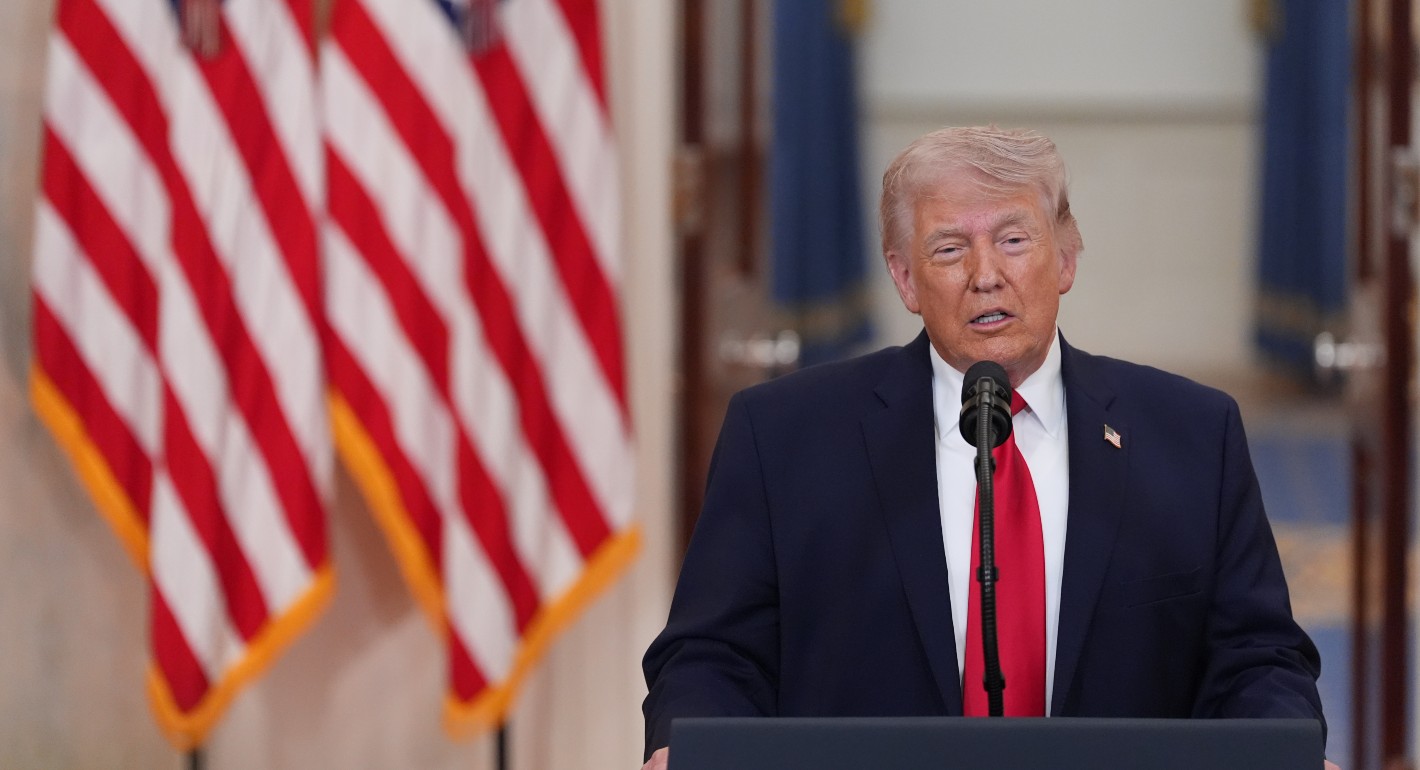
U.S. President Donald Trump speaks from the Cross Hall of the 

White House on April 1, 2026, in Washington, DC. Trump used the 

prime-time address to update the nation on the war in Iran. (Photo by Alex Brandon-Pool/Getty Images)


CARNEGIE

The Iran War Shows the Limits of 

U.S. Power

If Washington cannot adapt to the ongoing transformations of a multipolar world, its superiority will become a liability.

Published on Apr 28, 2026

The Iran war is confronting the Middle East and the world with dramatic transformations. War realities are reshaping global supply chains and testing long-held alliances. They are also showing the limits of security and stability in the Gulf and the wider Middle East without a regional architecture, as well as the limits of military superiority in impacting desired political change. The Iran war is becoming one of the pivotal moments in international history that are measured not merely by the outcomes of military battles, but by the profound impact they leave upon the political and symbolic standing of major powers—as well as upon their self-perceptions and their capacity to shape the world according to their will. Today—as the war in Iran continues—the United States faces such a crux: Can it adapt to a world where it cannot rely on holding unipolar hegemony and where the limits of military superiority become ever clearer?

The challenge facing the United States today is twofold: first, adapting to the ongoing global transformations without the need for a shock, and second, recovering from the Iran war’s blow to its legitimacy as a global leader. Its capacity to address both challenges is bound to be tested systematically in the next few years.

If it hopes to adapt, the United States can draw lessons from past moments where world powers were tested. Prominent among these moments is the Suez Crisis of 1956, which stands out as a decisive turning point in the trajectory of the British Empire. It exposed the limits of British imperial power and paved the way for its eventual decline, while simultaneously elevating the stature of Egyptian president Gamal Abdel Nasser as a symbol of national liberation across the Arab and developing worlds. In 1956, Nasser exercised a sovereign prerogative by nationalizing the Suez Canal—a decision that Britain and France perceived as a direct threat to their strategic and economic interests and, indeed, to their very status as imperial powers. The response was swift, taking the form of a military alliance comprising London, Paris, and Tel Aviv in an operation aimed at toppling the Egyptian regime, reasserting control over the canal, and reimposing the traditional norms of influence. Yet, despite the clear military superiority of the aggressors, the campaign ended in abject political failure under intense international pressure—particularly from the United States and the Soviet Union, both of whom viewed the escalation as a threat to the delicate equilibrium of the Cold War and to their individual, broader interests. This failure was not merely a tactical setback or a mishap in the conduct of a specific battle. Rather, it dealt a devastating blow to Britain’s image as a power capable of imposing its will, effectively signaling the beginning of the end of its role as a global leader.

The Suez moment is significant because it exposes the structural disconnect between military capability and political power. While Britain and France succeeded in achieving their military objectives—temporarily occupying Egyptian territory and inflicting material damage upon Egypt—they proved unable to translate these gains into sustainable political advantages, as the Egyptian regime was neither toppled nor surrendered its control over the canal. On the contrary, the operation resulted in their international isolation, the erosion of their moral and political legitimacy, and an accelerated dismantling of colonial empires. Conversely, Nasser skillfully leveraged the crisis to bolster both his domestic and international legitimacy, transforming a military assault into a political and symbolic asset catapulting Egypt to a beacon of anti-colonialism and himself to a national independence hero. This demonstrates that the outcomes of wars are not measured solely by events on the battlefield, but by how those events are politically interpreted at the negotiating table and diplomatically.

This lesson, which may appear self-evident today, was not always a factor in the calculations of major powers. Indeed, it has been repeatedly overlooked in subsequent conflicts; the war between the United States and Vietnam serves as a prime example. The United States entered the war possessing overwhelming superiority in military technology and destructive capability, yet it found itself unable to achieve a decisive victory. Vietnam, while materially weaker, possessed a superior capacity to harness other factors such as national legitimacy, local knowledge, and a leadership willing to endure prolonged human costs. Not only was the nature of the conflict unconventional, but the opposing side was not seeking a direct military triumph so much as banking on wearing down the will of subsequent American governments.

As human casualties mounted, domestic opposition within American society grew, and international support eroded, continuing the war became politically costly to such an extent that military victory was no longer feasible—or even meaningful. Thus, the war concluded with an American withdrawal that demonstrated a superpower’s inability to impose its will—even upon a far smaller nation—if the necessary political conditions were absent. Ultimately, the United States suffered defeat not at the hands of a military adversary but its own public’s opinion.

In Vietnam, American military power collided with three fundamental realities: first, that controlling territory does not equate to controlling society; second, that technological superiority cannot compensate for a lack of political and cultural understanding of the local context; and third, that time itself can be transformed into a weapon in the hands of the weaker party.

This scenario recurred—albeit in a different guise—during the 2003 Iraq War, when the United States succeeded in swiftly toppling Saddam Hussein’s regime in a military operation that, at first glance, appeared to be a textbook example of rapid, decisive action. However, this supposed military victory quickly morphed into the genesis of a complex and protracted crisis. The absence of postwar planning, the dissolution of state institutions, and the dismantling of the security apparatus collectively created a political and security vacuum. This vacuum was exploited by various forces—both internal and external—leading to an escalation of sectarian violence and terrorism, and resulting in a prolonged American military presence that failed to yield genuine stability.

In Iraq, it became abundantly clear that toppling a political regime does not automatically translate into building an alternative system, and that military force alone cannot reshape societies or impose models of governance from the outside. Furthermore, the experience underscored the critical importance of international legitimacy; the absence of a broad international consensus regarding the war undermined the United States’ ability to mobilize political and financial support, while simultaneously opening the door to widespread criticism of its policies. Thus, military superiority once again proved to be a tool of limited efficacy in the absence of a comprehensive political vision.

Turning to the present moment in 2026, we find that the conflict between the United States and Iran reintroduces these same dilemmas within an even more complex context. Despite the vast disparity in military capabilities, Iran is not confronting the United States through the framework of a direct, conventional war; rather, it relies on a hybrid mix of asymmetric tools—including regional networks populated by militarized militias and missile capabilities. This mode of conflict renders a decisive victory elusive, as it fragments the battlefields, prolongs the duration of hostilities, and drives up the political and economic costs of the war.

The regional and international environment surrounding the conflict further compounds its complexity. The absence of a broad international consensus regarding the war’s objectives and means, the divergence of stances among major powers, and the hesitation of certain traditional allies collectively constrain the United States’ ability to translate its military superiority into tangible political outcomes. Indeed, some of these very factors may operate in the opposite direction by undermining the legitimacy of military operations or diminishing their effectiveness.

In this context, the nature of the current international order plays a decisive role. The world is no longer bipolar, as it was during the Cold War era, nor is it unipolar, as it appeared to be in the 1990s; rather, it is trending toward a complex multipolarity in which the roles of major powers intersect with those of regional powers and nonstate actors. This multipolarity makes it difficult for any single power—no matter how formidable—to unilaterally impose its will, thereby increasing the importance of building consensus and forging alliances.

Furthermore, the very nature of warfare has changed. Wars are no longer fought solely by regular armies on clearly defined fronts; instead, they encompass multiple dimensions—economic, informational, cyber, and political. Weaker adversaries have become more adept at exploiting these dimensions to offset their military inferiority, making it difficult for major powers to achieve decisive military and political superiority. Within this framework, war transforms into a process of managing a protracted, asymmetrical, and complex conflict, rather than a battle resolved by a clear-cut outcome.

Nor can one overlook the role of domestic public opinion in democratic nations, which has emerged as a decisive factor in determining the trajectory of wars. The experiences in Vietnam—and subsequently Iraq—demonstrated that public support is not a static constant; rather, it is influenced by the evolving dynamics of the conflict as well as its human and economic costs. In today’s world—where information spreads rapidly and societies possess an ever-growing capacity for self-expression and organization—sustaining such support has become increasingly challenging, thereby imposing additional constraints on decisionmakers.

Thus, it becomes evident that military power—despite its undeniable importance—is no longer sufficient to achieve decisive outcomes in international conflicts, even when the confrontation involves a major power facing a significantly smaller state. Achieving a decisive outcome now demands a complex blend of tools: effective diplomacy, international legitimacy, stable alliances, the capacity for postconflict management, and a deep understanding of local contexts. Without these elements, military victories devolve into fleeting achievements—temporary gains that quickly erode under the weight of political complexities.

Revisiting the comparison between 1956 and 2026, the parallels lie not merely in the limits of military force, but in the broader challenge of translating power into sustainable political influence. Through the Suez Canal crisis, Britain discovered—albeit belatedly—that the era of empires imposing their will through force had passed, and that international legitimacy had become an indispensable component. Today, the United States faces a similar challenge—albeit within a different context—namely, the imperative to adapt to a world in which unilateral hegemony is no longer attainable through traditional means.

Nevertheless, the differences remain significant. The United States still possesses substantial military, economic, and technological superiority, alongside an extensive network of alliances and adaptable institutions. Moreover, the challenges it confronts are not the result of a single, decisive defeat, but rather the cumulative effects of a series of crises and experiences that have exposed the limits of unipolar hegemony and military power.

This suggests that what we are witnessing today may not constitute a “Suez moment” of crisis, but rather presents, in a similar fashion to the British in the Suez crisis in 1956, a window into the reality of the contemporary power landscape. This window elucidates a gradual trajectory that is reshaping the U.S. position in the international order and perceptions of America’s foreign policy—perhaps forever changed by the Iran war’s blow to U.S. legitimacy as a global leader.

Along this trajectory, another factor of equal importance comes to the fore: how the United States perceives its own global role. It is within the dynamic interplay between the logic of hegemony and the logic of partnership, and between reliance on hard power versus investment in soft power, that Washington’s capacity to adapt to the ongoing transformations will ultimately be determined. Experiences ranging from Vietnam to Iraq and Iran suggest that an overreliance on military instruments—unaccompanied by adequate political and diplomatic engagement—leads to limited or counterproductive outcomes.

Moreover, managing conflicts in today’s world requires acknowledging the multiplicity of actors and the interplay of interests. In the Middle East, for instance, no external power can achieve sustainable stability without taking the national security, economic, and political interests of regional powers into account and without working to develop multilateral conflict resolution and peacemaking tools. This brings us back to the central idea that military victory—even if achieved—cannot substitute for the necessity of political settlements.

Ultimately, a comparison of Suez, Vietnam, Iraq, and Iran reveals a recurring pattern: a great power possessing formidable military capabilities, yet facing increasing limitations in its ability to translate these instruments into sustainable political outcomes. This pattern does not signify the end of power, but rather its redefinition. For in today’s world, power is no longer measured solely by the capacity to win wars, but by the capacity to prevent them, to manage them should they occur, and to build a more stable regional and international order in their wake.

The Suez crisis of 1956 taught us that disregarding international legitimacy and political balance undermines influence. The lessons of Vietnam, Iraq, and Iran add that underestimating the complexities of societies and local conflicts—along with excessively relying on military force—can transform superiority into a liability. Military power expressed without legitimacy ultimately leads to other forms of power losing all value, creating a political failure.

In light of these lessons, the United States today appears called upon, more than ever before, to rethink its instruments and strategies; not because it has lost its power, but because the very nature of the world in which it exercises that power has fundamentally changed.

In this sense, the moment of 2026 may not be a moment of decline, but it is certainly a moment of testing. It is a test of the United States’ capacity to learn from history—to transition from a logic of military resolution to one of conflict management, and from the imposition of its will to the building of consensus. While Britain required the shock of Suez to recognize the limits of its power, the question facing the United States today is whether it can internalize that same lesson without the need for a similar shock. If the United States fails to learn, the accumulation of experience will lead—slowly but surely—to a reshaping of its role as a global leader.

An early version of this piece appeared in Al-Ahram Weekly, and parts are reused here with permission.

About the Author

Amr Hamzawy

Director, Middle East Program

Amr Hamzawy is a senior fellow and the director of the Carnegie Middle East Program. His research and writings focus on Egypt’s and other middle powers’ involvement in regional security in the Middle East, particularly through collective diplomacy and multilateral conflict resolution

    Recent Work
