Saturday, October 26, 2019

Can Turkey - Russia Agreement Help Syrians End Their Civil War?

Can The Turkey-Russia Agreement Help Syrians End Their Civil War?

Recep Tayyip Erdogan and Vladimir Putin (Wikimedia Commons)
By Helena Cobban
The United Nations’ Special Envoy for Syria, Geir Pedersen, recently expressed confidence that the Syrian Constitutional Committee (SCC), a key gathering of representatives of the country’s government, opposition, and civil society, can convene as planned in Geneva, October 30. If this does occur—even with, perhaps a slippage of a few days—it could mark the beginning of the long-overdue wind-down of the civil war that has plagued Syria for nearly nine years now.
The key development that allows such a (cautiously) optimistic assessment is the decision Turkey has come to gradually over the past three years that it needs to abandon its previously staunchly held goal of overthrowing President Bashar al-Assad’s government in Damascus by force. On October 22, the presidents of Turkey and Russia (which has been a close ally of the Syrian government for nearly 50 years) reached a crucial ten-point agreement, the first two points of which read thus:
1. The two sides reiterate their commitment to the preservation of the political unity and territorial integrity of Syria and the protection of national security of Turkey.
2. They emphasize their determination to combat terrorism in all forms and manifestations and to disrupt separatist agendas in the Syrian territory.
This agreement was reportedly reached after six-hours of one-on-one talks between the Turkish and Russian presidents, held in the presence of a single interpreter in the Russian resort city of Sochi. If implemented, it will mark the end of an 8.5-year period in which Turkey has pumped munitions, foreign fighters and money into Syria, in support of the prolonged and often very violent armed insurgency against Damascus.
Throughout many of those years, the Turkish campaign to overthrow President Bashar al-Assad’s government in Syria by force received generous and active support from the United States and some of its NATO allies, along with the autocratic governments of Saudi Arabia, the UAE, and Qatar. Turkey’s lengthy border with Syria was always the key channel through which this foreign support was pumped into Syria; and with Turkish President Recep Tayyip Erdogan now vowing to Russia that he will support the political unity and territorial integrity of Syria, then the whole project to effect regime change in Syria by force should now be declared dead.
Which should—hopefully—clear the way for the success of the upcoming meeting in Geneva of the SCC. The SCC’s mission is to negotiate changes to the Syrian constitution that will allow the differences among the country’s many political tendencies to be resolved though political means and in the context of rebuilding a constitutional order for the whole country, rather than through force.
There are, of course, many paradoxes and anomalies in the current, fast-moving diplomacy around Syria. The most glaring is that it was just 13 days after Erdogan sent a large military contingent in to occupy a swathe of land in northeastern Syria that he “reiterated” his commitment to the country’s territorial integrity. Another is that the ethnic-Syrian fighters who accompanied the Turkish Army into Syria were roundly denounced by many Western observers as “ragtag and ill-organized”—but until just a few months ago, those same fighters were lauded in the West as “moderate rebels”, “beacons of democracy,” and so on.
Behind the drama and the many tragedies of the fighting in northeastern Syria that followed Pres. Donald J. Trump’s announcement that the U.S. tripwire forces in the region would be withdrawn lie two notably smart campaigns of diplomacy—as waged by both Russia and Turkey.
Regarding Russia, as I wrote here back in July, Russia, “is the only state among the seven that have significant sway inside Syria that enjoys robust diplomatic ties to all the other six: Syria, Turkey, Iraq, the United States, Israel, and Iran.” Moreover, behind the scenes, Russia’s expert corps of smart, well-informed diplomats have been working hard at two different levels, to try to de-escalate and resolve the conflict inside Syria. At the international level, in January 2017, they convened the first meeting, in Astana, Kazakhstan, of a group of three countries with key interests inside Syria: the other two were Turkey and Iran (a key supporter of the Damascus government.) This Astana Group has held eight further meetings since then and helped pave the way for United Nations to be able to hold the upcoming inaugural meeting of the SCC.
At the intra-Syrian level, meanwhile, Russian diplomats have worked hard throughout the civil war to broker the numerous local ceasefires between government and opposition forces that in many cases allowed the government to retake cities or other areas of land through negotiations, rather than all-out war. They have also shuttled between Damascus and various portions of the Syrian opposition to test out various formulas for political reform. As the Washington Post’s David Ignatius noted in this piece today, back in 2017 one of the proposals they tested to address the concerns of Syria’s many Kurdish citizens was to take the name “Arab” out of the country’s formal name of “Syrian Arab Republic.”
Regarding the Turks, one of their great diplomatic coups was to be able to win away from the United States sponsorship and control of the chaotic grouping of 42 allegedly moderate Syrian rebel groups many of whom were formerly known as the Free Syrian Army (FSA). Many of those rebel fighters, now known as the “Syrian National Army,” have still been sporting the distinctive green-and-black striped badges once worn by the FSA, as they have been fighting alongside the Turkish Army units in northeastern Syria. And many of them—as can be seen in the big chart on p.11 of this study by the Turkish think-tank SETA—had previously received arms or other support from the U.S. military.
Taken as a whole, however, Turkey’s lengthy, high-level involvement in the regime-change project in Syria has been very damaging for the country’s own interests.
Back in Spring/Summer 2011, when Erdogan and Turkey’s then Foreign Minister (later, Prime Minister) Ahmet Davutoglu decided to throw the country’s support wholly into the project to overthrow the Syrian government by force, they almost certainly expected it would be as speedy and decisive as the overthrow of Muammar Gadhafi’s government in Libya, which they (like Washington and many other NATO allies) had also supported. But the anti-Assad project never gained the momentum—or, crucially, the level of support from the Syrian people—that it would have needed, to succeed. Instead, it became badly bogged down into the worst kind of a heavily armed civil war that can be imagined.
Moreover, Syria (unlike more distant Libya) has a very long common border with Turkey. That might have been helpful for Turkey’s military intelligence units that worked to send huge quantities of foreign fighters and advanced weapons in to aid the Syrian insurgents. But Syria’s proximity to Turkey was also harmful to Turkey. As Syria became mired in civil war, long-distance routes vital for Turkey’s manufacturers to be able to export to the big markets in the Gulf were cut. And some 3.5-plus million Syrians fleeing the war rushed across the border into Turkey. Turkey briefly used those refugees as pawns in its conflict with the EU, condoning the traffickers who funneled them up through the Balkans or across the Aegean into Europe until the EU agreed to pay Turkey handsomely to block that flow. But then, with the refugees stuck in a Turkey anyway suffering an economic downturn, much popular Turkish sentiment turned against them—and blamed the government for their presence.
Meantime, both the Syrian-Kurdish groups and the extremist takfiri groups that were among the Syrian opposition started to cause blowback within Turkey. The blowback from the Kurdish groups was particularly damaging—especially given that the U.S.-supported YPG was anyway always an offshoot of the outlawed Turkish-Kurdish group, the PKK.
Thus, in recent years, much Turkish popular sentiment has turned against the project to topple the Assad government by force; and that, along with the continuing offers from Moscow of intriguing blandishments, is almost certainly what has prompted Erdogan to sue for peace with Assad.
As in any lengthy civil war, there has been horrendous destruction and suffering on both (or all) sides of the political divide in Syria. Overcoming the hard feelings and deep grievances of the past will not be easy. And there remain numerous big military/security problems to solve—as well as the political/diplomatic problems which should start to be addressed as soon as the SCC meets in Geneva.
Prime among the remaining challenges is what to do with the large-scale takfiri (pro-Al-Qaeda) forces who remain deeply embedded in Idlib province, as well as what to do with those tens of thousands of other (pro-ISIS) takfiris who have been held in detention centers in northeastern Syria. Dealing with the Idlib takfiris should be primarily Turkey’s responsibility, since Turkey has supported them there for many years now. But all the many countries around the world from which the foreigners affiliated with Al-Qaeda and ISIS originally came to Syria will have to play their part.
But at least, let us all hope for a successful start—and completion—of the upcoming political reform talks in Geneva.
Print Friendly, PDF & Email
avatar

HELENA COBBAN

Veteran Middle East analyst and author Helena Cobban is a Senior Fellow at the Center for International Policy and the CEO of both Just World Books and the nonprofit Just World Educational. JWE’s website Justworldeducational.org makes freely available to the public a variety of resources on war, peace, justice, and the Middle East. The views she expresses here are her own.

Friday, October 25, 2019

The Middle East's Lost Decades

The Middle East’s Lost Decades
Development, Dissent, and the Future of the Arab World
Maha Yahya
MAHA YAHYA is Director of the Carnegie Middle East Center.


Since the 9/11 attacks, the Arab world’s relative economic, social, and political underdevelopment has been a topic of near-constant international concern. In a landmark 2002 report, the UN Development Program (UNDP) concluded that Arab countries lagged behind much of the world in development indicators such as political freedom, scientific progress, and the rights of women. Under U.S. President George W. Bush, this analysis helped drive the “freedom agenda,” which aimed to democratize the Middle East—by force if necessary—in order to eradicate the underdevelopment and authoritarianism that some officials in Washington believed were the root causes of terrorism. Bush’s successor, Barack Obama, criticized one of the cornerstones of the freedom agenda—the U.S. invasion of Iraq in 2003—but he shared Bush’s diagnosis. In his first major foreign policy speech as president, delivered [1] in Cairo in 2009, Obama called on Middle Eastern governments to make progress in democracy, religious freedom, gender equality, and “economic development and opportunity.” Implicit in his remarks was a widely shared view among Western observers of the Middle East: that the Arab world’s dysfunction was a product of social and political arrangements that thwarted human potential, furthered inequality, and favored a small elite to the detriment of the broader population.

During the first decade of this century, progress was slow. Under the surface, however, discontent was rising. This discontent culminated in the protests of 2010–11, commonly known as the Arab Spring [2]. In countries as diverse as Egypt, Libya, Syria, and Tunisia, ordinary citizens took to the streets to challenge their authoritarian rulers and demand dignity, equality, and social justice. For a moment, it seemed as if change had finally arrived in the Middle East.

Yet in the aftermath of the Arab Spring, development stalled. Although some countries, such as Tunisia, were able to consolidate democratic systems, authoritarian leaders in much of the region successfully counterattacked. In Egypt, the military led a coup [3] in 2013 to depose the democratically elected government; in Libya and Syria, dictators responded to peaceful protests with violence, precipitating brutal civil wars that turned into international proxy conflicts. Even in countries that did not descend into violence, autocrats clamped down on dissent and poured resources into suppressing their own people and undermining democratic transitions across the Middle East. Meanwhile, progress on the human development indicators prioritized by both international experts and U.S. policymakers either stagnated or went into reverse.

Today, nearly ten years later, the situation in the Middle East looks even worse than it did before the Arab Spring. Political repression is more onerous. Economic growth is sluggish and unequal. Corruption remains rampant. Gender equality is more aspiration than reality.
Yet something fundamental has changed. Arab governments have traditionally rested on what political scientists call an “authoritarian bargain,” in which the state provides jobs, security, and services in exchange for political loyalty. This bargain is based on the assumption that ordinary people will remain passive. But today, that assumption no longer holds. Citizens no longer fear their governments. Now more than ever before, ordinary people across the Middle East are politically engaged and willing to voice dissent. And as the massive protest movements in Algeria and Sudan [4] earlier this year showed, they remain willing to take to the streets to demand a better future, even in the face of repression. The Arab Spring may not have ushered in the immediate reforms that many had hoped for, but in the long run, it may have accomplished something more important: awakening the political energies of the Arab world and setting in motion the long process of Arab revitalization.

BEFORE THE SPRING

During the second half of the twentieth century, Washington’s attitude toward Arab development was essentially pragmatic and cynical. Although it favored the Middle East’s economic growth, the United States believed that the region was best governed by friendly autocrats, such as Egypt’s Anwar al-Sadat and Iran’s Mohammad Reza Pahlavi, who could provide political stability and protect Western interests.

This attitude changed after 9/11. Drawing on the work of international experts, such as those at the UNDP, U.S. policymakers concluded that the extremism emanating from the Middle East was, in part, a byproduct of the Arab world’s dismal development record: its repressive governments, entrenched inequalities, and stagnant, state-managed economies, which denied opportunities to ordinary Arab citizens. Democratizing the Middle East and unlocking the human potential of its citizens were touted by the Bush administration as a justification for its wars in the region. After invading Afghanistan in 2001 and Iraq in 2003, the United States cast its subsequent occupation of both countries as an extended exercise in democracy building. Bush announced the broader freedom agenda for the Middle East, creating programs, such as the Middle East Free Trade Area Initiative, to promote free markets and the growth of civil society.

The freedom agenda did not work out as planned. After the United States deposed the Iraqi dictator Saddam Hussein in 2003, Iraq sank into a decade of civil conflict that combined an anti-U.S. insurgency with a regional proxy war. This led to a decline in many of the key development indicators that the UNDP had identified as the source of Iraq’s problems. But the Middle East’s difficulties went deeper than this high-profile debacle. Throughout the first decade of this century, the authoritarian bargain that had long been the foundation of the region’s governments began to come undone. During this period, the region came to be defined by three key trends: growth without well-being, lives without dignity, and liberalization without freedom.

On the economic front, many Arab countries, encouraged by experts at institutions such as the International Monetary Fund, began to privatize state-owned firms, liberalize their trade policies, and end price controls in an effort to spur growth and reduce budgetary pressures on the state. In Egypt, for instance, the share of people employed by the government dropped from 32 percent in 1998 to 26 percent in 2006.

Yet although these policies produced some growth, they did not result in the sort of “trickle down” prosperity promised by their architects. Instead, well-connected insiders captured nearly all the benefits of these reforms. In Tunisia, 220 firms affiliated with the family of President Zine el-Abidine Ben Ali captured close to 21 percent of all net private-sector profits between 2000 and 2010—a fact that was revealed only when the firms were confiscated after the revolution that began in late 2010. State-connected firms also managed to evade $1.2 billion in import taxes between 2002 and 2009. A similar pattern held in Egypt and Lebanon, where insider firms were able to secure lucrative contracts for housing and construction projects and receive government licenses to invest in key sectors, such as oil and gas and banking.

As part of this push to liberalize their economies, Arab states also ended their employment guarantees and scaled back on the provision of public services, education, and health care. This led to declining living standards among large swaths of the region’s middle class, which was composed mainly of employees in the public and security sectors and which had historically been the biggest defender of the status quo. By 2010, 40.3 million people in the Arab region were either at risk of or suffering from multidimensional poverty, as defined by the UNDP and the Oxford Poverty and Human Development Initiative (OPHI). Between 2000 and 2009, overall living standards declined across the region, as did levels of health and education. In Egypt, the percentage of people living below the national poverty line rose from 16.7 percent in 2000 to 22.0 percent in 2008; in Yemen, the poverty rate rose from 34.8 percent in 2005 to 42.8 percent in 2009.
The withdrawal of public-sector employment guarantees and the reduction in the range and quality of public services resulted in a number of interconnected development challenges. Although literacy and school enrollment increased overall, education did not translate into opportunity. Between 1998 and 2008, the number of unemployed youth in the Middle East increased by 25 percent, with that increase concentrated among the better educated. By 2010, one in four of the region’s young people were unemployed, the highest rate in the world. The paucity of employment opportunities forced millions of men and women to turn to the informal economy, where workers typically earn low pay, have unstable incomes, and lack basic social protections, such as health insurance and pensions. In 2009, at least 40 percent of nonagricultural workers in Algeria, Egypt, Morocco, and Tunisia were employed in the informal economy; in Syria, the number was 20 percent. Yet for most of the Middle East, a more liberal economy did not result in a more liberal political sphere. Modest protest movements in Egypt and Syria were quickly suffocated [5] by the government. Civic initiatives were stifled, whereas the work of Islamic charities and other faith-based organizations was encouraged, especially in social and emergency assistance, poverty alleviation, and microfinance programs. For the leaders of these states, economic liberalization was not intended to promote free markets and free minds; instead, it was seen as a means to maintain the cohesion and loyalty of the regime’s elite. As state resources came under strain, privatization became a strategy for funneling assets to those already in power.
This unraveling served as the backdrop to the Arab Spring. In December 2010, a Tunisian street vendor set himself on fire to protest his mistreatment at the hands of a local official. His act set off a tsunami of protests [6]. In the ensuing months, people across the region—in Algeria, Bahrain, Egypt, Iraq, Jordan, Kuwait, Lebanon, Libya, Mauritania, Morocco, Oman, Sudan, Syria, Tunisia, Yemen, and the Palestinian territories—took to the streets to demand justice, equality, and an end to their countries’ repressive political regimes.

DÉJÀ VU ALL OVER AGAIN

The economic and political conditions that produced the Arab Spring have only worsened in recent years. With the exception of Tunisia, where the opposition succeeded in establishing a democratic political system that remains in place today, many countries of the Middle East have seen an autocratic restoration since 2011. In Egypt, in 2013, the military overthrew the country’s first democratically elected government, replacing it with a dictatorship under the control of President Abdel Fattah el-Sisi. Since taking power, Sisi has ruled the country with an iron fist [7]: between 2013 and 2018, the security forces disappeared over 1,500 Egyptians. And in July 2019, the country’s parliament approved a draconian law curtailing the influence of nongovernmental organizations by limiting their scope of action and freedom of movement.

The starkest example of autocratic restoration is in Syria. In 2011, the country saw massive protests against the dictatorial regime of President Bashar al-Assad. Yet rather than step down or meet popular demands for reform, Assad ordered his troops to fire on peaceful demonstrators, launching a bloody civil war that has killed more than half a million people and displaced millions more. Today, the once tottering Assad regime is mopping up the last remnants of opposition and reestablishing control. Thousands of political prisoners have been disappeared or languish in regime dungeons, and the government is preventing around 5.6 million refugees and 6.2 million internally displaced people from returning home.
Meanwhile, the Saudi and Emirati regimes, faced with domestic criticism of their stalled war in Yemen, have jailed bloggers, human rights activists, journalists, and lawyers for criticizing the government online. In perhaps the most notorious example of this increased intolerance of dissent, Saudi agents murdered the journalist Jamal Khashoggi [8] at the Saudi consulate in Istanbul in October 2018. In Lebanon, often touted as a beacon of freedom in the region, the government has begun to crack down on freedom of speech. In 2018, 38 people were prosecuted for their online posts, four times the number in 2017. Most of these posts criticized politicians, the president, or the country’s security agencies. And according to Freedom House, freedom of the press declined in 18 of the Middle East’s 21 countries between 2012 and 2017. This regional regression is captured by the Economist Intelligence Unit’s Democracy Index, which shows that together the Middle East and North Africa continue to make up the lowest performing region in the world on all measures of democracy: civil liberties, the electoral process and pluralism, the functioning of the government, political culture, and political participation.

As political freedoms have eroded, so, too, have the development gains of the past few decades. A 2018 global report on multidimensional poverty by the UNDP and OPHI found that nearly one-fifth of the population of the Arab states, or 65 million people, lived in extreme poverty, defined by the World Bank as people earning less than $1.9 per day. Another one-third was either “poor” or “vulnerable.” In fact, the Arab region was the only region in the world to experience an increase in extreme poverty between 2013 and 2015, with the rate rising from around four percent to 6.7 percent. In Egypt, recent data indicate that the poverty rate has risen from 28 percent in 2015 to 33 percent today, largely as a result of austerity measures and the devaluation of the Egyptian pound in 2016. In 2016, more than 15 million children in the Middle East and North Africa were not in school, a regression to 2007 levels. When one takes gender and wealth inequality into account, conditions in the region look even more dismal. Along with the Palestinian territories, 11 Middle Eastern countries—Algeria, Egypt, Iran, Iraq, Jordan, Lebanon, Morocco, Saudi Arabia, Syria, Tunisia, and Yemen—fall into the worst-performing category on the UN’s Gender Development Index, which measures the difference between a country’s male and female score on the UN’s Human Development Index (HDI), a composite measure of development statistics.

The worst declines have been in countries such as Syria and Yemen, which have both experienced violent conflicts over the past decade. Syria dropped 27 places between 2012 and 2017 on the HDI; Yemen dropped 20 places. Nearly 85 percent of Syrians and 80 percent of Yemenis now live in poverty. And in 2018, 10.5 million Syrians and 20 million Yemenis were food insecure. 

This stagnation or regression on key development indicators is coupled with sluggish economic growth. According to the Economist Intelligence Unit, economic growth in the Middle East and North Africa has been steadily declining following a drop in oil prices between 2014 and 2016. The region averaged 3.6 percent growth in 2015–16, but that number fell to 1.6 percent in 2017 and 1.3 percent in 2018. This stagnant growth has put a strain on government finances. Lebanon’s public debt is now equal to more than 153 percent of GDP, the third-highest level in the world. Even resource-rich countries, such as Saudi Arabia, are feeling the pinch. To refill state coffers and finance its growing budget deficit, the kingdom is planning to issue more than $31 billion in debt this year. And earlier this year, Moody’s downgraded Oman’s credit rating to “junk” status, citing low oil prices and the country’s ballooning deficits.

Faced with mounting economic challenges, governments in the region are stressing the need for entrepreneurship in the private sector. The United Arab Emirates has turned itself into a destination for startups and now boasts major success stories such as the ride-sharing app Careem, the e-commerce platform Souq, and the real estate platform Property Finder. Egypt, too, is a growing regional hub. According to a report by MAGNiTT, an online community for Middle Eastern start-ups, in 2018, Egypt was the fastest growing in the region “by number of deals.” And governments from Bahrain to Lebanon and Saudi Arabia have unveiled initiatives, such as Riyadh’s Vision 2030, to promote private-sector investment.

This modest expansion of the private sector, however, has not been enough to provide good jobs for citizens. Unemployment in the Arab states is still high—in 2018, it averaged 7.3 percent; excluding the oil-rich states of Bahrain, Kuwait, Oman, Qatar, Saudi Arabia, and the United Arab Emirates, it sat at 10.8 percent. Foreign direct investment remains low; in 2018, according to the International Monetary Fund, foreign direct investment in Arab countries amounted to only 2.4 percent of the global total.

It should come as no surprise, then, that Arab citizens’ confidence in their governments is collapsing. According to Arab Barometer surveys of nationally representative samples from six Arab countries (Algeria, Egypt, Jordan, Lebanon, Morocco, and Tunisia) and the Palestinian territories, public trust in government has decreased over the past decade. In 2016, more than 60 percent of the respondents said that they trusted government “to a limited extent” or “absolutely [did] not trust it,” compared with only 47 percent in 2011. On the other hand, 60 percent of the respondents in 2016 said that they trusted the military to “a great extent,” up from 49 percent in 2011. In a December 2018 Zogby poll, a majority of the respondents in Egypt, Iraq, and Tunisia said that they were worse off than they were five years earlier. And earlier this year, a BBC survey of ten Arab countries found that more than half of the respondents between the ages of 18 and 29 wanted to emigrate. Thousands of others have been conscripted into the region’s wars.

POWER TO THE PEOPLE

In many respects, then, the Middle East looks worse on many development indicators than it did a decade ago. Yet there is one key difference. Although the protests of the Arab Spring did not lead to the reforms that many had hoped for, they did succeed in fostering a culture of political activism and dissent among Arabs, especially the young, that persists today. Governments can no longer assume that their citizens will remain passive.
In 2018 alone, there were protest movements in Iraq, Jordan, Lebanon, Morocco, Sudan, and Tunisia. Earlier this year, protesters in Algeria and Sudan forced their countries’ respective leaders, Abdelaziz Bouteflika and Omar al-Bashir, to step down. In both countries, the protesters took care to remain peaceful—even in the face of violent government responses—while at the same time demanding genuine democratic reforms rather than a new form of military rule. And in both countries, the protesters seemed to have learned from the failed democratic transitions in Egypt and Syria.

In Sudan, protesters continued to call for a peaceful political transition and an accountable government, even after a massacre in June that left at least 100 dead and scores injured. On August 17, the Sudanese military and the opposition reached an agreement on a three-year transitional period, during which civilians and the military will alternate turns in power.
In Algeria, despite the resignation of the ailing Bouteflika in April, citizens have continued to demand the ouster of key figures of the old guard. Some members of Bouteflika’s inner circle have resigned or been arrested, and elections have been announced for December. Many protesters are skeptical of the elections, which they see as an effort by the military to bring a pliant president to power. Yet they have already shown that they are not willing to be cowed into accepting a modified version of the old regime.

This new culture of protest is also on display in Syria, which has seen a wave of civilian protests in former rebel strongholds now under the control of the Assad regime. Earlier this year, for example, hundreds of Syrians in the southern city of Daraa—the birthplace of the anti-Assad protests in 2011—turned out to oppose the installation of a statue of Assad’s father, the longtime dictator Hafez al-Assad. The regime may have won the civil war, but these demonstrations suggest that it will struggle to restore its authority.

The Middle East today is witnessing a perfect storm: as social and economic conditions erode and regimes double down on the repressive policies that provoked the Arab Spring, a new generation is coming to the fore. The young Arabs of this new generation are accustomed to voicing their dissatisfaction. They have seen both the promise and the failures of the 2010–11 revolts, and they are resistant to their leaders’ attempts at manipulation. Those leaders, moreover, no longer have the means to buy off their populations. What today looks like a regional regression since 2011 may well, in the future, be regarded as the initial phase in a much longer process of Arab revival. The road to that revival will likely be a difficult one, paved with pain. But if there is one thing that Arab populations know, it is that the status quo cannot be sustained.
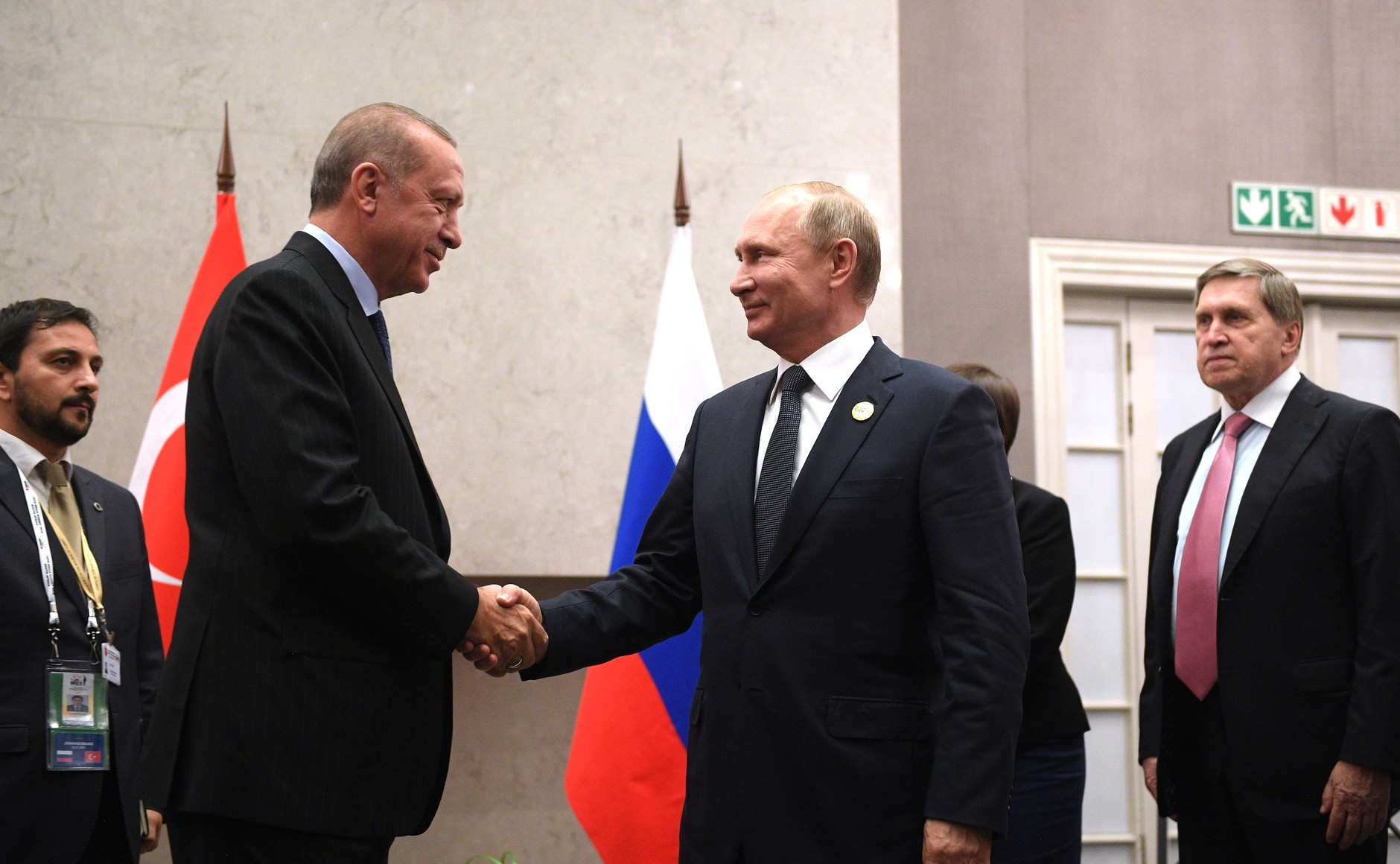
A Shift Towaards Diplomacy in Syria (By Ali Tuygan)

A Shift Towards Diplomacy in Syria

Ali Tuygan
October 24, 2019
It has been two tumultuous weeks starting with President Trump’s decision to withdraw US troops from Syria, immediately followed by the launching of Operation Peace Spring, Vice President Pence’s visit to Ankara on October 17,  President Erdoğan’s visit to Sochi five days later and the lifting of US sanctions against Turkey the next day.
The first visit resulted in a Turkish-US joint statement on northeast Syria and the second in a “memorandum of understanding” as President Putin called it.
Now, pundits are analyzing what was said in these two documents and predicting what the future may portend. Lots of question are being asked. Who are the winners? Who are the losers? Is there a victory? If so, whose victory is it? Where all of this might take Syria?
That questions are being asked and speculation being made is totally understandable since the Syrian conflict has been on world’s agenda for the last nine years. Moreover, contrary to what many still call the “Syrian civil war” the conflict has been anything but internal strife.
In order to properly assess what has transpired in the last two weeks, we Turks need to put everything in historical perspective.
Today, the Syrian conflict is in its ninth year and much has changed after the Russian intervention in 2015. Gone are the days of the Friends of Syria Group meetings and international coalitions targeting regime change. This group was formed after Russia and China, in the light of the Libya experience, vetoed a UN Security Council resolution intended to pave the way for another Western intervention. The group held its first meeting in Tunis on February 24, 2012. On April 1st, 2012, it met for the second time in Istanbul.
Later that month, then Foreign Minister Ahmet Davutoğlu delivered a major foreign policy speech in parliament. He said:
“The Friends of the Syrian Group represents the conscience of the international community and it was formed as a result of our determined efforts… We organized the second meeting in Istanbul with the participation of 83 countries and international organizations. It’s clear that these 83 nations did not come here to say ‘let’s keep the Assad regime in place’… As Turkey, we shall continue to direct and lead the massive wave of change in the Middle East. Among the peoples of the region Turkey is seen not only as a friend and a brother but also as the leader of a new and powerful vision to shape the future, create a new regional order… Lastly, I wish to stress the following: A new Middle East is being born. We shall continue to be the owner, the leader and the steward of this new Middle East”.
The contrast between the foregoing and today’s realities unmistakably show that Turkey’s ruling Justice and Development Party’s (JDP) foray into the Syrian conflict was a strategic blunder. It is worth remembering that only six months before that meeting, the Turkish parliament had ratified an anti-terrorism agreement with Syria in an act of mutual trust.
But “that was then, this is now” and one must look forward.
The two documents agreed upon during Vice President Pence’s visit to Ankara and President Erdoğan’s visit to Sochi leave many military/technical questions regarding the implementation of the “safe zone” and the arrangements between Turkish, Russian and Syrian forces in the area but they also open a window of opportunity to bring the Syrian war to an end, hopefully through diplomacy.
At his joint press conference with President Erdoğan in Sochi, President Putin said:
“Syria must be liberated from illegal foreign military presence. We believe that the only way to achieve strong and long-lasting stability in Syria is to respect the sovereignty and territorial integrity of the country. This is our principled position, and we have discussed it with the President of Turkey.
“It is important that our Turkish partners share this approach. The Turks and the Syrians will have to protect peace on the border together, which would be impossible without mutually respectful cooperation between the two countries.
“In addition to this, a broad dialogue between the Syrian government and the Kurds living in northeastern Syria must be launched. It is clear that all the rights and interests of the Kurds as an integral part of the multi-ethnic Syrian nation can only be fully considered and fulfilled via such an inclusive dialogue…”
None of the foregoing is news. All of this has been Russia’s consistent policy in Syria.
Immediately after the Sochi meeting President Putin called President Assad to inform him of what was agreed. The latter thanked him and voiced his complete support for the results that have been achieved and stated that Syrian border guards are ready to deploy to the Syrian-Turkish border together with Russian military police units.
In a nutshell, Moscow is going to orchestrate developments in Syria.
Criticism directed Mr. Trump’s decision to withdraw US troops from Syria in expressions such as “US is out, Russia is in” conveniently ignore Syria’s decades long cooperation with Moscow and to a large extent reflect Washington’s ongoing impeachment controversy.  Those critics need to admit that Moscow is their strongest ally in the fight against the Islamic State.
The Sochi memorandum shows that Ankara no longer sees President Assad as public enemy number one but someone with whom it has no other choice but to cooperate. Thus, we are back where we were eight years ago with mutual affection missing. In other words, Turkey’s Syria policy is about to come full circle in recognition of realities on the ground.
The understandings reached in Ankara and Sochi would hopefully prevent further loss of life and displacement of people which is of fundamental importance for Syria’s political transition and lasting peace in the area. Turkish government should keep stressing that its incursion was not an assault against the Kurds as many in the Western media presented it.
Turkey’s incursion in Syria and Western reaction to the operation have dealt a major blow to Turkey’s relations with the West and to whatever mutual confidence was left between the two. Whether the damage done can be undone remains a big question.

Thursday, October 24, 2019

A better path to a United Kurdistan


A Better Path to a United Kurdistan

by Guest Contributor
By Youseph Yazdi
The vision of an independent Kurdistan took a major step back in recent weeks. Anyone familiar with the history of this heartfelt but ever disappointing dream was not surprised. Neither are they surprised that what was thought to be a long-term relationship turned out to be a one night stand. One need not go all the way back to the post-World War One settlements, when world powers carved out the borders of several states in the Near East only to create the largest ethnic group without a state of their own. As recent as the 1970s, Iran, at the time ruled by Muhammad Reza Pahlavi, supported Kurdish forces in northern Iraq against Iran’s main threat, Saddam Hussein. When Saddam and the Shah signed their historic Algiers accord to quiet (temporarily) that conflict, the Shah’s Kurdish allies in Iraq were for all intents and purposes abandoned. Neither the Israelis nor the Americans, who have shed many a tear during the recent events in northern Syria, shed a tear for them then, given their close ties to the Shah.
Since then, Kurdish dreams of independence have been used by various forces, each time for a short time, for their own strategic ends. The Soviet Union used the Kurdistan Workers Party, or PKK, against Turkey to weaken NATO’s eastern flank. The Iranians, even though under new management after the 1979 revolution, again used Iraqi Kurds against Saddam, just as Saddam and the Israelis used Iran’s Kurds against Iran. The use and subsequent abandoning of the Kurds of Iraq in the course of the first Gulf War by the US played out, as today, on the TV screens of the world, again to much hand-wringing.
In each case, after the heated phase of their flings with the Kurds was over, each partner reverted back to established geopolitical realities. Much to the chagrin of the Kurds, the establish reality of existing states and stable borders was and remains too compelling. Even for the Israelis, who have a long-term strategic interest in creating new ethnic states and smaller states in their very dangerous neighborhood, there has been repeated cycles of excitement and disappointment. In the past four decades, viable and mouth-watering opportunities have arisen in sequence to dismember Iran, then Iraq, then Syria, and now Turkey, in most cases with Kurds as the primary (but not only) vehicle, and each time ending in a reversion to the status quo ante.
This is an indictment of the morality in geopolitics, which for the naive is shocking and for the experienced is shocking in the presumption of its existence.
At its core, it is an injustice that a Kurd living in Iran or Iraq or Syria or Turkey faces sometimes insurmountable barriers to visiting relatives in a neighboring country by borders and politics. It is an injustice that Kurdish language and culture and political traditions are subservient to those of Persians, Turks, and Arabs. This is equally true for Azeris, split between Iran and Azerbaijan, or Shia, split between Iran, Iraq and Saudi Arabia. Or Druze split between Lebanon, Israel, and Syria. The list is long. The list is endless, actually, if one considers how easy it is to divide and subdivide people.
For the Kurds, the injustice has the widest geography and longest timeline. One vignette occurred in the early days of the Iranian Revolution in 1979. Immediately after the February victory of the revolution, fighting broke out across Iran in what seemed to be every province. In the southeast, it was Baluchis, in the northeast, Turkmen. In the northwest, it was inter-ethnic conflict between Azeris and Kurds. The state propaganda at the time was that in each of these, foreign forces, like Saddam or Saudi Arabia or Israel, or pro-shah anti-revolutionaries were totally responsible for getting revolutionary brothers to fight each other. In reality, these outside forces were active, but only adding fuel and oxygen to embers of long-standing ethnic tensions.
The most serious fighting at that time was going on in Iranian Kurdistan, where Kurds were split between pro-revolutionary groups and those factions who -- no doubt egged on and armed by others -- saw this as a unique opportunity for Kurdish independence. These later groups were pitted against young poorly trained and equipped soldiers of the newly formed Iranian Revolutionary Guard Corp (IRGC), under the leadership of Mustapha Chamran.
At the time I had the opportunity to visit Kurdish regions in Iran, and speak to both separatist as well as revolutionaries. One conversation has remained a cornerstone of my own understanding of the issue. In our small apartment in Tehran, my father, who had arrived in Iran with Chamran only a few months prior, was Foreign Minister, and maintained prior friendships with Kurdish nationalists and leftist leaders. He routinely would have them in for heated discussions. Our apartment had no furniture, just folded blankets along the walls, which served as backrests for visitors. Some days, it would be Chamran, just returned from Sanandaj or Mahabad, relating hair-raising accounts of how his men were getting slaughtered with little support from the chaotic new government in Tehran. Some days, it was Kurdish leaders, who shared equally harrowing tales of injustice at the hands of the IRGC and pro-revolution Kurdish groups.
One point made by my father at the time, I believe, still resonates today. Kurdish statehood won based on foreign outside military power will never be peaceful or sustainable. Countries don’t make long term friends, they have long term interests. Unless you have the deeply rooted influence in the U.S., Europe, and the former Soviet Union that Israel enjoys, any outside power that props you up now, will for sure abandon you later. And in the interim, even if you succeed in the short run to carve out a state, the conflict created with your neighboring states will never let you prosper.
The only path for Kurdish resurgence, he pleaded, is through joining with democratic forces in Iran, Iraq, Syria, and Turkey to help all of us live in peace and prosperity. On the contrary, the conflict in Iranian Kurdistan so soon after a popular revolution, and the steady parade of dead young men returning in coffins from the west, was helping to shift the balance of power in Iran from pro-democracy parties to militant religious fanatics. By taking arms against the territorial integrity of the Iranian state, Kurds were not only hurting themselves, they were going to make life worse for all Iranians who cared about freedom and democracy.
I suspect Erdogan and the AK party today also sees opportunity in violent conflict with Kurds to solidify their own power, just as they saw a major threat to their power when Kurdish political parties fully engage in democratic processes in recent Turkish elections. In Iraq, the whole of Iraq needs Kurdish involvement and leadership in all aspects of the state, and Kurds have created some degree of autonomy. But as we saw in the Barzani-led independence referendum, attempts to unilaterally declare independence have only backfired, weakening the Kurdish region and strengthening radical sectarian forces.
In Syria, the YPG has created one of the most democratic and inclusive civil administrations and military forces the Middle East has ever seen. Their problem has always been that it was propped up by a foreign force. The testament of history was clear that this would not last, and the end game would be again, a reversion to the centrality of powerful states. The years wherein the YPG were in a powerful position with respect to the Syrian state was a perfect time to negotiate a long term arrangement that would, like the KRG, create a limited but sustainable degree of autonomy.
But, alas, another lesson of Middle East history is that when a king or party is powerful, they never negotiate, and when they weaken, they are in no position to do so. If, for example, when Turkey threatened to invade Afrin, the YPG had agreed, as encouraged by Iran and Russia, to allow the Syrian Arab Army to guard the border, they could have prevented a total rout from that province and the displacement of thousands of Kurds from their historical homes and villages. That bitter lesson was not learned and is today being repeated as the Rojava dream is being cared up before our eyes between the Turkish and Syrian armies.
The long-term solution to the injustices of the existing state boundaries in the Middle East will not be resolved through civil wars, but rather, through the example of the European Union. For example, Hungarians are a large and proud nation, dispersed between a half a dozen states in central Europe. But today, almost all hold EU passports and have no little or no barriers to live and prosper across many state borders. The same is true for the Irish, and many other ethnic groups, with or without their own formal state.
Is it so far-fetched to think that in a generation, Kurdish citizens of Iran, Turkey, Syria, Iraq would be able to travel and work freely and live with respect for their unique heritage, culture, and language? Is it crazy to imagine a Middle Eastern Union, that would bring peace and prosperity to over 200 million war weary people? Perhaps if you asked a German or a Frenchman in 1940 the same question it would have seemed crazy to them. But it happened, and within a generation. It could happen in the Middle East too, but it will require Kurds to join hands with Persians, Turks, Arabs, and all other ethnic and religious groups in the region to work together within each state to advance healthy political progress. Regardless of the improbability of it, it is the only option for Kurdish unity that has a chance of success.
Youseph Yazdi, earned the PhD from the University of Texas at Austin and MBA from the Wharton School of Business, and is faculty at Johns Hopkins University. His father, the late Ebrahim Yazdi, served as Iran's Foreign Minister, MP for Tehran, and Secretary General of the Freedom Movement of Iran.
Guest Contributor | October 24, 2019 at 4:55 pm | URL: https://lobelog.com/?p=50712