Wednesday, February 13, 2019

China's Uyghurs

Why Is Turkey Breaking Its Silence on China’s Uyghurs?
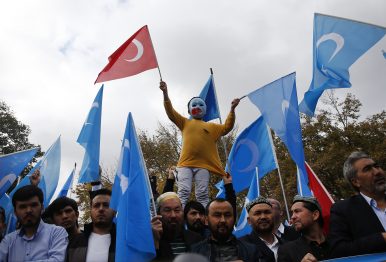
A child participates in a protest in Istanbul, Turkey on Nov. 6, 2018, against reports of oppression by the Chinese government toward Muslim Uyghurs.
Image Credit: AP Photo/Lefteris Pitarakis

Why Is Turkey Breaking Its Silence on China’s Uyghurs?


On February 9, the Turkish government issued a stern statement denouncing China for “violating the fundamental human rights of Uyghur Turks and other Muslim communities in the Xinjiang Uyghur Autonomous Region.” That made Turkey one of the very few Muslim-majority countries to go on record criticizing Beijing for mass detentions of Uyghurs and other Muslim minority groups – and it broke with the Erdogan government’s recent conspicuous silence on the issue.
Turkey has a long history of sympathy for the Uyghurs, who share cultural and linguistic similarities with other Turkic ethnic groups in the broader Central and West Asian region. Turkey has been a destination of choice for Uyghur refugees fleeing China since the 1950s, and is now home to a sizable Uyghur diaspora population (estimates put the number somewhere between 15,000 and 50,000). According to a 2015 Reuters report, Turkish diplomats in Southeast Asia even helped Uyghur refugees continue on to Turkey by providing travel documents (Uyghurs caught in Southeast Asian countries like Thailand and Cambodia are often deported back to China, where they face imprisonment).
Conscious of these cultural ties, people of Turkey have previously joined in mass anti-China protests sparked by reports that China was restricting Uyghur expressions of their Muslim faith.
Enjoying this article? Click here to subscribe for full access. Just $5 a month.
However, more recently the government under President Recep Tayyip Erdogan has valued its relationship with China above Uyghur rights. In 2015, when anti-China protests broke out in Istanbul, Erdogan acknowledged that “[C]laims about China’s pressure on our siblings in the Xinjiang Uighur Autonomous Region lead to sensitivity in our public,” but argued that unnamed forces were exploiting Turkish concerns to cause trouble in China-Turkey relations. Days later, Erdogan arrived in China, where he pledged support for China’s territorial integrity and promised that Turkey will not allow its cooperation with China to “be affected by ill-minded forces,” according to Xinhua. In 2016, in a remarkable shift from its traditional function as a Uyghur refuge, Turkey announced it had arrested approximately 100 Uyghurs from China en route to Saudi Arabia.
Turkey’s zeal for closer relations with China has only increased since then, especially after an attempted coup in 2016 hastened Erdogan’s authoritarian tendencies. It’s a familiar story that has also played out in Thailand: a U.S. ally with an increasingly worrisome human rights situation turns instead to embrace China and its famous “noninterference policy.” As Chinese investment and inclusion on the “Belt and Road” became more important for Ankara, the fate of Uyghurs back in China fell farther from the government’s radar. Erdogan’s remark back in 2009 that China’s anti-Uyghur crackdown was “a kind of genocide” seem far removed from his present stance.
Given this backdrop, it was a surprise when Turkey’s Ministry of Foreign Affairs came out swinging against the intensive new phase in China’s crackdown on Uyghurs and other Turkic ethnic groups. “It is no longer a secret that more than one million Uyghur Turks incurring arbitrary arrests are subjected to torture and political brainwashing in internment camps and prisons,” the statement proclaimed.
Continuing, the ministry called the camps “a great shame for humanity” and called on China to close them. Further, it asked “the international community and the Secretary General of the United Nations to take effective measures in order to bring to an end this human tragedy in Xinjiang.”
The key to the timing of Turkey’s change of heart might come near the end of the statement:
In such an environment, we have learned with deep sorrow the passing away in his second year of imprisonment of the distinguished folk poet Abdurehim Heyit, who was sentenced to eight years in prison for one of his songs. This tragedy has further reinforced the reaction of the Turkish public opinion towards serious human rights violations committed in the Xinjiang region.
Abdurehim Heyit is famous as a Uyghur musician, both inside China and abroad.
Nury Turkel, a Washington DC-based attorney who also serves as Chairman of the Board for the Uyghur Human Rights Project (UHRP), spoke to The Diplomat about Heyit’s importance to the Uyghur community. Heyit is “revered by Uyghurs across the globe” for his music and the “authenticity of his style that was very traditional and very local,” Turkel explained. From his music to his dress, he represented the daily life and cultural heritage of Uyghur people – and thus “encouraged Uyghurs to be proud of their heritage.”
Like many other Uyghur artists and intellectuals, Heyit’s activities had previously been deemed harmless and even sanctioned by the Chinese government – but that was before prominent expressions of Uyghur identity began to be grounds for detention under the ever-tightening crackdown. “His lyrics carry a national sentiment – Uyghurness – that may have gotten the Chinese government’s attention,” Turkel said.
Interestingly, Heyit’s last overseas trip was to Turkey to promote the poems of Abdurehim Ötkür, another influential Uyghur, which Heyit performed set to music. That may help explain why Heyit was targeted by China — but also why Turkey in particular felt compelled to speak up when rumors began that he had died. Prior to his arrest, Heyit had been a “bridge between the Uyghur and Turkish cultures,” Turkel told The Diplomat. “That shouldn’t be a crime.”
Hülya Kasapoğlu Çengel, a professor at Gazi University, helped arrange the December 2015 performance by Heyit at Gazi to mark the 20th anniversary of Ötkür’s death. She wrote on Facebook about her memories of Heyit during that trip: “He was very careful and cautious” and rejected media inquiries, doing “everything he could” to prevent his overseas trip from causing problems. Heyit “asked me to announce that his most important title was State Artist of the People’s Republic of China,” Çengel recalled.
Apparently such precautions weren’t enough. Radio Free Asia reported that Heyit had “been arrested without official explanation” in 2017, part of a broader crackdown on Uyghur cultural figures.
Rumors of Heyit’s death in detention began circulating on social media on February 8, and were picked up by Turkish media. On February 9, the Turkish Foreign Ministry responded with its strongly-worded statement.
China’s authorities then released a video purporting to show Heyit alive. In the video, provided by China Radio International’s Turkish service, complete with English subtitles, a man identifies himself as Heyit, gives the date as February 10, 2019, and says he is being investigated for “allegedly violating the national laws.” He further claims to be “in good health” and to have “never been abused.” The video, reminiscent of forced confessionsfrom other high-profile figures detained in China, has been called into question by Uyghur activists.
The Chinese embassy in Turkey also made sure to respond quickly to Ankara’s new stance. A statement posted on the embassy website repeated China’s usual justification that its Xinjiang policies are necessary to combat “three evils” of separatism, religious extremism, and terrorism. It added that Uyghurs are being placed into “vocational centers” aimed at de-extremism, not “concentration camps.”
“It is hoped that the Turkish side will correctly recognize and understand the efforts according to the law the Chinese side has made to effectively combat terrorism and get rid of extremism,” the statement said, furthering urging Turkey to “take back false accusations and adopt measures to eliminate evil influences.”
In a separate statement, Chinese Foreign Ministry spokesperson Hua Chunying said the video of Heyit proved Turkey’s statement was based on an “absurd lie.”
“The Turkish side has made a very bad mistake, which is quite irresponsible,” Hua said.
Such a counterattack from China was only to be expected. So why has the Turkish government now decided to risk China’s wrath by speaking out for Uyghurs?
In an op-ed for the Turkish Hurriyet Daily News, Serkan Demirtas notes that the government’s silence was increasing costly domestically. Political rivals to the ruling Justice and Development Party (AKP) had been mounting challenges – the Great Union Party (BBB) organized “a massive protest” on January 24 urging the government to take action; the Good Party pushed for a parliamentary motion to investigate violations of Uyghur rights in China (a motion that was rejected by the AKP).
“Scores of similar protests and meetings have long been taking place in different corners of the Anatolia [Peninsula] in recent months, increasing the pressure on the AKP,” Demirtas added. Against that political backdrop, the report of Heyit’s death “was regarded as final straw by Ankara.”
The key question is what happens now. Will Ankara rest on its single strong statement, hoping to avoid further upsetting Beijing, or will the Turkish government actually put actions behind its words urging the international community to get involved?
Thus far, China has been remarkably successful in keeping Muslim-majority countries silent on the Uyghur issue. But as Turkel of UHRP told The Diplomat, Erdogan is an influential figure “in the Muslim and Turkic worlds… his words resonate.”

Monday, February 11, 2019

Iran Devrimi 40 yaşında (Önder Özar'ın bilgi notu)

İran Devrimi 40 yaşında
20nci yüzyılın ikinci yarısındaki en önemli siyasal olaylardan biri İran’da 1925 yılından beri hüküm süren Pehlevi hanedanının halkın ayaklanmasıyla sona ermesi ve bir şii din adamının (Humeyni) liderliğinde bir İslam Cumhuriyeti’nin iktidar olmasıdır. 11 Şubat 1979 tarihinde meydana gelen İslam devrimi öncelikle bölgede, genel olarak da dünyada önemli gelişmelere ve sarsıntılara yol açtı.
İran’da Şah’ın sivil ve askeri kadroları büyük çapta tasfiye edildi. Çok değerli diplomatlar, bürokratlar, öğretim üyeleri vb. bu tasfiye operasyonunun kurbanları oldu. Devrim’in lideri ülke içinde büyük bir prestij sahibiydi. Paris’te sürgünde iken uluslararası medyaya verdiği mülakat ve diğer konuşmalarında dile getirdiği İran’da demokrasi ve adil düzen kurulacağı vaatlerini çabuk unuttu. Kendisinin son sözü söyleyeceği ve mutlak otoritesini öngören yeni bir anayasa hazırlattı ve bu anayasa referandumla onaylandı. Her şey Şii İslam kurallarına ve yorumlarına göre düzenlendi. Oysa, Paris’teki ikameti sırasında Humeyni, politik liderlik istemediğini, yürütme erkini seçilmişlere bırakacağını söylemişti. Ancak, Humeyni’nin çevresinde demokrasi ümit eden, bir kısmı Batı’da öğrenim görmüş kadrolar kısa sürede tasfiye edildi . Bazıları yurtdışına kaçtı.
Humeyni’nin en önemli, ancak en çok tartışılan icraatı, “devrim ihracı” idi. Humeyni, bir bakıma tüm İslam aleminin liderliğini hedefleyen bu –olanaksız- amacına ulaşamadığı gibi, bölge ülkeleri, komşuları ve islam aleminin İran’la ilişkileri bu tutumdan olumsuz etkilendi.. Sonuçta İran yalnızlığa sürüklendi. Yurt dışına kaçan İranlı aydınların ve muhaliflerin devrim ajanlarınca öldürülmesi, İran’ın “ terorist ülke” damgası yemesine yol açtı. (Bu suçlama halen geçerliğini koruyor)
Tahran’daki ABD Büyükelçiliği bir grup devrimci gencin baskını sonucu işgal edildi. Humeyni, rehin alınan 50 ABD’li diplomatın serbest bırakılması için Başbakanlığa atamış olduğu Mehdi Bazargan’ın ısrarlı talebini kabul etmedi. Bazargan bunun üzerine istifa etti. Böylece, devrimin ABD karşıtlığı perçinlenmiş oldu. Devrim, ABD tarafından desteklenen “zalim bir hükümdarı” devirmek için yapılmıştı. Ancak, Hükümdar ( Şah Muhammed Rıza Pehlevi) , tedavi için gittiği ABD’nde kanserden ölünce, ABD ve onun himayesindeki İsrail, devrimin baş düşmanları olarak hedef tahtasına kondu.
Temmuz 1988’de Humeyni’nin fetvası üzerine, İran’daki en büyük katliam gerçekleşti. Devrim karşıtı oldukları suçlamasıyla binlerce tutuklu infaz edildi. Humeyni, dünyanın büyük tepkisini çeken bir başka fetvayla, Hindistan asıllı İngiliz yazar Selman Rüşdi’nin, Kur’andaki bazı ayetleri kötülemesi nedenile, öldürülmesine yeşil ışık yaktı. Humeyni’nin, evrensel insan haklarını ve özgürlükleri hiçe sayan bu uygulamaları İran’ı büsbütün yalnızlaştırdı. Humeyni, adeta dünyaya pervasızca meydan okuyordu.
İran devriminin ilk on yılında, Saddam Hüseyin liderliğindeki komşu Irak’ın İran’a saldırması üzerinde durulması gereken en önemli olay. Saddam’ın nasıl bir kurgu ile İran’a savaş açtığı tam olarak aydınlanmış değil. Ancak, büyük devletlerin İran’daki islami devrim yönetimini devirmek amacıyla Saddam’ı teşvik ettikleri güçlü bir olasılık. Nedeni ne olursa olsun, Irak’ın başlattığı ve sekiz yıl süren bu savaş, her iki tarafta yüzbinlerce insanın can kaybına ve büyük maddi tahribata yolaçtı, ancak her iki taraf da 1989’da Güvenlik Konseyi kararını kabul etmek suretiyle başlangıç noktasına döndüler. Bununla beraber, bu savaş İran’da milli bir dayanışma ortamının oluşmasına katkıda bulundu, devrim süreci de bundan yararlandı. Bir başka deyimle, devrim bu savaştan insan zayiatı ve maddi tahribata karşın, manevi yönden güçlenerek çıktı.
Yeni anayasada devrim rehberi olarak tanımlanan Ayetullah Ruhullah Humeyni 3 Haziran 1989’da öldü. Yerine, dini hiyerarşi açısından yeterli olmamasına karşın Ali Hamaney getirildi. Devrimin güçlü ismi Haşimi Rafsancani Cumhurbaşkanı oldu. Rafsancani, pragmatik muhafazakar tanımına uygun politikalar uygulamaya çalıştı. Ancak, özel sektörün gelişmesi hedefinde başarılı olamadı. Zira, devrimi korumak amacıyla kurulmuş bulunan Devrim Muhafızları Ordusu (Pasdaran)ithalat ve ihracat dahil olmak üzere her türlü ekonomik faaliyetlerde bulunabiliyor ve çeşitli ayrıcalıklardan yararlanıyordu. Ayrıca, anayasa Rehber’e devletin silahlı kuvvetleri, polis ve kolluk görevlileri, yargı, televizyon ve diğer medya araçları vb konularda olağanüstü yetkiler tanıyordu.
Rafsancani’nin iki dönem ( 1989 -1997) süren cumhurbaşkanlığından sonra, ılımlı ve reformist söylemleriyle farklı bir profil çizen Mohammed Hatemi de iki dönem (1997-2005) cumhurbaşkanı seçildi. Hatemi ilk dönemde basın üzerindeki sansürün ve günlük yaşamdaki kısıtlamaların yumuşatılmasına, dış ilişkilerdeki olumsuzlukların giderilmesine yönelik olumlu adımlar attıysa da, başta rehber Hameney olmak üzere, devrim muhafızları ordusunun, Anayasayı Koruma Konseyi , Uzmanlar Konseyi ve Danışma Konseyi gibi muhafazakar kurumların –ki bunlar seçimle değil atama yoluyla oluşmakta – muhalefeti nedenile reformları gerçekleştirmekte başarılı olamadı.
2005’de yapılan seçimleri ilk kez dini ulema dışından bir aday olan Mahmut Ahmedinejad kazandı. 2009’da yapılan cumhurbaşkanlığı seçimlerinde adaylardan Rafsancani ile Ahmedinejad ikinci tura kaldılar. İlk turda daha fazla oy alan Rafsancani ikinci turda kaybetti. Bu beklenmeyen sonuç üzerine, halk sonuçları protesto etmek için sokağa çıktı ve üzücü olaylar meydana geldi. “Benim oyum nerde” sloganı bu seçimlere gölge düşürdü. Ahmedinejad, başlangıçta rehber Hameney’in desteğini arkasına almasına rağmen, zaman içerisinde Hamaney’le ters düştü ve sonuçta, dış politikada İsrail ve ABD’ne meydan okuyan söylemleri ve içerdeki populist uygulamalarıyla hem itibarını kaybetti hem de sorunlar yarattı.
2013 seçimlerinde ibre yeniden reformcu kanada döndü. Seçimleri kazanan Ruhani, özellikle İran’ın nükleer faaliyetlerinin kısıtlanması alanında ABD, İngiltere, Fransa, Almanya, Rusya ve Çin’le müzakereleri sonuçlandırdı ve JCPOA (Joint Comprehensive Plan of Action)
olarak bilinen nükleer anlaşmayı imzaladı. Bu anlaşmayla, İran 15 yıl süreyle nükleer faaliyetlerini Uluslararası Atom Enerjisi Ajansı denetiminde kısıtlamayı kabul ediyor, buna karşılık, ABD’ndeki dondurulan parasal varlıklarının belli bir takvime göre serbest bırakılmasını sağlıyordu.
2017 seçimlerinde ikinci dönem için seçilen Ruhani, JCPOA anlaşmasının avantajlarından yararlanma sürecinin henüz başındayken, ABD’nde 2016 başkanlık seçimlerini kazanan Donald Trump’ın Mayıs 2018’de JCPOA anlaşmasından çekilmesiyle yeniden zor bir durumla karşı karşıya kaldı.
Bazı gözlemler:
1 - İran Anayasası, Cumhurbaşkanı ve Meclis’in seçimle göreve gelmesini öngörüyorsa da, atanma yoluyla göreve getirilen Rehber’in geniş yetkileri ( silahlı kuvvetler, polis ve kolluk güçleri, radyo ve televizyon, yargı ile ilgili atamalar ve aziller) nedenile, İran İslam Cumhuriyeti esas itibarile teokratik bir yapıya sahiptir. Ayrıca, seçimlerde aday olmak için Anayasayı Koruma Konseyi’nin onayı gerekmekte. Anılan kuruluşun yapısı demokratik olmadığı gibi, adayların incelenmesinde ve gerektiğinde veto edilmesinde uygulanan kriterler de demokratik değil.
2 - Rehber’in olağanüstü yetkilerle donatılmasının yanısıra, kayıp olduğu varsayılan 12nci imamın temsilcisi olarak kabul edilmesi nedenile , Şii doktrinine göre hata yapmayacağı kabul edilmekte. Aslında, bu inanış İslam hukukunda “hatasız kul olmaz” anlayışına ters Diğer yandan, çağdaş demokrasilerde uhrevi/tanrısal vesayetin yeri yok.
3 -İran İslam Devrimi ülkede yetişmiş insan gücünün erimesine yol açtığı gibi, halkın dine olan bağlarının gevşemesine de neden oldu. Halen ABD ve Batı Avrupa ülkelerinde yüzbinlerle ifade edilen – yaklaşık bir milyon – eğitimli ve nitelikli İran vatandaşı yaşıyor.
4 - Muhafazakar kuruluşlar ve Şii hiyerarşi, İran’ın reformcu bir sürece girmesini engelliyor. Bu muhafazakar kurumlara göre reform , devrimin sulandırılması ve sonuçta başarısızlığa uğraması ile eşdeğerde. Ancak, burada şu sorunun sorulması gerekmiyor mu? İslam devrimin başarılı olmasının kıstasları neler? İnsan hakları ve özgürlükler İran’ın bugünkü islami yapısında ne ölçüde uygulanabilir?
5 -Benzer durumlarda sorgulandığı üzere, İran Şahı Muhammed Rıza Pehlevi nerelerde hata yapmıştı?
Bu konuda kitaplar yazıldığı, doktora tezleri ve benzer çalışmalar yapıldığı biliniyor. Bu kısa bilgi notunda bir kaç ana başlığı belirtmekle yetinmek durumundayım.
a) Petrol fiyatlarının yüksek düzeyde seyrettiği dönemde oluşan zenginliği, sosyal adaletçi bir anlayışla ekonomik ve sosyal projeler yerine, askeri harcamalara tahsis etmesi ve İran’ı bölgede bir “süper güç” yapmayı amaçlaması .
b) ABD’ne bağımlılığın dengeli bir politikanın çok ötesinde aşırı uygulamaları (Suç işleyen ABD askeri personelinin İran yargısından muaf olması gibi) gündeme getirmesi.
c) SAVAK istihbarat örgütünün faaliyetlerinin günlük yaşamı olumsuz etkilemesi ve halkın hoşnutsuzluğunun giderek artması.
d) Kendi kurduğu siyasi partiler ile yapay bir “demokrasi” oluşturması ve ülkede gerçek bir muhalefete izin verilmemesi. Bir başka deyimle, 1953’de CİA ve İngiliz istihbarat örgütü işbirliğiyle gerçekleştirilen Musaddık darbesi sonrasında, muhalefet anlayışının yok edilmesi.
e) Bir çok araştırmacı, eleştirmen ve yazar Şah’ın en büyük siyasi hatasının Musaddık olayından ders almaması olduğu görüşünü savunuyor.
Not: Bu bilgi notunun bir çok eksikleri olduğunu biliyorum. Ancak, her konuya bu dar çerçeve içinde yer verilmesi olanaksız. Takdirlerine...

Sunday, February 10, 2019

Populism by Joseph S. Nye

Is the “Populist” Tide Retreating?

 
Strong support for immigration and globalization in the US sits uneasily with the view that “populism” is a problem. In fact, the term remains vague and explains too little – particularly now, when support for the political forces it attempts to describe seems to be on the wane.
STANFORD – The dysfunctional politics of Brexit in the United Kingdom, and the midterm election reaction against President Donald Trump in the United States, are generating second thoughts about the populist tide sweeping the world’s democracies in recent years. In fact, second thoughts are long overdue.
Populism is an ambiguous term applied to many different types of political parties and movements, but its common denominator is resentment of powerful elites. In the 2016 presidential election, both major US political parties experienced populist reactions to globalization and trade agreements. Some observers even attributed Trump’s election to the populist reaction to the liberal international order of the past seven decades. But that analysis is too simple. The outcome was over-determined by many factors, and foreign policy was not the main one.
Populism is not new, and it is as American as apple pie. Some populist reactions – for example, Andrew Jackson’s presidency in the 1830s or the Progressive Era at the beginning of the twentieth century – have led to democracy-strengthening reforms. Others, such as the anti-immigrant, anti-Catholic Know-Nothing Party in the 1850s or Senator Joe McCarthy and Governor George Wallace in the 1950s and 1960s, have emphasized xenophobia and exclusion. The recent wave of American populism includes both strands.
The roots of populist reactions are both economic and cultural, and are the subject of important social science research. Pippa Norris of Harvard and Ronald Inglehart of the University of Michigan have found that cultural factors long antedating the 2016 election were very important. Voters who lost jobs to foreign competition tended to support Trump, but so did groups like older white males who lost status in the culture wars that date back to the 1970s and involved changing values related to race, gender, and sexual preference. Alan Abramowitz of Emory University has shown that racial resentment was the single strongest predictor for Trump among Republican primary voters.
But economic and cultural explanations are not mutually exclusive. Trump explicitly connected these issues by arguing that illegal immigrants were taking jobs from American citizens. The symbolism of building a wall along America’s southern border was a useful slogan for uniting his electoral base around these issues. That is why he finds the idea hard to give up.
Even if there had been no economic globalization or liberal international order, and even if there had been no great recession after 2008, domestic cultural and demographic changes in the US would have created some degree of populism. America saw this in the 1920s and 1930s. Fifteen million immigrants had come to the US in the first 20 years of the century, leaving many Americans with an uneasy fear of being overwhelmed. In the early 1920s, the Ku Klux Klan had a resurgence and pushed for the National Origins Act of 1924 to “prevent the Nordic race from being swamped,” and “preserve the older, more homogeneous America they revered.”

SUBSCRIBE NOW

For a limited time only, get unlimited access to On Point, The Big Picture, and the PS Archive, plus our annual magazine, for less than $2 a week.

SUBSCRIBE
Similarly, Donald Trump’s election in 2016 reflected rather than caused the deep racial, ideological, and cultural schisms that had been developing in reaction to the civil rights and women’s liberation movements of the 1960s and 1970s. Populism is likely to continue in the US as jobs are lost to robotics as much as to trade, and cultural change continues to be divisive.
The lesson for policy elites who support globalization and an open economy is that they will have to pay more attention to issues of economic inequality as well as adjustment assistance for those disrupted by change, both domestic and foreign. Attitudes toward immigration improve as the economy improves, but it remains an emotional cultural issue. In mid-2010, when the effects of the Great Recession were at their peak, a Pew survey found that 39% of US adults believed immigrants were strengthening the country, and 50% viewed them as a burden. By 2015, 51% said that immigrants strengthen the country, while 41% said they were a burden. Immigration is a source of America’s comparative advantage, but political leaders will have to show that they can manage national borders – both physical and cultural – if they are to fend off nativist attacks, particularly in times and places of economic stress.
Still, one should not read too much about long-term trends in American public opinion into the heated rhetoric of the 2016 election or Trump’s brilliant use of social media to manipulate the news agenda with cultural wedge issues. While Trump won the Electoral College, he fell three million short in the popular vote. According to a September 2016 poll, 65% of Americans thought that globalization is mostly good for the US, despite their concerns about jobs. While polls are always susceptible to framing by altering the wording and order of questions, the label “isolationism” is not an accurate description of current American attitudes.
Since 1974, the Chicago Council on Global Affairs has asked Americans annually if the US should take an active part in, or stay out of, world affairs. Over that period, roughly a third of the public has been consistently isolationist, harkening back to the nineteenth-century tradition. That number reached 41% in 2014, but, contrary to popular myth, 2016 was not a high point of post-1945 isolationism. At the time of the election, 64% of the respondents said they favored active involvement in world affairs, and that number rose to 70% in the 2018 poll, the highest recorded level since 2002 (which had been reached in the aftermath of the 9/11 terrorist attacks).
Strong support for immigration and globalization in the US sits uneasily with the view that “populism” is a problem. The term remains vague and explains too little – particularly now, when support for the political forces it attempts to describe seems to be on the wane.

Thursday, February 7, 2019

Trump is facing a Dilemma by Brian Bennett (TİME magazine)

Video Player is loading.
×
YOU MIGHT LIKE
STACEY ABRAMS DELIVERS REBUTTAL TO PRESIDENT TRUMP'S STATE OF THE UNION
By BRIAN BENNETT  
6:11 AM EST
The State of the Union speech is one of the most extravagant portraits of American power. Replete with pageantry, tens of millions of television viewers, a chamber crammed with dignitaries and Donald Trump at the center of the shot–is it any wonder the annual address is one of the few Washington rituals the President relishes?
But there was a new face in the frame when Trump stepped onto the rostrum on Feb. 5. Just over his left shoulder sat House Speaker Nancy Pelosi, who has outmaneuvered Trump since she retook the gavel in January. On the House floor in front of him sat dozens of female legislators dressed in white, a suffragist homage and a stark reminder of both the drubbing he took in the November midterms and the investigations those Democrats will pursue over the next two years.
That power shift, visible to all, is particularly dangerous for Trump. His political brand is built on dominance and rooted in the strength he projects to his supporters. The new reality in Washington challenges both. The President’s legislative agenda appears dead in the water, and his approval ratings have dropped. Polls show voters blame Trump for the 35-day government shutdown he triggered, oppose his border-wall demands and place more faith in Democrats when it comes to the President’s signature issue of border security.
Which may help explain the signs that Trump’s grip on the GOP is starting to slacken. Trump alienated supporters by reopening the government without securing funding for the wall. And in recent months, Senate Republicans have increasingly defied him. “There is certainly an increased willingness to challenge some of the President’s more dissonant foreign-policy positions,” says former Arizona Senator Jeff Flake, who has frequently criticized Trump.
Just how much power Trump retains will be tested in the coming days. If lawmakers don’t meet his Feb. 15 deadline to deliver more than $5 billion in border-wall funding, Trump has vowed to shut down the government again or use the Executive Branch’s emergency powers to build the barrier on his own authority. Senate Republican leader Mitch McConnell has warned that either step would escalate Trump’s tensions with Senate Republicans.
That leaves Trump in a dilemma. He knows how important it is to his supporters that he fight to deliver his signature campaign promise to build the wall. But getting in a scrap with GOP Senators carries its own risks: they are his bulwark against Pelosi and the House, not least because the Democrats could take the extraordinary step of beginning impeachment proceedings this year. “It’s the defining moment of his presidency,” says Steve Bannon, Trump’s former chief White House strategist.
Bannon thinks Trump should start construction on the wall without Congress and ignore concerns in the Senate about Trump’s plans to withdraw troops from Syria and Afghanistan. Trump’s more moderate aides, including his son-in-law, Jared Kushner, counsel compromise, according to one White House adviser.
That, however, would require something Trump has shown little ability to do: adapt his style to the demands of the job. Which is why the next few weeks are a key test not just for Trump’s presidency but also for the President himself.

There were signs at the State of the Union that Trump is trying to reset. The tone of much of the speech was conciliatory, with soaring appeals for unity, calls for bipartisan actions like infrastructure reform and lowering prescription drug prices, and a nod to the bipartisan criminal-justice law he signed in December. “We can make our communities safer, our families stronger, our culture richer, our faith deeper, and our middle class bigger and more prosperous than ever before,” Trump told the packed chamber. “But we must reject the politics of revenge, resistance and retribution–and embrace the boundless potential of cooperation, compromise and the common good.”
Other Presidents have pivoted to the center after midterm-election losses. When President Bill Clinton’s party lost the House during his second year in office, Clinton “revised his approach to governing,” says Russell Riley, co-chair of the presidential oral-history program at the University of Virginia’s Miller Center. Clinton worked with then House Speaker Newt Gingrich on sweeping welfare reform and a balanced budget–issues Clinton then successfully ran on in his 1996 re-election campaign.
Trump is more comfortable using his bully pulpit to incite supporters than to persuade skeptics. This may be his last chance to adjust. An NPR/PBS NewsHour/Marist survey conducted in mid-January found that Trump’s net approval rating had dropped 7 points since December, to 39%. Support among key portions of Trump’s base eroded, including a net decline of 18 percentage points among suburban men and a net decline of 13 points among white evangelicals. A Quinnipiac University national poll released Jan. 29 found that U.S. voters trust Democrats in Congress more than Trump by 50% to 41% on the issue of border security.
Trump has insisted on pressing for the wall funding, at the expense of other policy priorities. “He wants to address what we face immediately, which is the humanitarian crisis and the national-security crisis along the southern border,” says White House principal deputy press secretary Hogan Gidley. “Once we do that, there are broader discussions to have” about immigration reform, infrastructure and drug pricing.
But Trump’s threat to act on his own has alarmed Republicans. At a GOP Senate lunch on Jan. 29, some members of the President’s party told one another that they could not stand by and let Trump end-run Congress to build his border wall, according to several participants. If they allowed President Trump to invoke a national emergency on the border in 2019, some have said, how could they stop a Democratic President like, say, Senator Elizabeth Warren from declaring one in the financial sector in 2021, using the same power play to impose costly safeguards on banks?
With GOP defections all but guaranteed, the No. 2 Republican in the Senate, John Thune, urged lawmakers to call Trump aides and warn them there were likely the 51 votes needed to oppose an emergency declaration. McConnell has been sending a similar message to Trump himself. In his conversations with the President, McConnell raised polling data showing cratering support for Trump’s handling of border security, officials familiar with the conversations tell TIME.
Trump’s problems with his own party have been spreading to other issues since the November 2018 midterms. In December, seven GOP Senators joined with Democrats in calling for the U.S. to withdraw military assistance to Saudi Arabia’s war in Yemen. The same day, the chamber unanimously passed a resolution rebuking Crown Prince Mohammed bin Salman of Saudi Arabia for the murder of journalist Jamal Khashoggi, even as Trump defended his Gulf ally.
On Jan. 29, McConnell proposed an amendment expressing disapproval of Trump’s planned troop withdrawals in Syria and Afghanistan. It passed on Feb. 4 with the support of all but four Republicans; three Republicans did not vote. The defections prompted Trump to complain in private about the lack of lockstep loyalty, according a person familiar with Trump’s reaction.
Some Republicans on Capitol Hill insist there’s no real rift with the White House. “The tent is big enough for some disagreement,” says GOP Senator Tim Scott of South Carolina. “Clearly there are some Senators who disagree with the President,” says Louisiana Senator John Kennedy. “But do I think the Senate passing a resolution [opposing Trump’s troop withdrawals] is going to have any impact on what he does? No.”
On the issue of the moment, the Feb. 15 spending deadline, one way out would be for Trump to accept a deal that boosts border-security spending without funding a wall. “If he can get a bill enacted that truly does strengthen the border, then he will be able to sell that to his base without having an actual 2,000-mile-long physical wall,” says Whit Ayres, a GOP consultant at North Star Opinion Research. “The key is making the border more secure.”

Trump has survived tough times before. As a businessman, he bounced back from serial bankruptcies and crushing debt. As a presidential candidate, he was written off by the Republican establishment in the weeks before Election Day, then went on to shock the nation with a dramatic victory. He did it with the same formula that he has relied on as President: the instinct to improvise, fight back, belittle his opponents and bend the truth to suit his needs.
But the stakes are higher now. Trump faces determined congressional investigators, multiple criminal probes and special counsel Robert Mueller’s investigation. At the end of February he will hold a second high-stakes summit with North Korean leader Kim Jong Un. His trade negotiations with China aren’t going well, and his talks with the Taliban over leaving Afghanistan risk ending America’s 17-year war there with a hard-to-hide defeat.
Failure on any one of those fronts will make the others that much harder, and friends say Trump is feeling the pressure. “I think he realizes how important it is to get a win out of this, how important it is not to lose,” says conservative TV host Eric Bolling, who regularly talks to Trump. That’s doubly true for a man whose political worldview contains only winners and losers, with no room for compromise.
Trump’s moderate advisers may hope that at this most precarious moment he will show himself capable of growing, of learning and adapting to the realities of the job. Other Presidents have been defined by their ability to do just that. And during his State of the Union speech, Trump seemed to be vacillating between comity and provocation, struggling to find his way to a different kind of presidency, one more suited to the new division of power in the capital.
The hard truth in Washington now, though, is even that unlikely transformation may not be enough to salvage his presidency. Soon enough the same august chamber will provide the setting for grueling congressional investigations, and possibly even impeachment.
With reporting by Alana Abramson, Tessa Berenson and Philip Elliot/Washington
Contact us at editors@time.com.
This appears in the February 18, 2019 issue of TIME.