| FORWARD TO A FRIEND > | |
 |
Greek and Turkish presidents call for dialogue in Istanbul meeting Turkish President Tayyip Erdogan welcomes Greek President Konstantinos Tassoulas before their meeting in Istanbul, Saturday. [Mustafa Kamaci/Turkish Presidential Press Office/Handout via Reuters] Welcome to the weekly round-up of news by Kathimerini English Edition. The presidents of Greece and Turkey discussed regional developments and bilateral relations during a meeting in Istanbul on Saturday, with both stressing the importance of dialogue, diplomacy and the peaceful resolution of disputes as regional tensions mount. Greek President Konstantinos Tassoulas was in the city to visit the Ecumenical Patriarchate and meet with Patriarch Bartholomew. The meeting with his Turkish counterpart, Recep Tayyip Erdogan, at Istanbul’s Dolmabahce Palace covered a range of regional issues, according to a statement from the Greek presidency. Tassoulas said the two NATO allies, which share a long history and a common border, had a responsibility to contribute to regional security and stability. He also described the Greek community in Istanbul and the Muslim minority in Greece’s northeastern region of Thrace as bridges of friendship between the two countries. In its account of the meeting, the Turkish presidency said Erdogan had described the two minorities as a common heritage and called for closer ties based on humanitarian principles. He also stressed the importance of reciprocity, saying Turkey expected its initiatives to be met with corresponding steps by Greece. Greek officials accompanying Tassoulas included Culture Minister Lina Mendoni and Deputy Foreign Ministers Yiannis Loverdos and Alexandra Papadopoulou. Turkey was represented by Foreign Minister Hakan Fidan, Presidential Communications Director Burhanettin Duran and Chief Presidential Adviser on Foreign Policy and Security Akif Cagatay Kilic. The meeting followed recent progress on the Greece-Cyprus electricity interconnection project, known as the Great Sea Interconnector, which had faced Turkish objections over the route of its survey work. It also came amid reports that Turkey is considering deploying its Russian-made S-400 air defense systems in Saudi Arabia while retaining operational control, in a bid to resolve its dispute with Washington and regain access to the US F-35 fighter jet program. Turkish Defense Minister Yasar Guler is due in Washington Monday to meet US Defense Secretary Pete Hegseth. Turkey was removed from the program in 2019 after taking delivery of the Russian systems, amid US concerns that they could compromise the fighter’s sensitive technology. Ankara is seeking to secure six F-35s it has already paid for and potentially return to the program. Any breakthrough could have implications for the military balance with Greece, potentially allowing Turkey to acquire advanced stealth fighters and narrow Athens’ emerging technological advantage. Following his meeting with Erdogan, Tassoulas visited the Ecumenical Patriarchate in Istanbul’s Phanar district. He is the first serving Greek president since the restoration of democracy in 1974 to pay a pilgrimage visit to the institution. He was welcomed by about 30 students from three Greek schools in Istanbul before attending a service at the Patriarchal Church of Saint George, the historic seat of the Ecumenical Patriarchate. During a private meeting with Bartholomew and Patriarch Theodore II of Alexandria, Tassoulas praised Bartholomew’s contribution during his 35 years as head of the Ecumenical Patriarchate. Bartholomew thanked him for Greece’s continued support. Tassoulas also expressed hope that the Halki Theological School, a seminary near Istanbul that has been closed for more than 50 years, would reopen soon, on the second day of his pilgrimage visit to the city Sunday. Founded in 1844, the seminary has played a central role in the Eastern Orthodox Church as the Ecumenical Patriarchate’s main theological school. It trained generations of Orthodox clergy, including Bartholomew. Spotlight
|
MUST READS
|
 [InTime News] With the next national elections – expected to take place sometime in the spring – potentially producing an inconclusive result, the resilience of the far-right Alliance of Greeks, which is polling at around 4% in most surveys, is seen as a particularly worrying development. If current projections materialize, the party would enter the 300-seat Parliament with about 11 lawmakers. The concern is about not only what the party represents, but also its impact on the electoral arithmetic. The more parties that cross the 3% threshold and enter Parliament, the harder it becomes for the election winner to secure an absolute majority and form a single-party government. Seen as the ideological heir to Golden Dawn, Alliance of Greeks continues to appeal to a segment of the electorate, primarily through its hardline rhetoric on corruption and immigration. These issues, alongside the cost of living, rank among voters’ main concerns. There are, however, legal obstacles to Ilias Kasidiaris, a prominent former Golden Dawn leader, running as a candidate for the party. He was recently released from prison after serving a total of about seven years for his role in the neo-Nazi organization. Regardless of whether Kasidiaris participates in the upcoming elections in some capacity, the government is examining the possibility of banning campaign events featuring him at indoor venues, amid concerns that they could trigger unrest. An event at which he spoke in Thessaloniki a month ago prompted a nearby anti-fascist protest that ended in clashes with riot police. |
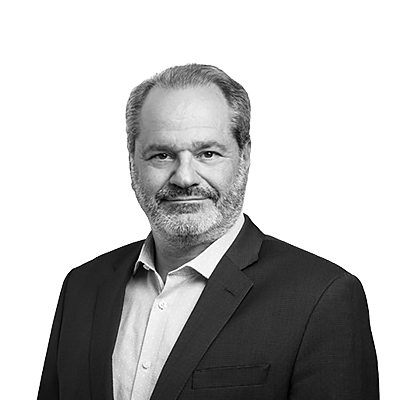
 It takes more than twice as long to traverse Attica during rush hour, while the situation is often even worse on the capital region’s main thoroughfares. The average driver loses about 143 hours a year stuck in traffic, and the situation seems to be deteriorating with every passing year. Experts point out that during rush hour, the congestion index reaches almost 90%, rising to as much as 200% on the worst-affected roads. This means that driving on these roads takes drivers 200% longer than it would in the absence of traffic. |

|
| “The Euronext Athens (ATHEX) general index closed Friday at 2,512.83 points, up 1.33% from Thursday’s 2,479.94 points. On a weekly basis, it fell 1.56%.” |
| “The number of card payments has exceeded that of cash payments in Greece, bringing the country closer to eurozone trends favoring electronic payments. The same is true of transaction values, with cards accounting for 50.2%, compared with 39.1% for cash. The share of cash payments has fallen from 88.5% in 2016 to just 44.8% in 2026.” |
| “The Greek housing market has enough housing stock to meet demand, but it is not being put to use. Many properties, both privately and publicly owned, remain vacant and could help address the current housing crisis, according to experts.” |
|
Editor's Pick Ukraine’s enduring powerRead the article |
| We’d like to hear from youShare your feedback at newsletters@ekathimerini.com |
| Did you receive this email from a friend?Subscribe to our newsletters here |
 |
| Kathimerini English Edition is published as a single paper with the International Edition of NYTimes |
No comments:
Post a Comment