
Trump and Xi’s spheres of ignorance

Like all great rivalries, President Donald Trump‘s relationship with President Xi Jinping comes with known knowns, known unknowns, and unknown unknowns.
The Trump-Xi summit is being framed in the language of known knowns. Iran. Soybeans. Boeing jets. Tariffs. Rare earths. Microchips. Taiwan. Visas. These are the known knowns that policy watchers follow to judge whether their relationship is still strained or softening.
But the real summit will take place in the unknown unknowns. Trump does not really know what Xi wants from America—because nobody really knows—or what pressures Chinese citizens are placing on a state built to prevent those pressures from being seen. Xi does not really know what Trump wants from China—because nobody really knows—or what American voters will tolerate from a president who uses foreign policy as a purity test. Both have spheres of influence, domestically and internationally. But both also have spheres of ignorance.
Trump may know that China wants tariff relief or purchase agreements; he may know less about how China understands status, its Century of Humiliation and Taiwan. He may know Americans dislike China; he may misread how quickly hawkishness gives way to grocery bills. Xi may know that America wants leverage; he may know less about how a consumer-minded, institutionally fractured republic expects to see that. And Xi’s own system, from the Great Firewall to party discipline and purges, makes genuine Chinese sentiment hard to hear.
Common Knowledge: What Both Sides Say They Want
Publicly, Trump wants a deal he can sell as strength. He wants Chinese purchases of American farm goods and aircraft, less pressure from tariff escalation and restrictions on rare earths, and some kind of sign that he can still influence Beijing. Officials have also discussed a new U.S.-China “Board of Trade.”
Xi wants a deal he can sell as statesmanship. He also wants tariff predictability, fewer restrictions on Chinese access to advanced technology, breathing room for Chinese exports, and language on Taiwan that respects his position. The People’s Daily, the mouthpiece of the Chinese Communist Party, recently called Taiwan “the first red line that cannot be crossed.”
Uncommon Knowledge: Neither Side Knows What the Other Wants
The disconnect is that the wants themselves are not common at all. Neither can be sure what the other needs. Trump may know that Xi wants tariffs lowered, but not how much domestic weakness sits behind the request. Xi may know that Trump wants purchases, but not how much American voters dislike paying for trade wars. Trump may know Taiwan is sensitive, but not why Beijing treats it as a civilizational issue.
Michael Sobolik of the Hudson Institute highlighted the contradiction. Washington and Beijing are “competing at different levels and different domains, with different theories of victory,” he told the Associated Press. Trump has used tariffs as leverage for a trade deal, while Xi is “angling to win a cold war with the United States.”
That is why this is not merely Trump versus Xi. It is Trump ignorant about China and about the priorities of his own citizens. It is Xi ignorant about America and about the priorities of his own citizens.
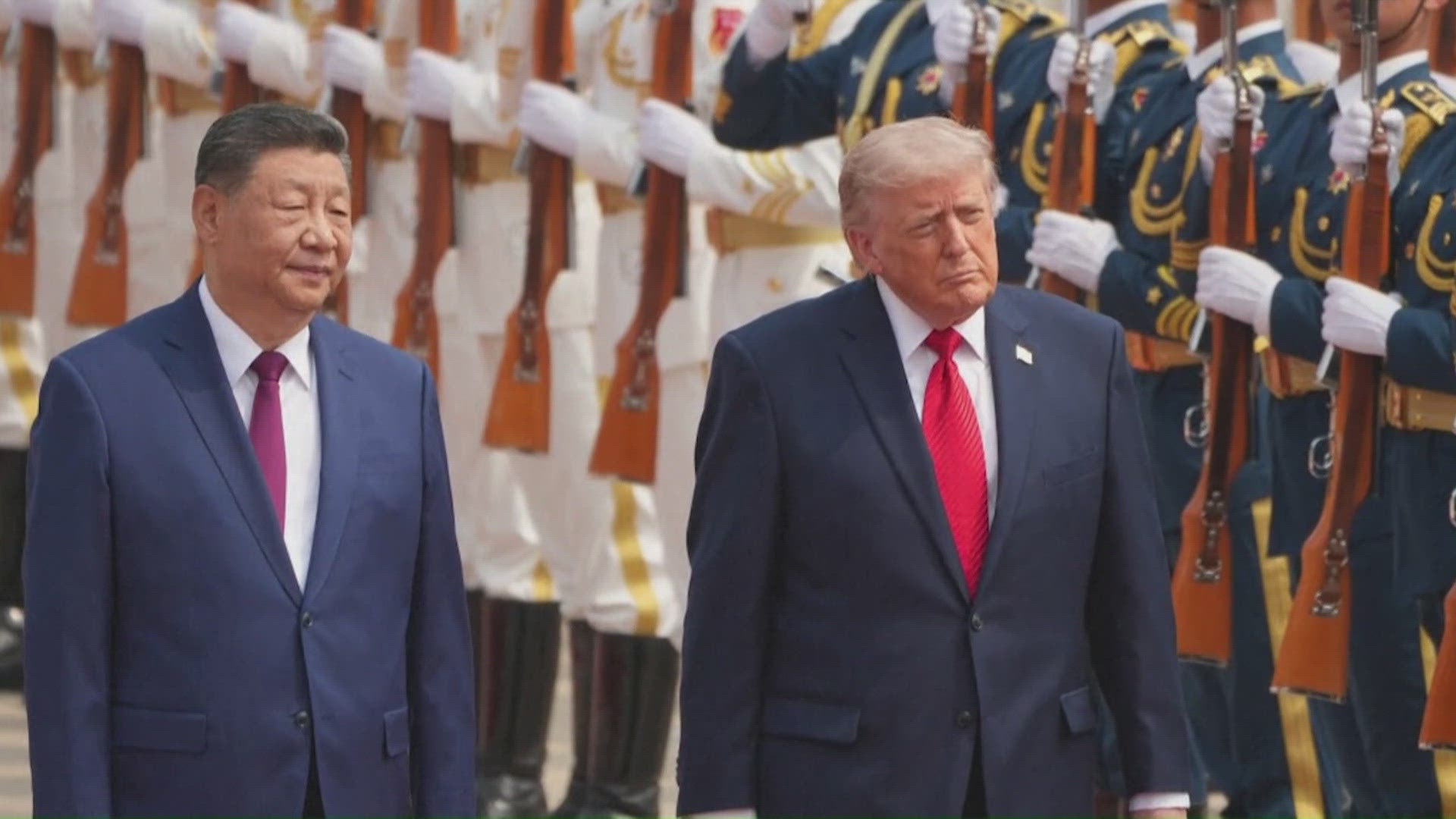
 Related video: Trump meets with Chinese president behind closed doors (KENS-TV San Antonio)
 KENS-TV San Antonio
 KVUE-TV Austin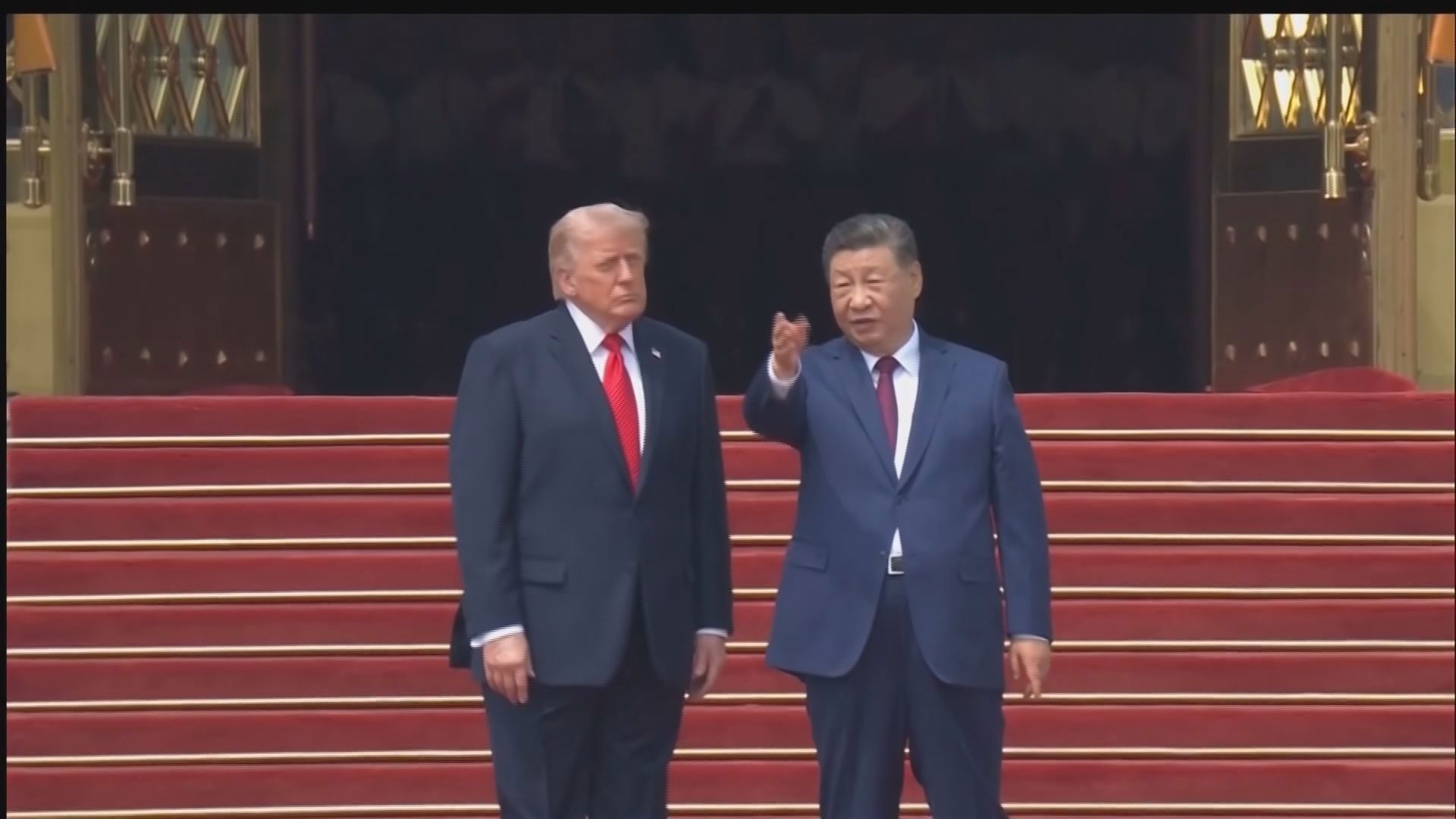
 KARE-TV Minneapolis St. Paul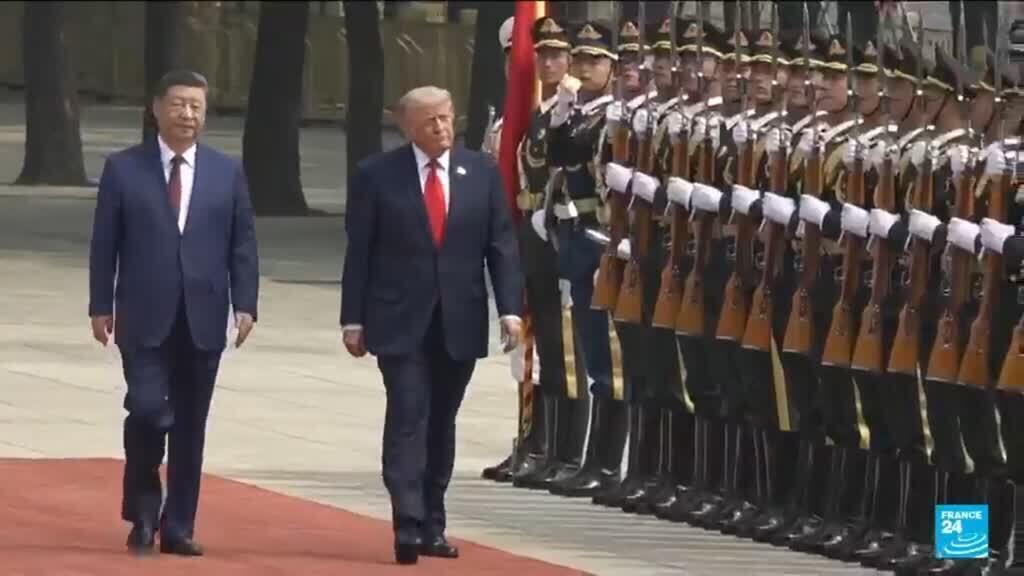
 France24 - Video
Trump’s China Problem: China Is Not Just a Vendor
Trump’s instinct is to treat China as a giant supplier that can be pressured into buying more from America. The U.S. ran a $202 billion goods deficit with China in 2025, and deficits animate Trump.
Yet that figure is less useful than it looks. In 2018, the U.S. goods deficit with China was $418 billion, more than double the 2025 figure. If the deficit were the whole story, Trump could declare partial victory. But the deficit has shrunk partly because supply chains have changed. Taiwan has become so central to the AI supply chain that the U.S. imported more goods from Taiwan than from China in the early part of 2026.
Trump’s deeper ignorance may be civilizational. Notoriously, he’s often described as a transactional leader. China’s constitution, though, frames its national project as the “great rejuvenation of the Chinese nation” under Communist Party leadership and treats opposition to the socialist system as a political enemy.
Taiwan is, of course, the major fault line. Trump approved an $11 billion arms package for Taiwan in December but had not moved forward with delivery before the summit. To Trump, delaying weapons can look like a card to play. To Xi, it may look like a signal that the American president privately accepts China’s civilizational priorities.
Trump’s America Problem: Voters Want Lower Prices More Than Theater
Trump also risks misreading Americans. He speaks as if voters want a confrontation with Beijing. Many do, as do many American lawmakers. But the evidence suggests that the public’s priority is its own living standards.
AP-NORC found that seven in 10 Americans named at least one economic issue among the problems they wanted the government to address in 2026, while 43 percent mentioned personal finances, 44 percent mentioned immigration and 41 percent mentioned health care. Foreign policy, excluding immigration, fell to 25 percent from 35 percent. Only 11 percent were confident the federal government could make progress on the issues they named.
China-specific polling points the same way. An NPR, Chicago Council and Ipsos poll found that Americans largely see China as an economic rival, but they also want strong trade ties and lower tariffs. It found that 76 percent thought tariffs were bad for the cost of living, 70 percent thought they were bad for the standard of living, 66 percent thought they were bad for the U.S. economy and 61 percent thought they were bad for jobs. It also found that 62 percent opposed significantly reducing trade with China if doing so meant higher prices, while 58 percent opposed increasing tariffs on Chinese goods.
That is the awkward fact behind the summit. Trump’s political style prizes confrontation, but his voters live in a cost-of-living election. The Chicago Council’s 2025 survey found that 53 percent of Americans favored cooperation and engagement with China over working to limit China’s power, up from 40 percent the previous year, and that 54 percent opposed higher tariffs on Chinese imports. This is realism for the American public.
Xi’s America Problem: Trump Is Not America
Xi’s corresponding mistake might be to treat Trump as if he were America in human form. In China and America, the leader matters enormously, but in America he is also obstructed, contradicted, mocked, and on a time limit—even if some of the changes he has brought to the country may not be.
Xi may also misread American opinion, ironically to his advantage, if he assumes anti-China rhetoric equals a unified appetite for rupture. Pew found that American views of China have grown somewhat more positive, with the share describing China as an enemy falling from 42 percent in spring 2024 to 28 percent in January 2026. The NPR-Chicago Council-Ipsos poll found that 37 percent of Americans called China a rival, 21 percent called it an adversary, and 20 percent called it a strategic partner. Yet the majority would still prohibit U.S. companies from selling sensitive tech to China.
The American signal to China is therefore not one signal. It is many: buy our crops, do not invade Taiwan, lower prices, stop stealing technology, send students, do not send spies, keep supply chains open, do not dominate them.
Xi’s China Problem: The Firewall Edits the People
Xi’s deeper ignorance concerns China itself. Authoritarian systems are good at surveillance but bad at listening. The Great Firewall is not only a tool for keeping Western ideas out, but for misreading Chinese sentiment.
China’s online population is enormous. Xinhua reported that China had more than 1.12 billion internet users by June 2025, with internet penetration of 79.7 percent. Yet Freedom House’s 2025 Freedom on the Net report gave China a score of 9 out of 100 and said Chinese users had faced the world’s worst internet-freedom conditions for more than a decade. It also said authorities censored and manipulated online content, removed posts on sensitive incidents and announced the deletion of more than one million pieces of content in an early-2025 campaign.
But, as in America, Chinese public opinion is not a monolith. China Pulse, a Carter Center and Emory University survey project, found that 73 percent of Chinese respondents viewed the United States as a national-security threat in its late-2025 and early-2026 wave, with Taiwan and international trade the top reasons cited among those who perceived a threat. Yet another China Pulse analysis found that many Chinese respondents expected equality in trade relations and believed a trade conflict would harm both sides. The public can be nationalistic and practical at the same time, just like Americans, but be unable to voice both sides.
China’s economy gives Xi another headache. China’s National Bureau of Statistics reported 5 percent GDP growth in the first quarter of 2026, while industrial data showed high-tech manufacturing up 12.5 percent. But retail sales grew only 2.4 percent in the first quarter, real-estate development investment fell 11.2 percent, and new commercial-property sales fell 16.7 percent in value.
This is the domestic bargain Xi must protect: growth with pride. Yet an information system that suppresses complaint may yet overstate tolerance.
The Broken Human Circuit
The ignorance is not just at the top. The middle layers of understanding between the two countries have thinned.
AP reported that only about 700 American students were studying at Chinese universities in late 2023, down from a peak near 25,000 a decade earlier. Open Doors reported that 265,919 students from China studied in the United States in the 2024-25 academic year.
The imbalance creates an understanding shortage. VOA quoted David Moser, an American linguist in Beijing, warning that without more Americans studying in China, “in the next decade, we won’t be able to exercise savvy, knowledgeable diplomacy in China.”
Flights tell the same story. ChinaTravelNews estimated that the October 2025 to March 2026 season had only 27 scheduled flights per week between the Chinese mainland and the United States, far below pre-pandemic levels. AP reported in 2024 that U.S.-China flights remained far below 2019 levels even after Washington allowed Chinese airlines to increase round trips.
Journalism is another shrinking bridge. Voice of America reported that a Foreign Correspondents’ Club of China survey found that most foreign journalists said reporting conditions remained far below international standards, with many reporting interference, harassment or being blocked from reporting or filming. Fewer students, fewer flights, fewer reporters and fewer uncensored conversations make ignorance structural.
Secrecy Makes Bad Translators
Secrecy compounds the problem because each side hides the information the other most needs. The difference is that America’s secrecy coexists with leaks, lawsuits, opposition politics and an aggressive press, while China’s secrecy is embedded in party discipline and law.
Its revised Counterespionage Law, passed in April 2023 and effective in July 2023, enlarged the government’s authority to combat espionage, broadening the scope from traditional state secrets to documents, data, materials or items related to national-security interests without clearly defining those terms. This affects more than spies. It affects companies, academics, journalists, researchers and analysts trying to understand China.
What the Summit Can and Cannot Fix
The Trump-Xi summit can still produce positive outcomes for both sides. But it won’t bridge their spheres of ignorance.
So the summit should be judged less by whether it produces a triumphant communique than by whether either side shows evidence of understanding the other’s constraints. The alternative to diplomacy is conflict, and that risk is a known known.
Related Articles
- Lupita Nyong’o Reveals the Trojan Horse in America’s Culture War
- Trump's Venezuela Fantasy Turns America First Inside Out
- Trump’s Culture War Has a New Patron Saint—and a Fallen Idol
Start your unlimited Newsweek trial
No comments:
Post a Comment