Bloomberg Originals
How the Strat of Hormuzhas become a weapon of war
Story by Alex Longley and Julian Lee
May 1,2026
(Bloomberg) -- No region of the world produces more oil and gas than the countries straddling the Persian Gulf, and most of it needs to travel by tanker via the Strait of Hormuz.
Traffic through the waterway has been at a near-standstill since the US and Israel launched strikes against Iran in late February and Tehran threatened to attack ships in the strait. This sent energy prices soaring on world markets and triggered a cascade of disruption across industries as varied as Indian fertilizer production, South Korean manufacturing and European aviation.
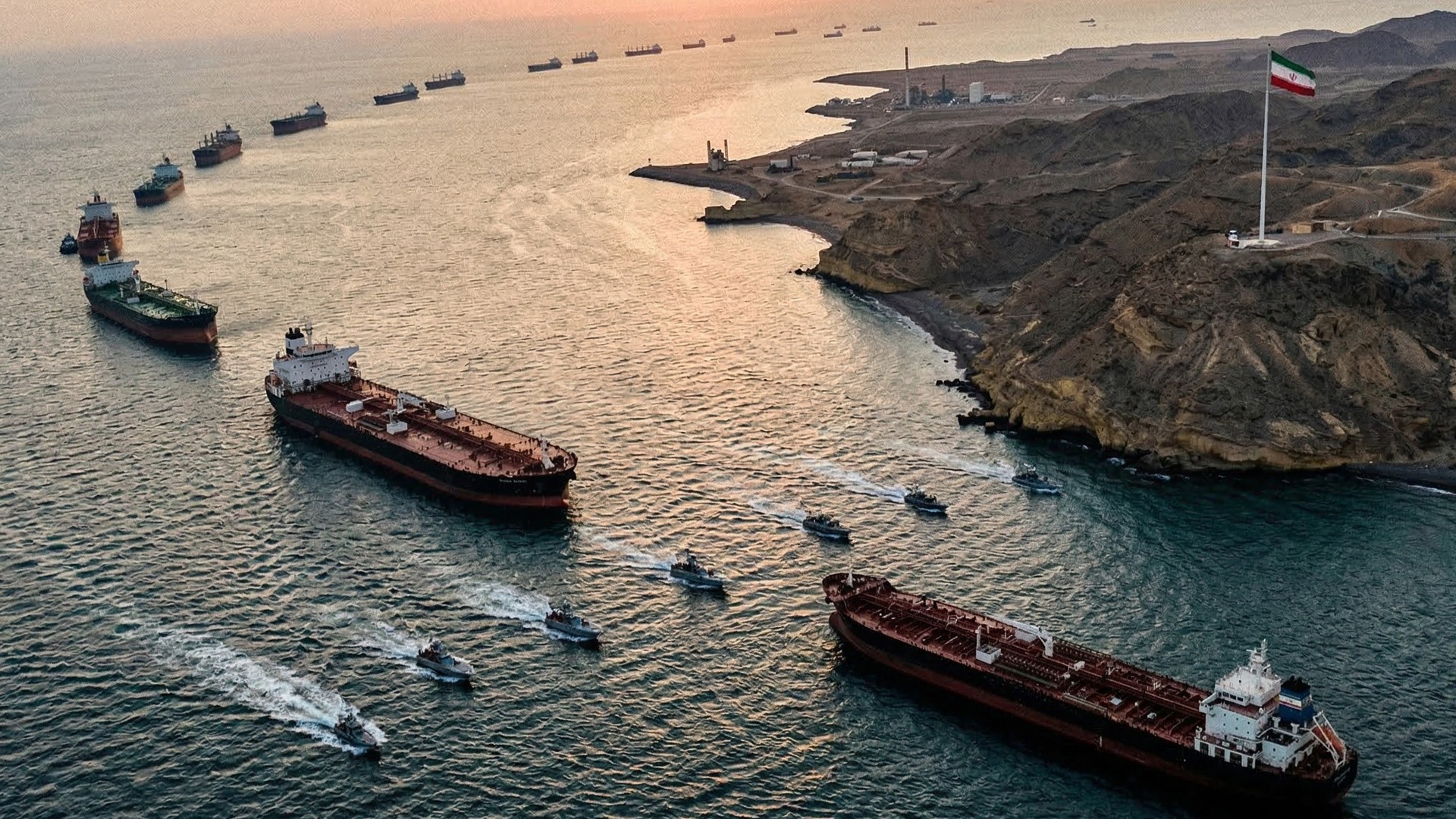
Hundreds of tankers, bulk carriers and cargo ships are still languishing in the Gulf, and countries in the region have shuttered most oil production as there’s no longer anywhere to store new supplies. Even if the US and Iran eventually strike a deal to unblock the strait, there’s no certainty that free navigation will be fully restored. Iran’s government has signaled it intends to use its de facto control over Hormuz not just to strengthen its hand in peace talks, but as a useful weapon to brandish in future against its adversaries.
© Bloomberg
How has the Iran war affected shipping through the Strait of Hormuz?
Following the outbreak of war in late February, Iran’s government warned it would attack vessels entering the strait without its authorization, and the average number of daily ship transits fell to fewer than 10 from about 135 in peacetime.
Iran allowed certain vessels, including those carrying its own oil, to cross the waterway via a corridor that hugs the Iranian coast, sometimes after requesting payments of as much as $2 million. As a result, while the number of cargoes from other exporters in the region had slumped by more than 95% by mid-March, shipments of Iranian oil had dropped only slightly from pre-war levels.


 Walking Archive
 Showtime112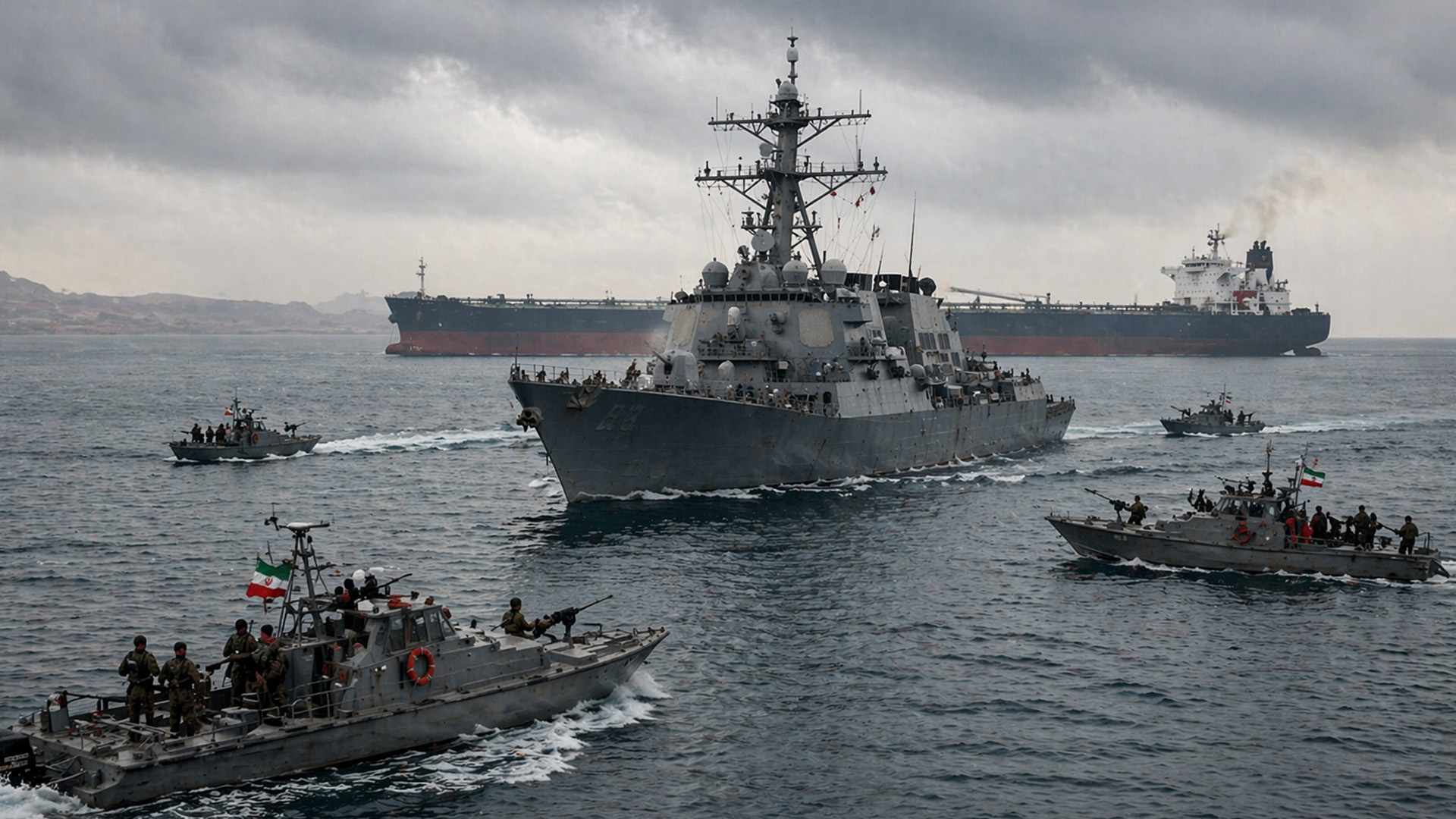
 Beyond Walks
The warring parties announced a ceasefire in early April. But shipowners said the situation in Hormuz didn’t change as a result, noting that Iran was broadcasting to maritime traffic that its permission was still required to traverse the sea corridor.
Those remaining transits approved by Iran declined sharply after the US imposed its own blockade on ships traveling to and from Iranian ports from April 13. Iran declared the strait open again on April 17, only to close it once more hours later after the US refused to ease its own shipping ban.
When might the Strait of Hormuz reopen?
That depends on how soon the US and Iran can agree on some kind of longer-term settlement to end the conflict and remove the threat to commercial shipping. Pressure on both sides to strike a deal is growing as the economic damage continues to mount. US President Donald Trump has insisted his navy’s blockade is working, while Iran has said it won’t reopen the strait to commercial vessels until the blockade ends. How much trade disruption either side is ultimately willing to tolerate is still unclear.
A peace agreement is unlikely to lead to an immediate resumption of regular traffic in the strait. Unless they are convinced that any reopening will endure, ship owners will likely be much more willing to take their stranded vessels out of the Persian Gulf than to send fresh ones in that might subsequently get stuck if the waterway is closed again.
Iran has said mines have been laid along the narrow strait’s most frequently used routes. These would need to be cleared for normal traffic to resume, a process that could take weeks. Widespread GPS signal jamming has made it harder and more dangerous for vessels to navigate the strait. Even if these issues are swiftly resolved, some ship operators may be unwilling to sail through without some kind of military escort.
The US Navy doesn’t have enough ships to protect more than 100 vessels at any one time, and Western defense officials have said reopening the strait can only be done by a multinational coalition. So President Donald Trump would need to persuade allies to deploy their own navies alongside that of the US.
Such an operation may not be able to accommodate as many ships as pass through in normal conditions. Allowing too many to crowd the waterway may raise the risk of line-of-fire constraints, in which, for example, a warship is unable to destroy an incoming threat because there’s a commercial vessel lying in its path. It could take weeks to clear the backlog on either side of the strait, given the sheer number of ships now stranded in the Gulf.
What does the Iran war mean for the Hormuz route in the longer term?
The scale of disruption from the war exceeds that of the previous two oil crises in 1973 and 1979. Shipowners, their insurers and customers have seen how easy it was for Iran, a country with virtually no conventional navy, to swiftly bring navigation through Hormuz to a halt and how hard it will be to restore normal operations.
By the time a ceasefire was agreed on April 8, the US and Israeli bombing campaign had failed to destroy all of the missile and drone arsenal that Iran uses to project power beyond its borders. Iranian government officials have said they will never give up their control over the strait and signaled their intention to monetize this leverage even once the war is over. A bill is making its way through the parliament in Tehran that enshrines Iranian sovereignty over the strait in national law and formalizes a toll system for ships crossing the waterway, according to the country’s semi-official Fars news agency.
If a longer-term settlement fails to remove the Iranian threat to commercial shipping in Hormuz, the economics of this key trade route may change for years to come. The most cautious ship operators may decide that sailing through Hormuz is not worth the risk under any circumstances. Others, notably those involved in transporting industrial and consumer goods, could find that higher insurance premiums make a significant amount of Gulf trade uncompetitive in comparison with other regions.
What’s the significance of Hormuz?
Situated between Iran to its north and the United Arab Emirates and Oman to its south, the Strait of Hormuz connects the Persian Gulf to the Indian Ocean. It’s around 100 miles (161 kilometers) long and 24 miles wide at its narrowest point. The shipping lanes in each direction are just two miles wide.
The strait is an essential route for the energy market, handling about a quarter of the world’s seaborne oil trade and a fifth of its liquefied natural gas. Saudi Arabia, Iraq, Iran, Kuwait, Bahrain, Qatar and the UAE all ship crude through Hormuz in normal times, and the majority of their cargoes go to Asia. Gulf countries are also home to refineries that produce large volumes of diesel, naphtha — used to make plastics and gasoline — and other petroleum products that are exported globally via the strait.
Beyond energy, Hormuz is a choke point for products including aluminum, fertilizer, and even helium, which is used in the production of semiconductors.
To what extent can oil producers bypass the Strait of Hormuz?
Kuwait, Qatar and Bahrain have no other sea route for their exports.
Saudi Arabia, which ships the most oil through Hormuz, has rerouted crude through a pipeline that runs to the Red Sea port of Yanbu. Producer Saudi Aramco aims to use the pipeline’s full 7-million-barrel-a-day capacity, but about 2 million of that will be used in domestic refineries, power generation and water desalination plants, leaving a maximum of about 5 million barrels a day available for export through Yanbu — about 30% below the kingdom’s usual export levels.
The Red Sea route isn’t without risk as Iran has already targeted a refinery in Yanbu and hit a pumping station on the East-West pipeline, while Iran-backed Houthi militants in Yemen have threatened to resume attacks on vessels in the Red Sea.
The UAE can likewise bypass Hormuz to a certain degree. But spare capacity is limited and the port of Fujairah, which sits at the end of a pipeline that connects the UAE’s oil fields to the Gulf of Oman, has been disrupted by drone attacks. While Iraq is seeking to revive shipments through ports in Jordan and Syria, the amounts being considered are a small fraction of its normal shipments through Hormuz.
Asia Receives Most of the Oil Shipped Via the Strait of
Hormuz | Breakdown of crude oil and condensate
transported through the waterway in 2025, by destination
© Vessel tracking data compiled by Bloomberg
Does Iran have the right to control Hormuz?
Under the United Nations Convention on the Law of the Sea, countries can exercise sovereignty up to 12 nautical miles (14 miles) from their coastline — an area known as their territorial waters. The Strait of Hormuz runs through the territorial waters of Iran and Oman. However, nations must allow “innocent passage” of foreign vessels through their territorial waters and must not impede “innocent” or “transit passage” through straits used for international navigation. The treaty also says that countries cannot charge foreign ships merely for passage through their territorial waters.
While Iran’s government signed UNCLOS in 1982, its parliament never ratified the treaty.
The head of the world’s main shipping agency, the International Maritime Organization, said on April 9 that any efforts by Tehran to permanently enforce a toll system on Hormuz are unacceptable and would set a dangerous precedent.
Related Explainers
More stories like this are available on bloomberg.com
©2026 Bloomberg L.P.
No comments:
Post a Comment