İtalyan düşünce kuruluşu ISPI'nin Türkiye'nin Orta Doğu ve Kuzey Afrika dış politikası raporu
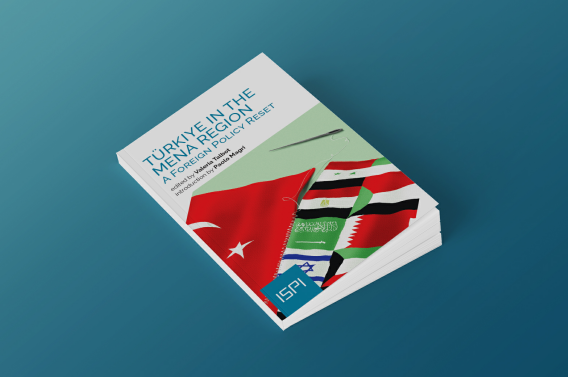
TÜRKIYE IN THE MENA REGION: A FOREIGN POLICY RESET
|
|
|
In recent years, Türkiye's foreign policy has been driven by efforts to reset relations with regional competitors in the Middle East and North Africa (MENA) region. Against a backdrop of disruption caused by the Covid-19 pandemic and the Russian invasion of Ukraine, as well as the redefinition of the US role in the region, Ankara’s renewed diplomatic activism has been guided by the willingness to break from regional isolation, as well as the need to relieve Türkiye’s deteriorating economy. How did Türkiye ditch its ideological approach in the wake of the 2011 Arab uprisings to adopt a more pragmatic stance? And how is the process of rapprochement with other key actors in the MENA region playing out – namely Gulf monarchies, Israel and Egypt?
|
|
|
|
|
Report edited by Valeria Talbot (ISPI) |
|
|
|
TABLE OF CONTENTSIntroduction, Paolo Magri (ISPI Executive Vice President)
1. Türkiye, UAE and Saudi Arabia: A New Era of Cooperation in a Changing Regional Landscape Ali Bakir (Atlantic Council and Qatar University)
2. The Normalisation Between Türkiye and Israel: A Second Chance to Restart the Relationship Gallia Lindenstrauss (Institute for National Security Studies - INSS)
3. From Rivalry to Normalisation: Opportunities and
Challenges to Egypt-Türkiye Relations Meliha Benli Altunışık (Middle East Technical University - METU)
4. Türkiye’s Libya Policy on Shifting Sands Evrim Görmüş (MEF University)
5. Türkiye’s Swings in the Syrian Crisis: Paving the Way Forward Güney Yıldız (Political Analyst)
Conclusions Valeria Talbot (ISPI)
|
|
|
|
No comments:
Post a Comment